Life gets real in Montréal
The landscape provides it with space and freedom – it’s America. History helped it inherit knowledge and European singularity, especially France’s. Such mixture shaped Québec’s capital. And it’s a wonder.
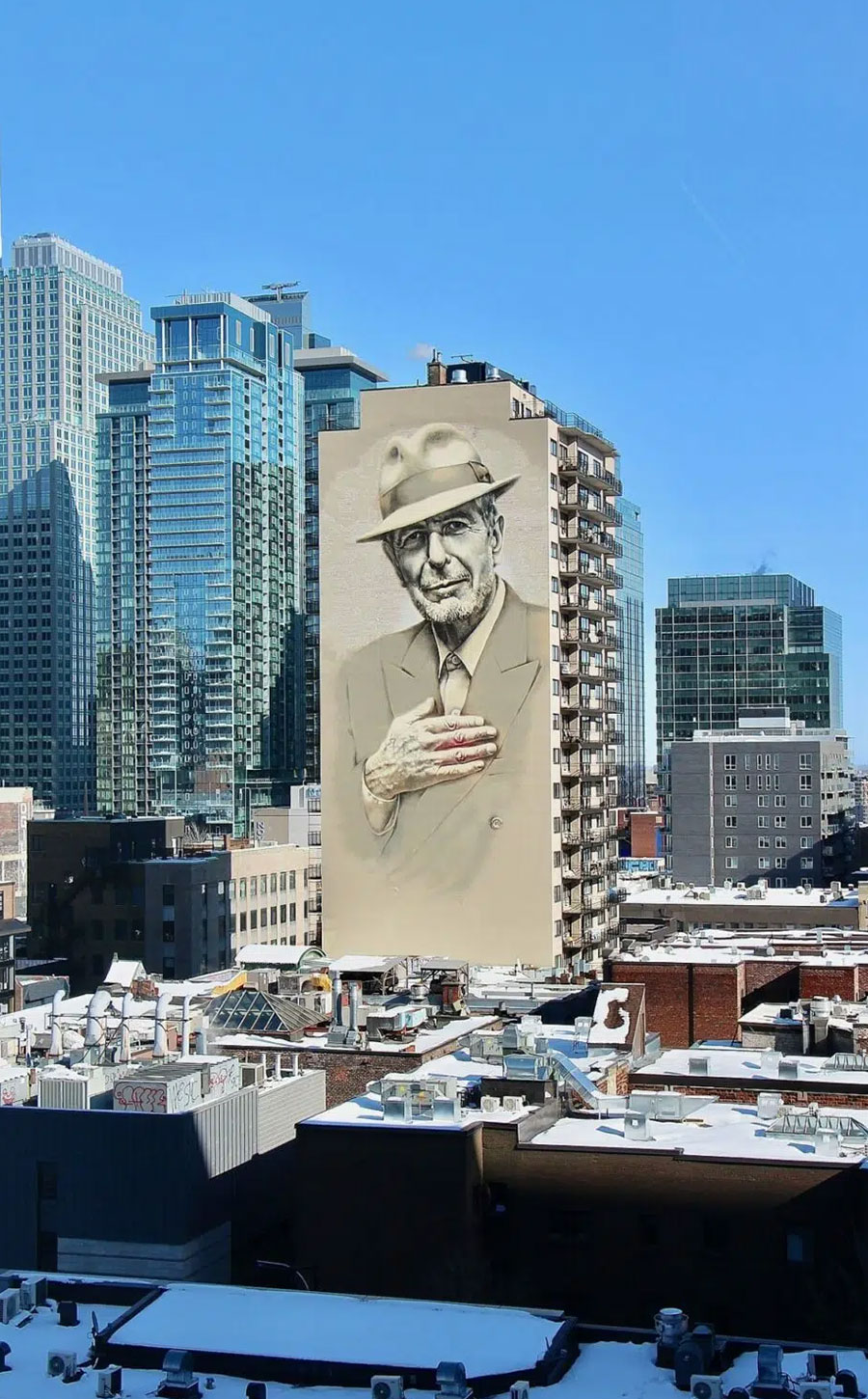
Montréal is something you breathe. The city split by the Saint Lawrence River gives prominence to its squirrel-abundant parks, its highway-wide avenues, it forests filled with maple trees that protect ski pistes during winter – and secret kisses as soon as the first warm spring breeze blows – its open-air pleasures, skating, running, biking. Anyone can find a healthy hobby there and long live happiness!
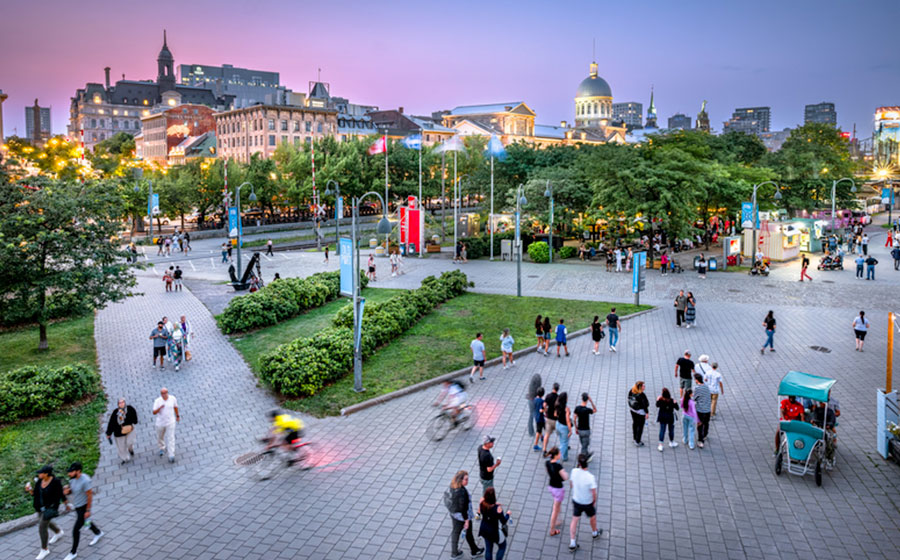
Old-town Montréal and recent neighbourhoods
This is the first impression you get when visiting Montréal: a form of happiness, of kindness you find upon meeting more and more people, a desire to share travel tips. Such coolness spreads among the 2 entities that form the city (2 millions of inhabitants, 4 for the whole metropolitan area): the old town and recent neighbourhoods, the old Montréal and the new Montréal.
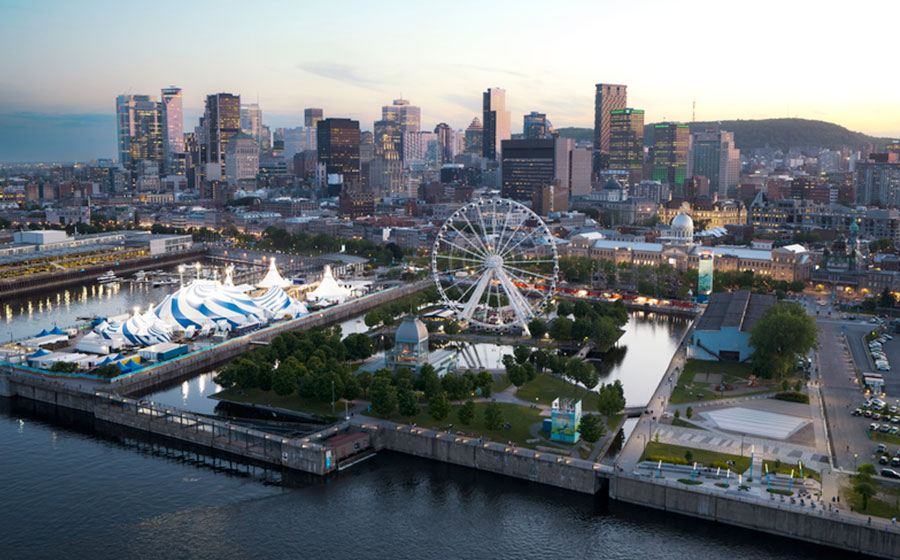
Such partition is usual in America, yet here it’s smeared with the moving pride of the first immigrants – coming from La Rochelle, Nantes, Brest, La Baule or Saint-Malo – who followed Jacques Cartier (1491-1557) across the Atlantic Ocean. In 1535, Cartier wrote in his record book “Nomasmes icelle montaigne le mont Royal” (We called this mountain Mount Royal). The modest landform (233 meters high) soon overlooked a camp, a fort, a village, a town, a city, a capital – here’s how Montréal was born.
‘I remember’
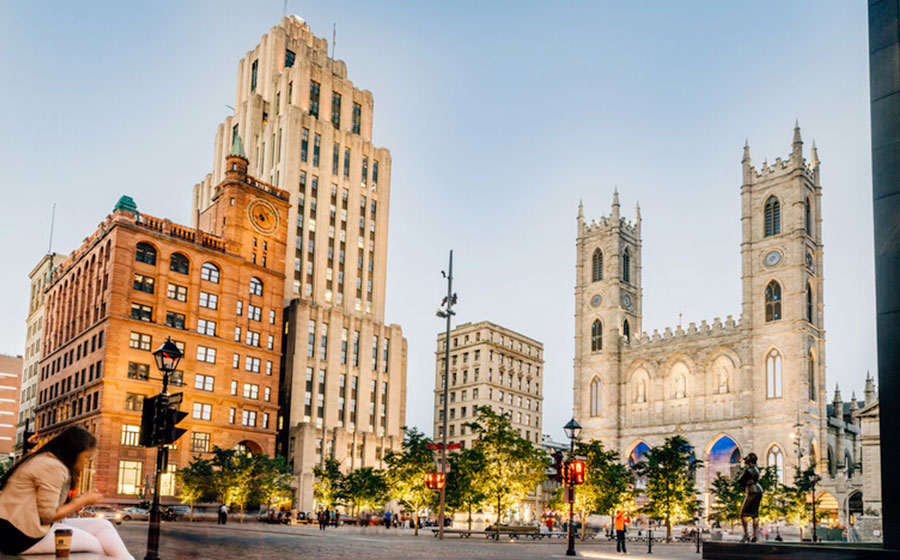
Cobble-stoned streets, hundreds of bistros and old-fashioned restaurants, as many streets named after saints or past historical glories, a splendid Notre-Dame Basilica – where Céline married her René – surrounded by a good number of churches, monasteries or French signs. Let’s not forget the use of French everywhere, sometimes with radicality. All of this makes for a delightful stroll in the old town, echoing Quebec’s motto “Je me souviens” (‘I remember’). Remembering is alright, but History runs its course.
Democracy, freedom and respect
Centuries passed on, and the self-proclaimed French metropolis of the Americas watched waves of worldwide refugees set foot on its land as diverse crisis shook the world. Quick, let’s start a new life away from bombings and misery! The American dream combined with French benevolence worked like a charm. Quebecer generosity states that here, we’re all immigrants. Starting from 1833, the city engraved a new motto on the façade of public buildings: Concordia salus – literally ‘Salvation through harmony’ but more simply, the art of coexisting.
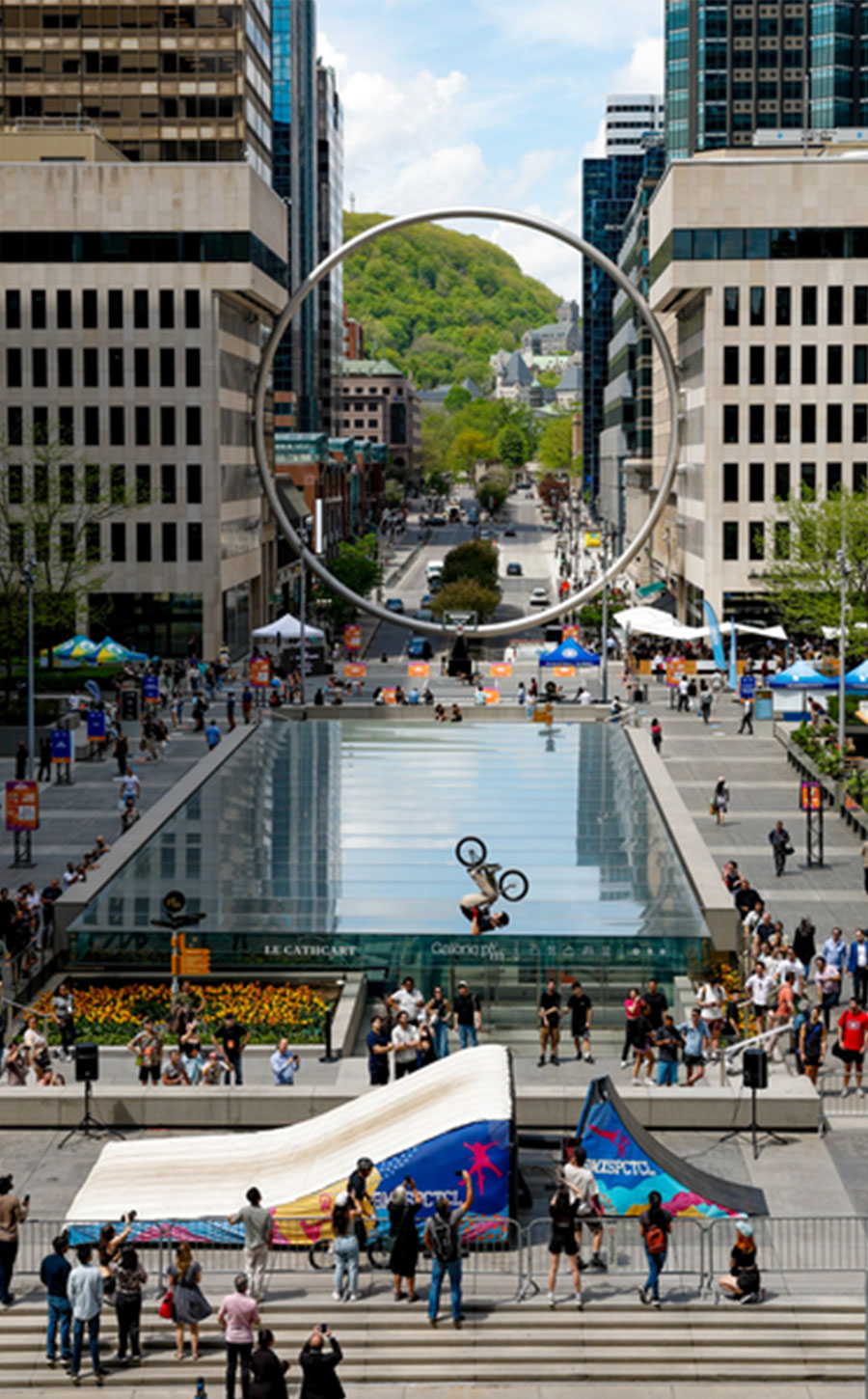
The city currently hosts a good hundreds of different nationalities. Every newcomer has the right to be themselves as long as they agree with the values that make Montrealer, Quebecer, Canadian people proud to be such – democracy, freedom and respect.
Globalized City
Having a walk along Saint Catherine Street – malls, theaters and flowery squares spreading over more than a kilometre – and checking how successful this mindset is. A dense crowd, not caring much about their differences, that gathers around the same cravings: a maple syrup waffle, a pair of jeans, a gym, the next smartphone or having a beer while watching Montreal Alliance basket players dunking in slow-mo on the big screen. Under this iconic street, 30 kilometres of underground pedestrian paths protect 1,300 shops from the freezing snow or the hot blazing sun.
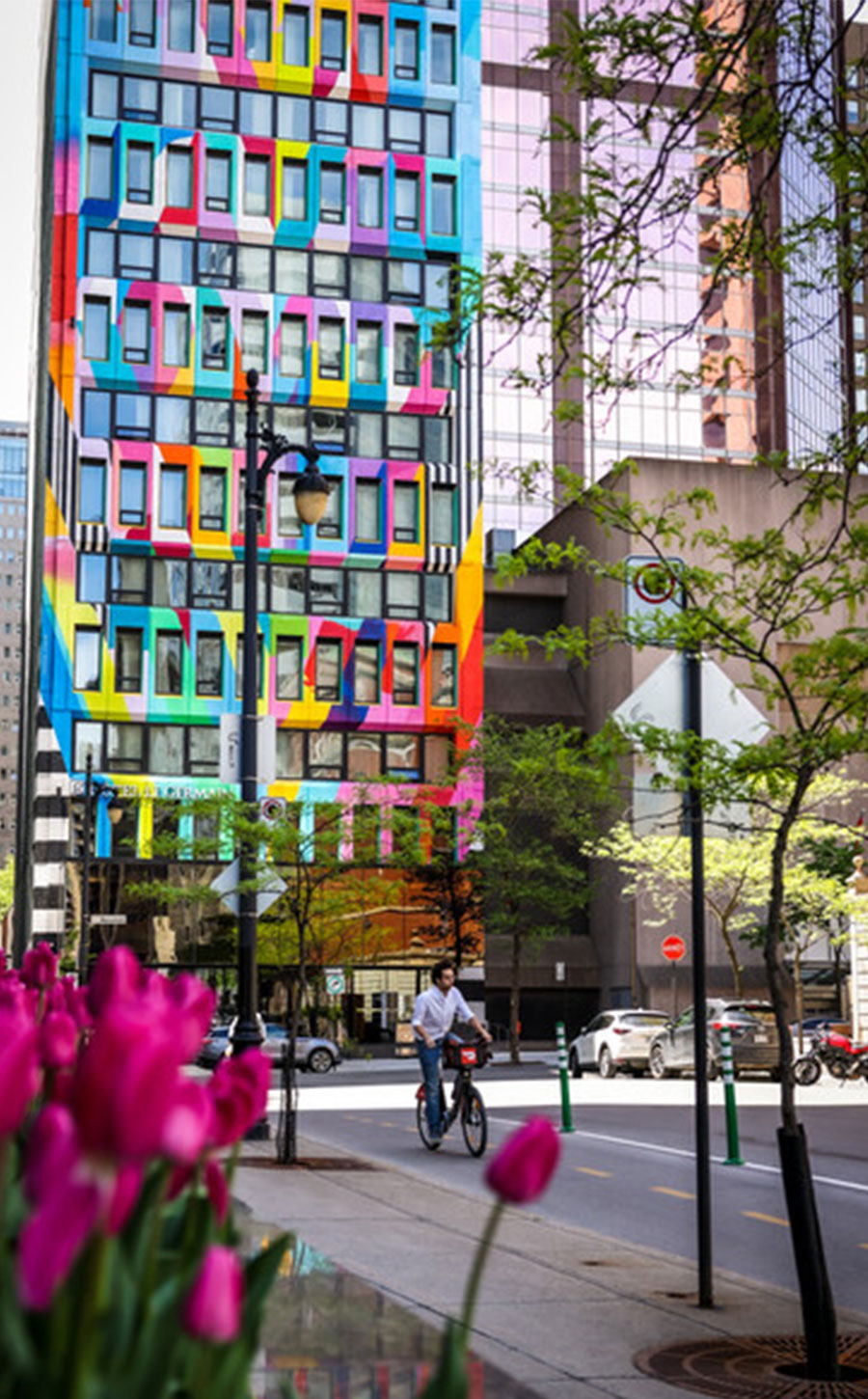
Saint Laurent Boulevard’s neighbourhood is another demonstration of Montréal’s diversity. An African crafts shop lies next to a Turkish restaurant. Farther on the street, a French bistro rubs shoulders with an Indian fabric shop front, right next to a Lebanese or Iraqi spices shop, a music shop where people speak Brazilian Portuguese, and a pizzeria. Welcome to Globalized City.
Shining Humaniti
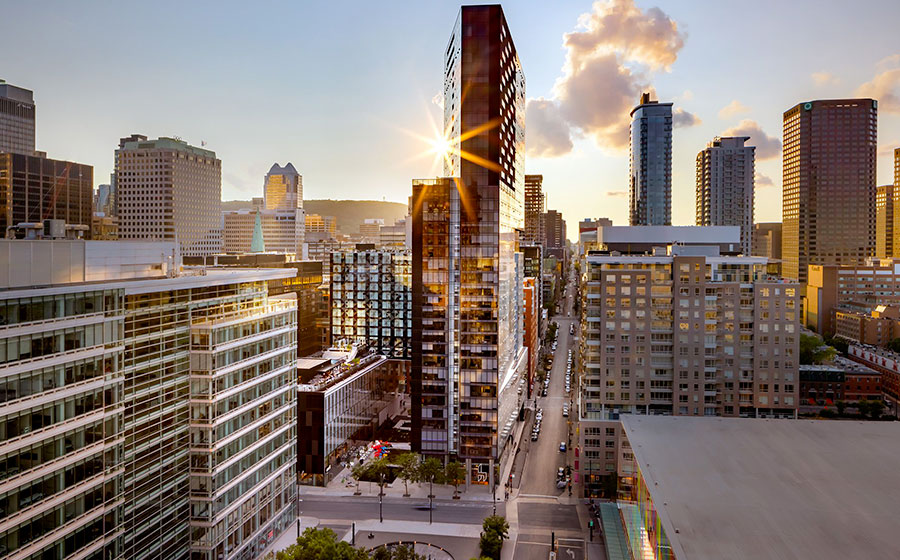
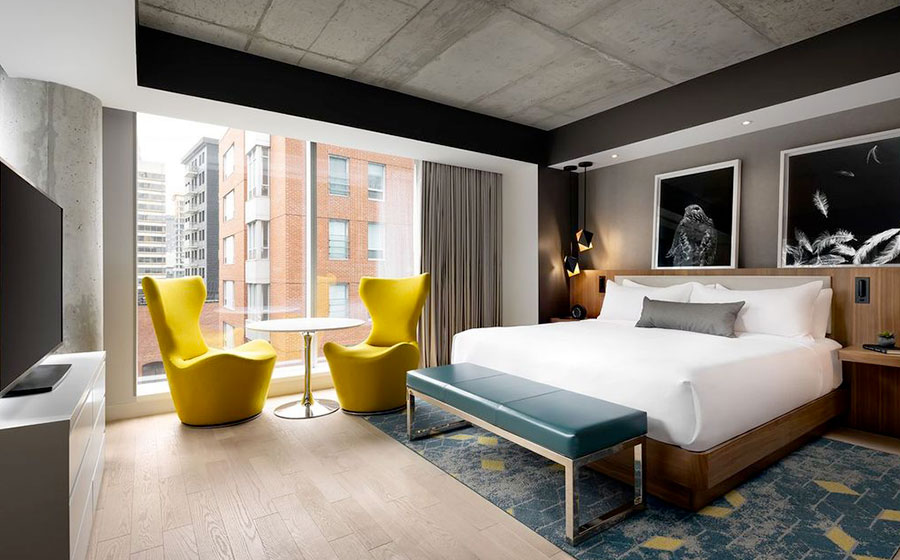
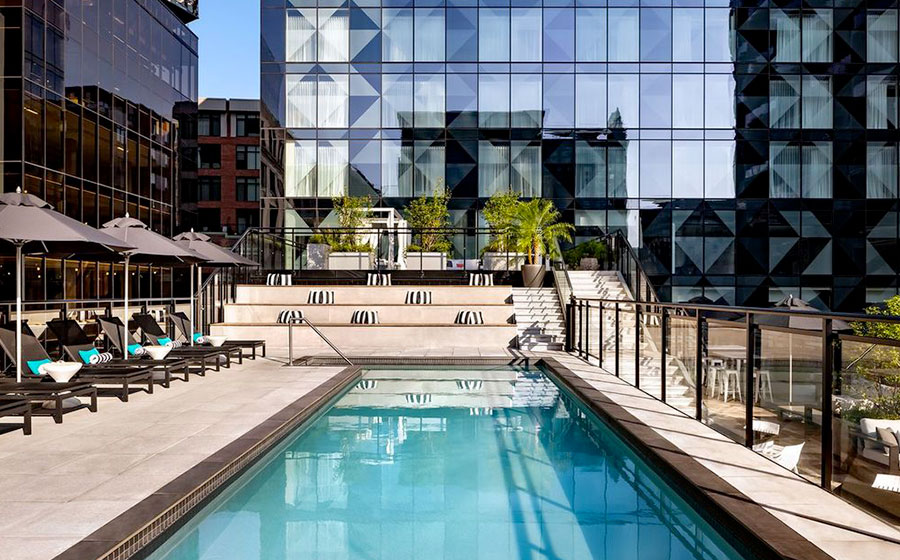
And right in the middle, a hotel emerges: the Humaniti. It acts as the link between the first city and the one that already lives in the future. Twenty glass-covered floors reflect the light. Art is omnipresent: the house is sprinkled with hundreds of modern artworks – canvas, sculptures, objects or furniture – visible in the common areas as well as in the 193 guest rooms. Wide and comfortable, the latter follow American standards.
Acting both as a sentry, a beacon and an exploration site, Humaniti is beaming. Where would you like to go? Old town or modern neighbourhoods, business streets or calm gardens, bistro or fast-food restaurant, river or mountain, lily flower or maple leaf? As Montréal’s kilometre zero, the hotel’s doors open on multiplicity – thus, on liberty.
Tourism in Montréal (www.mtl.org)
Hôtel Humaniti, 340 Rue de La Gauchetière, Montréal.
One night in a double bedroom (in May, for instance): starting from €250.
Tel.: 00 514 657 25 95 and www.humanitihotel.com
Read also: