A material world
Ceratanium® developed by IWC, 3D carbon for Oris, high-technology ceramics by Rado, 18K Moonshine™ gold for Omega, Alpine granite worked down to the micron by Tissot: every manufacture changes the technical constraint of materials into an aesthetic stance. Here are five watches, five propositions. ‘Cause we are living in a material world…
IWC, Portugieser Chronographe Ceratanium®
IWC unveils the Portugieser Chronograph Ceratanium®, the monochrome variation of their emblematic chronograph released in 1998. This edition limited to 1,500 copies sets a new milestone for the manufacture thanks to the use of Ceratanium®, a new material developed in-house.
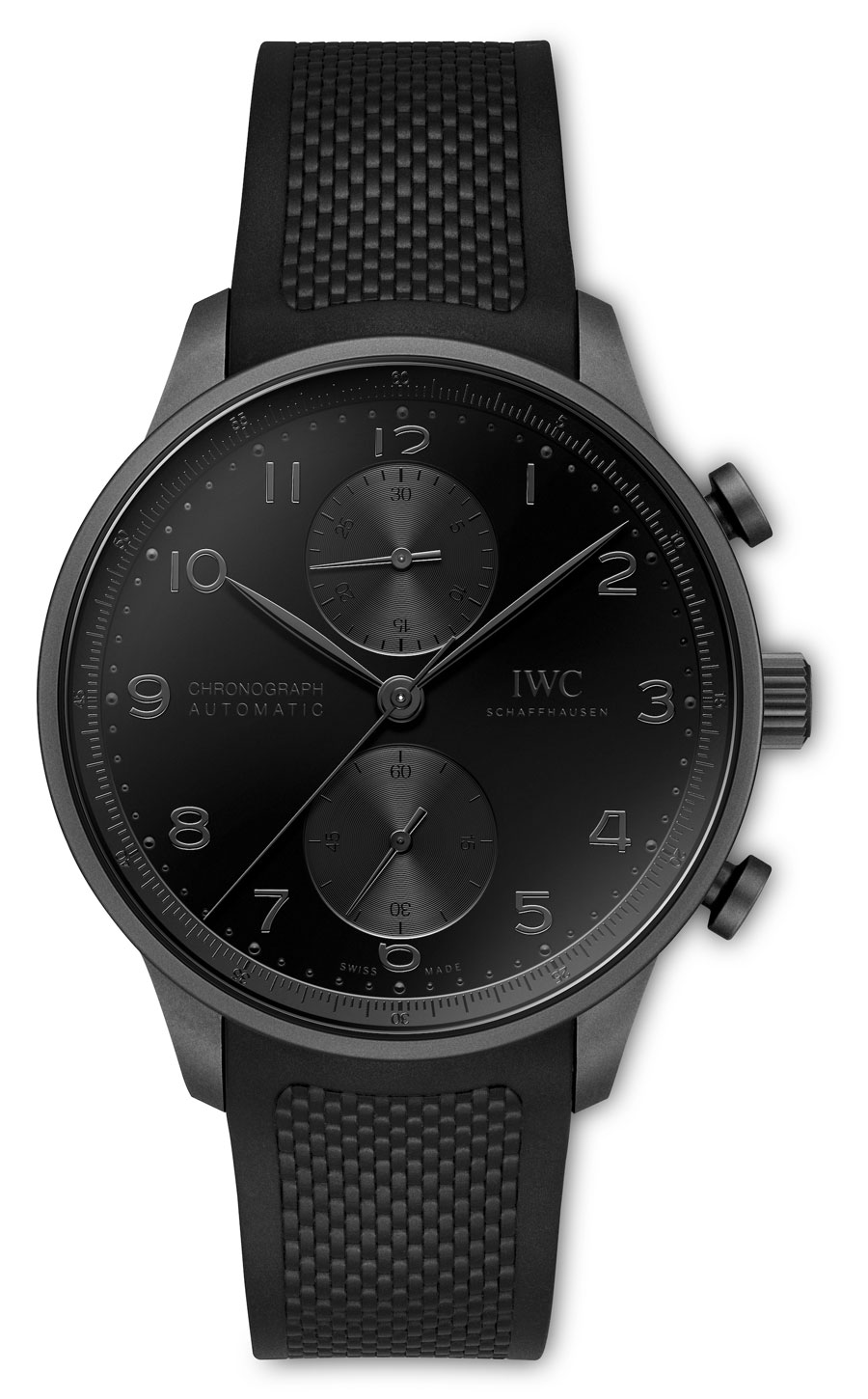
This special titanium alloy, fired at extremely high temperatures in a ceramic kiln, provides the metal with a ceramic-like scratchproof sturdiness. Combined with titanium’s lightness, this new mix presents an intense metallic black finishing.
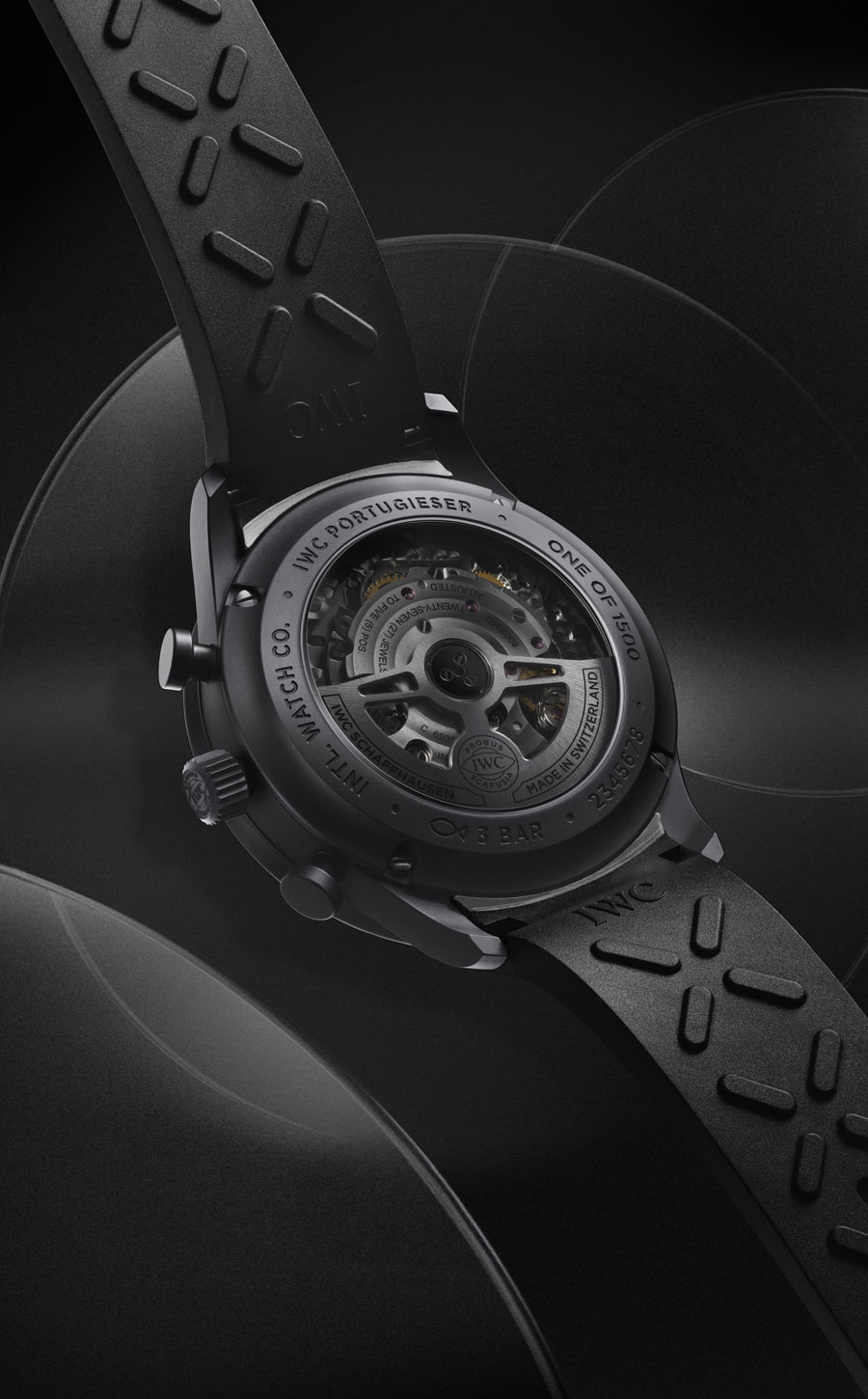
The 41mm case, water-resistant up to 30 meters, the crown and the push-buttons are all made of Ceratanium®. This material coherence spreads on the black dial: protected by a cambered sapphire crystal with an anti-glare treatment, matching appliques and hands make for a perfect visual harmony. What’s more, the Arabic numerals, the indices and the scale graduated down to a quarter of a second are subtly elevated, enhancing legibility. The black rubber strap, decorated with a square motif, completes the whole piece.
As for the mechanical side, the watch integrates a chronograph movement that vibrates at a 4Hz frequency (28,800 vibrations per hour). Revealed by a sapphire case back, this self-winding calibre with bidirectional click-wheels features a stopwatch function with minutes and seconds, and a small hacking second. It also offers a power reserve of about 46 hours.
€14,800
See the technical specifications sheet of the Portugieser Chronograph Ceratanium® by IWC
OMEGA, Speedmaster Moonwatch Professional
This new Speedmaster Moonwatch puts the emphasis on contrasts. This lunar icon is now available as a reverse panda edition: the dial presents a double-layered architecture. The main black polished surface features a varnished and lacquered finishing that adds visual depth. The sub-dials take the opposite stance: their white lacquered base creates a sharp contrast, while their rhodium-plated flanks reflect the light with subtlety.

The various indicators of this watch keep with this play of contrasts. While the minute track of the sub-dials is coloured black, the one displayed on the totalizer is white. A discreet-yet-efficient detail that enhances legibility while putting the emphasis on the reverse panda theme.
Water-resistant up to 50 meters, this 42mm watch is equipped with a black ceramic bezel featuring a white enamel tachymetric scale. As the historical signature of the Speedmaster collection, the famous “dot over 90” is always there.

The collection also proposes a precious edition in 18K Moonshine™ Gold, Omega’s exclusive yellow gold alloy. Released in 2019, it is composed by 75% of gold, 14.5% of silver, 9% of copper and 1% of palladium – creating a unique hue, slightly lighter than 18K yellow gold. This metal is also renowned for resisting discoloration. Also, the hours and minutes hands and the indices feature the warm glow of this alloy. Coated in a luminescent substance, they rub shoulders with the central chronograph hand adorned with a Moonshine™ Gold-coloured PVD coating.
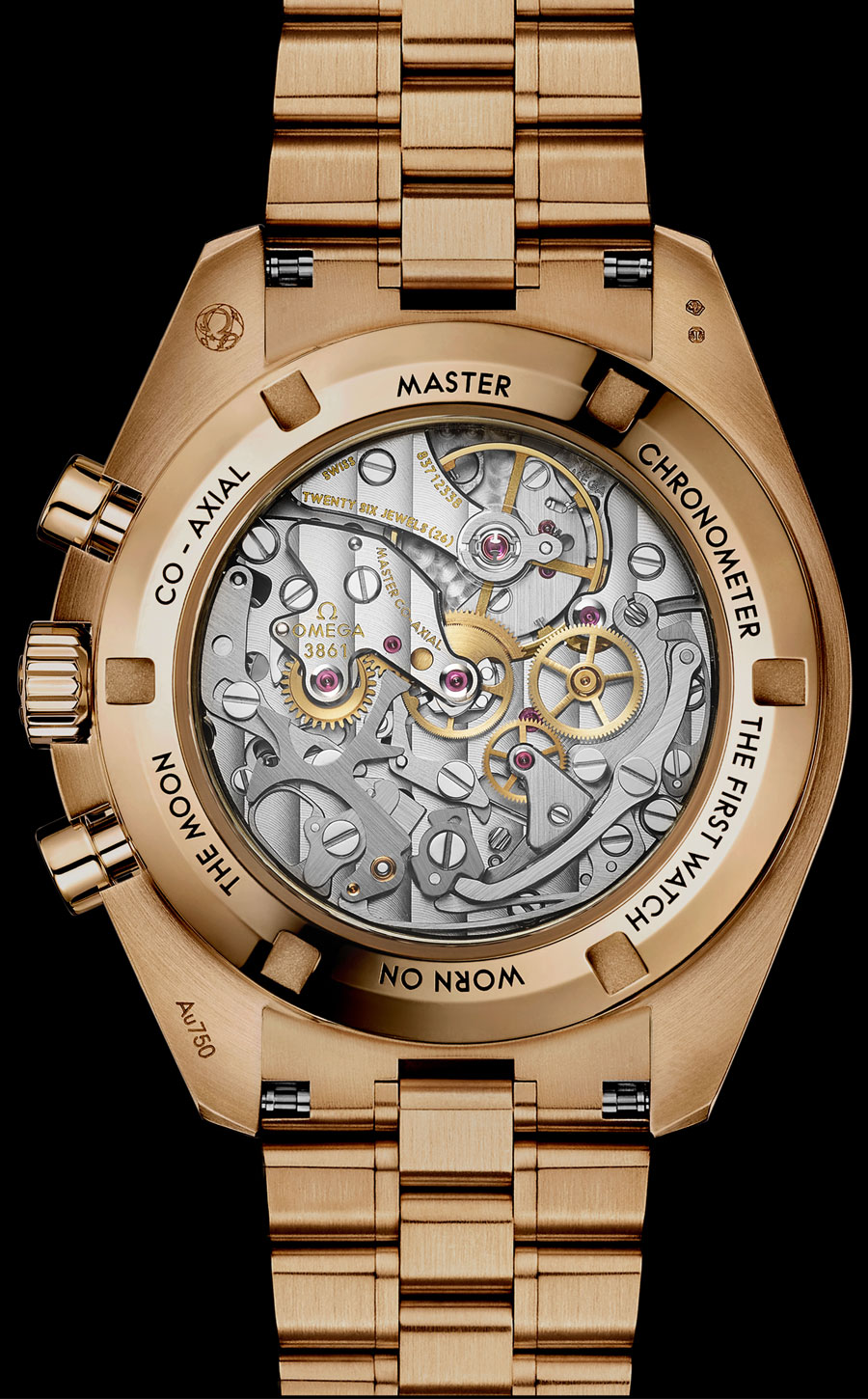
This Speedmaster is powered by the Omega 3861 Co-Axial Chronometer calibre. As the true heir of legendary Calibre 321 that accompanied NASA astronauts on the Moon, this movement represents the modern evolution of the Moonwatch inner workings. Certified Master Chronometer, it guarantees high levels of precision, performance and magnetic resistance (up to 15,000 gauss). This new edition shows that an icon can still reinvent itself… by just switching perspectives.
€48,200
See the technical specifications sheet of the Speedmaster Moonwatch Professional model
ORIS, ProPilot Desert Edition
In the watchmaking industry, the use of carbon isn’t considered a mere stylistic effect anymore. With this ProPilot Desert Edition, Oris makes it a true technical argument. Inspired by aviation, this new edition of the ProPilot Date collection isn’t just a simple aesthetic redecoration: it introduces a case architecture firmly focused on high-tech materials.
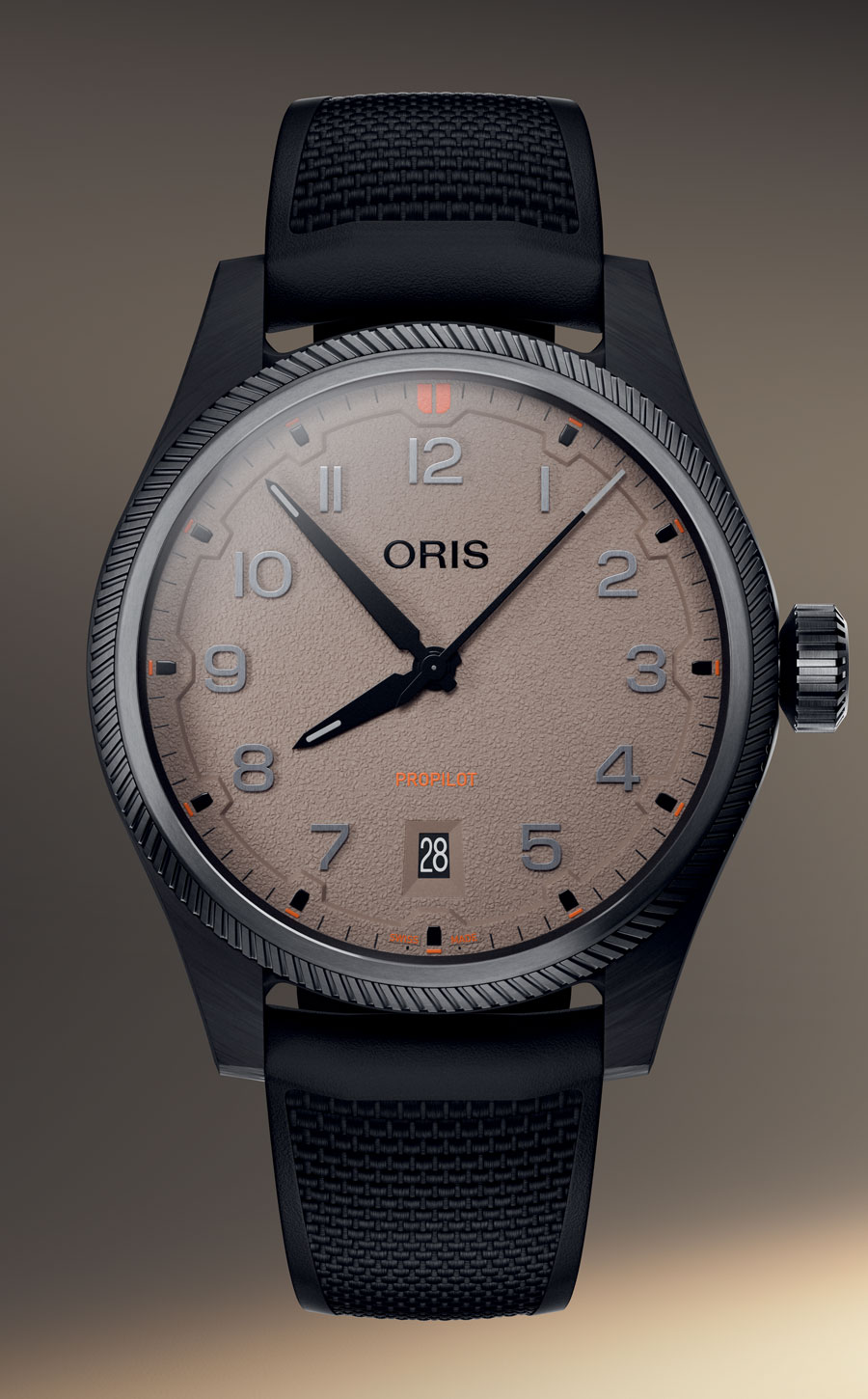
The heart of the project lies in the 41mm case made out of carbon fiber that was developed through an unprecedented process. While classic additive materials are characterized by random patterns, this technique allows engineers to precisely control the weaving of materials. Carbon fibers are printed with a polymer used in the aerospace industry: PEKK. This technological combination results in a high-performance composite. Light as polymer, this material reveals to be sturdier than some metals, by combining structural stiffness, thermal stability and high chemical resistance. In the watchmaking industry, such type of composite allows to machine a case both sturdy, super-light and long-lasting – thus perfectly adapted for a watch inspired by flight instruments.
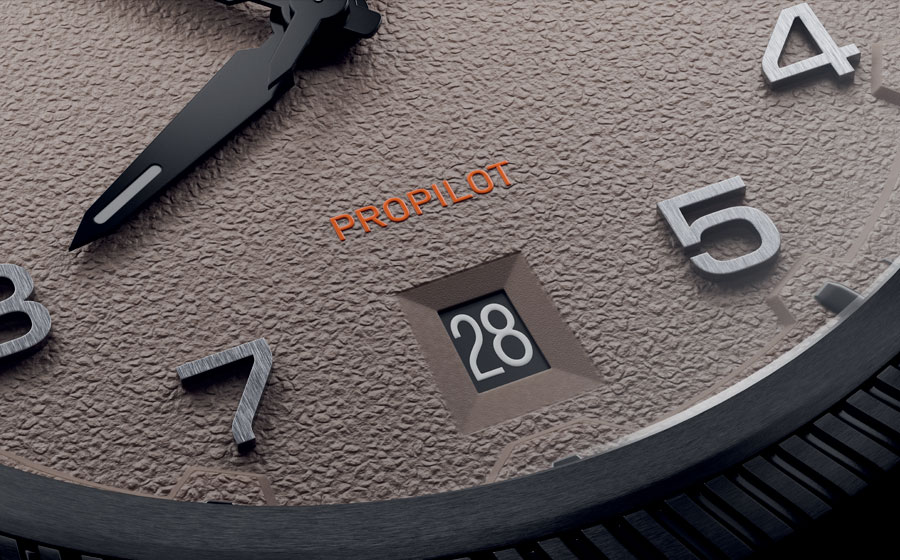
With this model, Oris preserves the functional codes of the ProPilot collection. An oversized bezel, a secured screwed-down crown and a stainless-steel case back with a gray PDV coating reinforce the solidity of the whole piece while creating a subtle contrast with carbon’s technical texture. Its design was refined: sharper outlines, redesigned hands, modernized applied numerals. The dial displays a grained “sandbeige” surface inspired by arid expanses. The black hands and the applied indices coated in Super-LumiNova® ensure immediate legibility, while some reddish orange strokes add a dynamic touch.
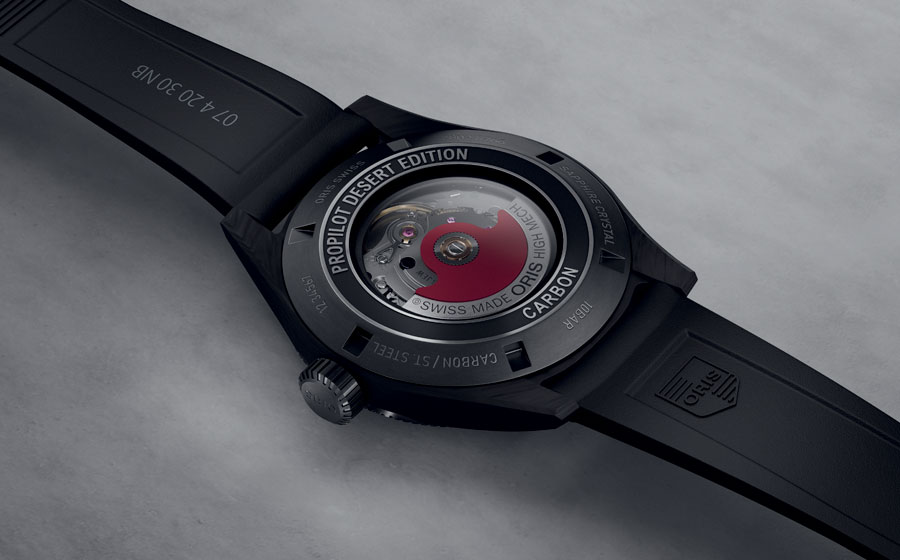
Inside, a self-winding calibre vibrates at a 4Hz frequency and offers 41 hours of power reserve. A tried-and-tested movement equipped with a central second hand, an instantaneous date aperture and a stop-second feature for a precise setting. This edition, water-resistant up to 100 meters, is delivered on a hybrid rubber textile strap with a redesigned version of the “LIFT” clasp, now thinner and easier to adjust.
€2,850
See the technical specifications sheet of the ProPilot Desert Edition by Oris
RADO, True Round x Les Couleurs® Le Corbusier® Special Edition
Rado calls upon Le Corbusier spirit and transforms modernist architecture into modern watchmaking. This results in 3 new special editions of the True Round model – not only do they quote the Swiss designer; they also translate his radical vision through the watch itself.

Avant-garde. Mesmerizing. Iconic. Such words could be used to describe both the architect’s work and this collection issued by Rado in collaboration with Les Couleurs Suisse®. As the self-proclaimed “Master of Material”, Rado found the ideal playground: this partnership mixes modernism, material experimentations and chromatic audacity.

First stop: Marseille, with this edition inspired by the Cité Radieuse – a large Unité d’habitation (Housing Unit) designed in 1952 by Le Corbusier that merges raw concrete with collective life. The dial that echoes its rugged walls was processed by laser engraving on high-tech ceramic. The resulting effect is subtle, almost tactile. The monobloc case, the crown and the bracelet display an unprecedented hue for such material: blanc ivoire 4320B.
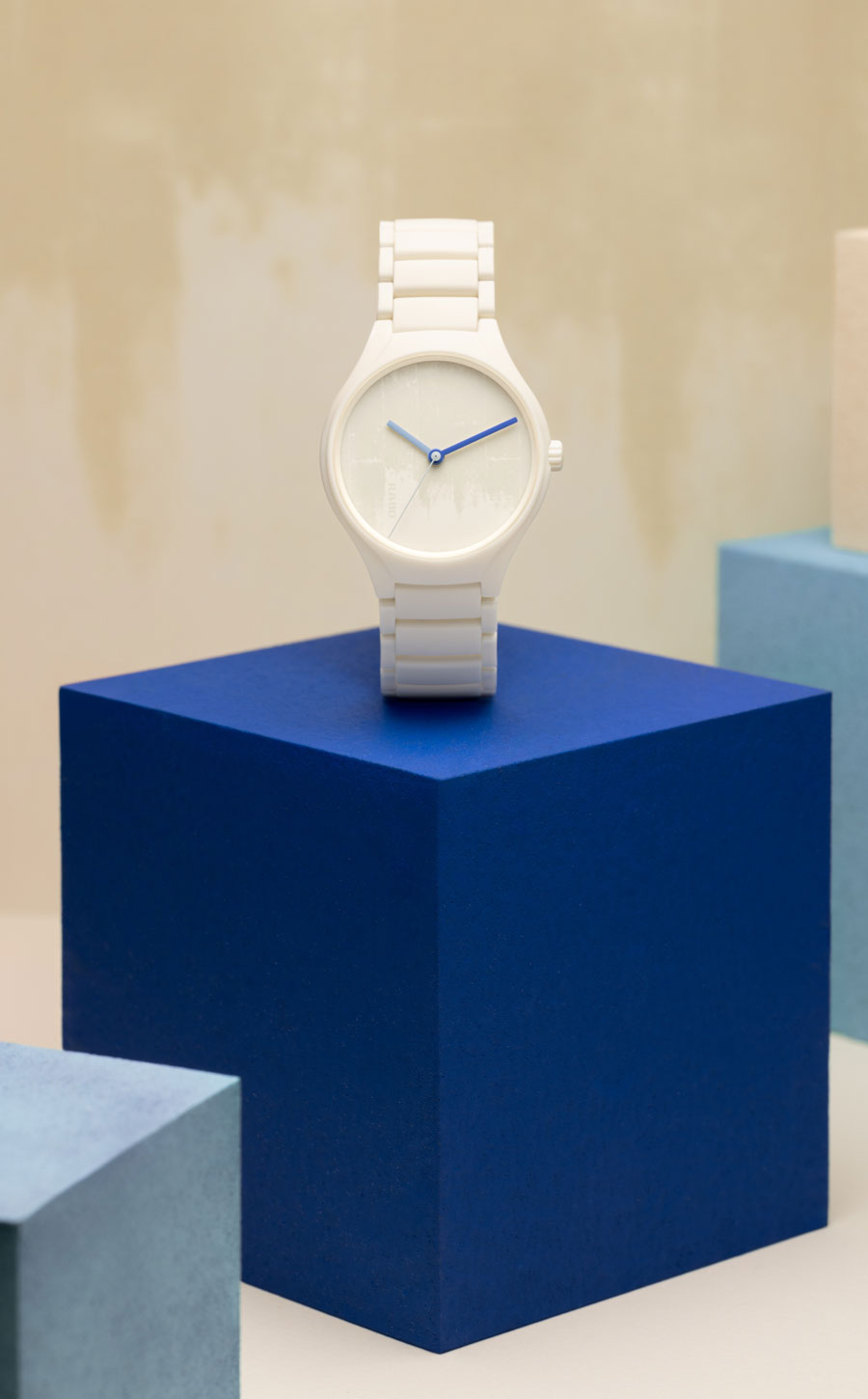
This colour results of a sintering process operated at 1,450°C – an industrial alchemy that required years of development. The hands inject a chromatic vibration thanks to 3 different hues of Outremer blue from the Polychromie Architecturale: outremer moyen (32021), bleu outremer 31 (32020) and outremer pâle (32023).
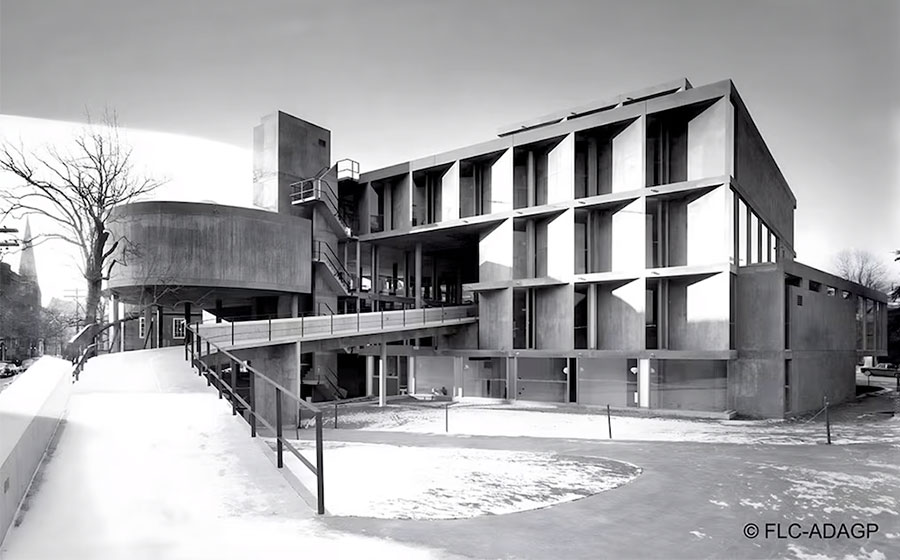
Next stop: the Carpenter Center for the Visual Arts at Harvard University for a change of atmosphere. Completed in 1963, this building remains the only North-American work by Le Corbusier – and an aesthetic shock among Cambridge’s academic landscape.
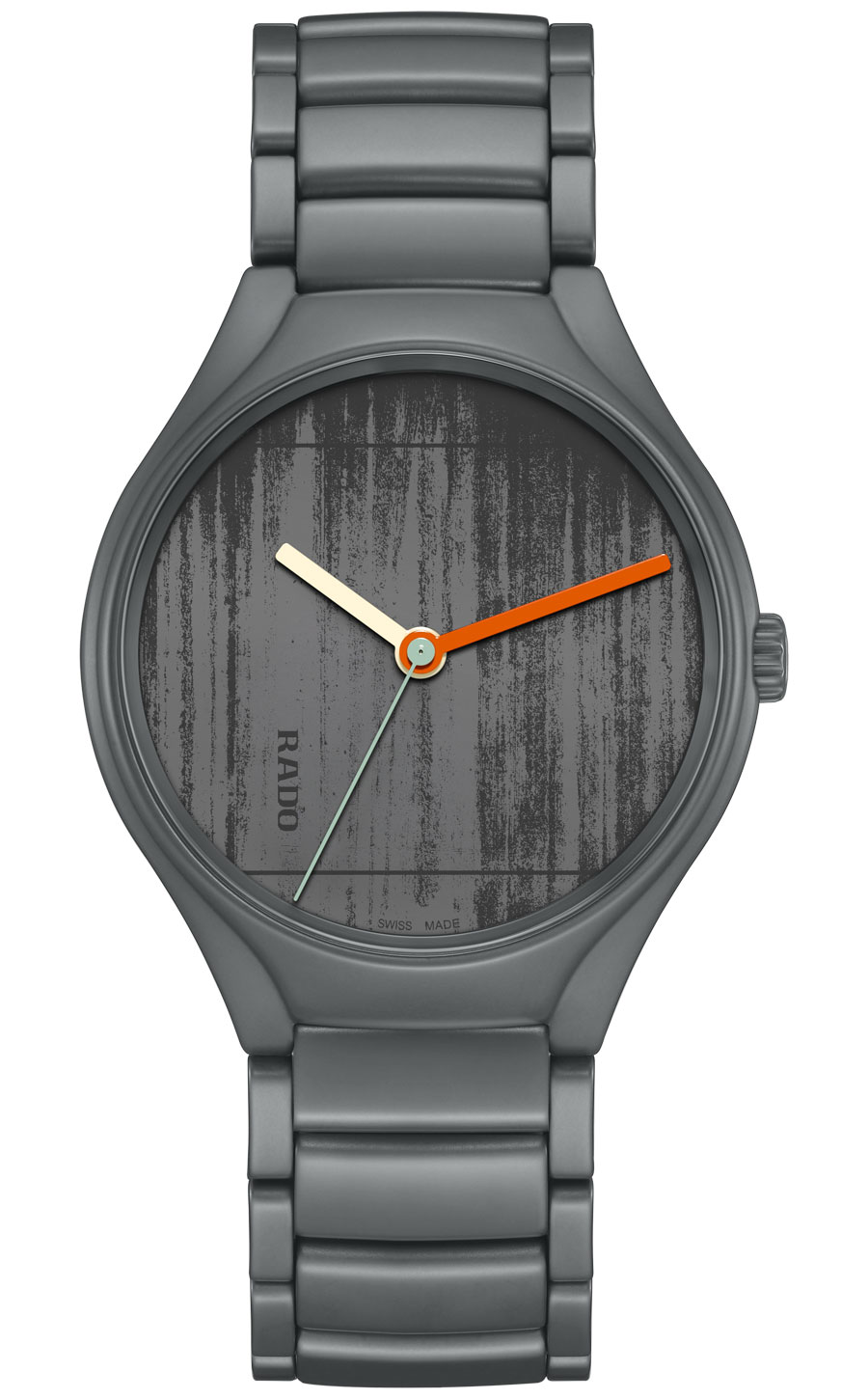
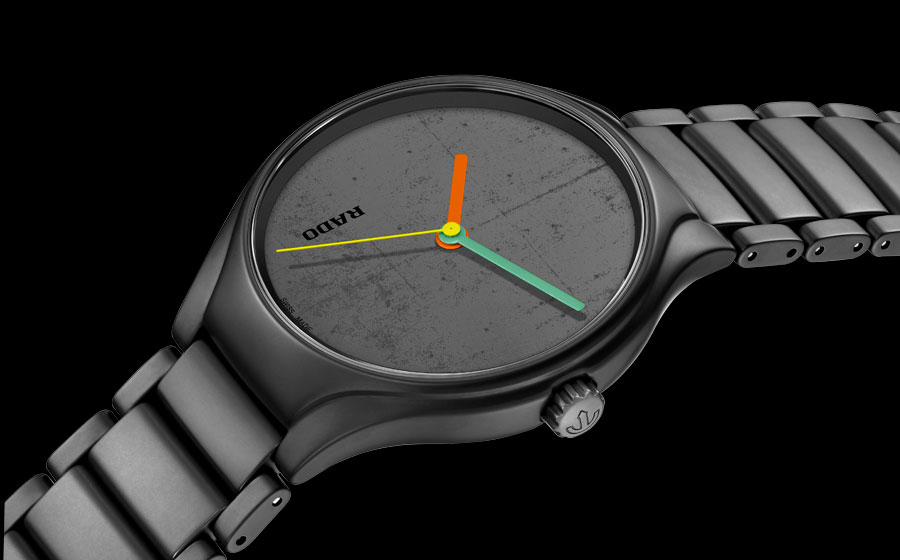
Rado holds back its raw power with an engraved dial that evokes precast concrete, and gris foncé 32010 ceramic. The lacquered hands – white, bright orange or light green – lash this monochrome composition with graphical accents.

Last stop: India, with the visionary city of Chandigarh. Inspired by a detail on the Palace of Assembly, the dial displays an abstract representation of its monumental frontage made through a laser engraving process. The whole piece is dressed in a deep noir d’ivoire (4320E) while the bright orange and green hands recall of the chromatic palette of the designer.
At the back, 63 colourful strips reproduce the whole colour chart of the Polychromie Architecturale and circle the self-winding calibre. Revealed by a sapphire case back, the latter is equipped with a Nivachron™ hairspring and offers a power reserve of 80 hours.
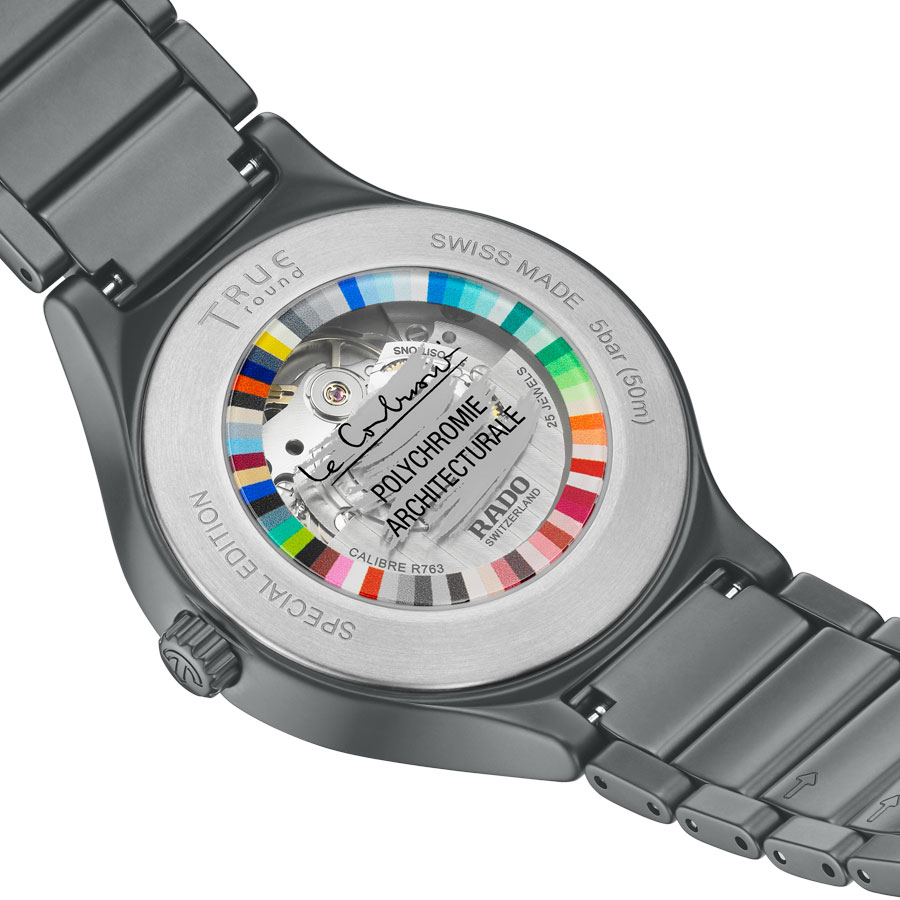
The 3 models all present 63 strips digitally printed that represent the full spectrum of the Polychromie Architecturale.
€2,750
See the technical details of the True Round x Les Couleurs® Le Corbusier® Special Edition
TISSOT, RockWatch
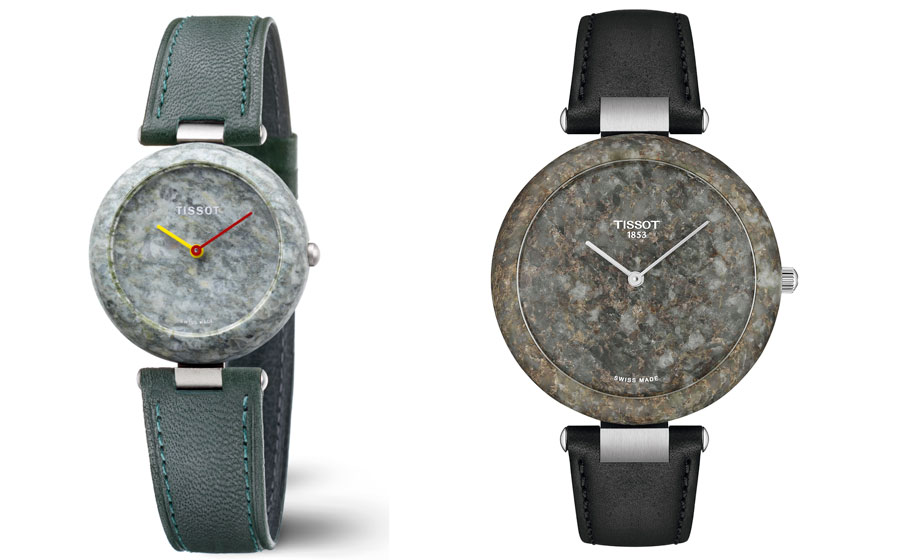
In 1985, a daring idea disrupted the codes of the watchmaking industry: turning a piece of a mountain into a wrist-watch. Inspired by this avant-garde vision, the RockWatch model embodied Tissot’s ingenuous know-how – it was then a world first. Today, this watch is revived through a limited edition of 999 copies, a tribute to the raw beauty of the Alps.
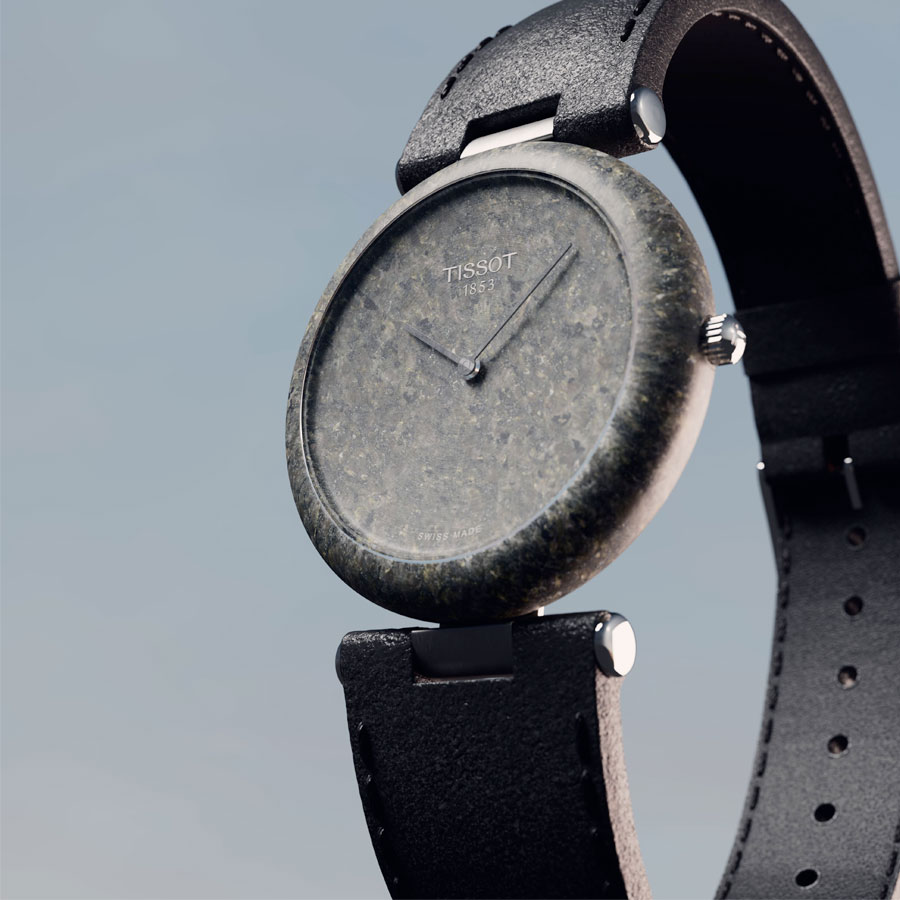
This new edition preserves its legendary mineral soul, but with refined details. The 38mm granite case now features nickel-plated hands that enhance the raw stone material. A flexible black leather strap creates a smart contrast while a sapphire crystal with an anti-glare coating replaces the original mineral glass. Under the integrated dial, a quartz movement ensures the display of hours and minutes, as well as an EOL (End of Life) indicator.
The building process of a Tissot RockWatch starts with a large granite block extracted from the heart of the Alps during the renovation works of the Jungfrau Railways’ tunnel. The stone is first milled into cylinders, then cut into sections to make the machining process easier.
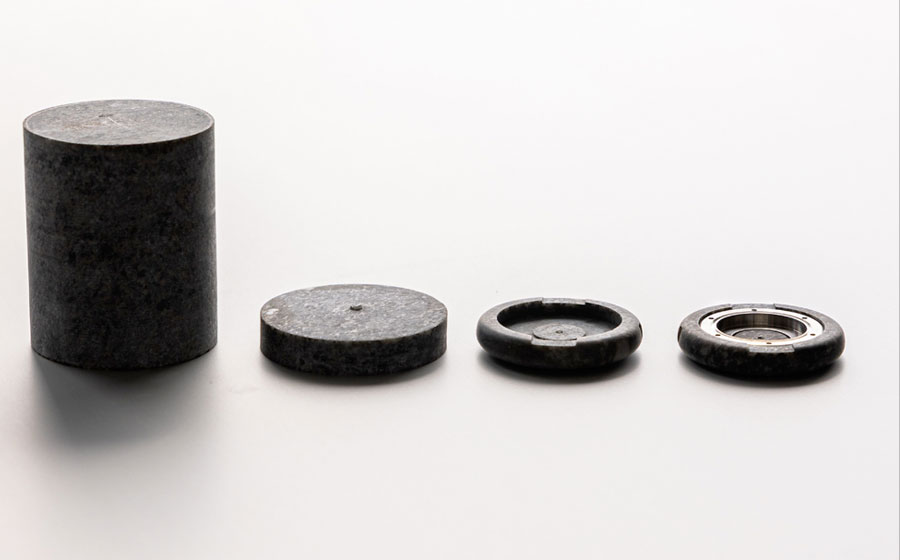
Then, these sections are given to the craftspersons who previously worked on the first 1985 RockWatch, thus perpetuating a historical know-how – such an incredible story. The granite sections are progressively grinded and blended out to reach the final diameter of the case: 38mm, with micrometric precision. A central cavity is then hollowed out to nest the movement.

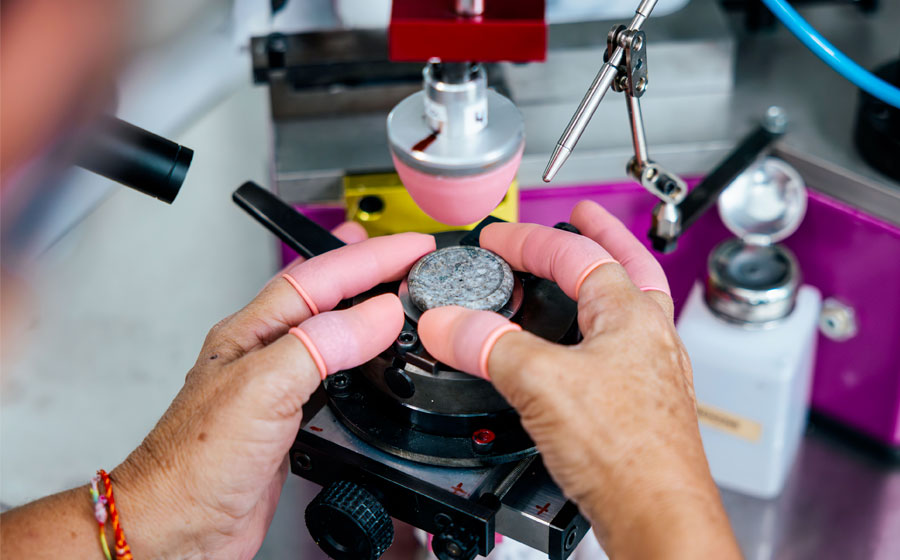
A stainless-steel container is set on the inside to ensure the whole piece to be balanced. The logo and the inscriptions are pad-printed directly on the stone, before assembling the movement and adding the brass hands and the cambered sapphire crystal. Finally, the case back is engraved and the bracelet is attached – completing this watch bound to be set in stone.
€1,095
See the technical specifications sheet of the RockWatch by Tissot
See also: