Deciphering watch calibres
Mechanical, automatic, quartz, hybrid, solar-powered… lost already? Then you are exactly in the right place. In this heavy-duty video, Frank Sans C takes you to the heart of watches, where everything is decided: calibres. Fantasized, criticized, or misunderstood – the goal is to set the record straight. Helping you understand differences, breaking stereotypes and providing you with enough knowledge to be able to talk about them. Why is Frank Sans C wearing a lab coat? Stay until the end…
Quartz calibres: precision without fuss
Let’s get started with the calibre purists despise – and everyone else admires quietly. A quartz calibre is the embodiment of efficiency: a battery (sometimes solar-powered), an electronic circuit and a small quartz crystal that doesn’t look like much.
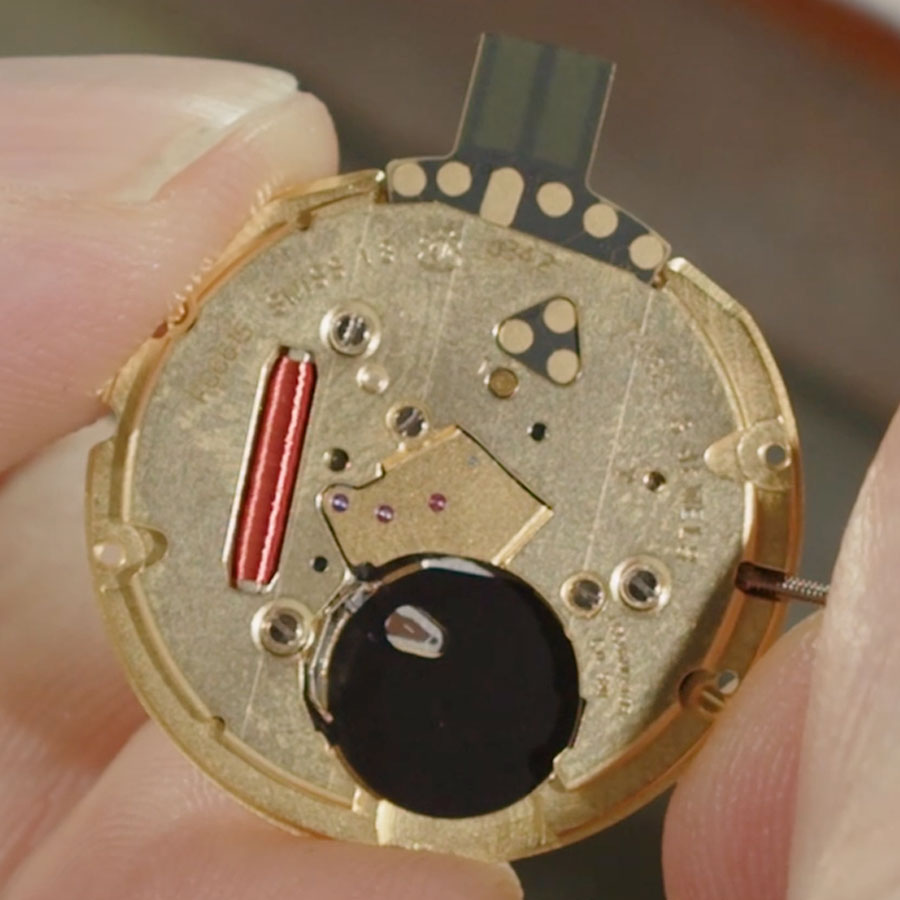
And yet! As soon as power gets through, this crystal starts vibrating with an almost-insolent regularity: only 32,758 times per second. A formidable stability the electronic circuit then changes into perfectly controlled pulses – one per second – to power the hands.
As a result, the famous seconds hand jolts from second to second. Clean, neat, almost surgical.
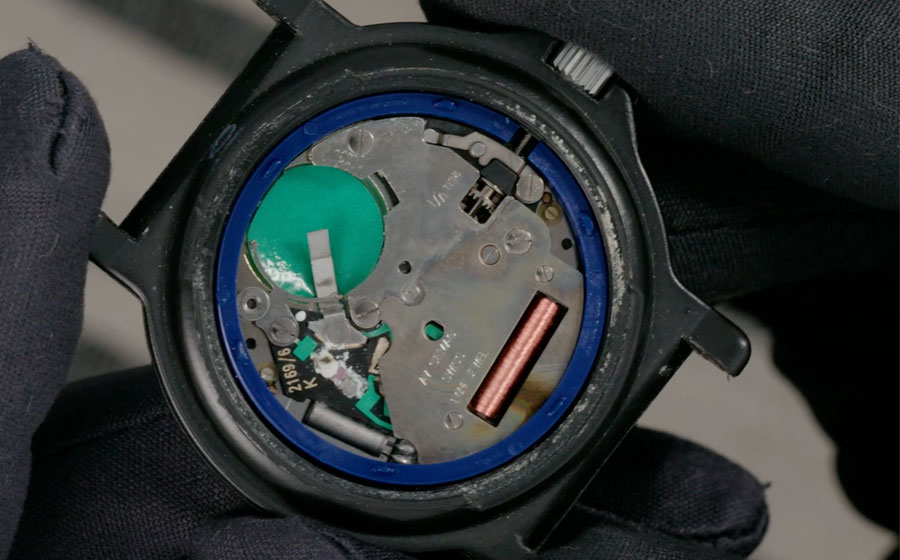
We’re not here to deliver a physics tuition – the frequencies and vibrations afficionados among you are free to dwell this subject further – but let’s remember the main point: quartz is relentlessly precise. Its performances are almost indecent, consider this:
- A standard mechanical watch: -10 to +20 seconds a day
- A watch certified chronometer by the COSC: -4 to +6 seconds a day
- The most acute watches (for example, Rolex’s) : up to ±2 seconds a day
VS
- A basic quartz watch: ±15 seconds… a month
- A top-of-the-range quartz watch: less than 5 seconds a year (Breitling, Grand Seiko, Certina, Longines VHP)
- Some models even flirt with 1 second a year (Citizen)
In other words: quartz watches are unmatched. On top of the bargain, they usually cost less, don’t need to be wound up, are low-maintenance and you can leave it for a month, only to find it still perfectly on time. Quartz watches may not be considered noble, but they clearly have the high ground.
Mechanical calibres: beauty and soul… and a few tantrums
On the other hand, mechanical calibres play on a different note. No need for a battery here – the energy comes from a mainspring that can be wound up either manually (through the crown) or automatically via an oscillating weight that picks up the motion of the wrist.
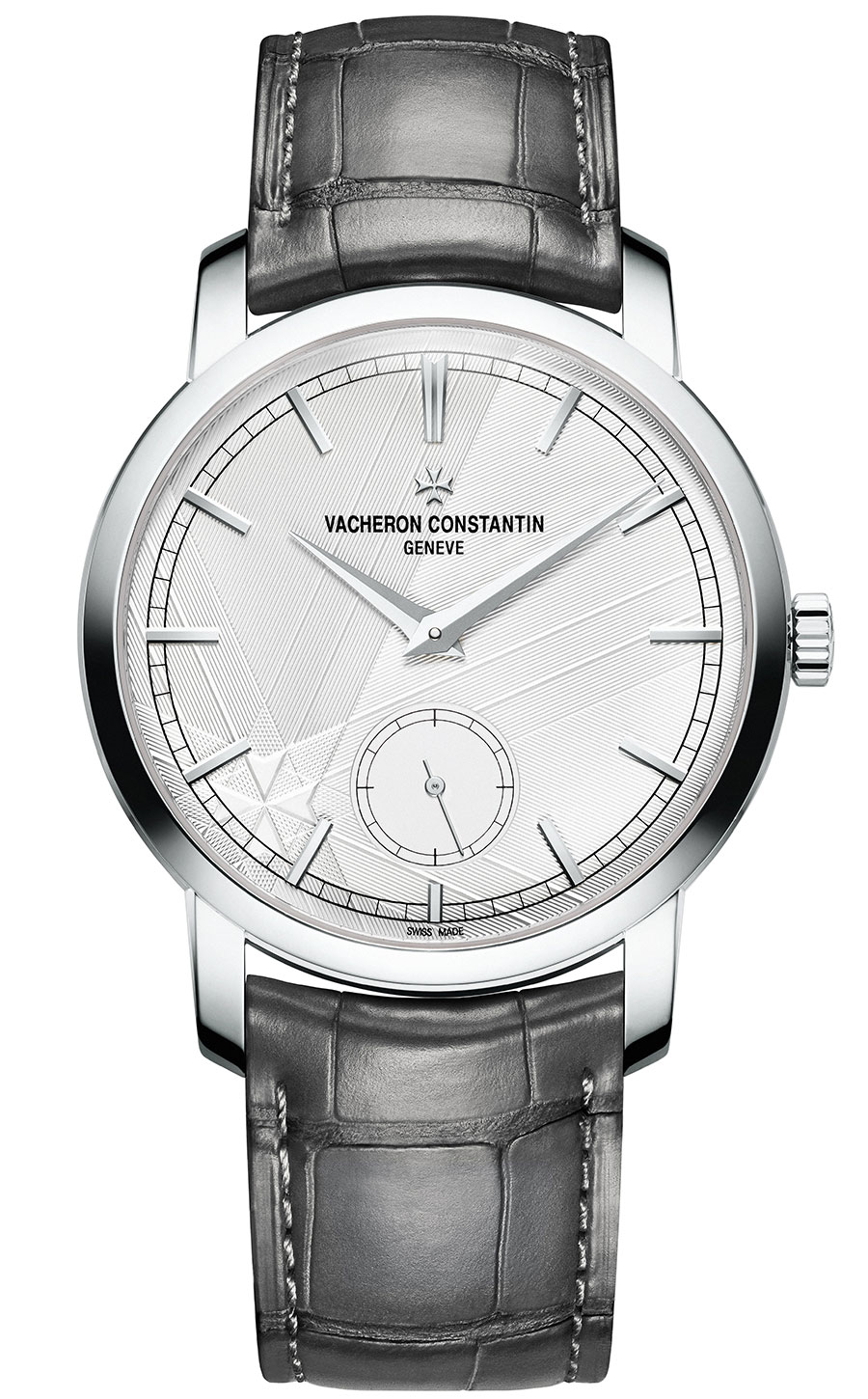
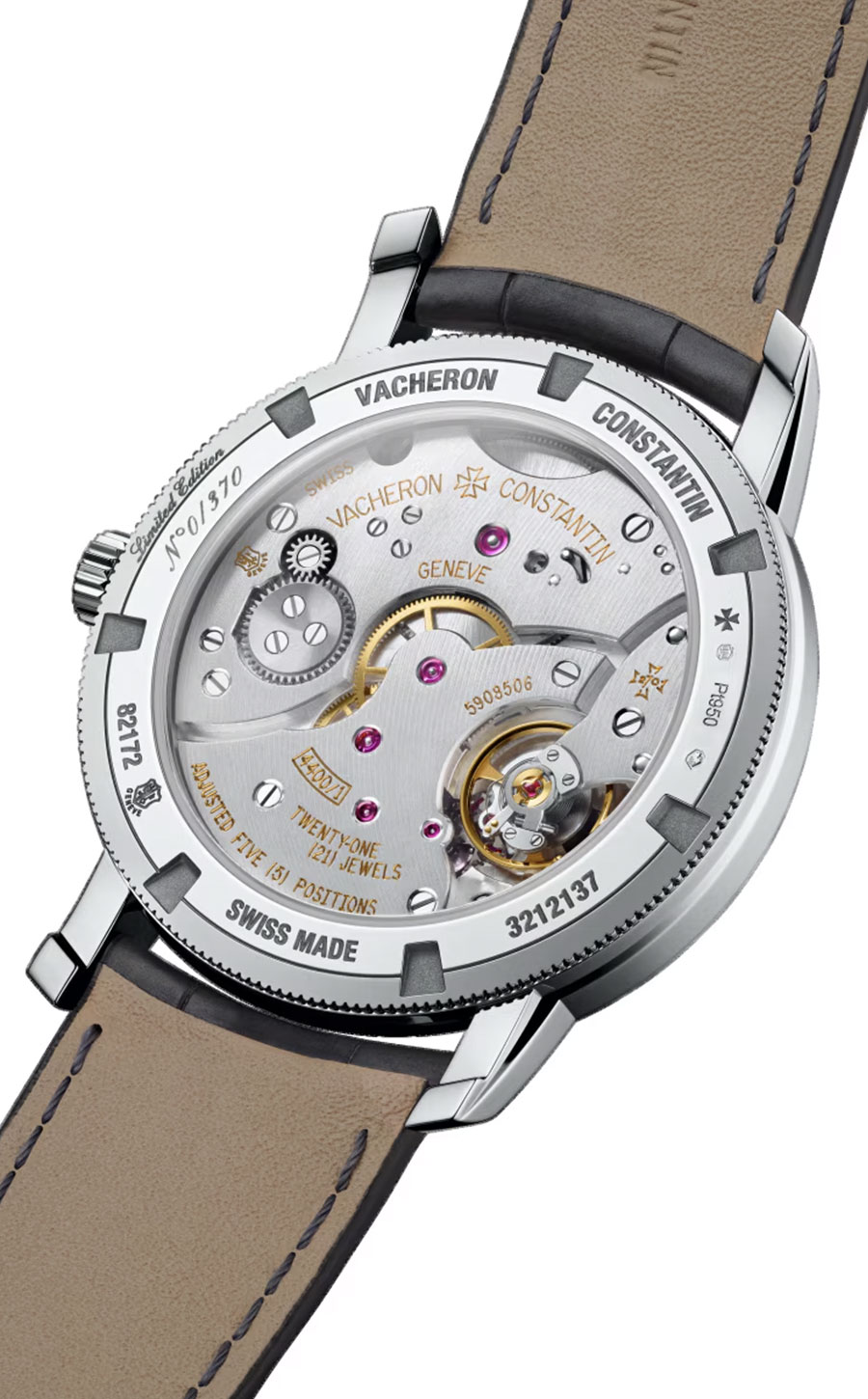
A mechanical calibre is like a mechanical theatre: bridges, mainplates, serrated wheels, gears… and especially this regulating organ that beats like a heart. A fragile heart that can sometimes be temperamental, yet that remains awfully fascinating.
Indeed, mechanical inner workings are demanding:
- More expensive production costs
- Sensitivity to shocks and magnetism
- Diminished precision
As a mechanical watch can malfunction, it requires respect and maintenance. You can’t do anything you want with it.
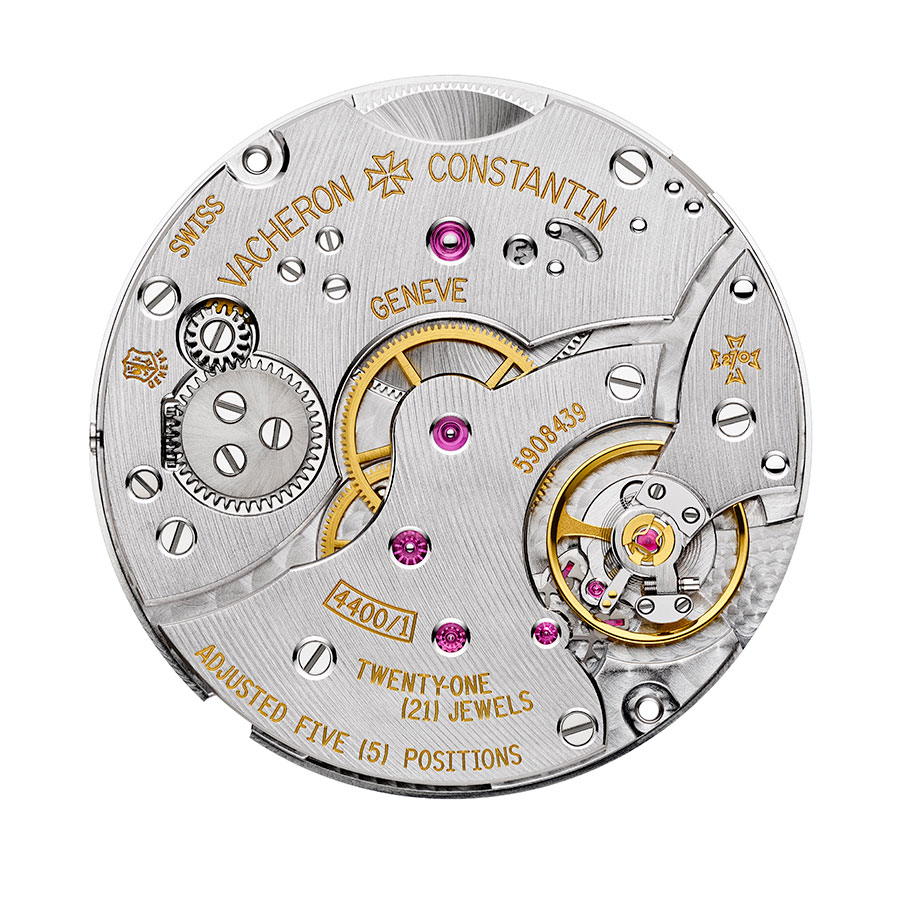
Developed and manufactured by Vacheron Constantin
“Côte unique” finish and 270th anniversary emblem
Mechanical and manual-winding
28.60mm (12 ½ ’’’), 2.80mm thick
About 65-hour power reserve
Hallmark of Geneva certified timepiece
Manual or self-winding: ritual or facility?
Two calibres types, both alike in dignity, are part of the mechanical family. Manual-winding calibers, first. Some people like the daily meditative process of winding up a watch. A simple, meaningful gesture. An almost sacramental ritual. Self-winding calibers, then. Practical elegance. You put it on in the morning and go about your day… and the watch gets wound up by itself. The next day, it starts over again.
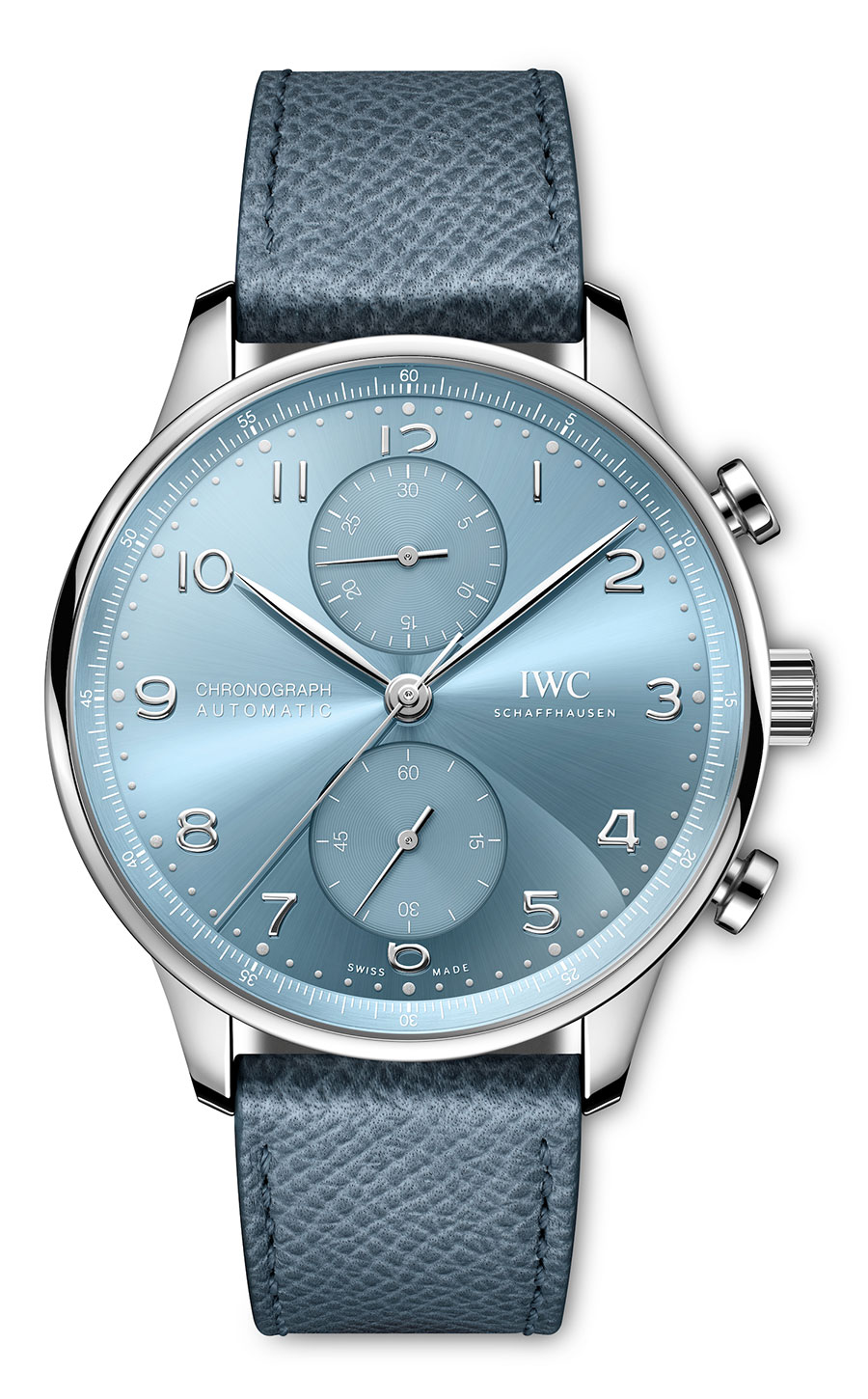
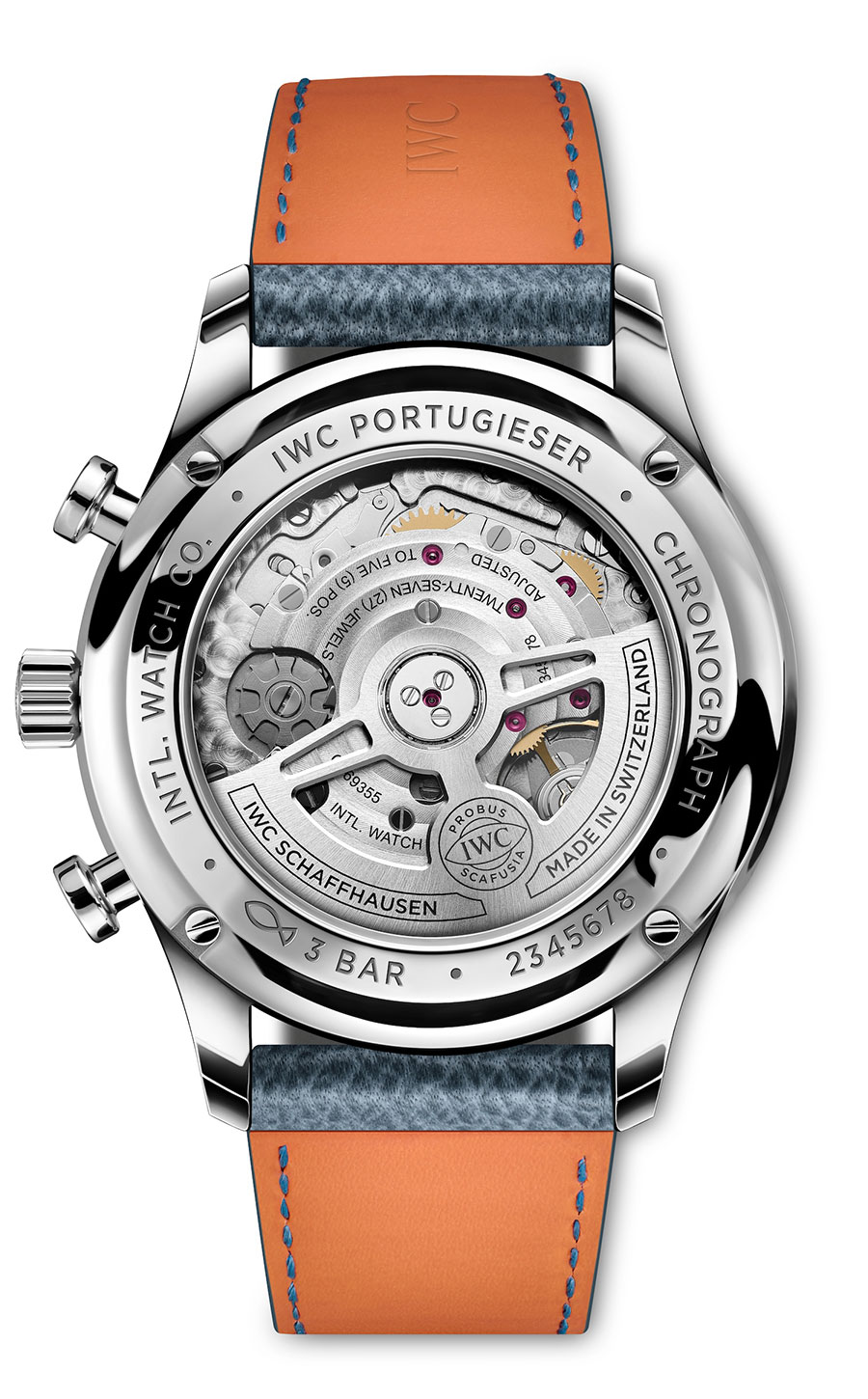
Small seconds with stop second mechanism
46-hour power reserve – Frequency 28,800vph (4Hz)
Quartz or mechanical: a tough question
What’s the best, in the end, quartz or mechanical calibres? In terms of pure accuracy, quartz calibers crush their opponents without even trying. In terms of emotion, craftsmanship and legacy, mechanical calibers take the lead. It’s not a duel but a choice between different life philosophies.
The myth of the “manufacture calibre”
Another tricky subject: the famous “manufacture movements”. The theory is simple: a house designs, develops and builds its own calibre, which is usually considered top-of-the-range or even high watchmaking’s. Yet, reality is a bit more equivocal. Companies such as ETA, Sellita, Miyota or Soprod are movement manufactures themselves – their purpose is to design and produce calibres. The concept of “manufacture calibre” must then be considered less binary. Ask instead simple questions: is this calibre reliable, coherent and well-made enough for its price?
How can I distinguish a quartz calibre from a mechanical movement?
Look at the seconds hand:
- It jolts from one second to another: that’s a quartz calibre!
- It slides with a vibrating fluidity: that’s a mechanical movement.
Straight and neat. At least in theory, as a delightful trap exists: the deadbeat seconds feature. This mechanical complication mimics the behaviour of a quartz movement, with a seconds hand that jolts every second. A technical feat that has become absolutely useless nowadays – which makes it irresistible.
On the other hand, some complications such as the foudroyante feature do the exact opposite: the seconds hand is lightning-fast. No wonder why it’s also called diablotine (little devil).
Other hybrids and curiosities
As blurring lines is usual in the watchmaking industry, some calibres refuse to choose their side.
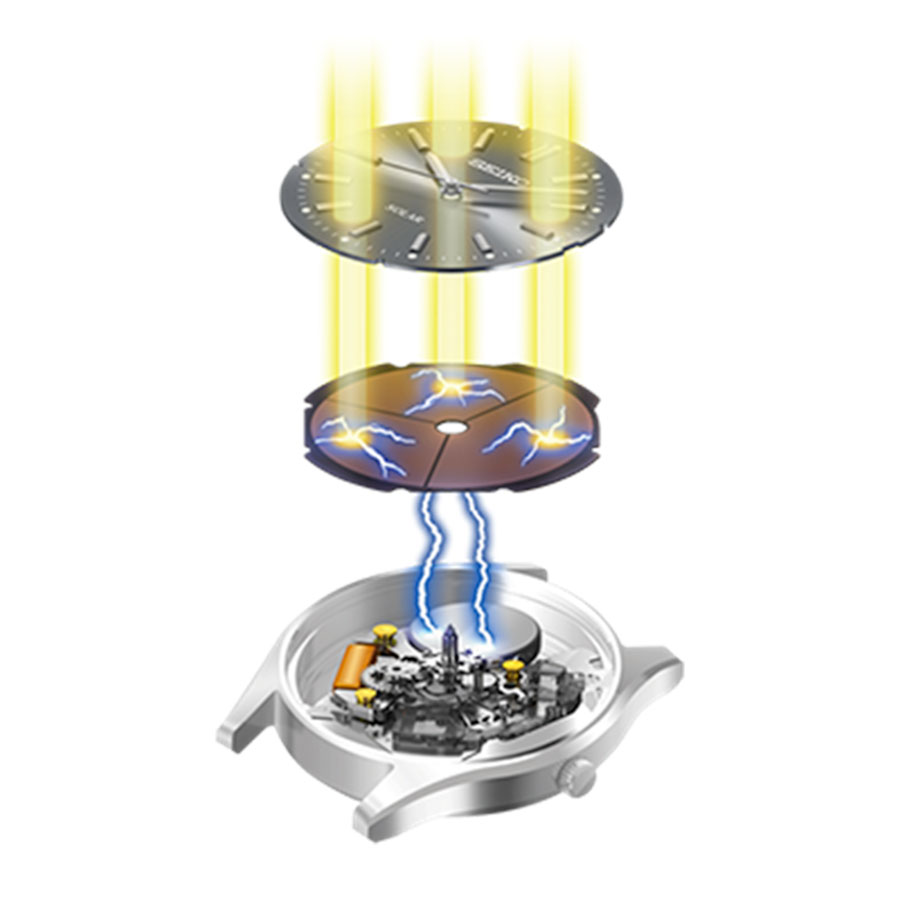
A few examples: the solar-powered calibre, with a sun-recharged battery; the Spring Drive calibre, a technological oddity that blends a mainspring with an electronic regulator; the Meca-Quartz movement, a smart hybrid that combines quartz-induced precision with a mechanical chronograph.
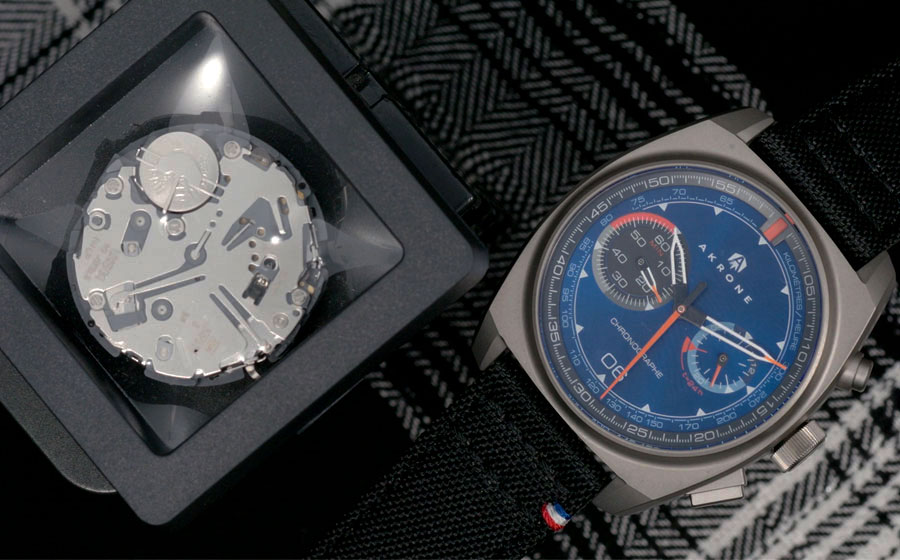
The latter is a real booby trap: it’s a quartz watch… with a chronograph hand that behaves like the one of a mechanical calibre. Even the most enlightened can get fooled.
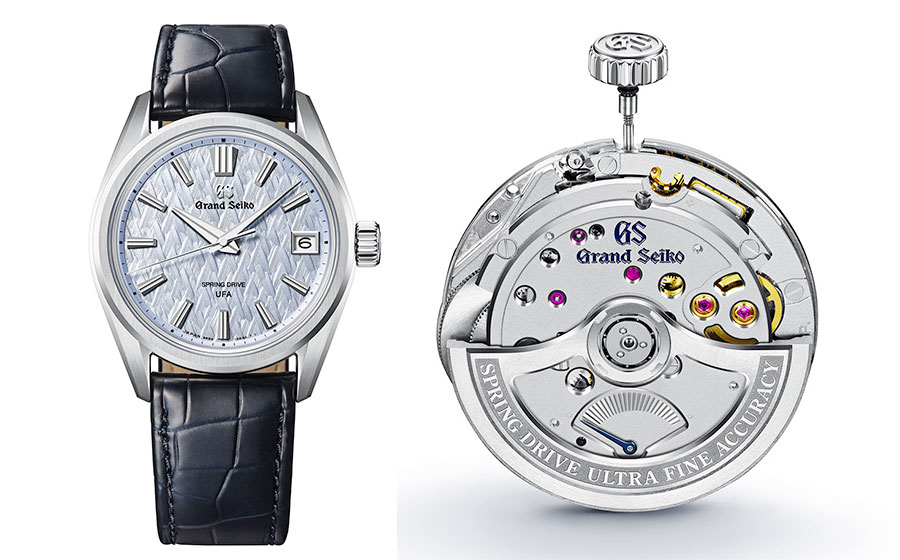
Winding: Automatic
Accuracy: ±20 seconds per year (±3 seconds per month)
Power reserve: Approximately 72 hours
Number of jewels: 34
Diameter: 30.0mm / Height: 5.02mm
Conclusion: Which calibre suits me best?
In the end, it’s up to you.
- You don’t want any constraint → quartz calibre
- You want an easy machinery → self-winding calibre
- You like rituals → manual-winding calibre
- You’re looking for exception → high watchmaking and manufacture calibres
There’s no good nor bad choice, only different expectations and preferences.
INSTAGRAM CONTEST FRANK SANS C & IWC
Win 8 tickets to a masterclass assembling/disassembling a calibre with a master watchmaker from the IWC manufacture.
STAY CONNECTED
@franksansc_official
See also:
Read also: