Cartier: Substance and Form
How can you recognize a Cartier watch? Often, it is by its shape which is anything but round. From the rectangular Tank and the "crashed" aesthetic of the Crash model to the oval Baignoire or the streamlined lines of the Roadster, this renowned French Maison has made shape its signature. Yet, behind these instantly recognizable silhouettes lies genuine horological craftsmanship: the mechanics serve the design, and vice versa. We sat down with Pierre Rainero Director of Image, Style, and Heritage to explore how Cartier fosters a dialogue between creativity and geometry, substance and form.
Geometry as a language
Some watches are recognized by their shape, others by their movement. At Cartier, it is often the silhouette that first catches the eye a rectangle with softened corners, an elongated oval, a curved case, or a form that seems to have defied the rules of geometry. Since the beginning of the 20th century, the Maison has made this approach a cornerstone of its watchmaking identity. At 13 Rue de la Paix in Paris, this history takes on a particularly profound resonance. It was at this iconic address that Frank Sans C met with Pierre Rainero Director of Image, Style, and Heritage whose work lies at the intersection of the Maison’s creative vision and its historical legacy..
Cartier Paris Archives © Cartier
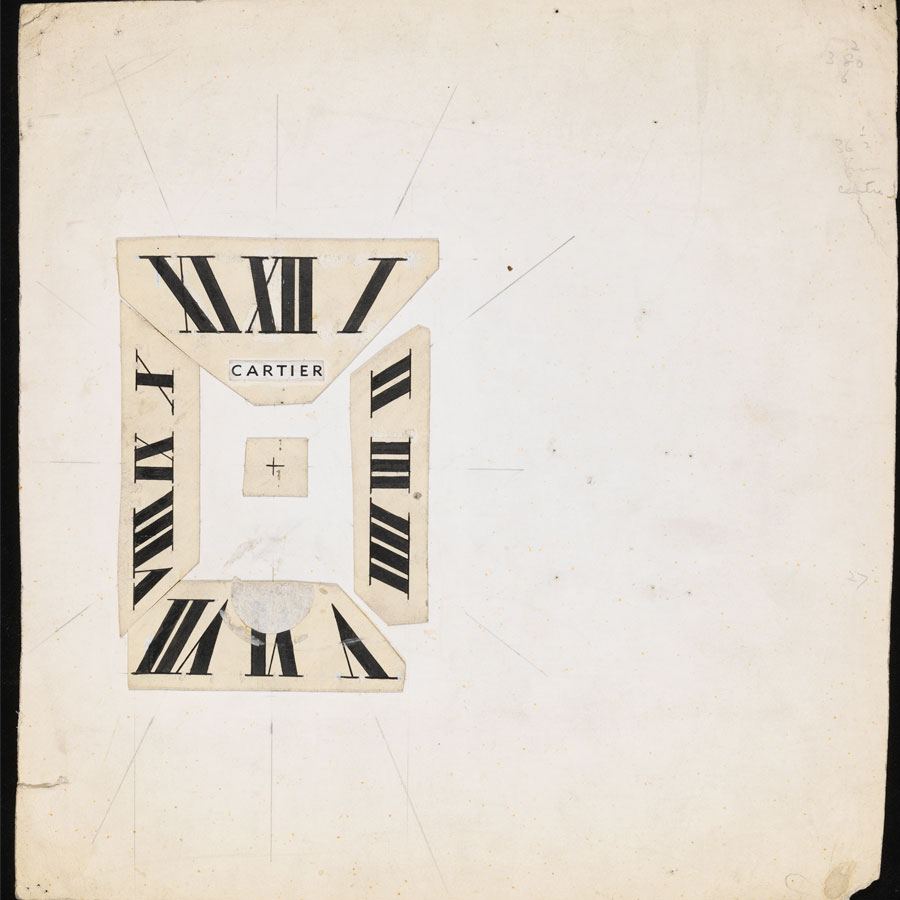
Across both historical collections and contemporary interpretations, a single question runs through Cartier watchmaking: how can a form evolve while still meeting the demands of mechanics? Design and technical engineering do not operate in isolation; rather, they work in tandem. An asymmetrical case, for instance, requires the movement to adapt to its contours; a curved case necessitates a rethinking of proportions; and a bracelet must extend the lines of the watch while conforming to the wrist. Form, therefore, is not merely an aesthetic exercise it serves as a genuine technical starting point.
A matter of form
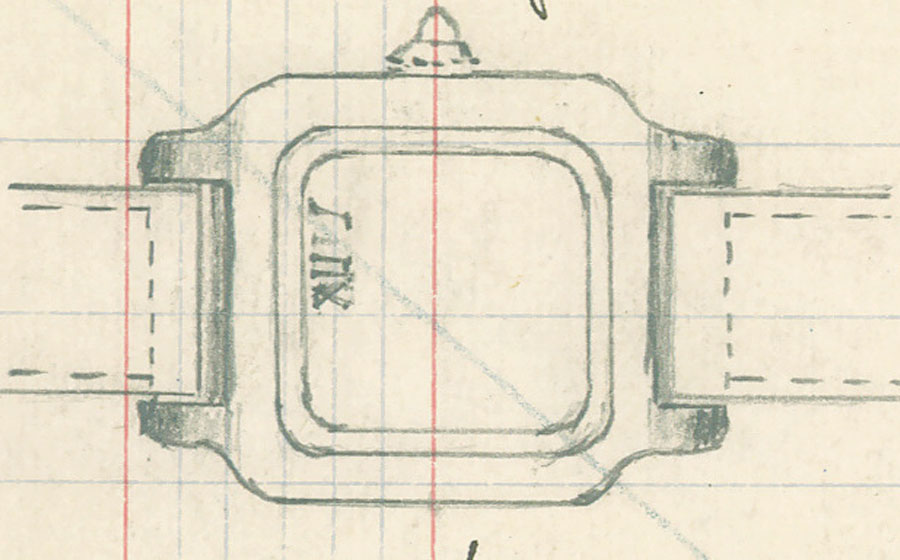
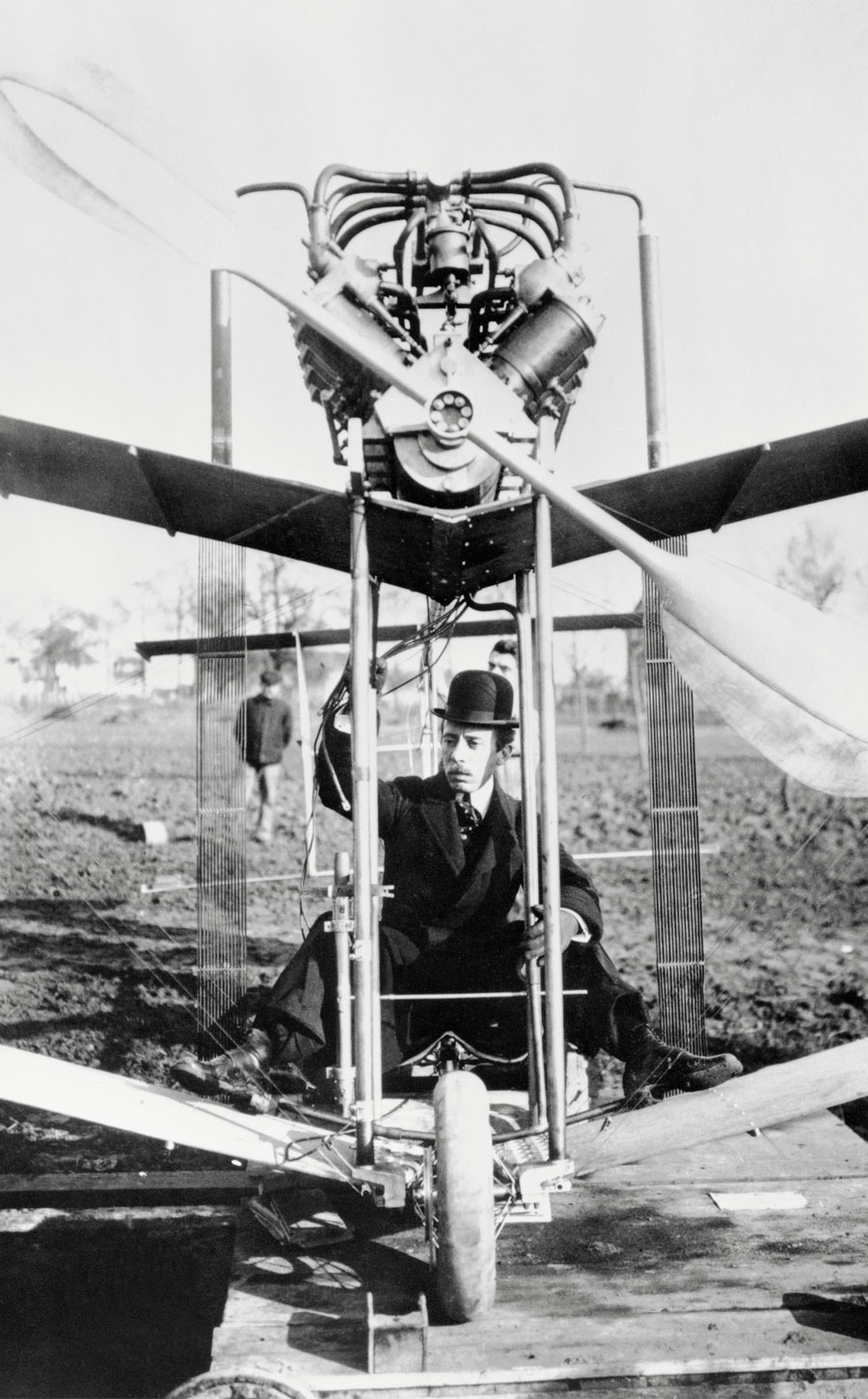
The year 1904 marks a significant milestone in the brand’s history with the creation of the Santos-Dumont conceived by Louis Cartier for his friend, the aviator Alberto Santos-Dumont, who wanted to be able to check the time while in flight, without having to let go of his aircraft’s controls.
Cartier Paris Documentation © Jules Beau
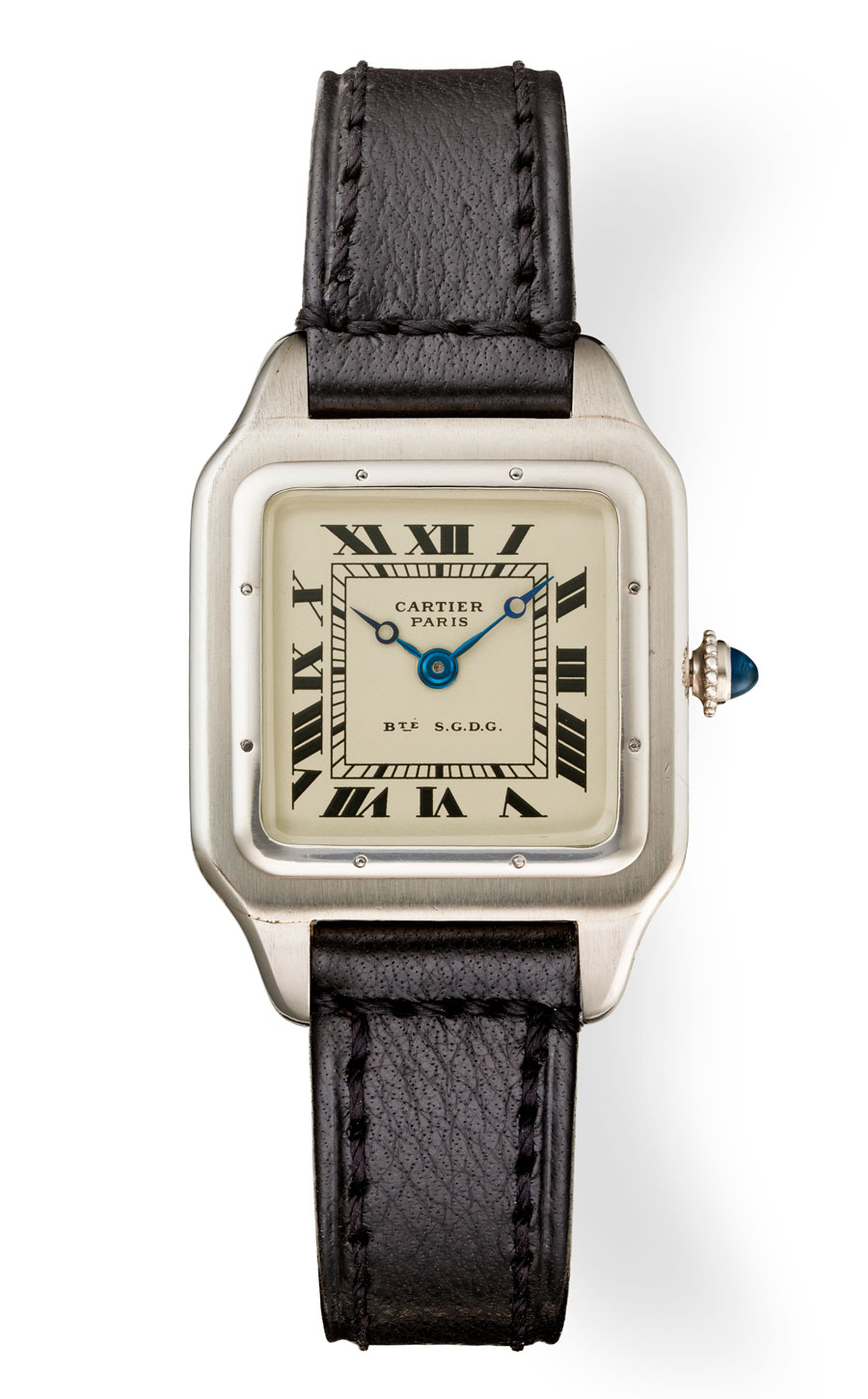
At a time when the pocket watch still reigned supreme, this timepiece featured a square case, exposed screws, and a strap that allowed it to be worn on the wrist. Geometry became functional: it structured the object, defined its character, and addressed a new way of use.
Marian Gérard, Cartier Collection © Cartier
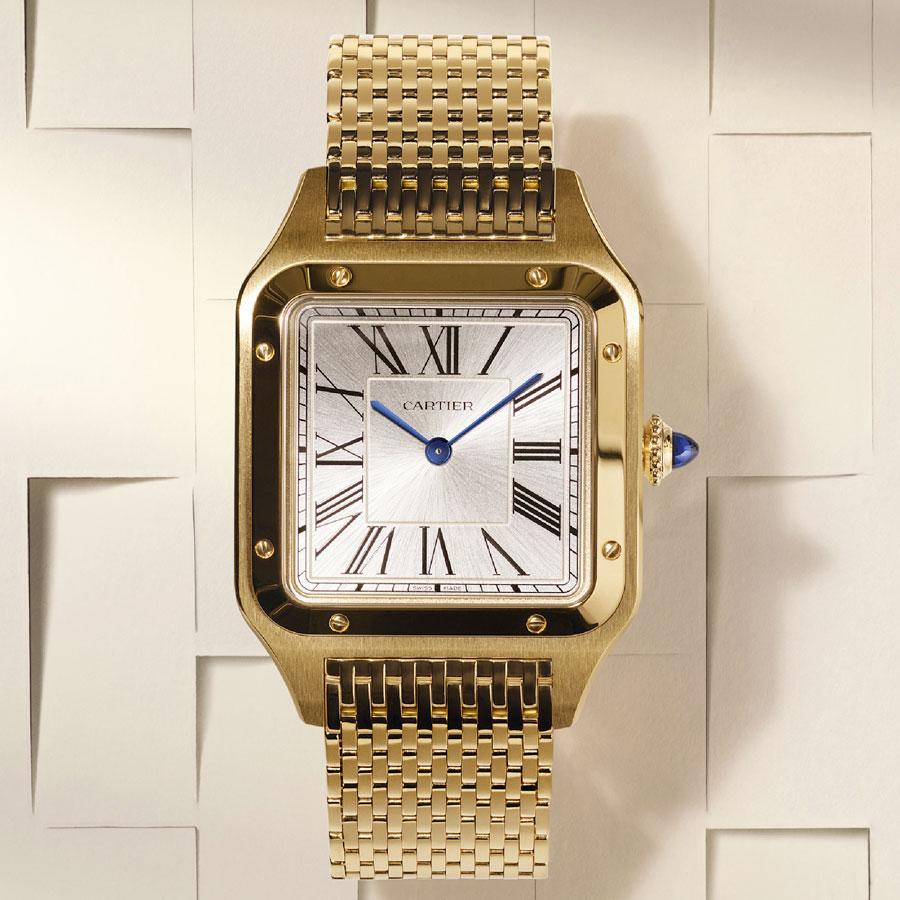
More than a century later, the Santos-Dumont retains its original design codes, featuring Roman numerals and a crown topped with a blue cabochon. In some models, the bracelet even takes center stage. A case in point is the new yellow-gold Santos-Dumont (large model), which comes on a polished bracelet one so supple it feels almost like fabric. This flexibility is achieved through the extreme fineness of its 1.15 mm thick links, arranged in fifteen-row-wide mesh sections, totaling 394 individual links. It is as impressive to the eye as it is to the touch.
In 1917, this geometric exercise was taken a step further with the launch of the Tank. Its two parallel sidebars visually extend the case, integrating the strap into the design. While the result may appear remarkably simple, there is a genuine overall coherence, as it is clear that these lines play a major role in defining the watch’s silhouette.
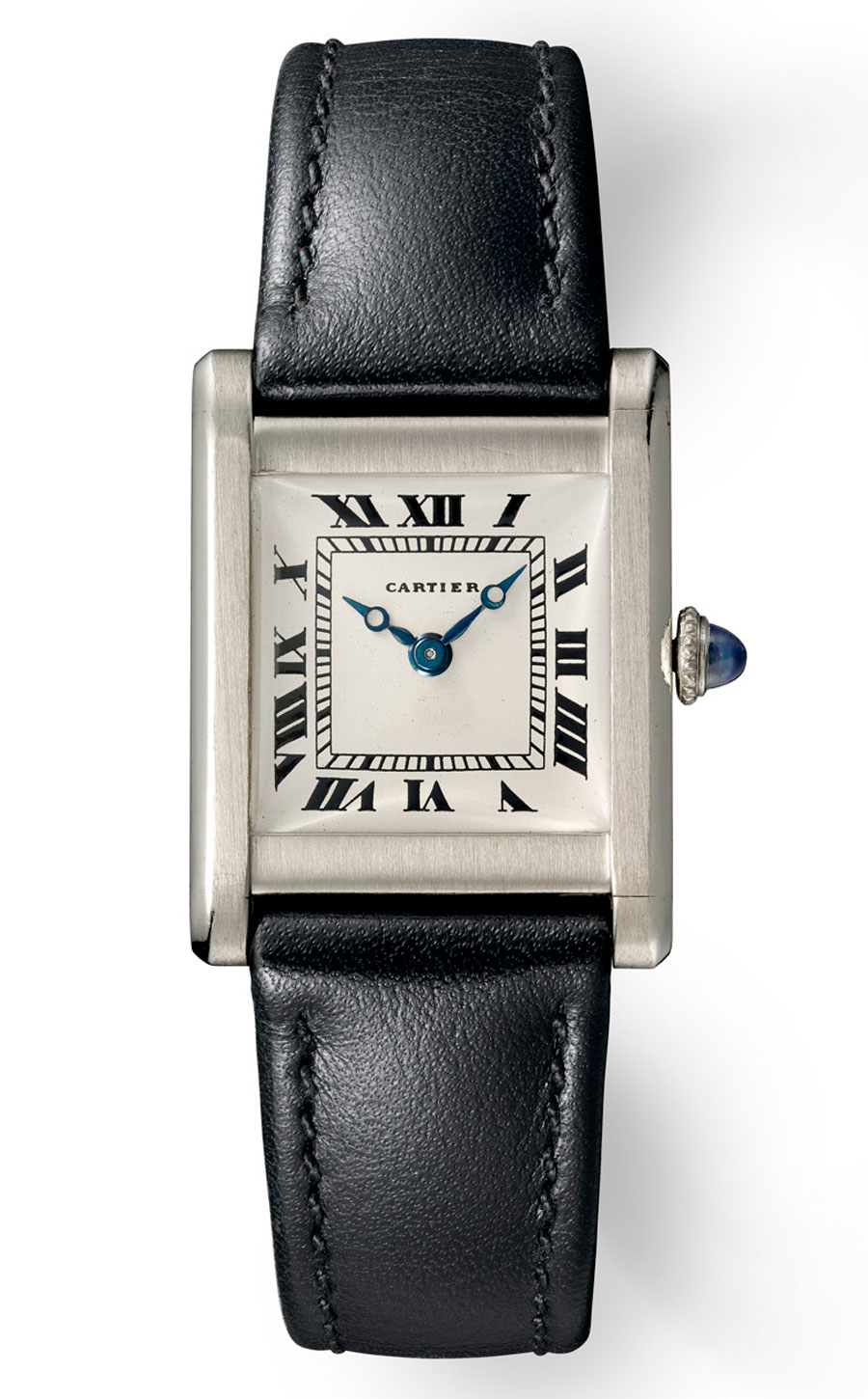
Vincent Wulveryck, Cartier Collection © Cartier
The story continues with the Tank Cintrée in 1921. The rectangle softens to follow the curve of the wrist. Then, the Tank Américaine unveiled in 1988 further explores this pursuit of balance with its curved case and more elongated lines. While the form remains instantly recognizable, its proportions and ergonomics have evolved. And, of course, there is the Tank Française (1996), which features a bracelet integrated into the case and returned to the spotlight in 2023 with softened angles.
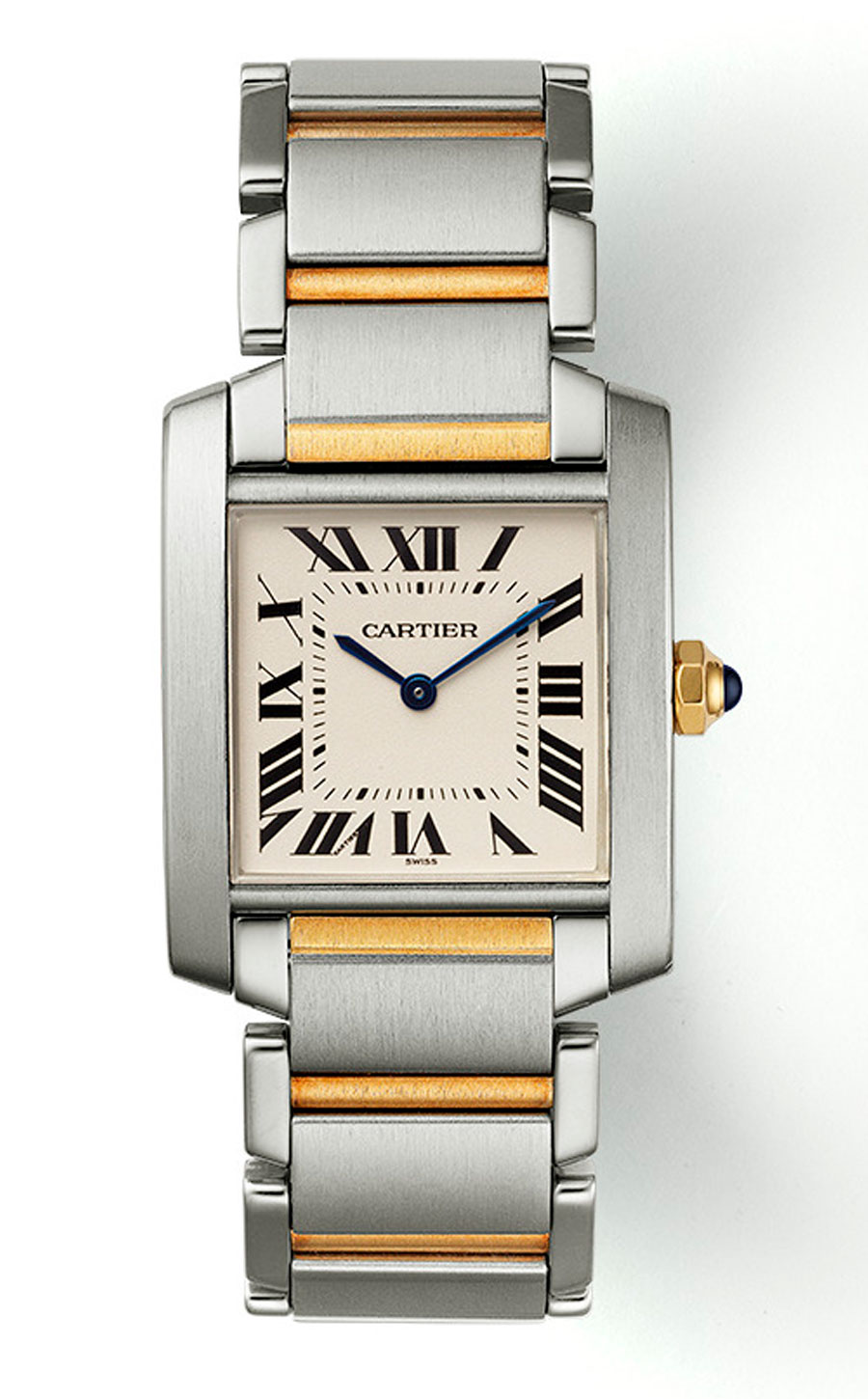
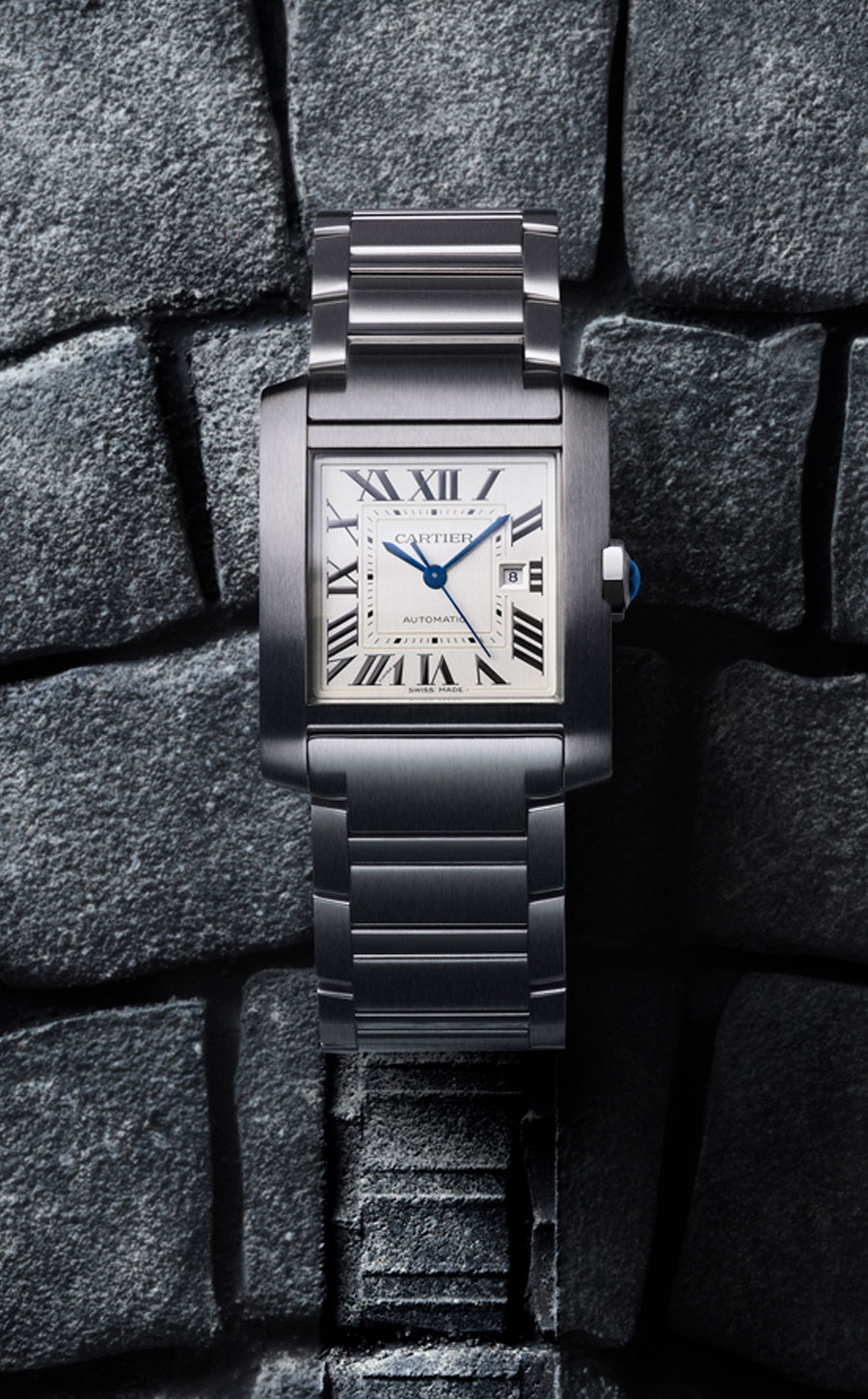
Tank Française from 2023 in steel
This mastery of balanced proportions is not limited to right angles. Created in 1912, the Tortue model brings curves and taut lines into dialogue within a case featuring a distinctive silhouette.
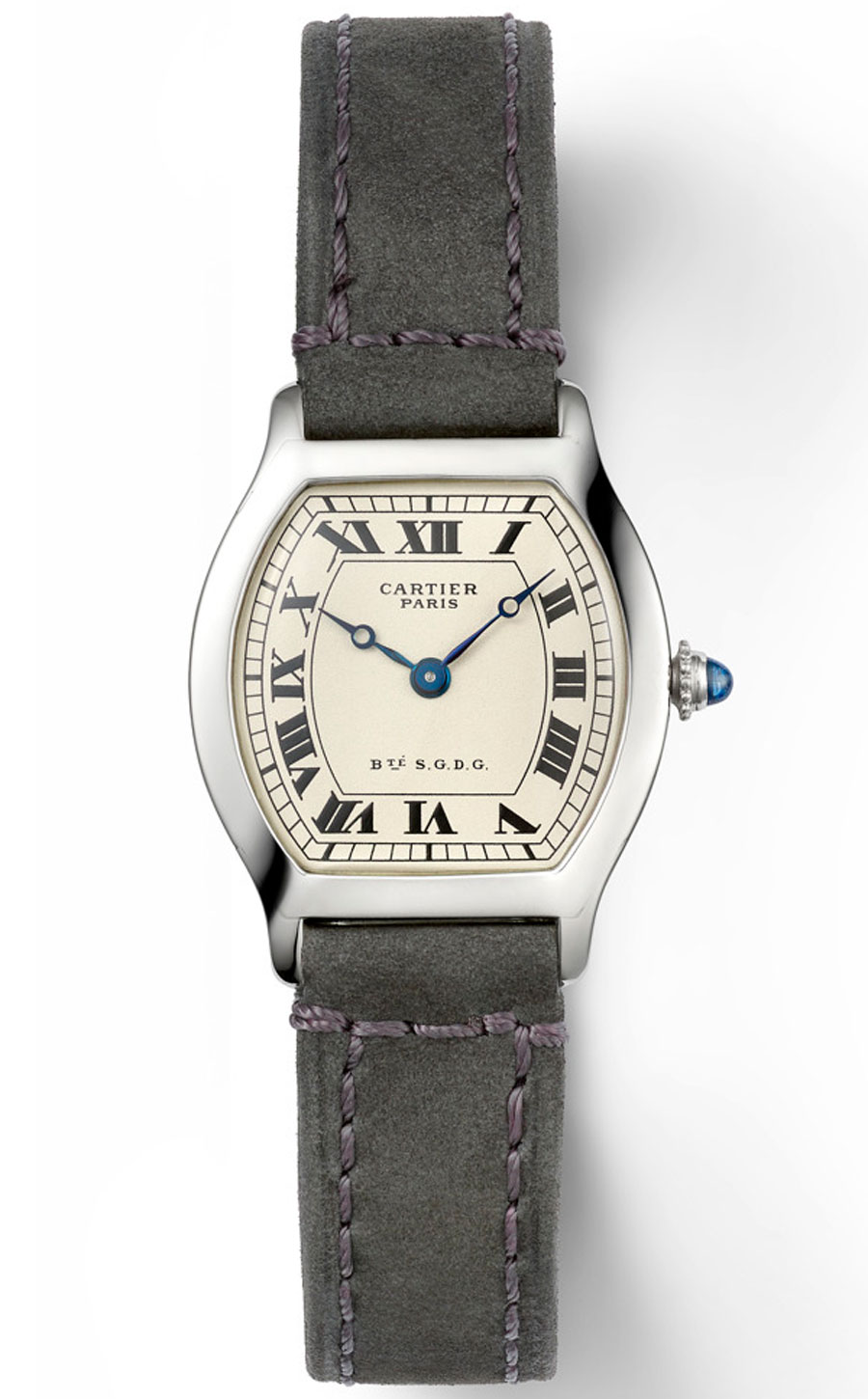
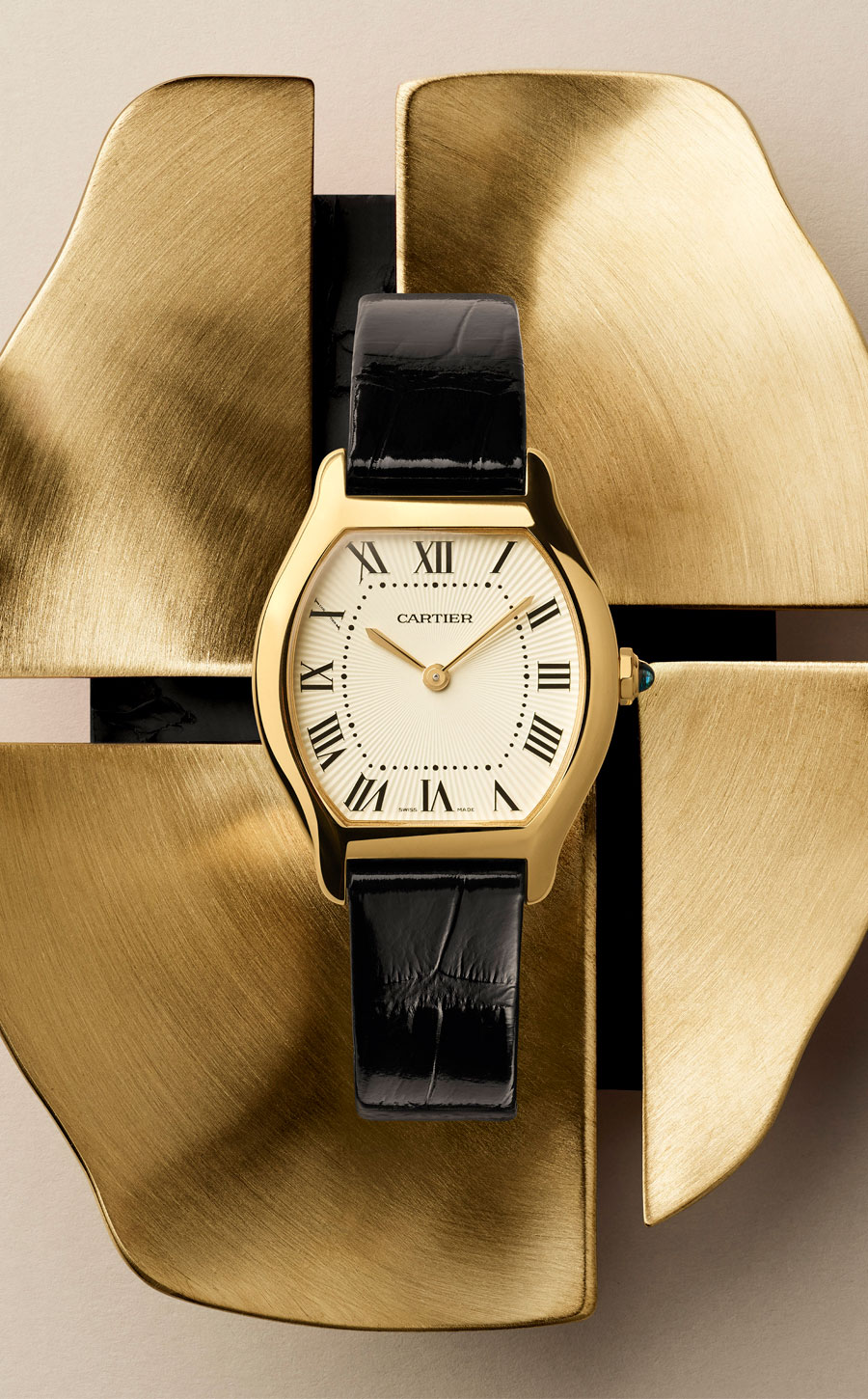
Tortue watch in yellow gold (2026) – € 13,700
As for the Baignoire, it explores the oval form through an elongated silhouette that blurs the line between watch and jewelry. In its current yellow-gold iteration, the Clous de Paris geometric motif extends across the case and the rigid, bangle-style bracelet, reappearing on the dial. This lends the piece an almost sculptural dimension. Once again, a standard is set: the craftsmanship goes well beyond the initial design. The texture, the relief of the ornamentation, and the polished surfaces must all harmonize with the watch’s overall volume.
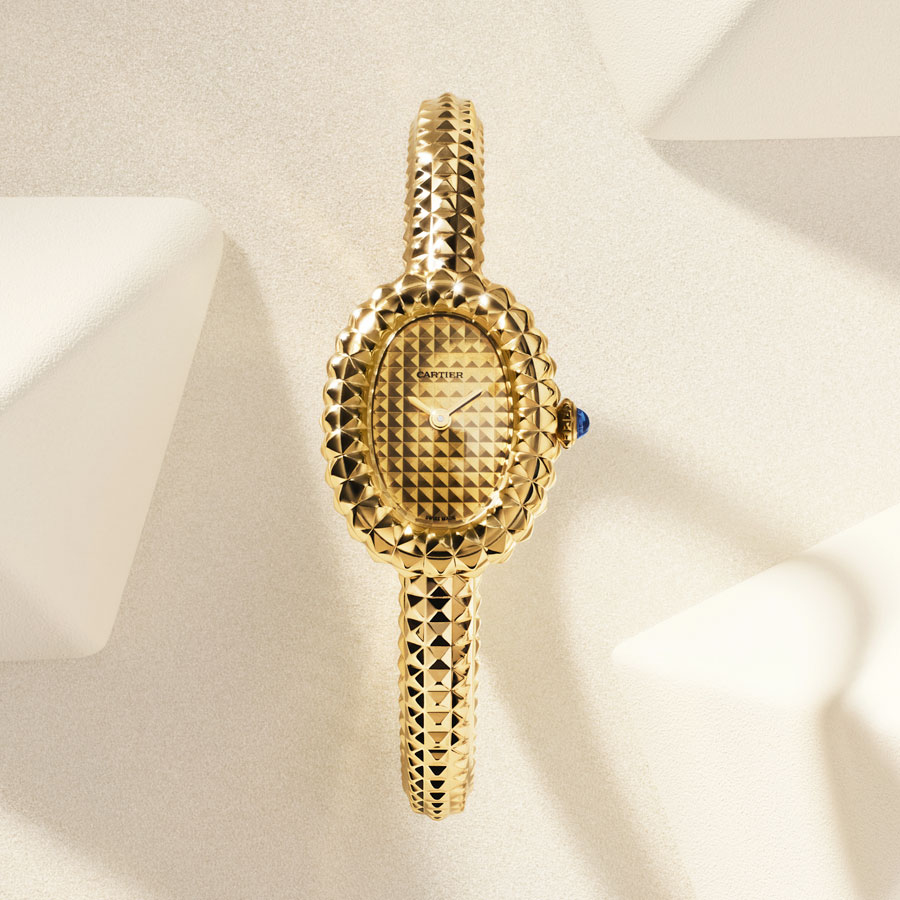
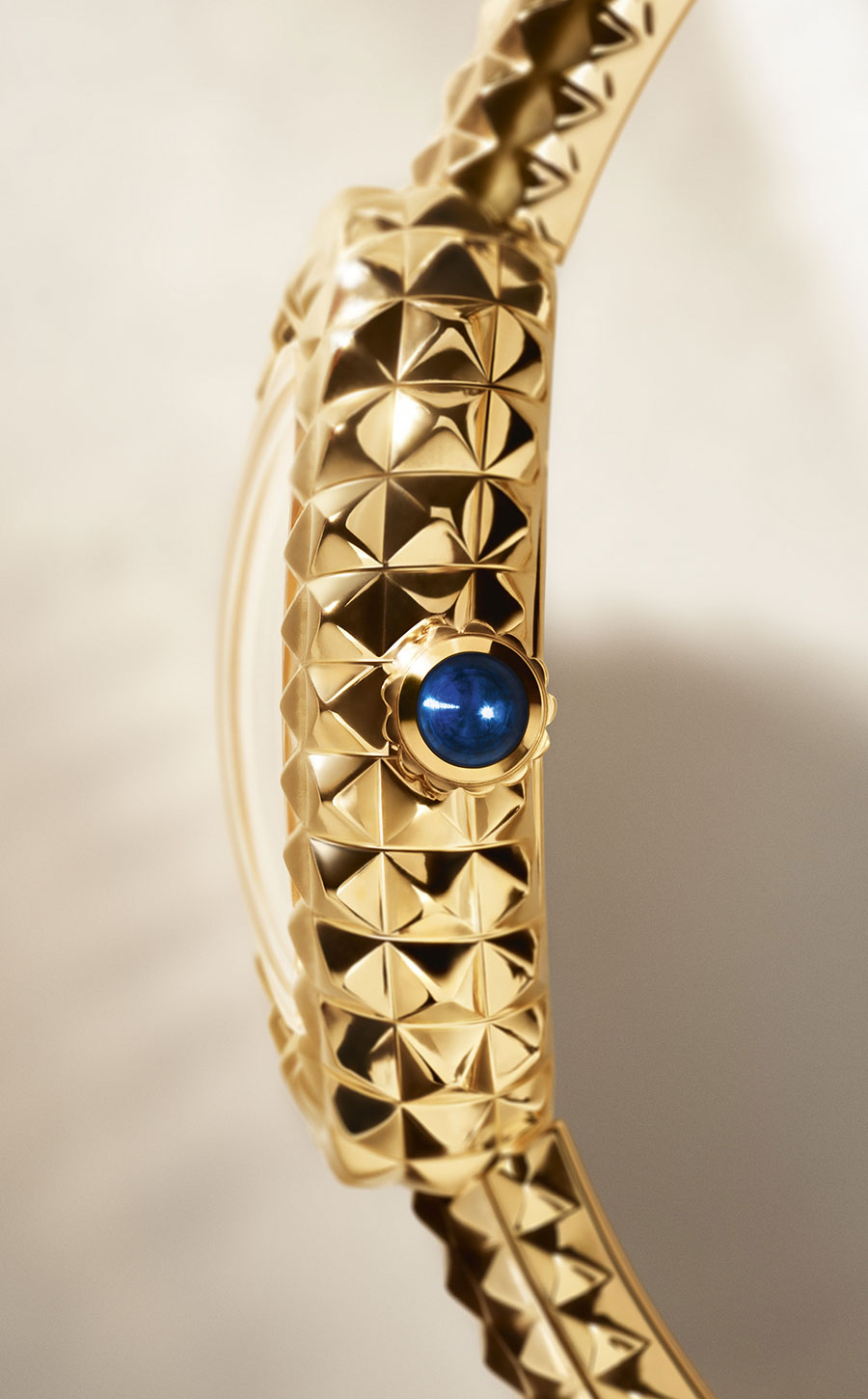
What you need to know:
At Cartier, the logic behind naming watches is not necessarily based on an inspiration derived from their shape. The primary objective is to be able to designate them precisely notably in accounting records so that everyone knows exactly which model is being referred to. This logic sometimes draws upon geometry: when viewed from above, a watch’s shape may resemble a specific geometric figure, which then serves to distinguish and identify it.
According to Pierre Rainero, Director of Image, Style and Heritage at Cartier
When drawing imposes its own rules
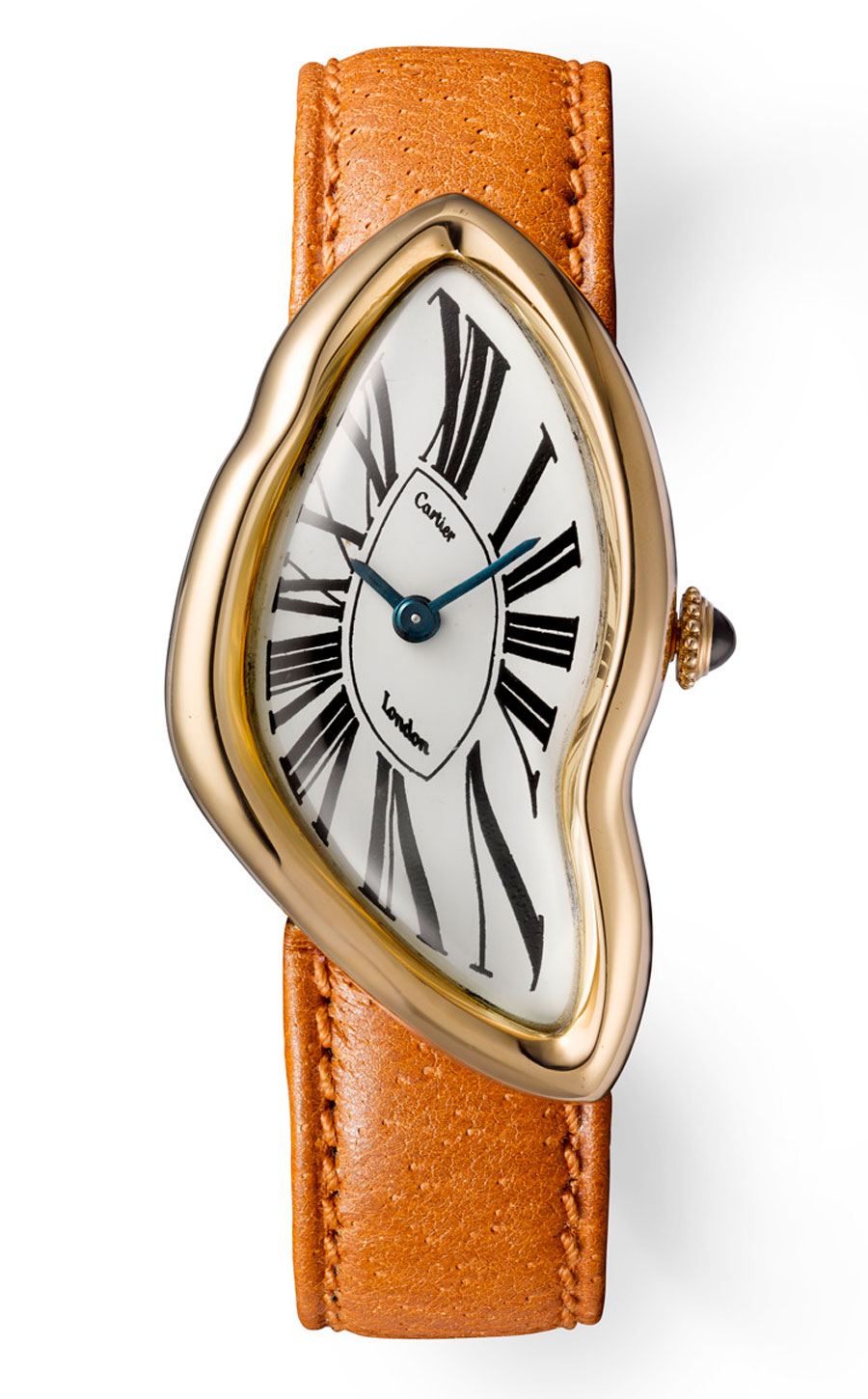
With the Crash model created in London in 1967, amidst the vibrant energy of the “Swinging London” scene Cartier broke away more decisively from traditional geometry. Its asymmetrical case appears distorted, as if time itself had lost all its reference points. Legend has it that a client brought a damaged Cartier watch into the New Bond Street boutique, requesting that it be repaired.
Vincent Wulveryck, Cartier Collection © Cartier
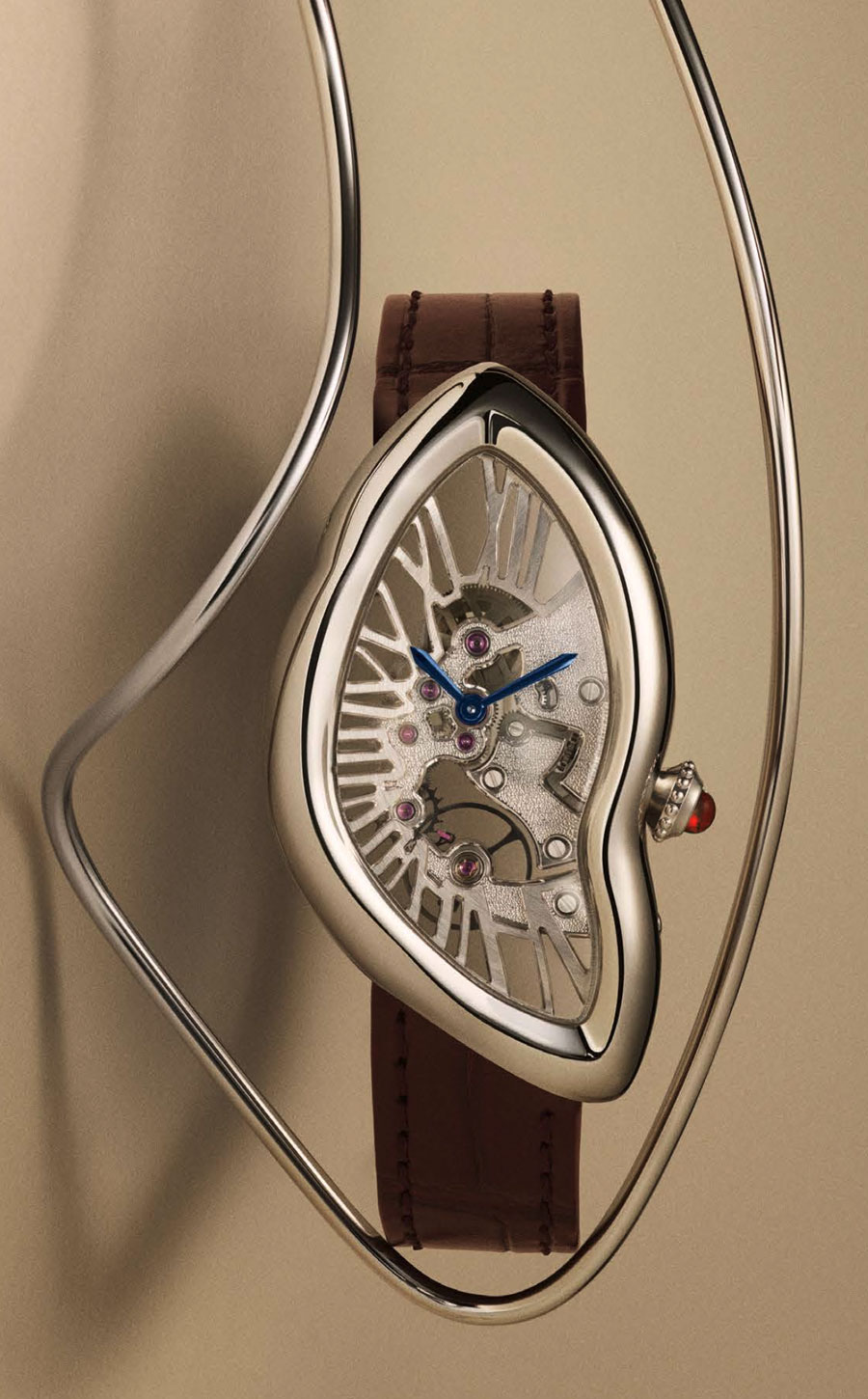
Jean-Jacques Cartier, who was then at the helm of Cartier London, had a stroke of genius: he wanted to replicate the case exactly as it was. This highly unconventional timepiece went on to become one of the Maison’s most iconic watches. Yet, beneath this artistic freedom lay a significant horological challenge: the movement had to be fitted into an unusual architectural structure.

Cartier London Archives © Cartier
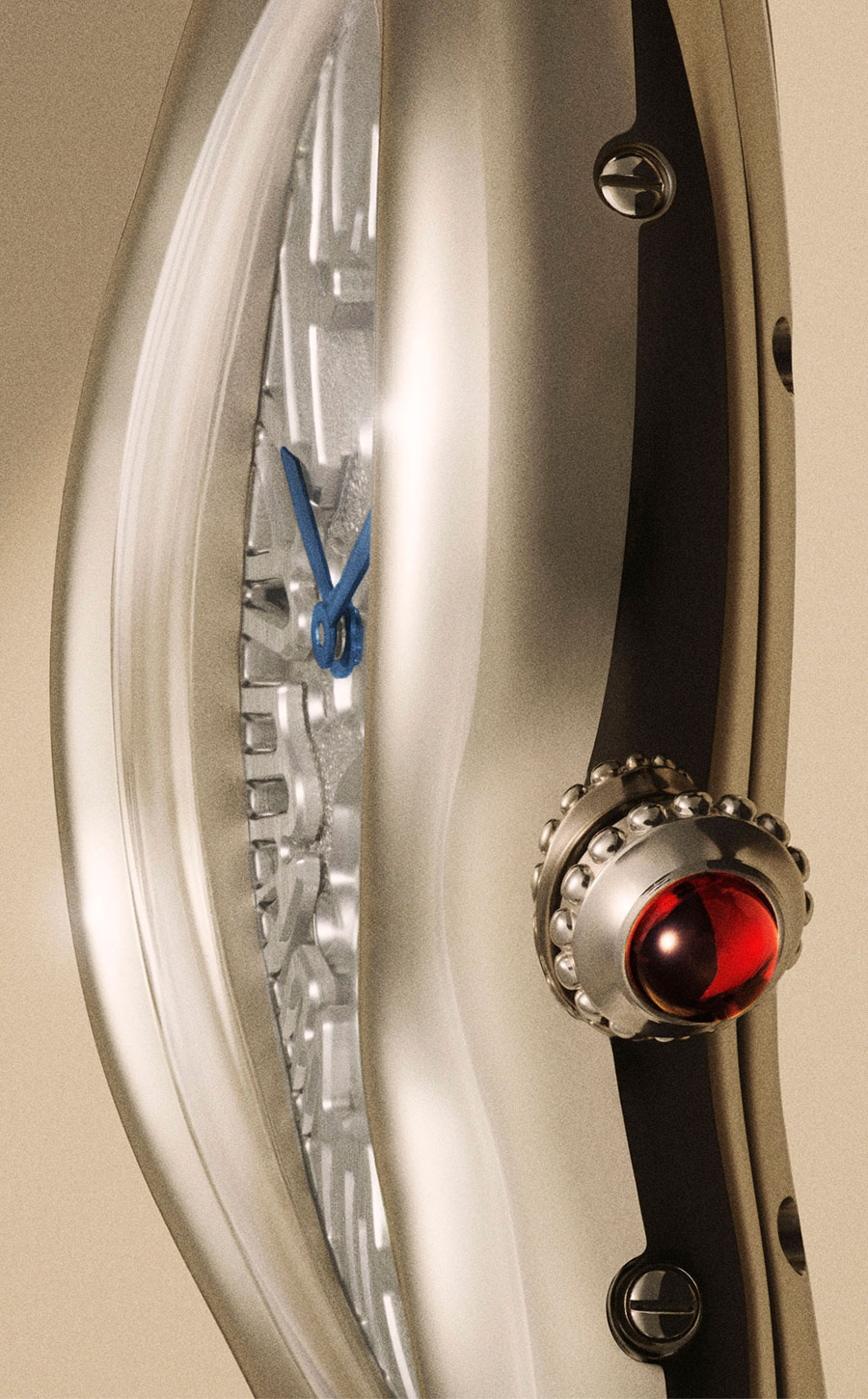
The skeletonized version takes the exercise further. In fact, the caliber was developed specifically for this shape. Just look at the bridges, which form Roman numerals. Extraordinary. The mechanics are no longer hidden; they are an integral component of the design. And therein lies the very paradox of Cartier: technical prowess can be understated, yet also put on display when it serves the design.
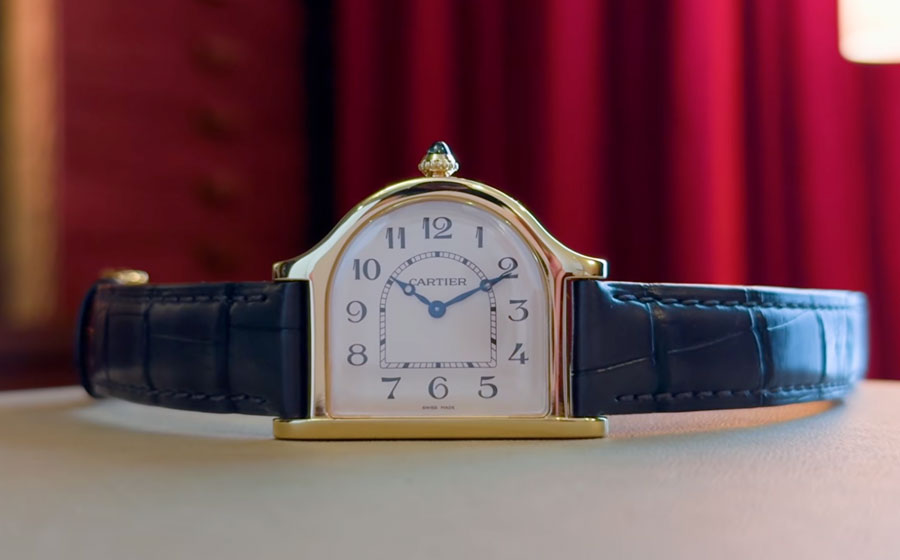
The Cloche model strikes a different note. With a case that evokes the shape of a bell, it shifts conventional frames of reference a reminder that, for Cartier, watchmaking is as much about playing with conventions as it is with forms. Indeed, this creation can be worn on the wrist, but it can also be placed on a desk or bedside table, serving as a small clock.
Unveiled in 2002, the Roadster makes a high octane return this year. It draws its inspiration from the automotive world specifically, from the sleek, aerodynamic forms of mechanical design. The dial evokes a speedometer, while the ogival-shaped crown and the date magnifier call to mind the headlights of a sports car. For this new generation, the proportions have been redesigned, the lines refined, and the ergonomics reworked. The bracelet has also been reimagined, featuring shorter links and the new “QuickSwitch” interchangeability system, which allows for easy replacement without the need for tools. Two in-house automatic calibers power the various sizes: the 1847 MC for the large models and the 1899 MC for the medium-sized versions.
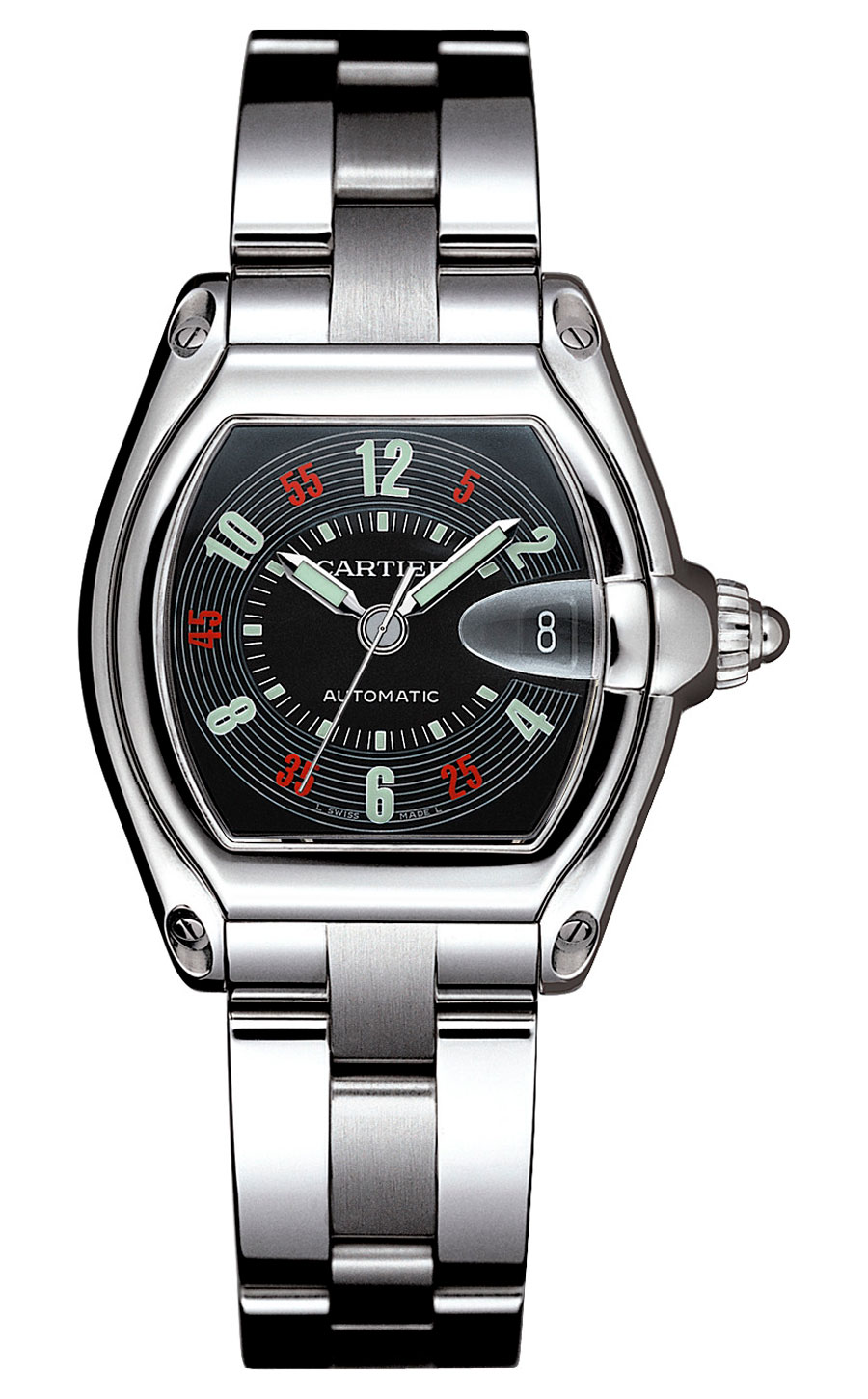
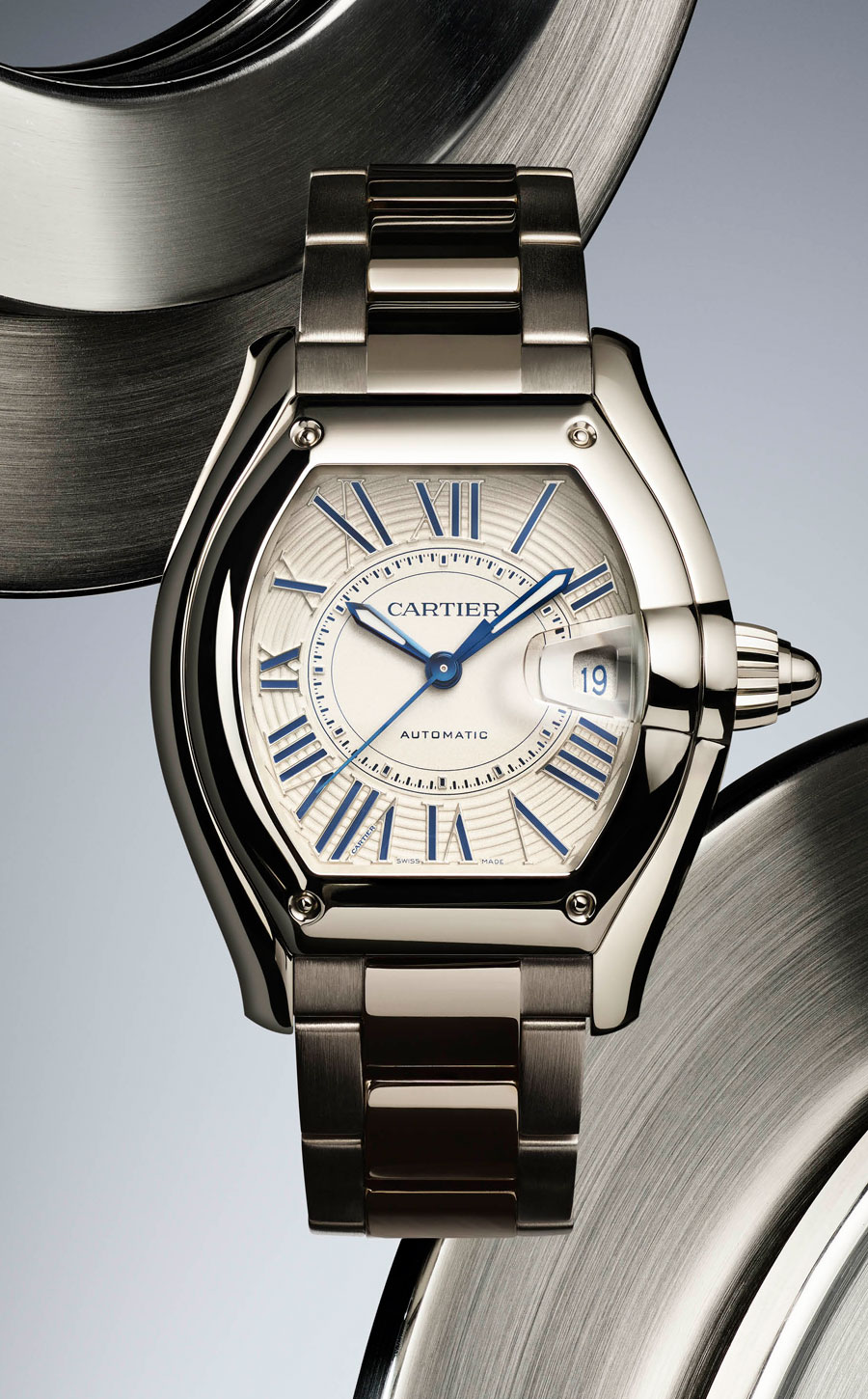
Roadster steel watch, large model (2026) – € 10,000
With the Ballon Bleu, launched in 2007, Cartier explores a different path: one defined by roundness and volume. At first glance, the case appears perfectly circular. But look closer: its enveloping curve domed on both sides gives it the look of a polished pebble. And then there is a truly remarkable detail: the crown, topped with a blue cabochon, is set within a metal arch that appears to protect it. It even encroaches upon the dial, displacing the traditional railway-track minute scale.
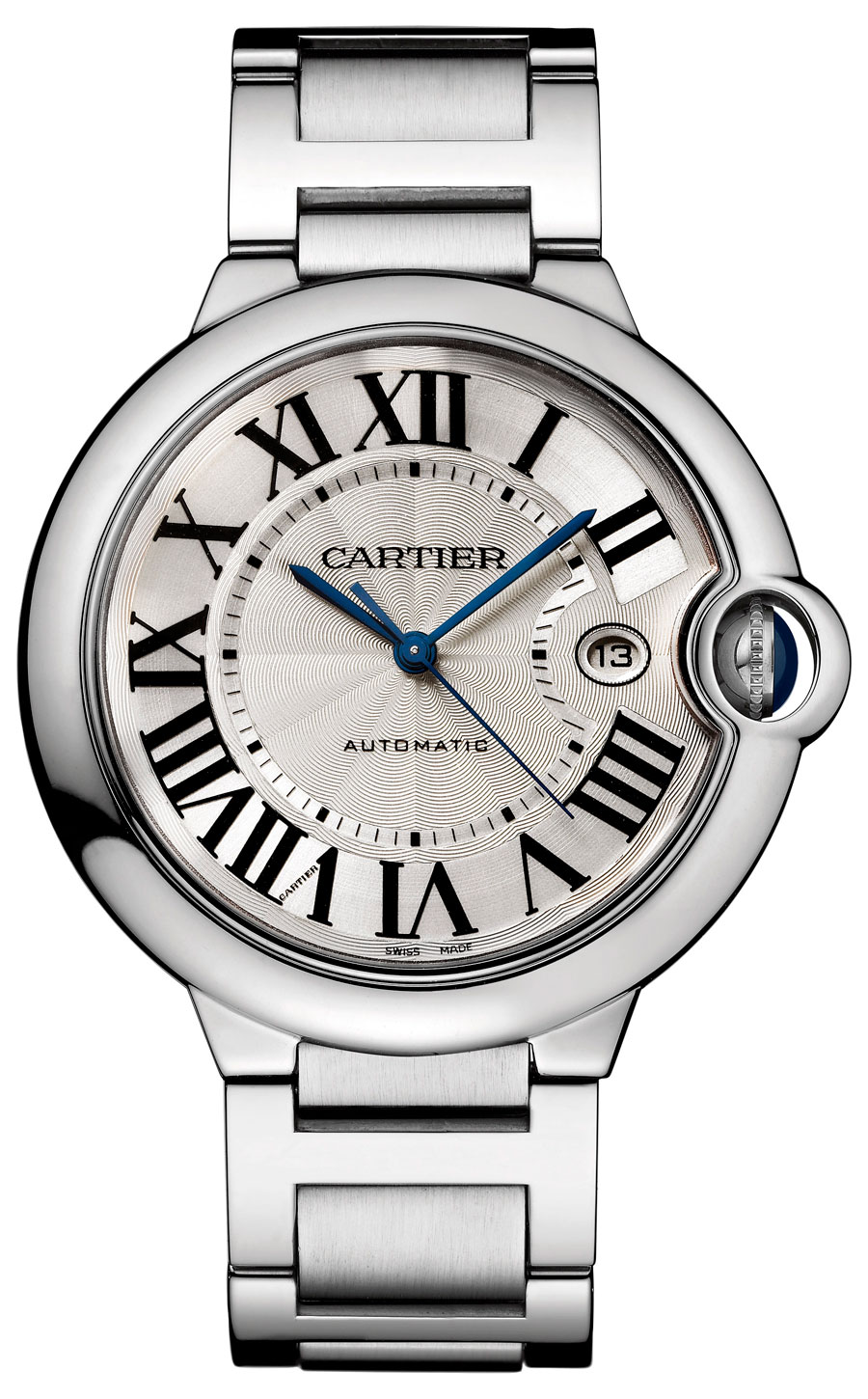
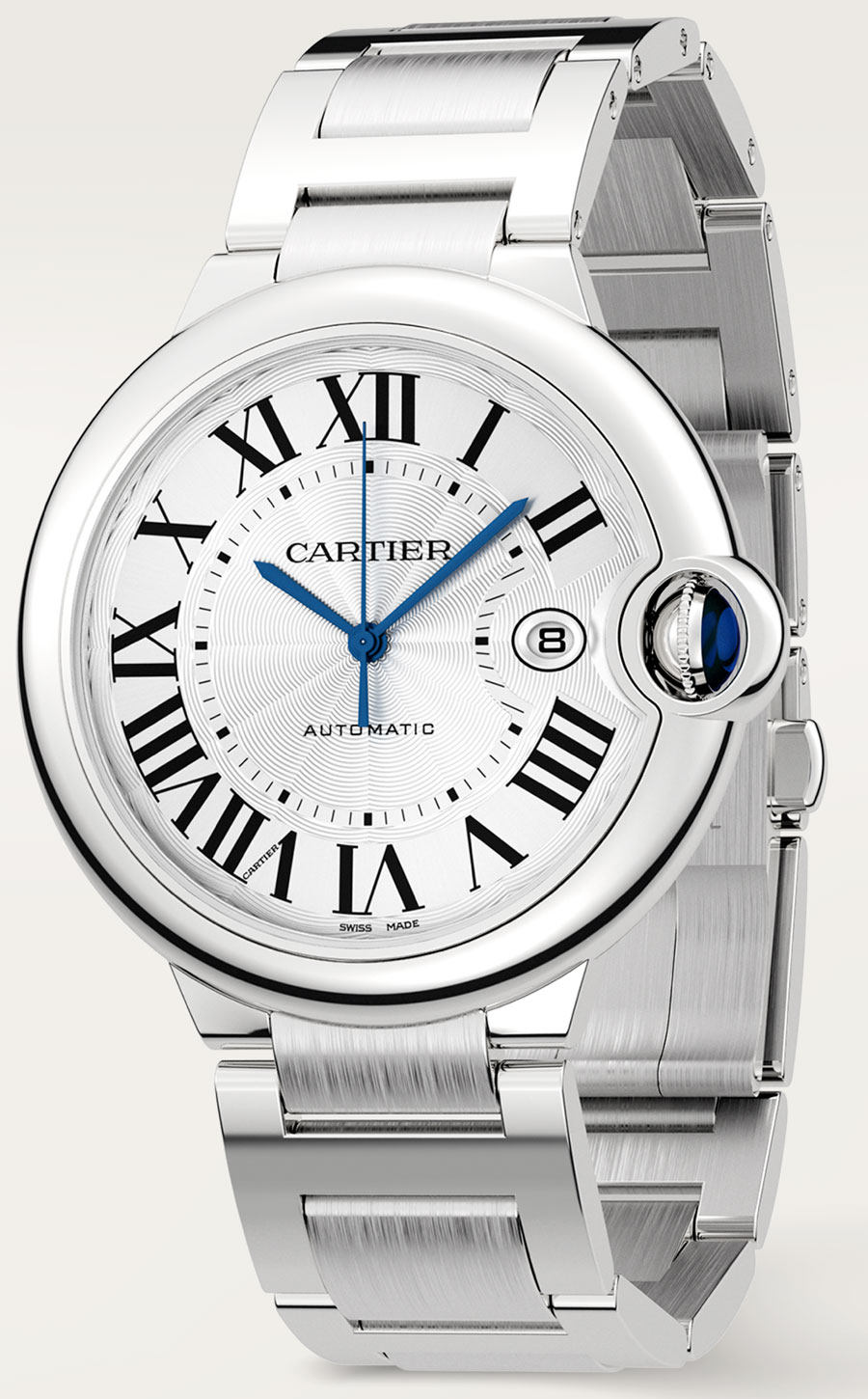
Ballon Bleu de Cartier watch (current model) in steel, 42 mm – € 8,350
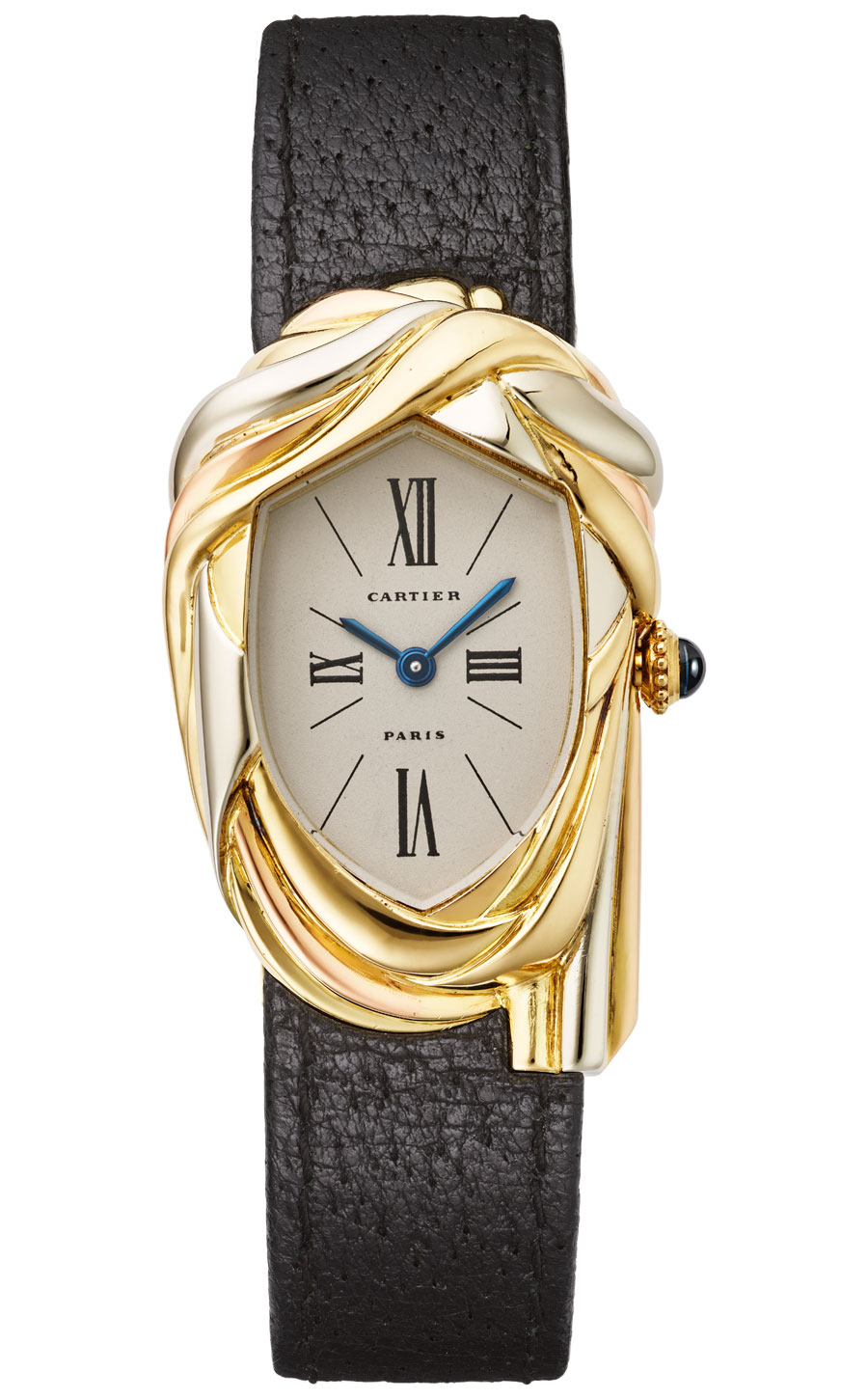
The Cheich tells another story that of a watch whose design is directly inspired by adventure. Conceived in 1983 by Alain-Dominique Perrin and Jacques Diltoer, in collaboration with Thierry Sabine founder of the Paris-Dakar rally it echoes the silhouette of the turbaned figure that appeared on the famous rally’s logo. Its sculptural gold case evokes the cheich, the traditional turban worn in the desert.
Marian Gérard, Cartier Collection © Cartier
And what about the Cartier menagerie in all this?
At Cartier, time sometimes takes on an animal form. Since the panther first appeared in 1914, the animal kingdom has established itself as a remarkable realm for the Maison’s creative expression. Far more than a mere decorative motif, the animal becomes substance, volume, and architecture.

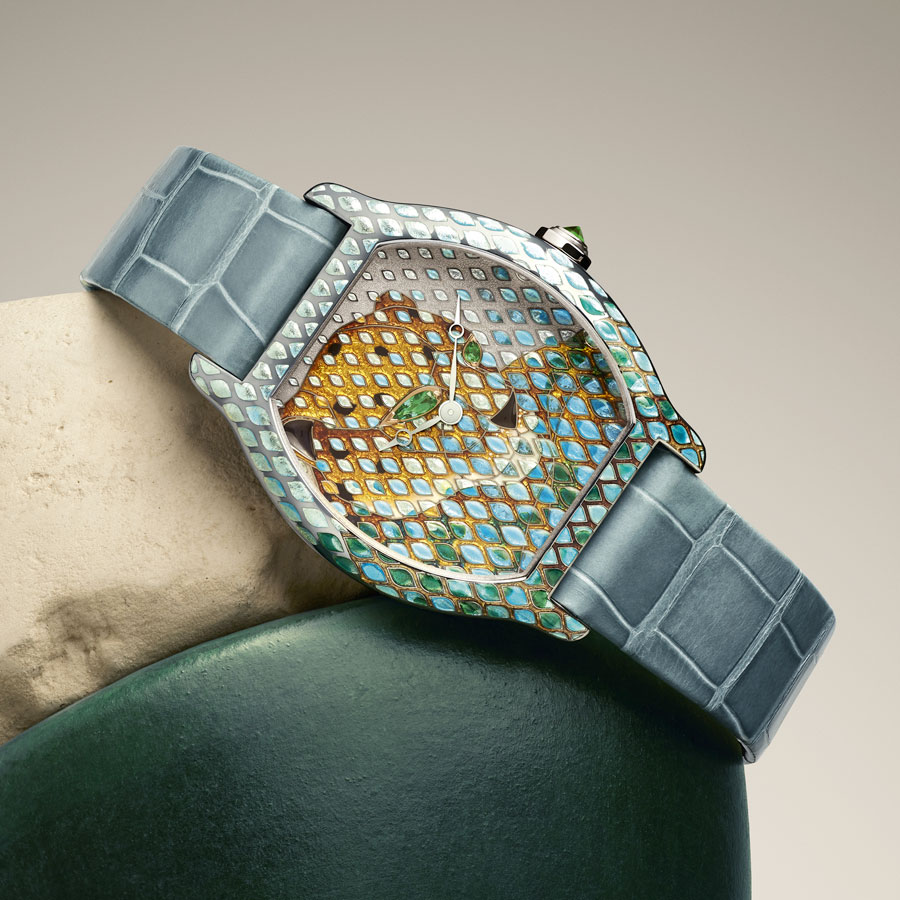
The curves of a body, the lines of a silhouette, or the graphic pattern of a coat all serve to challenge established conventions. Through its animal-themed creations, Cartier blends expert jewelry craftsmanship with aesthetic freedom, as exemplified by the Tortue Panthère Métiers d’Art watch, crafted in white gold and adorned with champlevé enamel. In short, it is a different way of conceiving the shaped watch.
One of the notable watches from Pierre Rainero:
the Doña de Cartier

María Félix (1980) – © Photograph by Snowdon / Trunk Archive
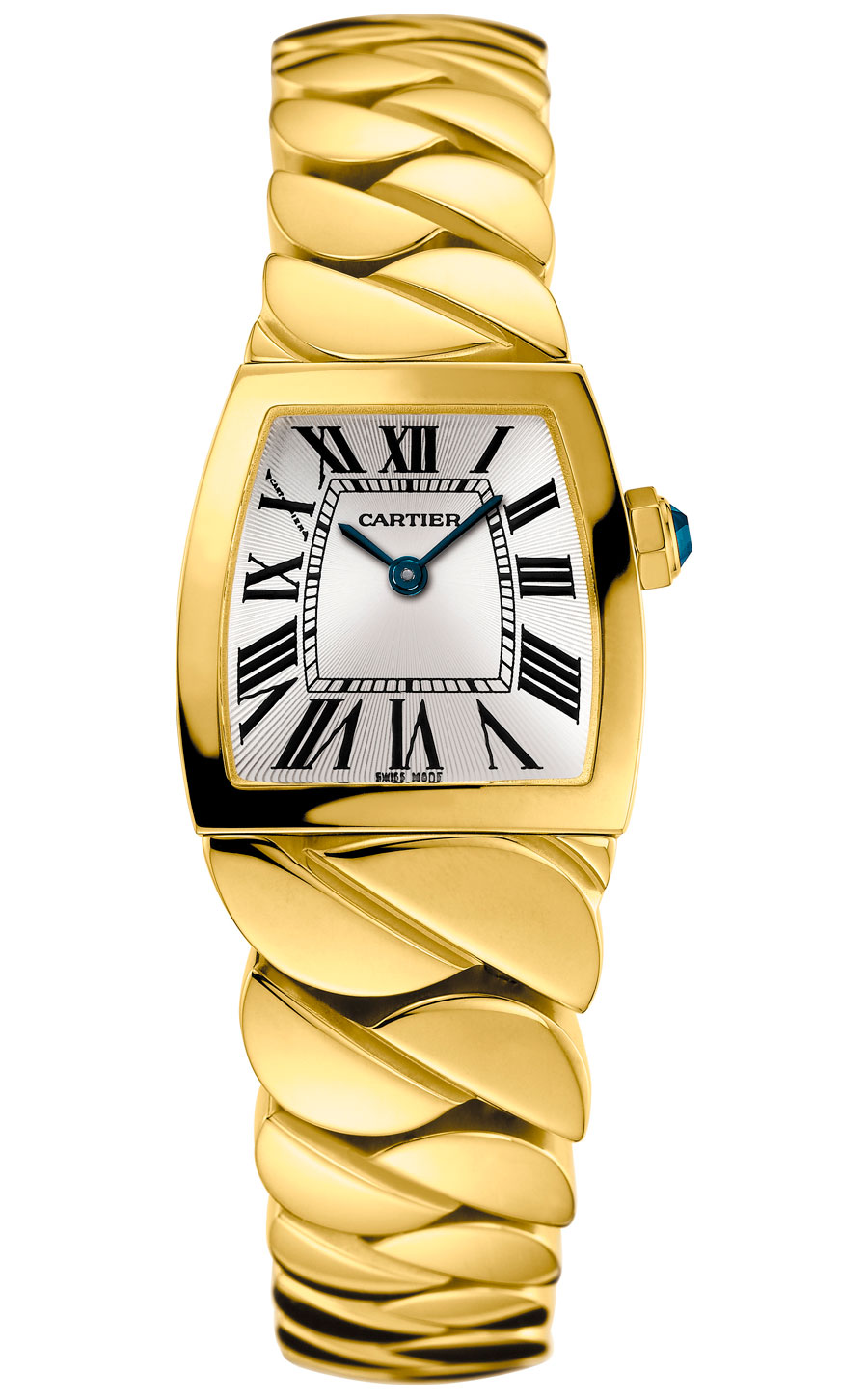
The La Doña de Cartier collection pays tribute to an unconventional woman: María Félix, a Mexican actress nicknamed “La Doña,” known for her strong personality, elegance, and penchant for extraordinary jewelry. A major Cartier client, she served as the inspiration for several of the Maison’s iconic animal-themed creations. The La Doña watch captures this spirit with its trapezoidal case and a bracelet featuring bold, generous links that evoke the scales of a crocodile a timepiece with a spirited, assertive character, much like the woman who inspired its name.
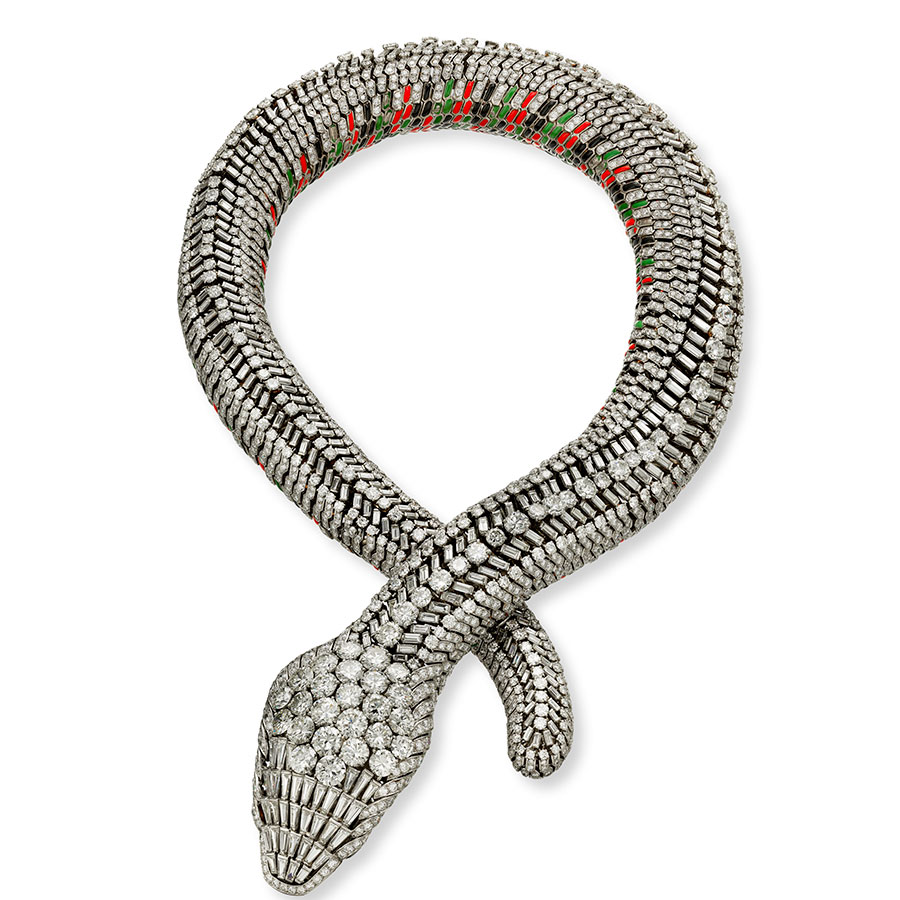
‘Serpent’ necklace, Cartier Paris, 1968 commission – Vincent Wulveryck, Cartier Collection © Cartier
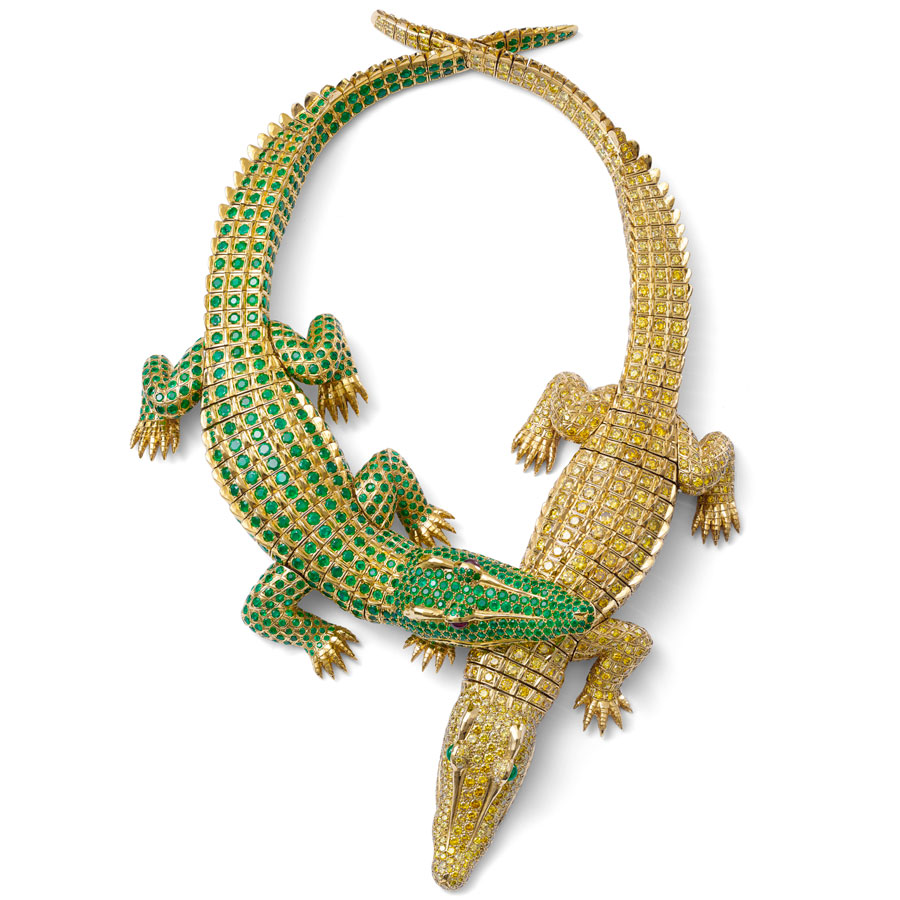
Another anecdote: in 1975, María Félix asked Cartier to create a piece of jewelry in the form of a crocodile. The result was an extraordinary necklace composed of two articulated crocodiles one set with yellow diamonds, the other with emeralds. According to Pierre Rainero, the piece had to be quite substantial, as it was intended not only to adorn a neck but also to serve as a centerpiece for a table. It is a spectacular creation that also brings to mind another piece she commissioned in 1968: a “Serpent” necklace a true temptation.
To conclude in fine style…
Though distinct, these creations ultimately tell the same story. Geometry dictates the layout of the dial, the integration of the bracelet, and, at times, even the construction of the movement. In turn, watchmakers allow the design to break free from more conventional forms. In this way, Cartier has built a repertoire of shapes that have endured through the decades.
Boutique Cartier
13, rue de la Paix, Paris 2e
01 70 65 34 00
Watch also :
Read also: