
Big Crown Pointer Date « Bullseye »
754 7779 4061-07 5 19 25
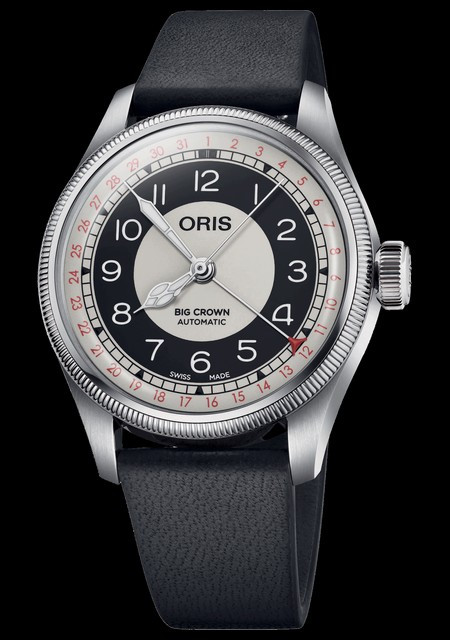
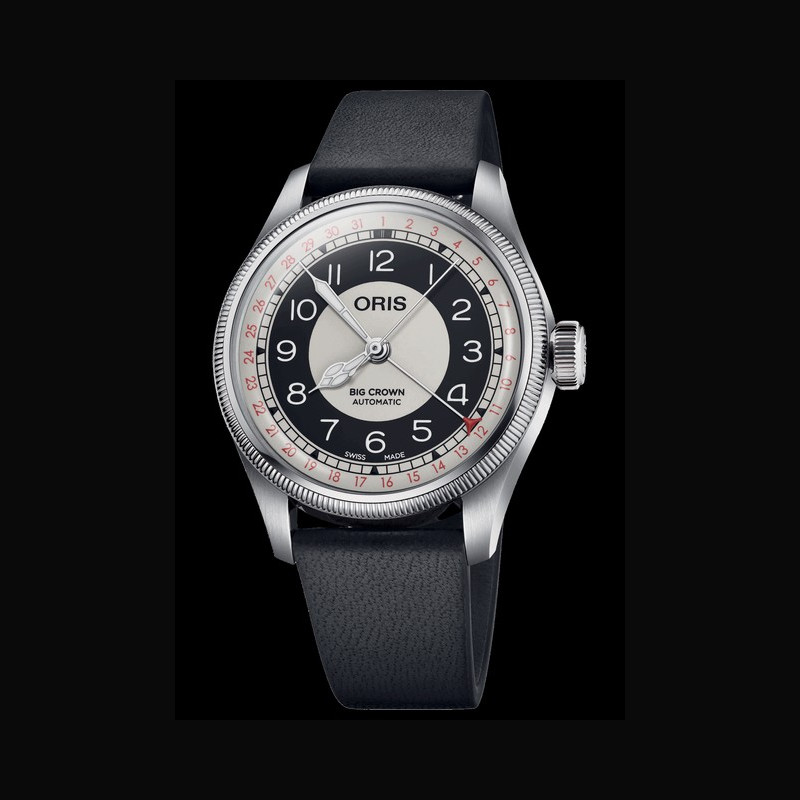
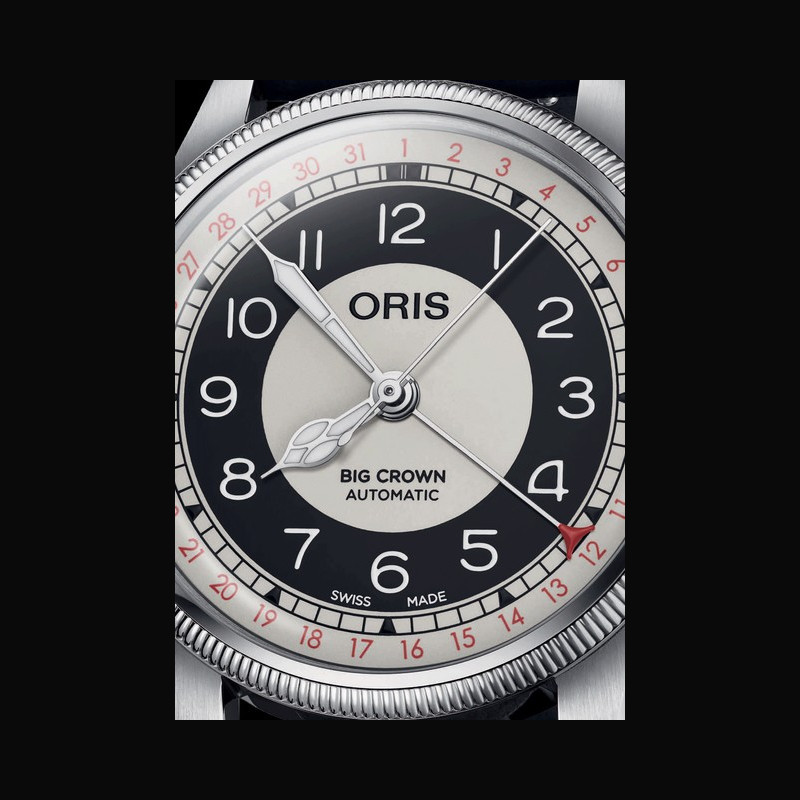
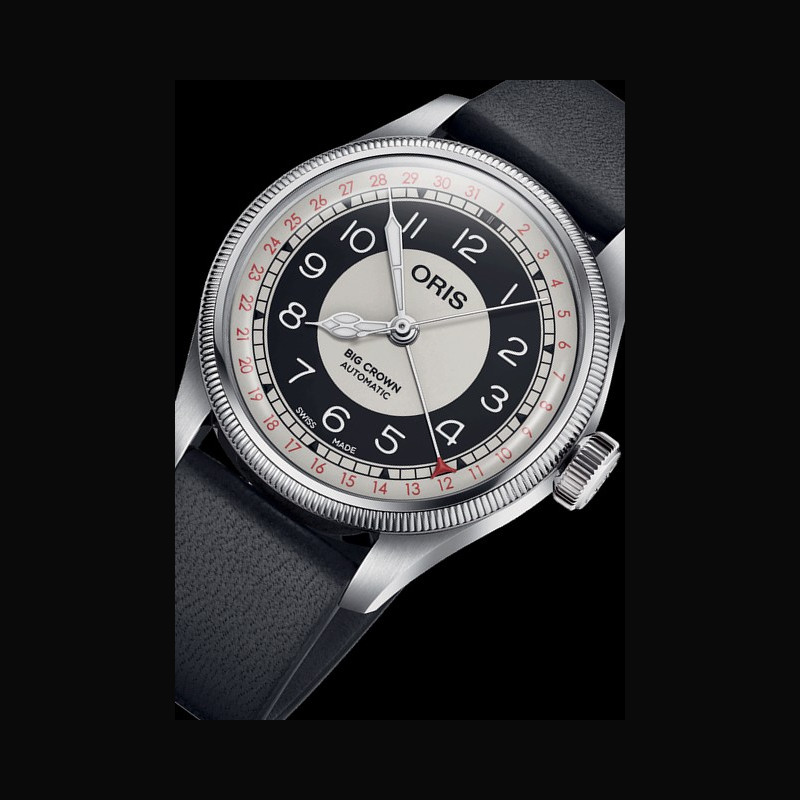


| Brand : | Oris |
| Collection : | Oris Big Crown |
| Model : | Big Crown Pointer Date « Bullseye » |
| Reference : | 754 7779 4061-07 5 19 25 |
| Complement : | Stainless Steel - Grey and Black Dial - Strap Deer Leather |
| On sale : | January 2026 |
-
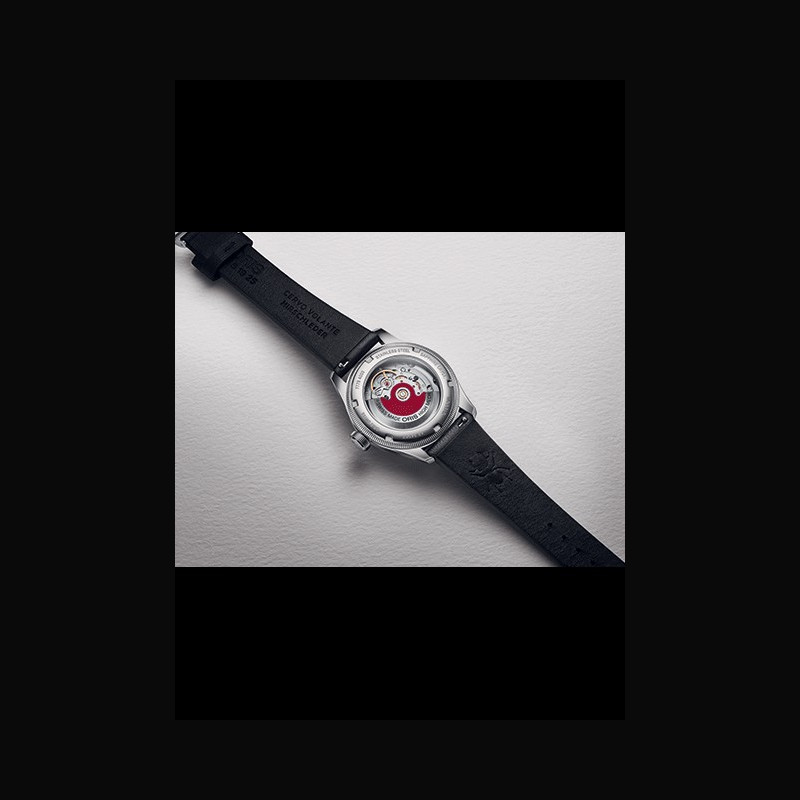
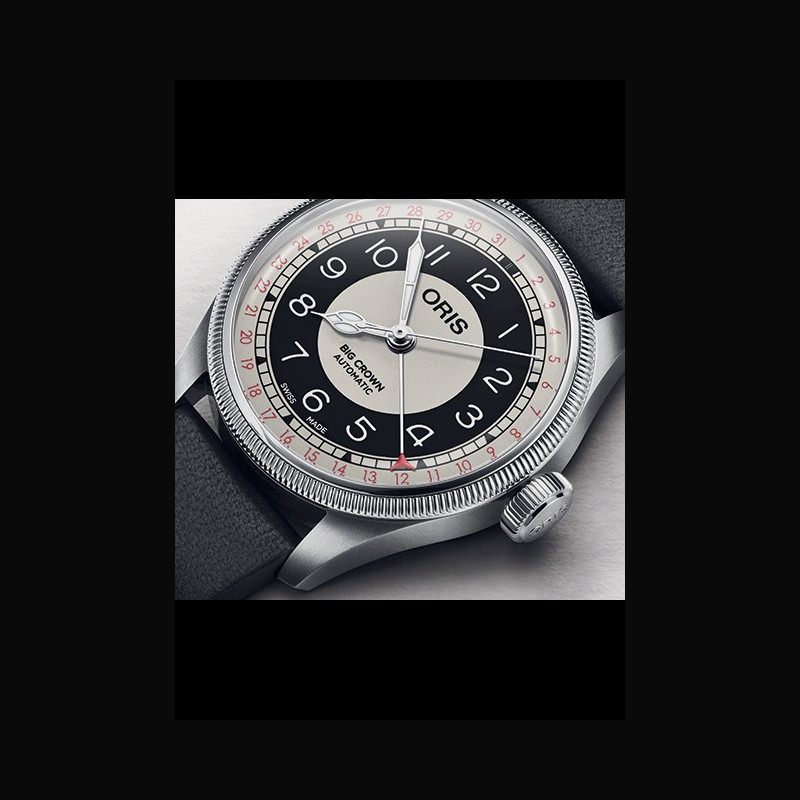
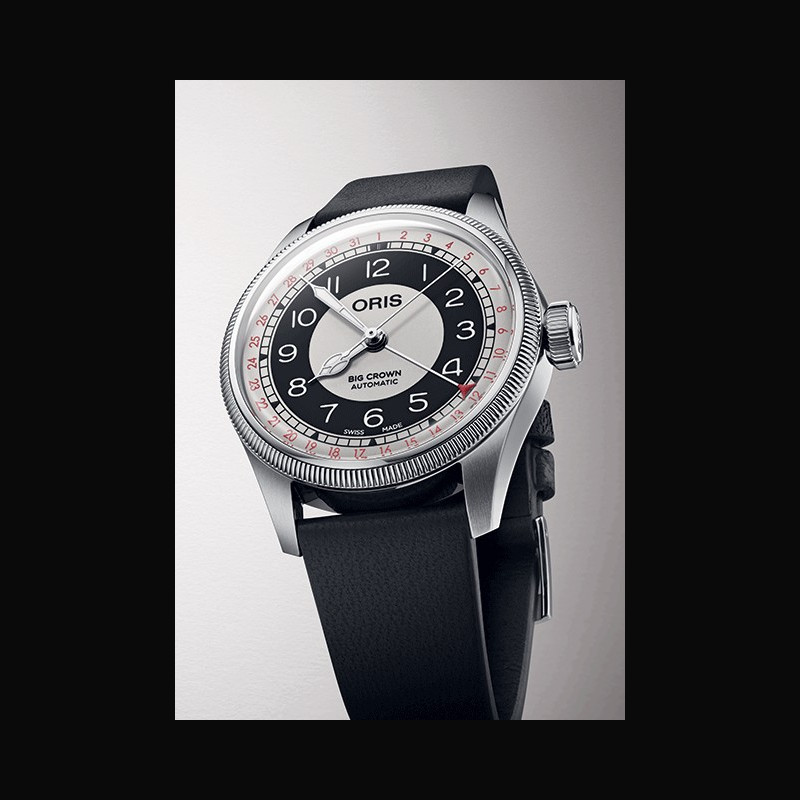
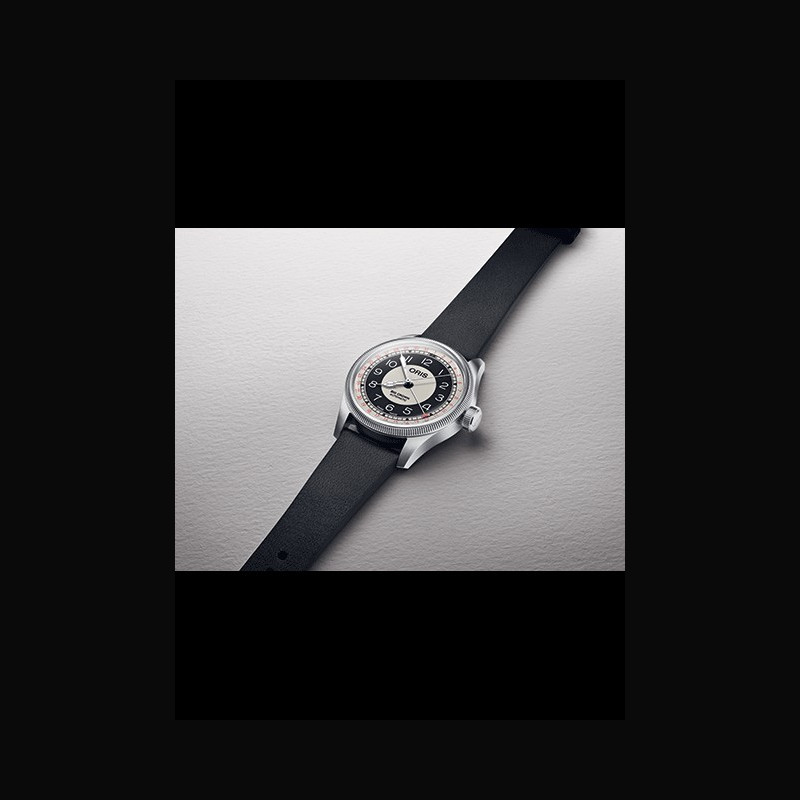
Brand : Oris Collection : Oris Big Crown Model : Big Crown Pointer Date « Bullseye » Reference : 754 7779 4061-07 5 19 25 Complement : Stainless Steel - Grey and Black Dial - Strap Deer Leather On sale : January 2026 List Price : 1 950 € Diameter : 38 mm Thickness : 12.20 mm Styles : Vintage Types : Self-winding Complication : Centre hands for hours Minutes and seconds Date centre hand Instantaneous date Date corrector Fine timing device and stop-second Case material : Stainless steel Case peculiarity : Case back Stainless steel; screwed; see-through mineral glass Operating devices Stainless steel screw-in security crown Shape : Round Water-resistance : 50 meters Dial color : Grey Black Display : Luminous material Hands; numerals and indices filled with Super-LumiNova® Glass : Domed Sapphire Antireflective coating Strap material : Deer leather Strap color : Black + More characteristics :
Movement
Number Oris Calibre 754
Winding Automatic
Power reserve 41 hours
Case
Multi-piece stainless steel case
Dial
Cool grey and black, details in red
Strap / Buckles
Black Cervo Volante sustainable deer leather with quick strap change system

DESCRIPTION
BIG CROWN POINTER DATE “BULLSEYE”
The story of Oris’s independent mind comes to the fore with a non-limited version of the Big Crown Pointer Date design collectors call the “Bullseye”
BE INDEPENDENT
The Big Crown Pointer Date is an Oris icon, created by free-thinkers for those with curious minds
For more than 120 years, the Oris story has been a story of free- thinking independence. On paper, we’re an independent company and not part of a group. And we’re not owned by a hidden investor looking to buy and sell for a quick profit.
In practice, this means we’re free to make our own decisions and take the path we think is right, both for us and for our customers. This is why we only make mechanical watches. It’s why we’ve made people and planet and a deep respect for our environment a central pillar of our activities. And it’s why we believe in making watches that prioritise substance over status. This is who we are: it’s who we’ve always been. This is also why Oris has always appealed to watch lovers with an independent spirit of their own. People who know their own minds and pursue their own dreams with discipline and dedication, rather than follow the crowd. It’s a hard- won position and we’re very proud to have loyal customers all over the world who subscribe to the same free-thinking philosophy.
One of the great examples of it is the Big Crown Pointer Date, a watch we introduced for pilots in 1938. With its oversized crown, large Arabic numerals and unusual pointer date function, it was a simple, elegant, ergonomic design that would go on to stand the test of time. Almost nine decades later, the Big Crown Pointer Date lives on, an Oris icon.
Today, its story continues with the Big Crown Pointer Date “Bullseye”.
IN THE EYE OF THE STORY
Almost three decades since the last, the Big Crown Pointer Date “Bullseye” is back, a timeless watch design that tells the story of Oris’s independence
To understand Oris’s independent mindset, it’s important to look to its roots. The company was founded in 1904 when two watchmakers from the traditional watchmaking town of Le Locle moved to Switzerland’s Swiss German-speaking industrial north. Their vision? To fuse the hand-craftsmanship of the French- speaking south with the industrial might of the north, thereby making watches of high aesthetic value that also offered quality, accuracy and reliability at reasonable prices.
It was counter-cultural, but it worked. Oris grew fast and became known for its beautifully designed, highly accurate watches and clocks. An independent legacy was born.
In 1938, the company’s Big Crown Pointer Date design came to life. It was clearly legible so aviators could read it, and it had the added benefit of a date function, indicated by a central pointer hand. A simple, accessible design that has since captured the imaginations of countless watch lovers. An Oris icon. Today, it returns with a dial design that echoes through time, too. Oris first introduced a “Bullseye” dial in the 1910s. Catalogues from the time show pocket watches with the two-tone, concentric design.
It would appear time and again, enjoying high popularity in the mid- 20th century. Oris last turned to it in 1998. And then it disappeared.
Now, it’s back in the Big Crown Pointer Date “Bullseye”. The watch is based on the 38mm Big Crown Pointer Date. It has an oversized crown, a fluted bezel and an automatic mechanical movement powering that signature function. The grey and white dial has a sporty red date ring and a Pointer Date hand with a red tip. Another entry into the Big Crown canon.
“The Big Crown Pointer Date embodies Oris’s independent spirit,” says our Chairman, Ulrich W. Herzog. “This iteration taps into the zeitgeist and shows again why the Big Crown is a design for the ages.”
THE BIG CROWN EMBODIES ORIS. IT’S A DESIGN FOR THE AGES
Oris Chairman Ulrich W. Herzog joined the company in 1978. Later, he would co-lead a management buyout that would secure Oris’s independence
BLUE SKY THINKING
Ulrich, you joined Oris in 1978 and have one of the longest careers in watchmaking. How do you look back on your early days in the business? Before joining Oris, I worked in banking and the oil industry. This was a major change for me. From big physical volumes and big financial numbers to a small product with components measured in hundredths of millimetres. But what was most impressive was to learn and see first-hand what this key Swiss industry was able to produce and distribute across the globe, and to see the worldwide appeal of Swiss watchmakers – especially Oris.
Your first years with Oris were difficult times for the watch industry. What are your memories of the so-called Quartz Crisis?
It was very tough! Almost all Swiss watch companies found themselves in financial difficulties and had to claim support. The number of people employed in the sector fell from around 90,000 to around 30,000. At the time, Oris was part of the ASUAG Group, which was also struggling. But the strongest survived and the crisis proved a huge turning point for the industry.
Just how close did Oris come to becoming a victim of the crisis?
Close! Oris was particularly strong in the starting price ranges, mainly in the UK and its associated colonies. Oris came under strong pressure in terms of prices and on the aforementioned markets, and a closure of the factory was considered by the group management.
But as we know, that didn’t happen, and in 1982, you and Oris Honorary Chairman Dr Rolf Portmann staged a management buyout. Why?
While ASUAG didn’t see a future for Oris, Dr Portmann and I did. Over the previous 80 years, Oris had built up a worldwide reputation for quality and design, and we believed this recognition could put Oris back on the road to success. Dr Portmann had a choice: close the factory, or together with me and some further shareholders, take the risk. We took the risk.
That choice secured Oris’s future and independence. How important has that independence been?
With the management buyout, we realised that we were now responsible for ourselves. In the beginning, this was a deeply uncomfortable feeling. Like having too little oxygen. But we learned fast and became agile and more courageous. We took bold decisions and did things our own way and realised that our products and our stories had a market. People liked what Oris stood for, its watches and its unique spirit. Today, independence is our mindset. It’s what inspires us and fuels every decision we make.
Fifly years ago, mechanical watches were tools; now they’re luxury objects. Are you surprised they still exist?
Not at all. The interaction of the components in a mechanical watch always triggers joy and amazement. We only make mechanical watches because they’re emotional objects that retain their value in the long-term.
How does the Big Crown Pointer Date tell the story of Oris and of mechanical watchmaking?
The first Oris watch with the Pointer Date display came in 1938. Afler the management buyout, we made the decision to focus on mechanical watches, and at that point we decided to make this legendary complication a collection cornerstone. It’s still here today, a constant for almost 90 years.
You’ve travelled the world with Oris: what role does the Big Crown Pointer Date play in representing Oris on the world stage?
The key message I carried into the world over and over again was of Oris’s values: passion for mechanical watches, a proud heritage since 1904, our Swiss origins, our urge to try new things, and our independence in thinking and acting. The Big Crown Pointer Date has always told this story beautifully, becoming an Oris icon.
And now the “Bullseye” version returns. What’s the story behind it and its unusual detailing?
This style first appeared in an Oris watch in the 1920s and was very popular during a period spanning the 1940s to the 1970s. I’d always liked it and so we returned to it afler the buyout, but as sometimes happens, designs are lost to time. The last one we made was in 1998 and when we stumbled across it recently, we were reminded of how strong it is. It’s great to see it back.
Half a century in watchmaking – what’s your view of it today?
I’m sorry to see that more and more, only people with above-average incomes can afford mechanical watches, and that a growing number of companies are taking this path. We’ve always believed in the power and value of Swiss Made mechanical watches at prices that make sense. They bring joy! Just as I was 50 years ago, I’m convinced there will always be people entranced by that vision. Oris will always be here for them.
BIG CROWN POINTER DATE “BULLSEYE”
The story of Oris’s independent mind comes to the fore with a non-limited version of the Big Crown Pointer Date design collectors call the “Bullseye”
BE INDEPENDENT
The Big Crown Pointer Date is an Oris icon, created by free-thinkers for those with curious minds
For more than 120 years, the Oris story has been a story of free- thinking independence. On paper, we’re an independent company and not part of a group. And we’re not owned by a hidden investor looking to buy and sell for a quick profit.
In practice, this means we’re free to make our own decisions and take the path we think is right, both for us and for our customers. This is why we only make mechanical watches. It’s why we’ve made people and planet and a deep respect for our environment a central pillar of our activities. And it’s why we believe in making watches that prioritise substance over status. This is who we are: it’s who we’ve always been. This is also why Oris has always appealed to watch lovers with an independent spirit of their own. People who know their own minds and pursue their own dreams with discipline and dedication, rather than follow the crowd. It’s a hard- won position and we’re very proud to have loyal customers all over the world who subscribe to the same free-thinking philosophy.
One of the great examples of it is the Big Crown Pointer Date, a watch we introduced for pilots in 1938. With its oversized crown, large Arabic numerals and unusual pointer date function, it was a simple, elegant, ergonomic design that would go on to stand the test of time. Almost nine decades later, the Big Crown Pointer Date lives on, an Oris icon.
Today, its story continues with the Big Crown Pointer Date “Bullseye”.
IN THE EYE OF THE STORY
Almost three decades since the last, the Big Crown Pointer Date “Bullseye” is back, a timeless watch design that tells the story of Oris’s independence
To understand Oris’s independent mindset, it’s important to look to its roots. The company was founded in 1904 when two watchmakers from the traditional watchmaking town of Le Locle moved to Switzerland’s Swiss German-speaking industrial north. Their vision? To fuse the hand-craftsmanship of the French- speaking south with the industrial might of the north, thereby making watches of high aesthetic value that also offered quality, accuracy and reliability at reasonable prices.
It was counter-cultural, but it worked. Oris grew fast and became known for its beautifully designed, highly accurate watches and clocks. An independent legacy was born.
In 1938, the company’s Big Crown Pointer Date design came to life. It was clearly legible so aviators could read it, and it had the added benefit of a date function, indicated by a central pointer hand. A simple, accessible design that has since captured the imaginations of countless watch lovers. An Oris icon. Today, it returns with a dial design that echoes through time, too. Oris first introduced a “Bullseye” dial in the 1910s. Catalogues from the time show pocket watches with the two-tone, concentric design.
It would appear time and again, enjoying high popularity in the mid- 20th century. Oris last turned to it in 1998. And then it disappeared.
Now, it’s back in the Big Crown Pointer Date “Bullseye”. The watch is based on the 38mm Big Crown Pointer Date. It has an oversized crown, a fluted bezel and an automatic mechanical movement powering that signature function. The grey and white dial has a sporty red date ring and a Pointer Date hand with a red tip. Another entry into the Big Crown canon.
“The Big Crown Pointer Date embodies Oris’s independent spirit,” says our Chairman, Ulrich W. Herzog. “This iteration taps into the zeitgeist and shows again why the Big Crown is a design for the ages.”
THE BIG CROWN EMBODIES ORIS. IT’S A DESIGN FOR THE AGES
Oris Chairman Ulrich W. Herzog joined the company in 1978. Later, he would co-lead a management buyout that would secure Oris’s independence
BLUE SKY THINKING
Ulrich, you joined Oris in 1978 and have one of the longest careers in watchmaking. How do you look back on your early days in the business? Before joining Oris, I worked in banking and the oil industry. This was a major change for me. From big physical volumes and big financial numbers to a small product with components measured in hundredths of millimetres. But what was most impressive was to learn and see first-hand what this key Swiss industry was able to produce and distribute across the globe, and to see the worldwide appeal of Swiss watchmakers – especially Oris.
Your first years with Oris were difficult times for the watch industry. What are your memories of the so-called Quartz Crisis?
It was very tough! Almost all Swiss watch companies found themselves in financial difficulties and had to claim support. The number of people employed in the sector fell from around 90,000 to around 30,000. At the time, Oris was part of the ASUAG Group, which was also struggling. But the strongest survived and the crisis proved a huge turning point for the industry.
Just how close did Oris come to becoming a victim of the crisis?
Close! Oris was particularly strong in the starting price ranges, mainly in the UK and its associated colonies. Oris came under strong pressure in terms of prices and on the aforementioned markets, and a closure of the factory was considered by the group management.
But as we know, that didn’t happen, and in 1982, you and Oris Honorary Chairman Dr Rolf Portmann staged a management buyout. Why?
While ASUAG didn’t see a future for Oris, Dr Portmann and I did. Over the previous 80 years, Oris had built up a worldwide reputation for quality and design, and we believed this recognition could put Oris back on the road to success. Dr Portmann had a choice: close the factory, or together with me and some further shareholders, take the risk. We took the risk.
That choice secured Oris’s future and independence. How important has that independence been?
With the management buyout, we realised that we were now responsible for ourselves. In the beginning, this was a deeply uncomfortable feeling. Like having too little oxygen. But we learned fast and became agile and more courageous. We took bold decisions and did things our own way and realised that our products and our stories had a market. People liked what Oris stood for, its watches and its unique spirit. Today, independence is our mindset. It’s what inspires us and fuels every decision we make.
Fifly years ago, mechanical watches were tools; now they’re luxury objects. Are you surprised they still exist?
Not at all. The interaction of the components in a mechanical watch always triggers joy and amazement. We only make mechanical watches because they’re emotional objects that retain their value in the long-term.
How does the Big Crown Pointer Date tell the story of Oris and of mechanical watchmaking?
The first Oris watch with the Pointer Date display came in 1938. Afler the management buyout, we made the decision to focus on mechanical watches, and at that point we decided to make this legendary complication a collection cornerstone. It’s still here today, a constant for almost 90 years.
You’ve travelled the world with Oris: what role does the Big Crown Pointer Date play in representing Oris on the world stage?
The key message I carried into the world over and over again was of Oris’s values: passion for mechanical watches, a proud heritage since 1904, our Swiss origins, our urge to try new things, and our independence in thinking and acting. The Big Crown Pointer Date has always told this story beautifully, becoming an Oris icon.
And now the “Bullseye” version returns. What’s the story behind it and its unusual detailing?
This style first appeared in an Oris watch in the 1920s and was very popular during a period spanning the 1940s to the 1970s. I’d always liked it and so we returned to it afler the buyout, but as sometimes happens, designs are lost to time. The last one we made was in 1998 and when we stumbled across it recently, we were reminded of how strong it is. It’s great to see it back.
Half a century in watchmaking – what’s your view of it today?
I’m sorry to see that more and more, only people with above-average incomes can afford mechanical watches, and that a growing number of companies are taking this path. We’ve always believed in the power and value of Swiss Made mechanical watches at prices that make sense. They bring joy! Just as I was 50 years ago, I’m convinced there will always be people entranced by that vision. Oris will always be here for them.
-
Brand : Oris Collection : Oris Big Crown Model : Big Crown Pointer Date « Bullseye » Reference : 754 7779 4061-07 5 19 25 Complement : Stainless Steel - Grey and Black Dial - Strap Deer Leather On sale : January 2026 List Price : 1 950 € Diameter : 38 mm Thickness : 12.20 mm Styles : Vintage Types : Self-winding Complication : Centre hands for hours Minutes and seconds Date centre hand Instantaneous date Date corrector Fine timing device and stop-second Case material : Stainless steel Case peculiarity : Case back Stainless steel; screwed; see-through mineral glass Operating devices Stainless steel screw-in security crown Shape : Round Water-resistance : 50 meters Dial color : Grey Black Display : Luminous material Hands; numerals and indices filled with Super-LumiNova® Glass : Domed Sapphire Antireflective coating Strap material : Deer leather Strap color : Black More characteristics :
Movement
Number Oris Calibre 754
Winding Automatic
Power reserve 41 hours
Case
Multi-piece stainless steel case
Dial
Cool grey and black, details in red
Strap / Buckles
Black Cervo Volante sustainable deer leather with quick strap change system