Episode 2: Cartier, Piaget, Vacheron Constantin
This second instalment of Watches and Wonders 2026 turns the spotlight on a facet of watchmaking in which shape takes centre stage. From elongated and cushion-shaped cases to ovals and asymmetrical designs… These varied shapes are more than aesthetic flourishes; they require a rethink of movement integration. By exploring new approaches to space and volume, these timepieces redefine how we tell the time and champion an approach in which design and mechanics work in lockstep. Among the highlights are leading watchmaking brands such as Cartier, Piaget, and Vacheron Constantin.
CARTIER
Crash Skeleton Timepiece
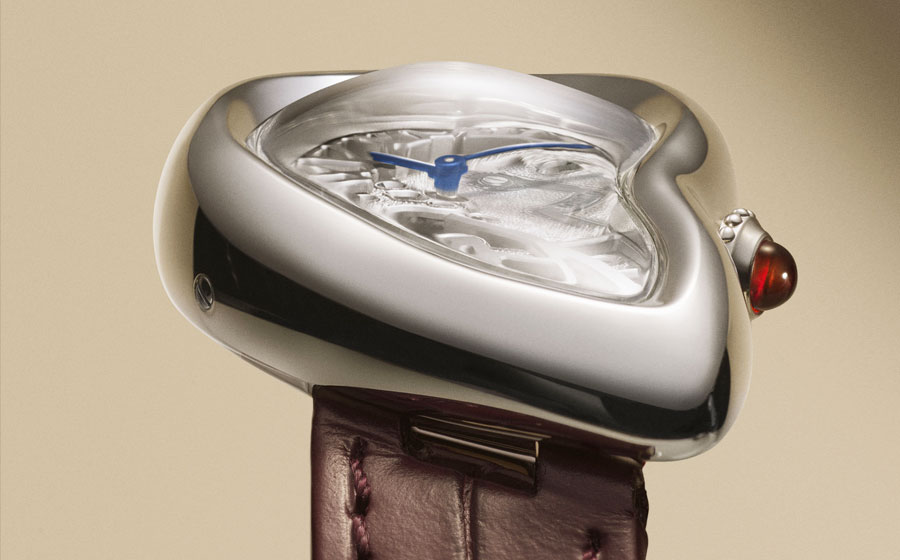
Within the Cartier Privé collection, the Cartier Crash Skeleton further explores the brand’s historical forms. Originally created in London in 1967, the Crash is renowned for its asymmetrical case and strikingly offset dial design
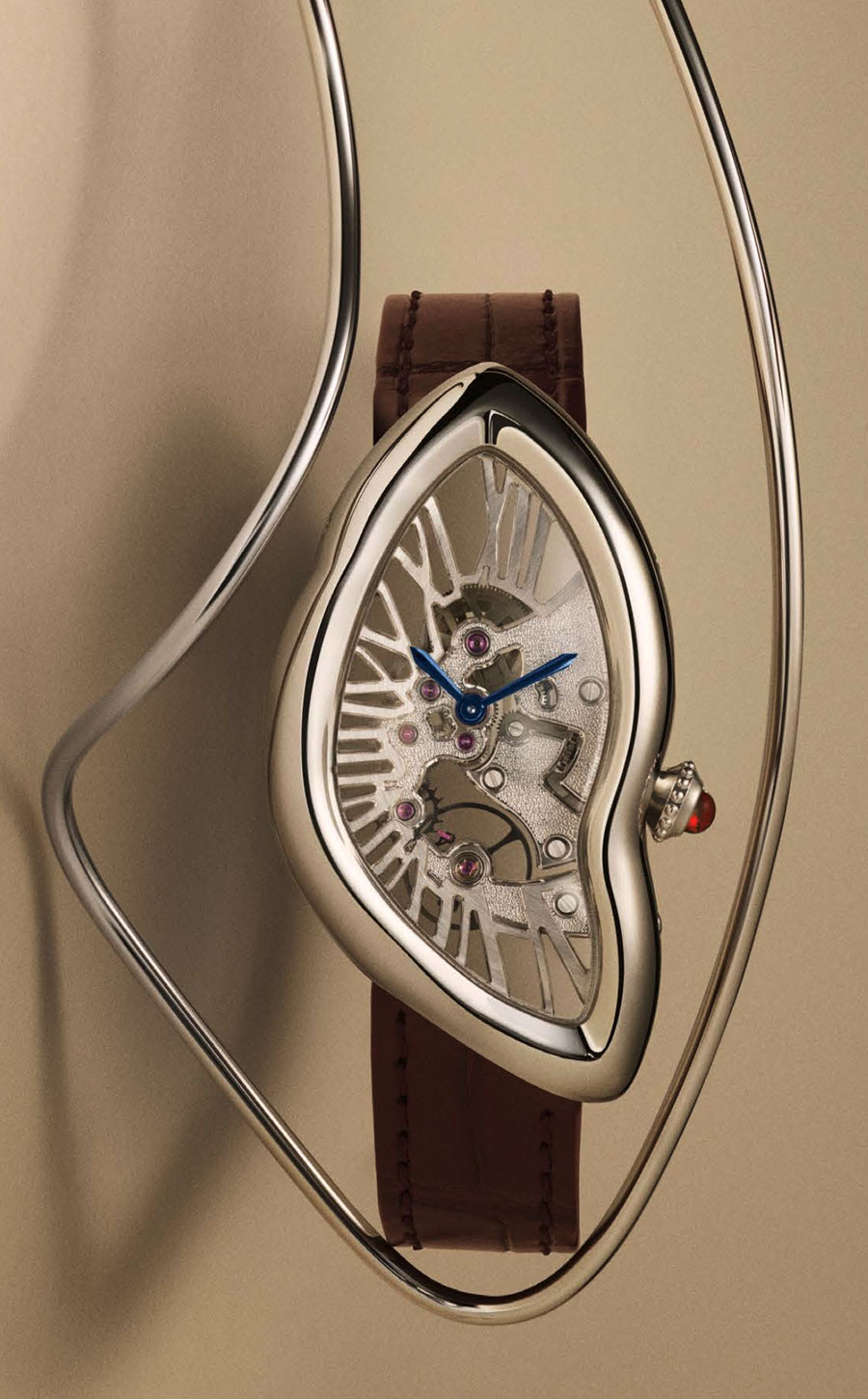
This exclusive platinum edition is powered by the manual-winding Manufacture 1967 MC calibre, engineered specifically for the watch’s highly distinctive geometry. The 142-component calibre features a skeletonised architecture in which the bridges, fashioned as Roman numerals, double as the time display. These are hand-hammered, thanks to a technique that takes around two hours to be achieved. This patented construction combines structural function with legibility.
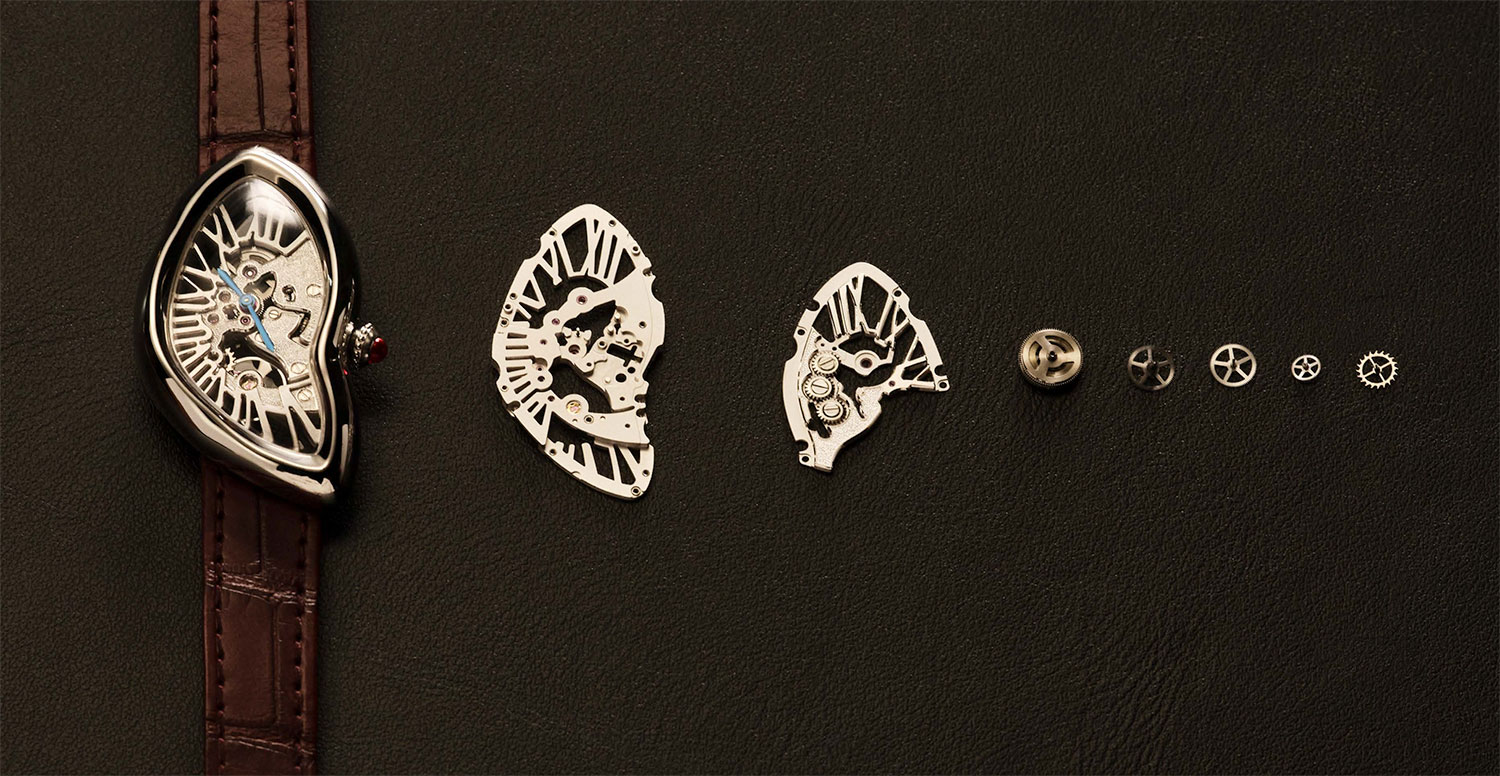
The entire assembly is housed in a 45.34 mm × 25.18 mm case, measuring 12.97 mm in thickness. The timepiece comes fitted with a semi-matte burgundy alligator bracelet. Produced as a numbered limited edition of 150 pieces, this version showcases the ingenuity of its calibre design, making inventive use of limited space and combining mechanical function with visual appeal. A notably striking timepiece!
€117,000
Click here for the Skeleton Crash Timepiece spec sheet
Technical Specifications:
Platinum
Skeleton bridges shaped as Roman numerals
Semi-matte burgundy alligator bracelet
1967 MC manual-winding mechanical manufacture movement
Dimensions: 45.34 × 25.18 mm
Thickness: 12.97 mm
38-hour power reserve
Numbered limited edition of 150 pieces
Tank Cintrée
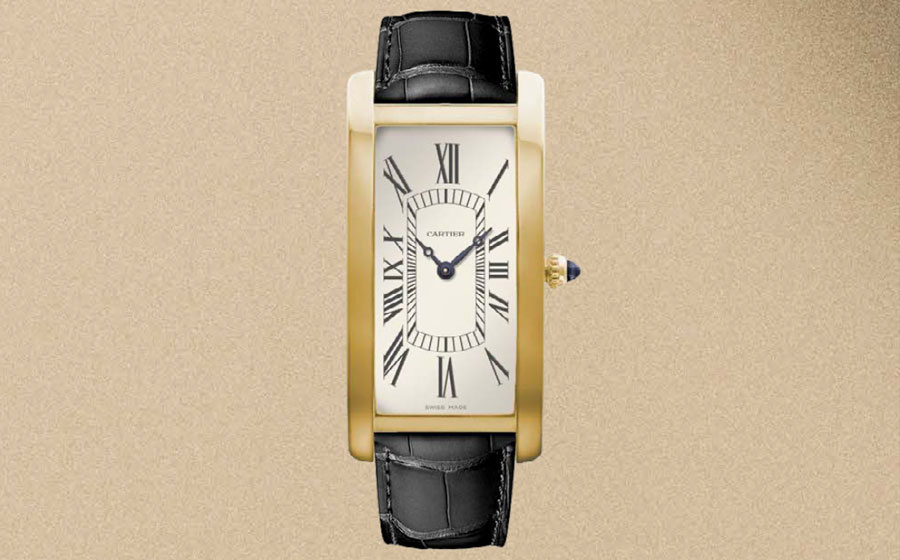
For this 10th edition of Cartier Privé, the Cartier Privé – La Collection brings together several historic time-only models. Among them, the Tank Cintrée by Cartier stands out for its elongated yellow-gold case, measuring 23 mm × 46.3 mm and 6.95 mm thick. The opaline dial with a golden finish features Roman numerals and blued-steel Breguet hands. Power comes from the 1917 MC manual-winding Manufacture calibre. The caseback is engraved with a motif inspired by the model’s distinctive silhouette. Fitted with a dark grey semi-matte alligator bracelet and water-resistant to 30 metres, this reissue retains the hours-and-minutes display and remains true to the materials and finishes of the original.
€37,000
Click here for the Tank Cintrée Timepiece spec sheet
Technical Specifications:
Yellow gold
Golden-finish opaline with grey Roman numerals
Dark grey semi-matte alligator bracelet
1917 MC manual-winding mechanical manufacture movement
Dimensions: 23 mm × 46.3 mm
Thickness: 6.95 mm
Roughly 38-hour power reserve
Water-resistant to 3 bar (roughly 30 metres)
Myst de Cartier
The Myst de Cartier features a highly unconventional construction, built entirely around an integrated, clasp-free bracelet. The articulated structure is composed of successive elements — strung like pearls — on a flexible core, allowing it to slip straight onto the wrist. This required bespoke engineering to ensure the bracelet is equally supple and durable.
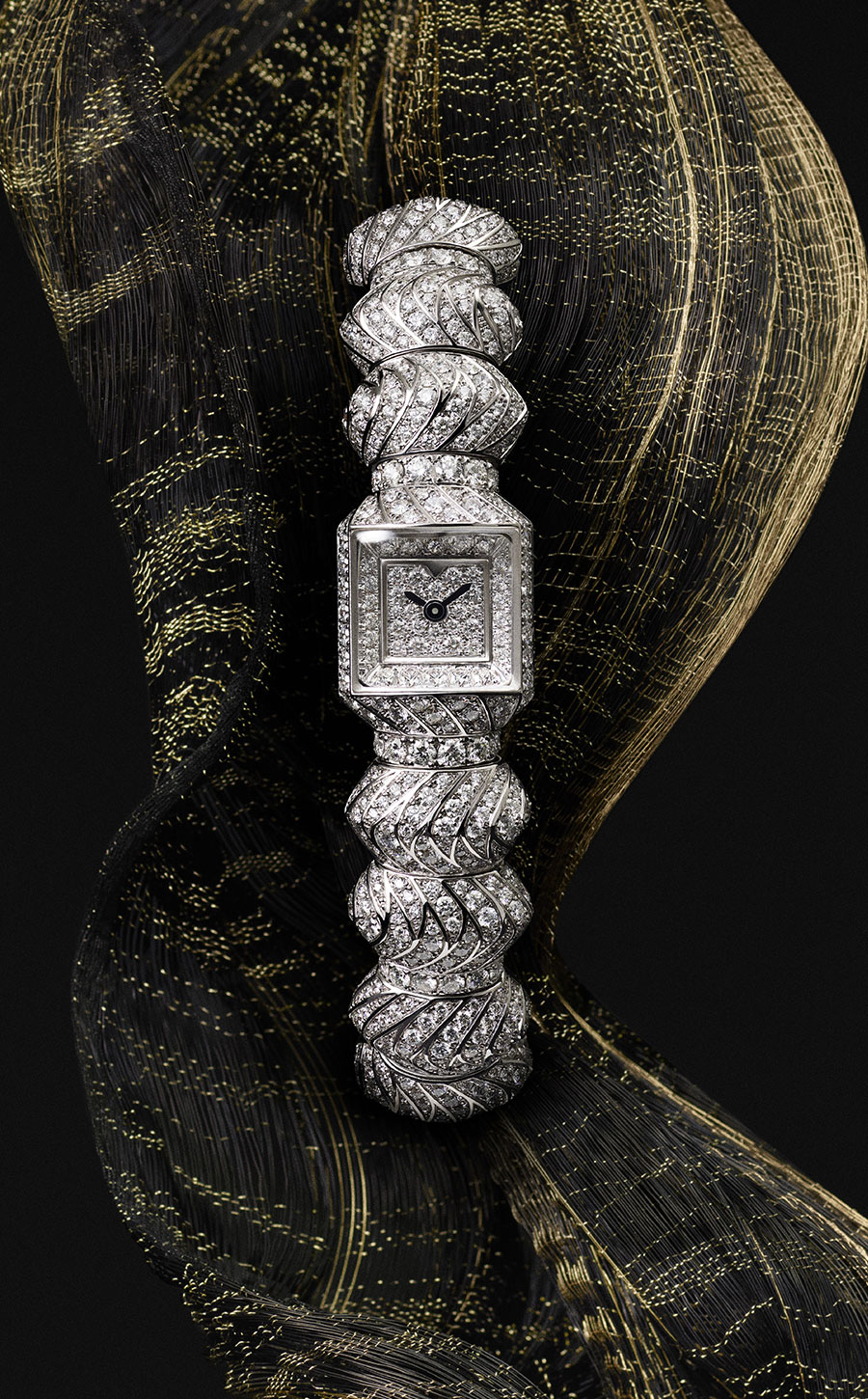
The thin case, measuring 19.7 × 15.4 mm with a thickness of 9.9 mm, is crowned by a domed crystal. It houses a dial set with 45 brilliant-cut diamonds (0.37 ct) in a snow-setting, punctuated by a single triangular marker at 12 o’clock. The design elegantly combines curves and straight lines, a theme echoed in the bracelet’s mix of diamond-paved segments and decorative motifs. The four-grain setting accommodates stones of varying sizes, creating a shimmering effect. In white gold, the sense of volume is achieved entirely through the way light moves across the diamond-set surfaces. Set with 986 brilliant-cut diamonds with a total weight of 9.17 carats, this intricately twisted timepiece is driven by a quartz movement. The bracelet is offered in multiple sizes.
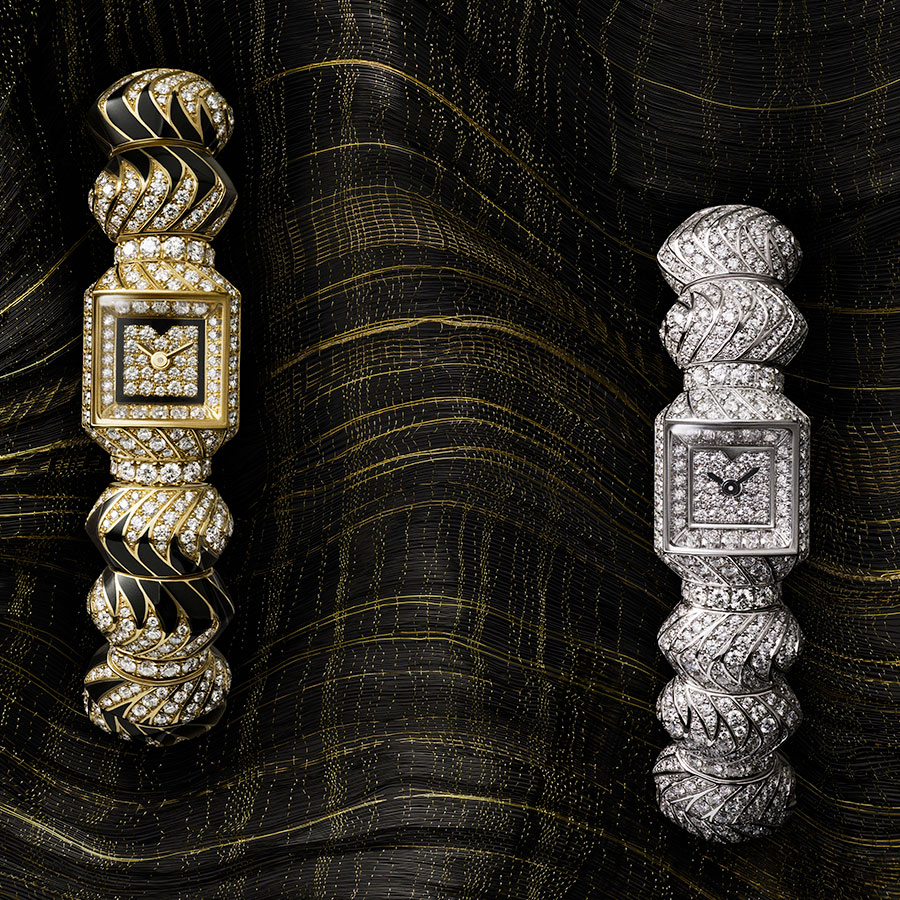
Click here for the Myst de Cartier Timepiece in white gold and diamonds spec sheet – €186,000
Technical Specifications:
White gold model
Case and bracelet set with 986 brilliant-cut diamonds (9.17 ct)
Snow-set with 45 brilliant-cut diamonds (0.37 ct)
Quartz movement
Dimensions: 19.7 mm × 15.4 mm
Thickness: 9.9 mm
Water-resistant up to 3 bar (roughly 30 metres) Available in sizes 15/16
Click here for the Myst de Cartier Timepiece in yellow gold and diamonds spec sheet – €156,000
Yellow-gold model
Case and bracelet set with 634 brilliant-cut diamonds (6.13 ct) and black lacquer
Snow-set with 47 brilliant-cut diamonds (0.35 ct), framed by onyx
Quartz movement
Dimensions: 19.7 mm × 15.4 mm
Thickness: 9.9 mm
Water-resistant to 3 bar (roughly 30 metres)
Available in sizes 15/16
Santos-Dumont Watch
Here, the Santos-Dumont is presented in a yellow-gold edition with an integrated metal bracelet, nodding to the very first bracelets the brand developed in the 1920s.
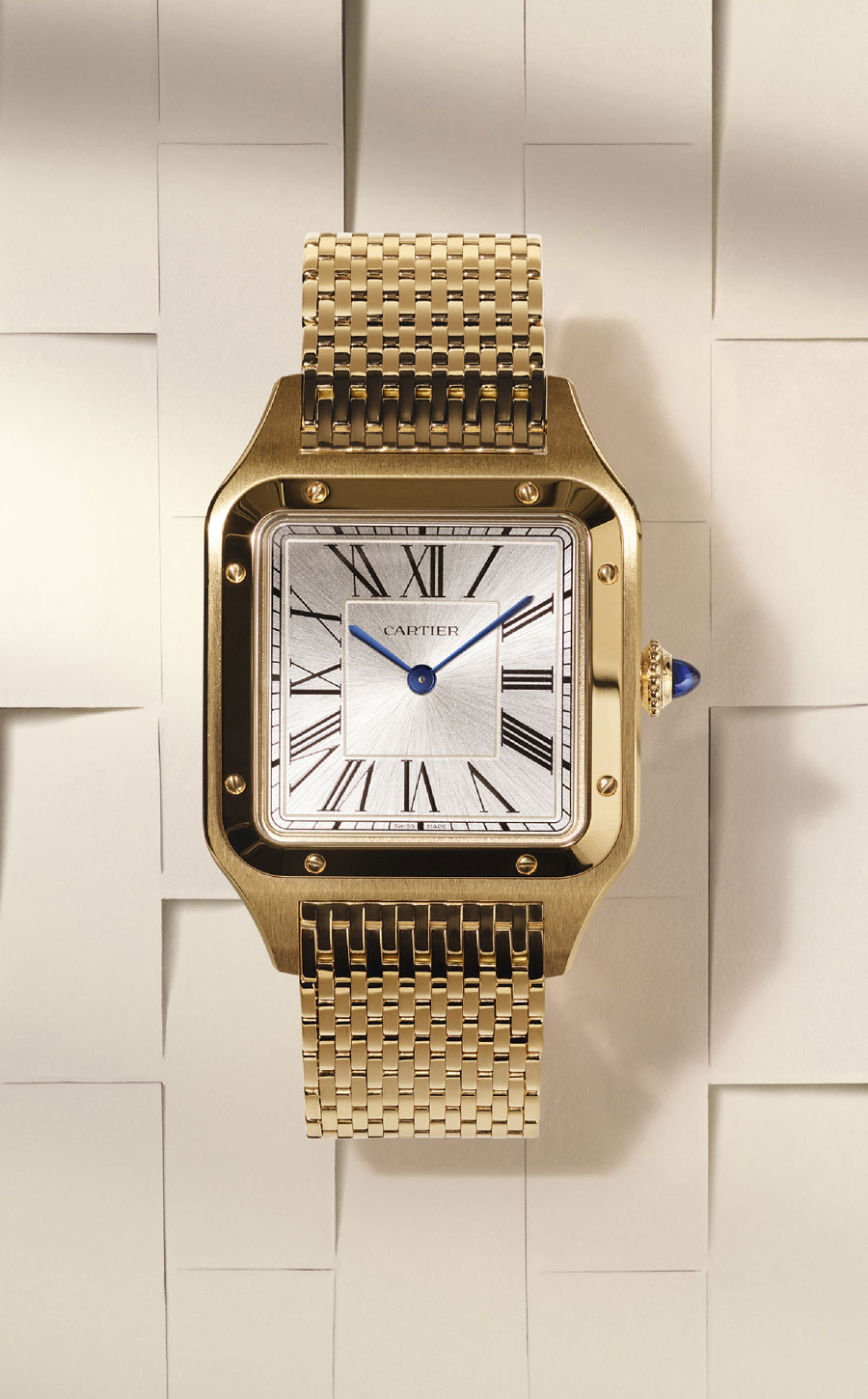
Its construction relies on the assembly of 394 individually machined and polished links, arranged across 15 rows. At 1.15 mm thick, these links provide considerable flexibility, allowing the bracelet to sit perfectly around the wrist. Each strand is secured to both the case and the clasp, contributing to a sense of structural cohesion. The case retains all the DNA of the Santos collection: exposed screws, a beaded crown set with a blue cabochon, and a Roman numeral dial (with a secret signature). The sun-brushed silver dial enhances legibility through controlled light reflection. Water-resistant to 30 metres, the watch is powered by the 430 MC manual-winding manufacture movement. This calibre is well suited to the case’s restrained proportions and refined profile.
€48,500
Click here for the yellow-gold Santos-Dumont Timepiece spec sheet
Technical Specifications:
Yellow gold
Sun-brushed silver dial
Interchangeable yellow-gold bracelet
430 MC manual-winding mechanical manufacture movement
Dimensions: 43.5 mm × 31.4 mm
Thickness: 7.3 mm
Roughly 38-hour power reserve
Water-resistant to 30 metres
Roadster
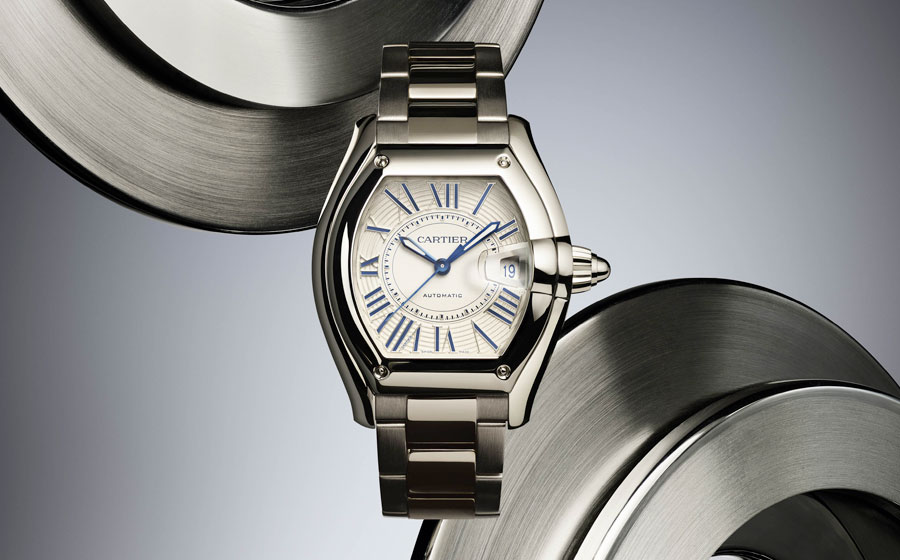
The Roadster returns to the spotlight with a distinctive barrel-shaped case. Its proportions have been subtly refined to improve wearability without altering its original design. The crown is now more naturally integrated into the bezel and the caseband, creating a smoother visual flow enhanced by the interplay between the crystal, the date magnifier, and the dial. The bezel is defined by four rivets, while the date magnifier retains a distinctive shape, seamlessly integrated into the overall design. The dial carries over the established codes: a circular striated pattern, a railway minute track, and Roman numerals. The updates stem from new manufacturing processes, such as a relief effect achieved through stamping, complemented by lacquered hour markers and a transferred minute track. On these two automatic versions in steel and yellow gold, the luminescent sword-shaped hands highlight either a blue or anthracite finish respectively.
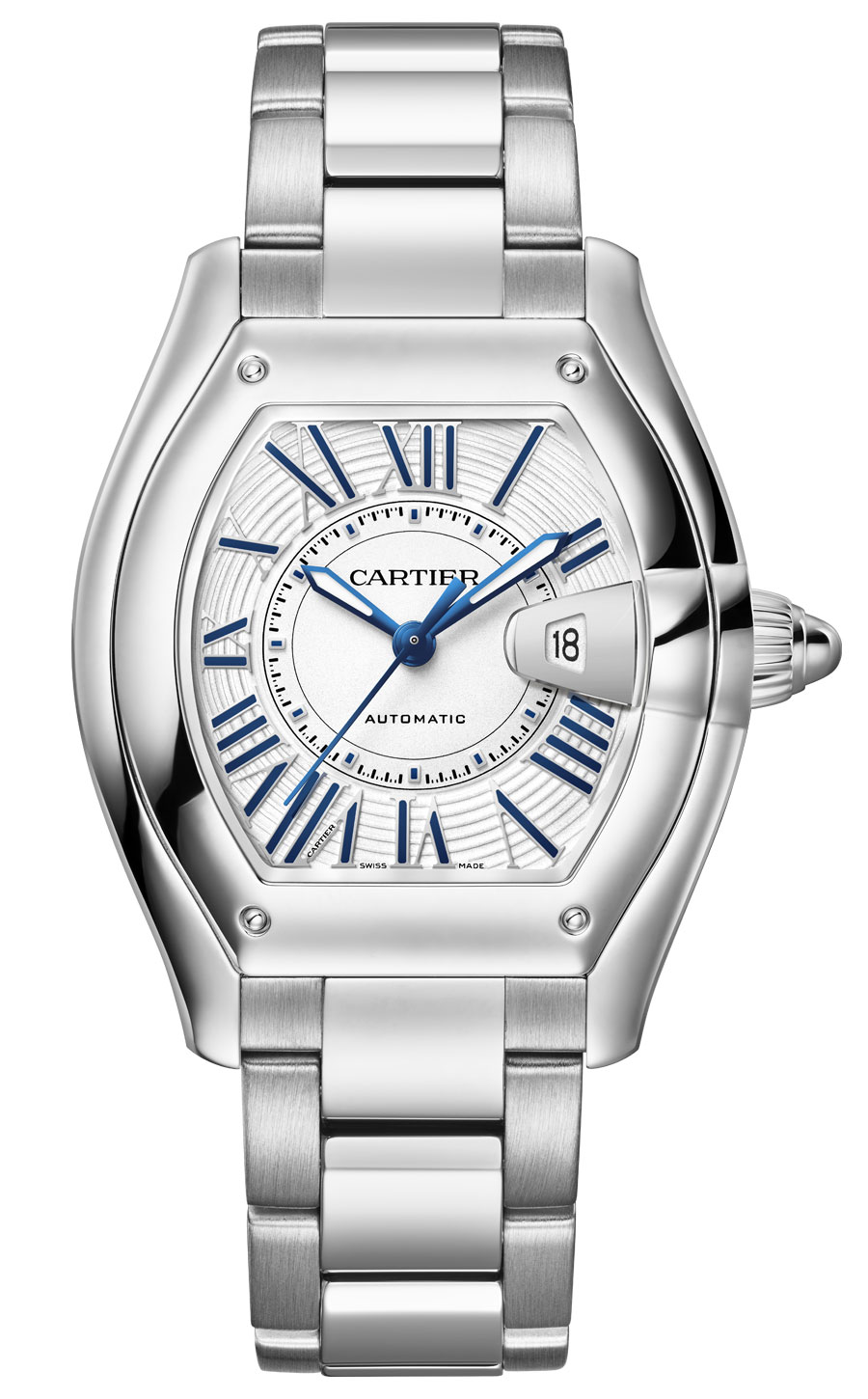
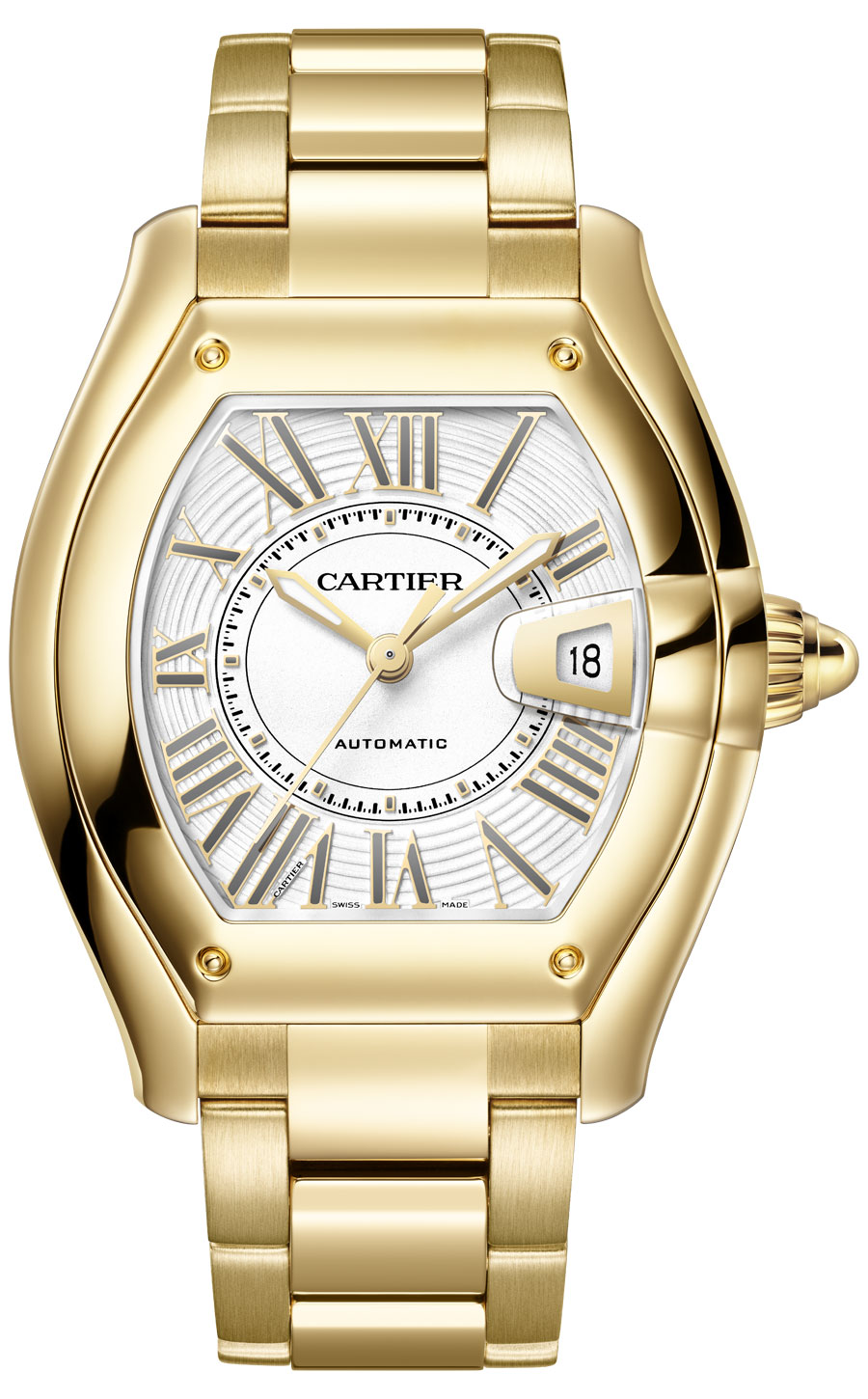
A large yellow-gold model, also with a white dial, supplied with a grey alligator bracelet.
The metal bracelet has also been redesigned. Shorter links provide improved flexibility and ensure it sits more comfortably on the wrist, while alternating polished and brushed surfaces give the piece a well-structured look. Switching bracelets has never been easier — no tools required. If you prefer the alligator bracelet, use the folding clasp, which matches the case material.
Technical Specifications:
Medium Model in Steel — €9,150
White dial, Super-LumiNova®
Bracelet featuring QuickSwitch® system
Second semi-matte navy blue alligator bracelet
with interchangeable steel folding clasp
Mechanical Movement: 1899 MC self-winding mechanical manufacture movement
Dimensions: 42.5 mm × 34.9 mm
Thickness: 9.7 mm
Water-resistant to roughly 100 metres
Large Model in Yellow Gold — €56,000
White dial, Super-LumiNova®
Bracelet featuring QuickSwitch® system
Second semi-matte grey alligator bracelet
with interchangeable yellow-gold folding clasp
Mechanical Movement: 1847 MC self-winding mechanical manufacture movement
Dimensions: 47 mm × 38 mm
Thickness: 10.06 mm
Water-resistant to roughly 100 metres
Cartier Baignoire with Clou de Paris Motif
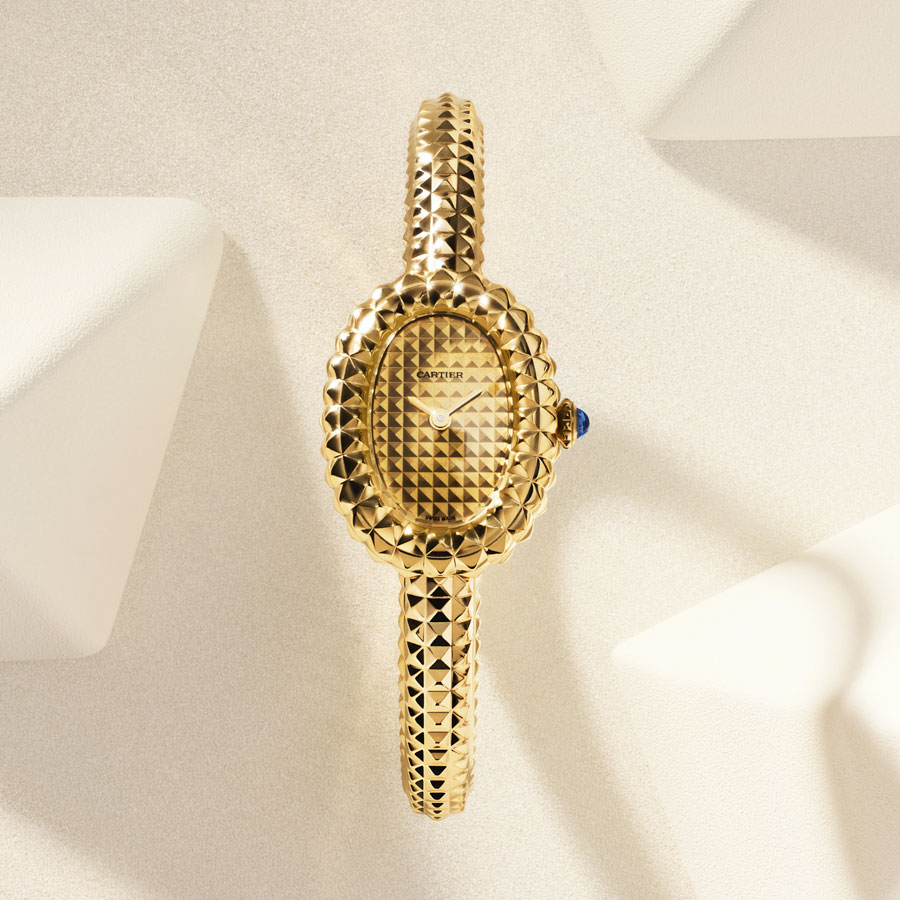
This is a timepiece with undeniable presence — and, for me, one of the big standouts of the watch fair. Crafted as a solid bangle bracelet, this version of the Baignoire is entirely devoted to the Clou de Paris motif. The pattern flows seamlessly across the watch — from the bracelet right through to the dial — demanding flawless execution to ensure the proportions remain perfectly uniform. Its creation relies on a specialised gold-forming technique, preserving the crisp geometry of the facets while maintaining structural integrity. The push buttons, yellow gold too, seamlessly blend into the curve of the bangle, ensuring an entirely uninterrupted silhouette.
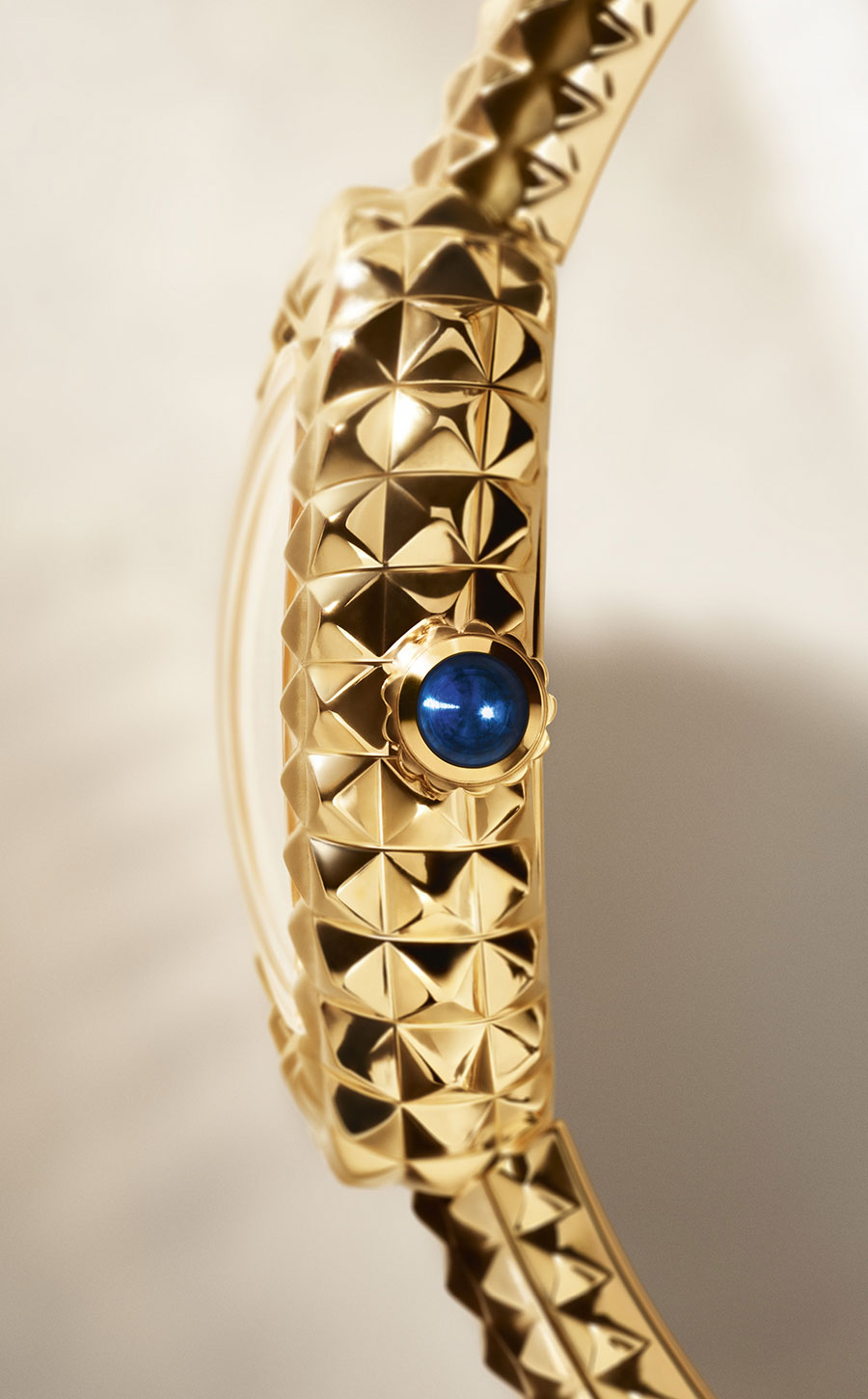
The case preserves the Baignoire codes: the oval shape, a winding crown adorned with a sapphire, and a pared-back dial. The engraved Clou de Paris motif transforms the perception of surfaces. It brings the timepiece a consistent, tactile texture throughout. Another understated Cartier feat lies in the polishing, which has been done entirely by hand to preserve the geometric pattern without softening the edges, to ensure legibility. Needless to say, we are utterly amazed.
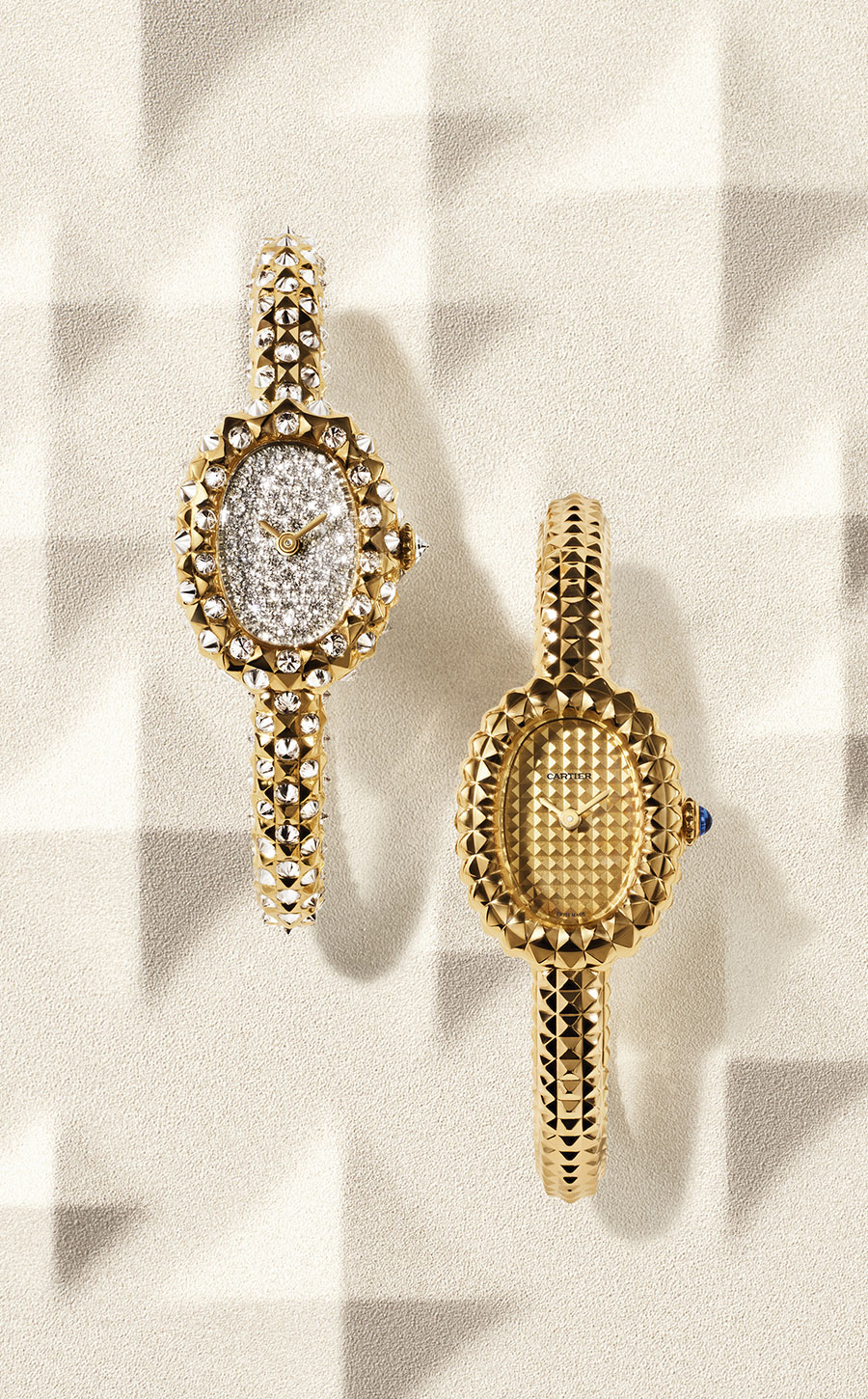
€22,800
Click here for the yellow-gold Clou de Paris Baignoire Timepiece spec sheet
Technical Specifications:
Yellow gold
Golden dial
Available in 15, 16, and 17
Quartz movement
Dimensions: 24.6 mm × 19.3 mm
Thickness: 7.5 mm
Water-resistant to 3 bar (roughly 30 metres)
PIAGET
Polo 79
The Piaget Polo 79 continues the legacy of a model first launched in 1979, recognisable by its seamless design and gadroon motif — a pattern that alternates between polished and satin-brushed surfaces. This runs through both the case and bracelet, creating a continuous play of texture that has been the hallmark of the lineup since its inception. Following all-gold and white-gold versions, a two-tone model was introduced earlier this year, marking the latest iteration in the lineup.
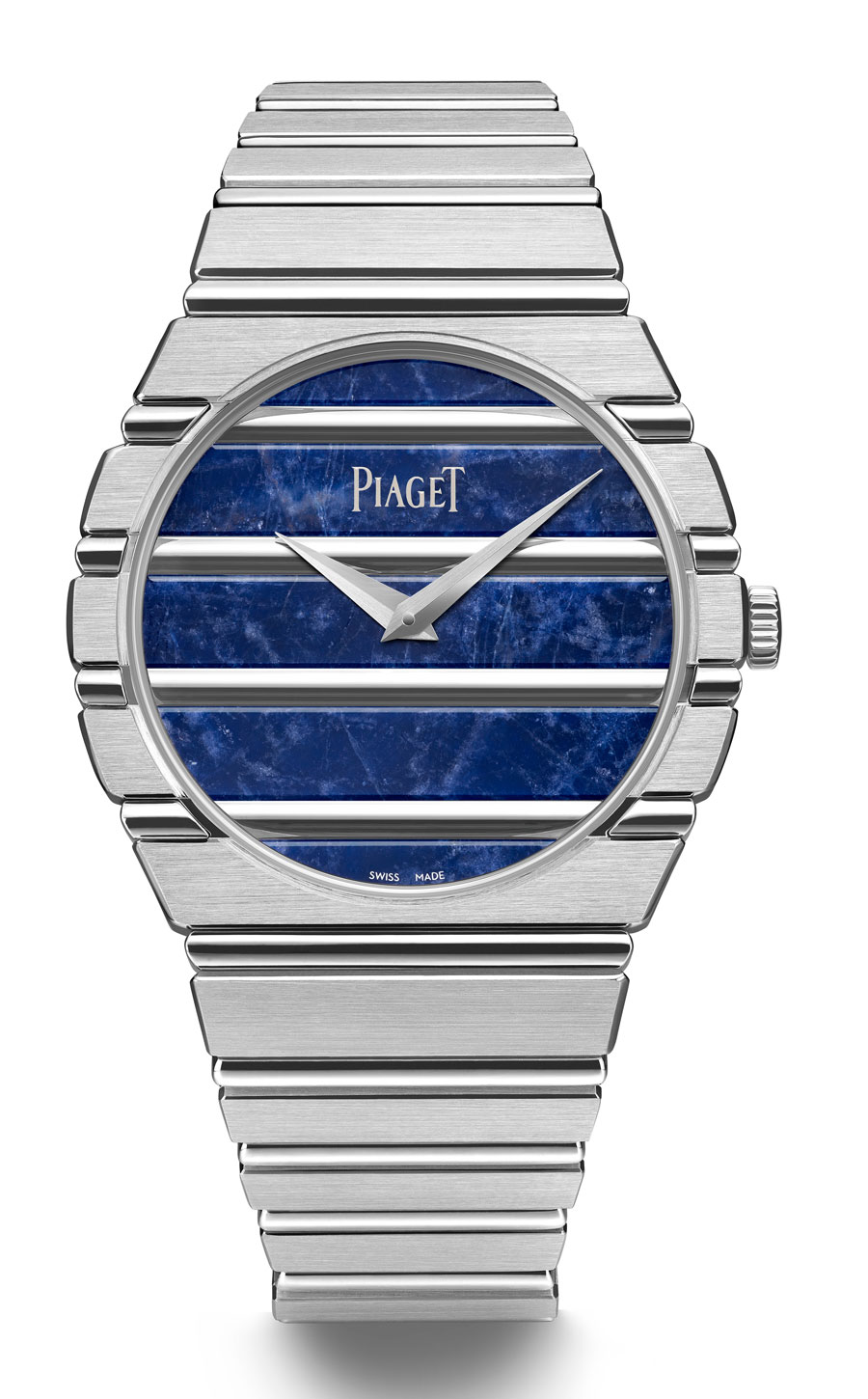
Today, this latest Polo 79 retains a 38mm diameter and a 7.45mm-thick profile. The 18-carat white-gold case marries satin-brushed surfaces with polished gadroons — a finish mirrored seamlessly across the integrated bracelet. Its defining feature, however, is the sodalite dial. This ornamental stone creates a striking contrast against the white gold while drawing out the dial’s appearance, which is further enhanced by polished gadroons. It is a choice steeped in Piaget’s heritage, the brand having previously experimented with onyx and lapis lazuli, on earlier iterations of the Polo.
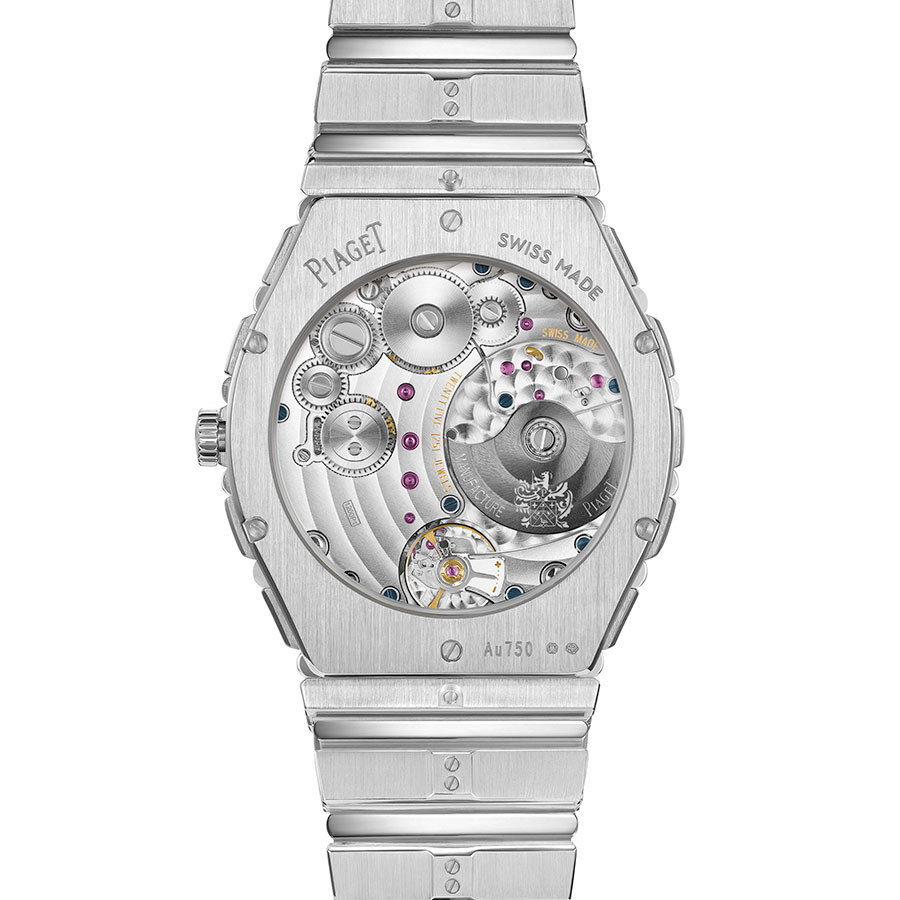
The timepiece retains the lineup’s core design: monobloc construction, alternating finishes, and an integrated ultra-thin movement, while introducing a new material variation to the dial. It boasts the ultra-thin, in-house self-winding calibre 1200P, ensuring both a slim profile and a seamless integration within the watch’s overall profile. It is water-resistant to roughly 50 metres.
€104,000
Diameter: 38 mm
Case thickness: 7.45 mm
Case: 18-carat white gold, satin-finished and polished gadroons
Dial: 18-carat white gold with polished gadroons and sodalite
Bracelet: 18-carat white gold, satin-finished and polished gadroons
Movement: 1200P self-winding manufacture calibre
Water-resistant to roughly 50 metres
Click here for the Polo 79 Timepiece spec sheet.
Polo Date
Water-resistant to 50 metres, this timepiece preserves the distinctive lines of the Polo collection in a compact format, with a rose-gold cushion-shaped case measuring 36 mm in diameter and 8.8 mm in thickness.
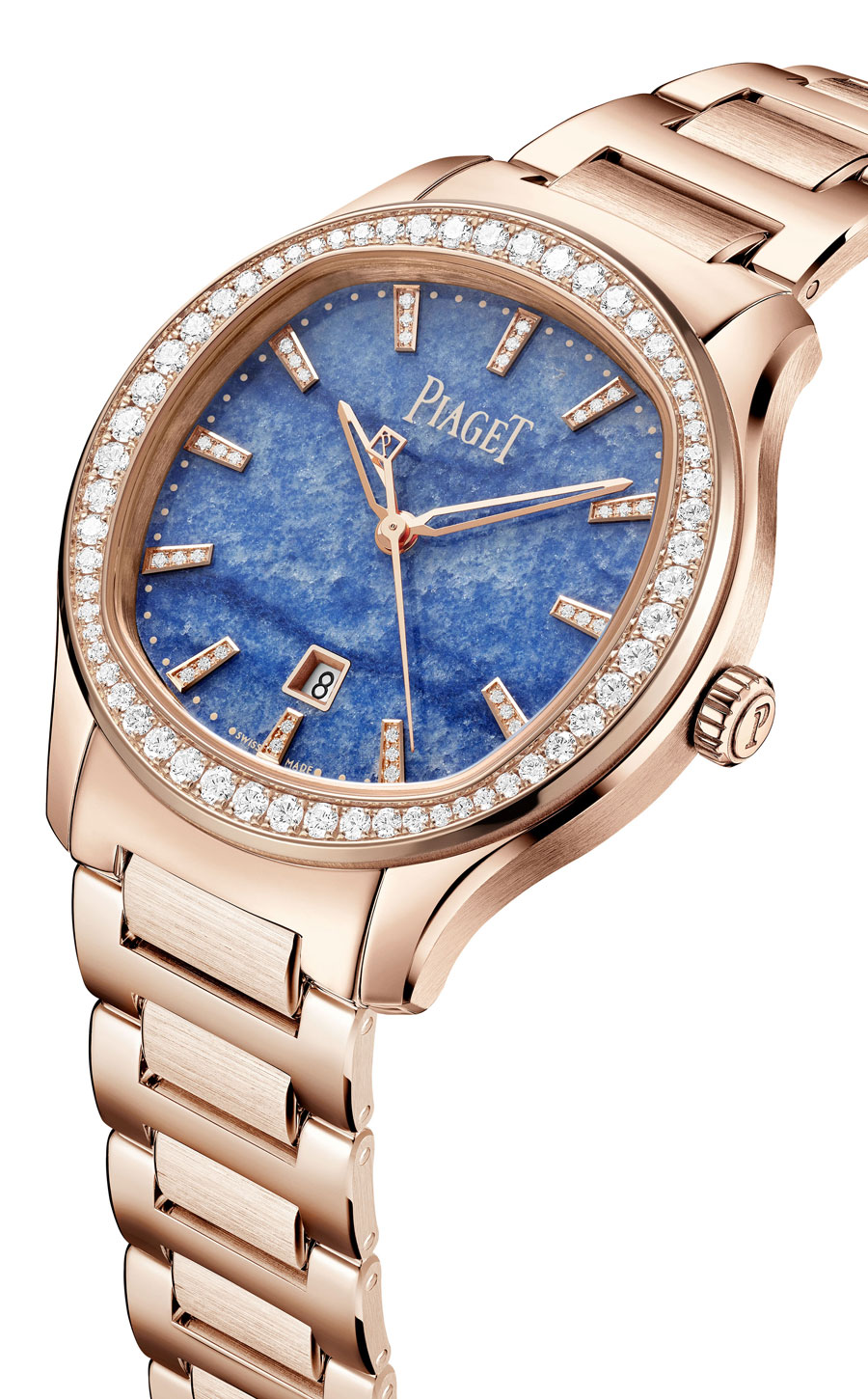
Crowned by a bezel set with 60 brilliant-cut diamonds, the blue quartz dial introduces a mineral texture which creates a stark contrast with the rose-gold elements. The applied rose-gold hour markers are set with 36 brilliant-cut diamonds (three per index), while the open-worked hands ensure excellent legibility of the hours and minutes.
Turning the watch over, the sapphire caseback reveals the in-house calibre 500P1. This self-winding movement beats at 28,800 vibrations per hour (4 Hz) and delivers a 40-hour power reserve. Fitted with an engraved oscillating weight, it displays a number of traditional yet finely executed finishes, including circular Côtes de Genève, a perlage-decorated mainplate, bevelled bridges and blued screws. The integrated rose-gold bracelet can be interchanged with the supplied burgundy alligator bracelet. It showcases a rose-gold pin buckle.
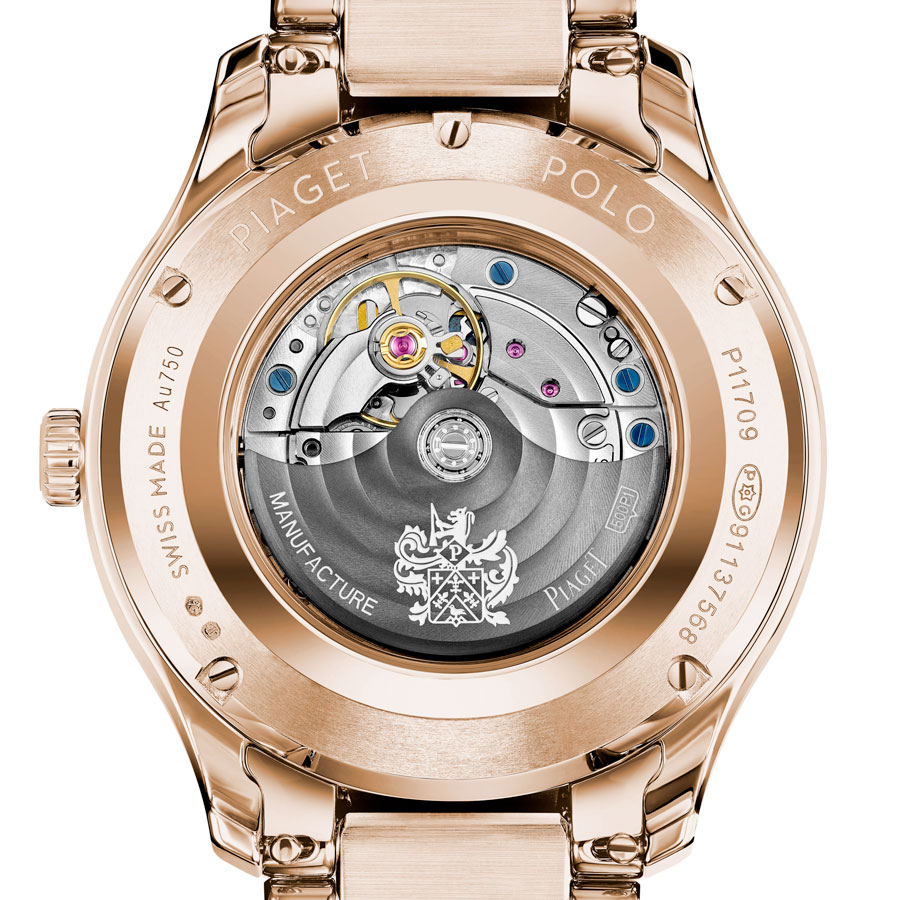
€71,000
Click here for the Polo Date Timepiece spec sheet.
Swinging Pebbles
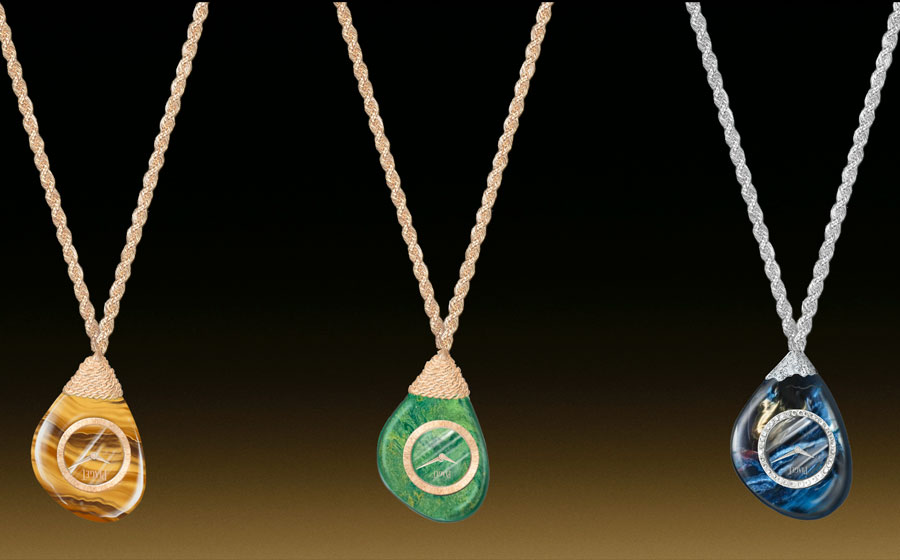
With the Swinging Sautoirs, Piaget pursues a tradition first established in the late 1960s, when the watch broke free from the wrist to reinvent itself as a pendant. As early as 1969, the 21st Century Collection pioneered this very concept, blending exquisite goldsmithing and ornamental stones with master watchmaking in entirely unconventional formats. Throughout the 1970s, under the guidance of Valentin Piaget and in partnership with designers such as Jean-Claude Gueit, these creations evolved into unique timepieces defined by their materials and movement. At the heart of the concept is a stone dial hanging to a gold chain: fluidity and motion are central to the design.
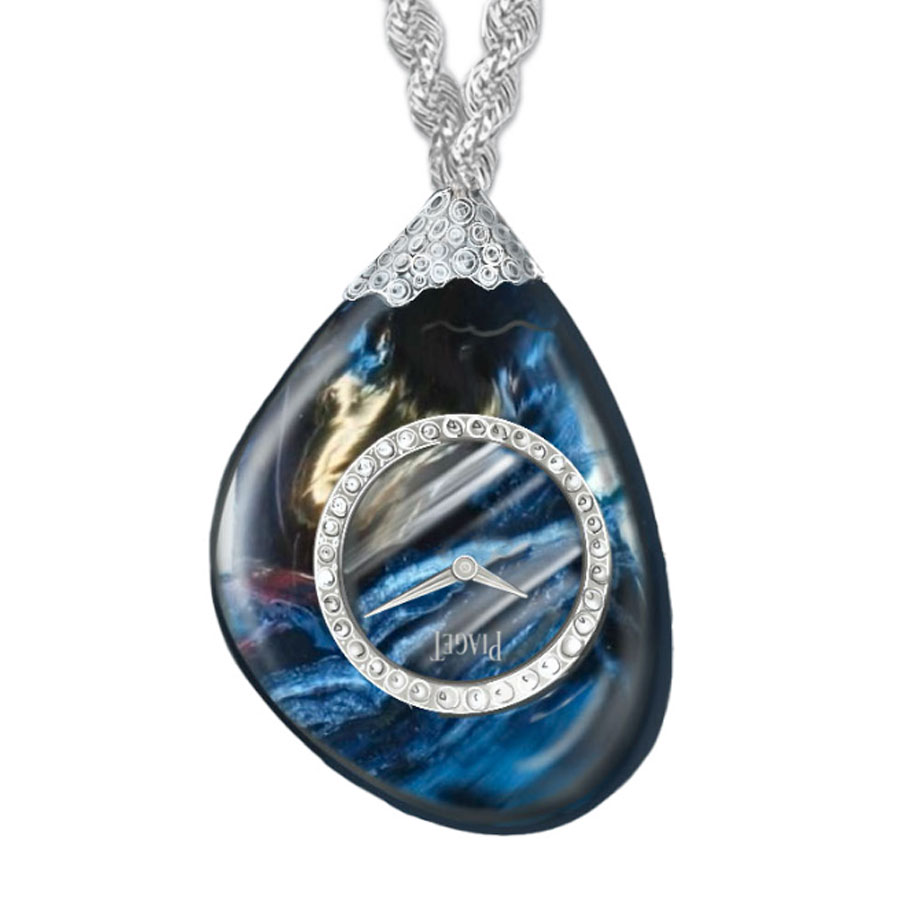
This new Swinging Pebbles series reimagines this very design. Each watch-pendant is carved from a single block of ornamental stone— in this case, pietersite — which is hollowed out to house a manufacture movement, then sealed to create a polished, pebble-shaped case. This monobloc construction showcases both the continuity of the material and the precision of the craftsmanship. The white gold case is set with diamonds and houses the 355P quartz calibre, displaying the hours and minutes. The entire piece is hanging on an 80cm twisted white gold chain. It serves as both a structural and decorative element. Water-resistant to 30 metres, this version pays tribute to the historic principles of the Swinging Sautoir: integrating the movement within an ornamental stone, employing a sealed-case construction, and creating a fluid interaction with the wearer’s movements through the chain. We find it utterly enchanting.
€90,000
Technical Specifications:
White gold
Sautoir Length: 80 cm
Movement: Quartz
Water-resistant to roughly 30 metres
Dial & Pendant: Pietersite
Andy Warhol
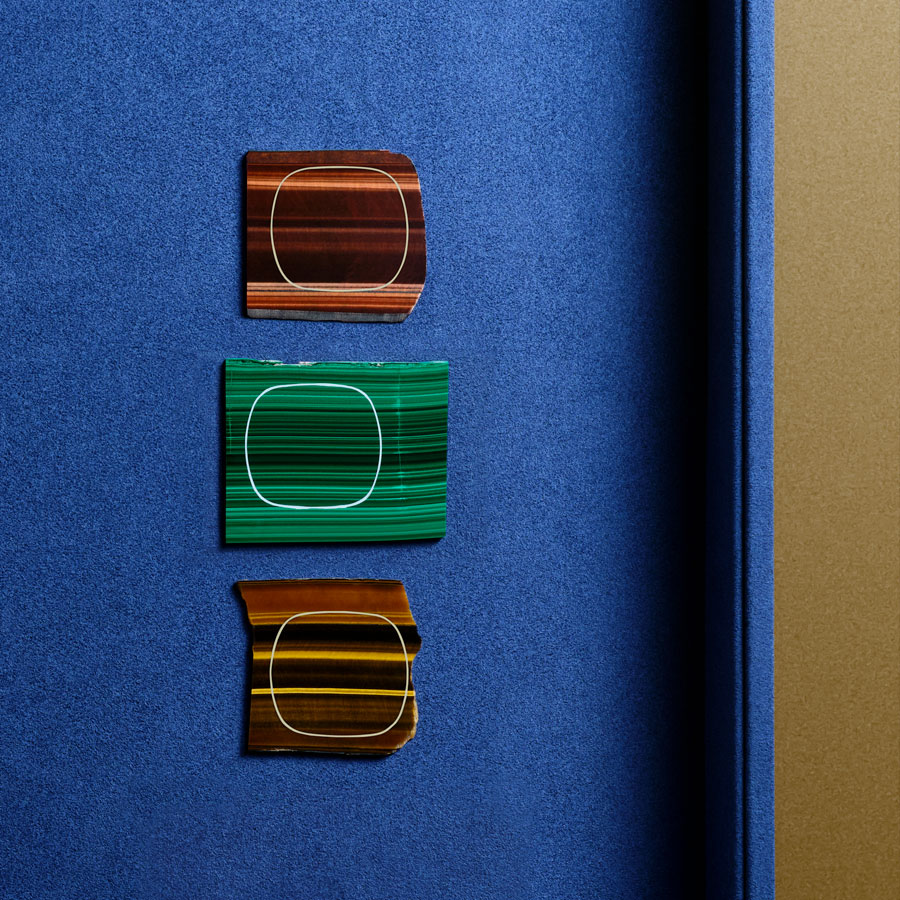
At Piaget, colour is a language in its own right. Since 1963, the brand has explored the expressive potential of ornamental stones — lapis lazuli, malachite and tiger’s eye — transforming the watch dial into a vibrant work of art. This approach challenged the conventions of the time and has since become one of its defining hallmarks. The real breakthrough came with the ultra-thin 9P calibre: by reducing the thickness, Piaget opened up new possibilities in design. The dial took centre stage. Throughout the 1960s and 1970s, the jewellery watch emerged as a stylish object, fueled by the vibrant spirit of the Piaget Society.
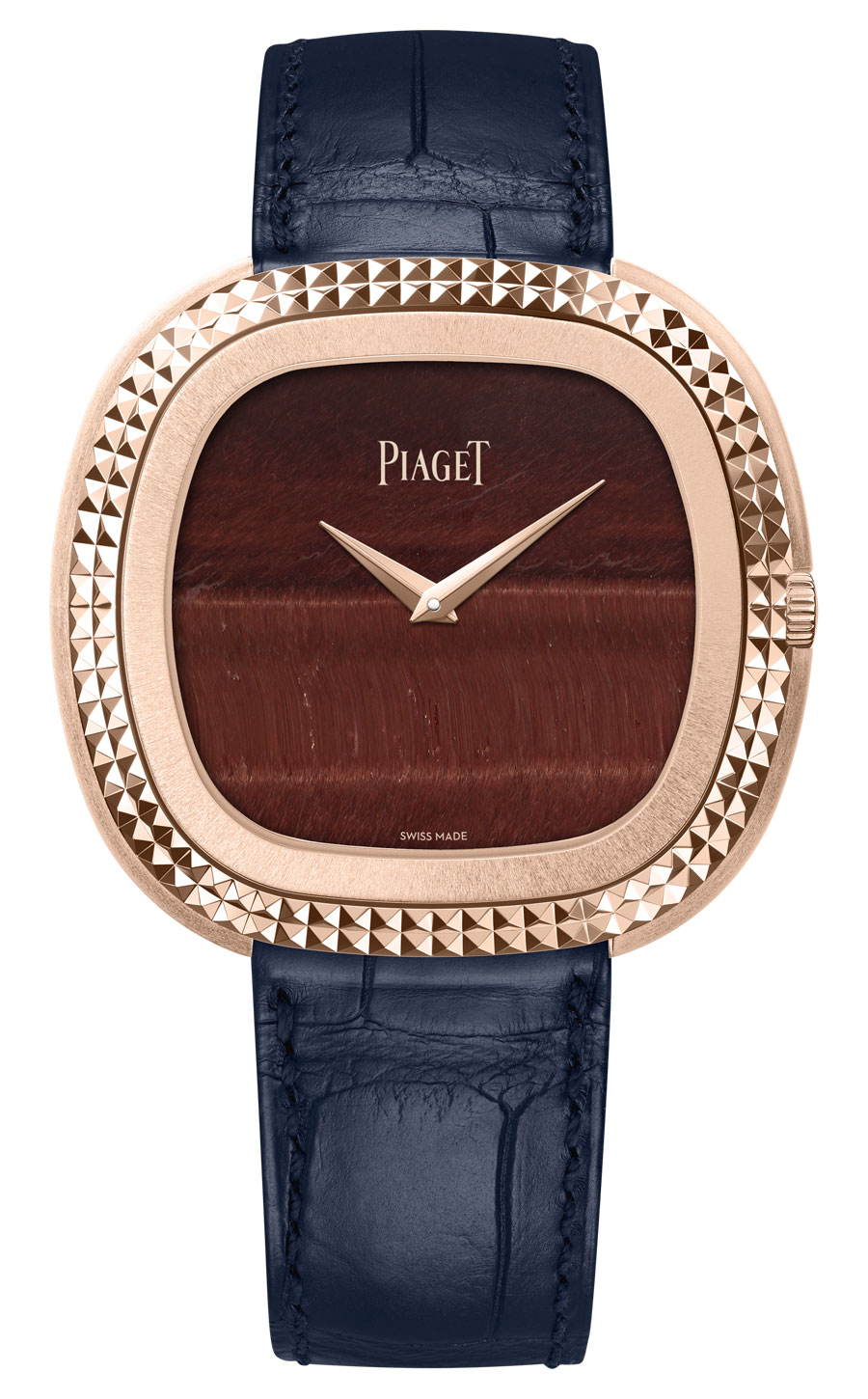
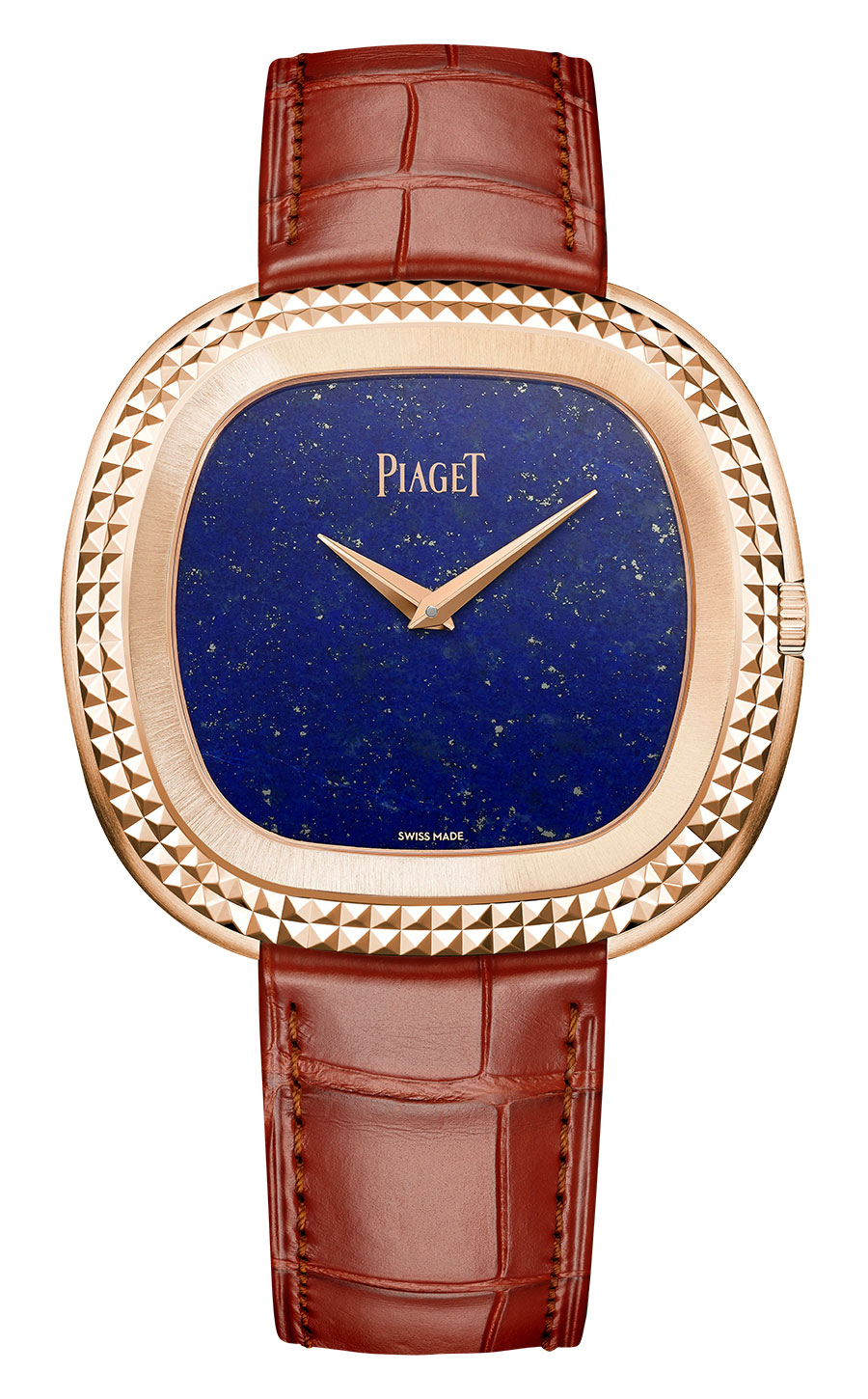
This year, this heritage is strikingly embodied in two new iterations of the Piaget Andy Warhol lineup. Identical design: a 45 × 43 mm rose-gold cushion-shaped case adorned with a Clou de Paris finish, a slim profile (8.08 mm thick), and the self-winding Manufacture 501P1 movement, which delivers roughly a 40-hour power reserve. A shared foundation, conceived like a jewellery box. On the one hand is lapis lazuli: a deep, naturally veined blue with an almost celestial touch, seeming to catch the light from within. Paired with a brown alligator bracelet, it creates an understated elegance, almost contemplative. On the other is bull’s-eye (oxeye): a stone with vibrant red-brown tones which seems to offer a striking natural variation. Paired with a blue alligator bracelet, it delivers a far bolder contrast.
Beneath the dial, the 501P1 movement upholds the highest standards of watchmaking, combining meticulous finishing with a highly refined design, while allowing the dial to remain firmly centre stage. Here, texture and colour take precedence. Two watches, two personalities, one signature: that of a brand, which keeps making colour one of its most compelling forms of expression.
Rose-gold model with bull’s eye dial — €61,500
Rose-gold model with lapis-lazuli dial — €67,500
VACHERON CONSTANTIN
Overseas Ultra-Thin Automatic
Following seven years in development, the watchmaker has introduced the calibre 2550 —an ultra-thin automatic movement measuring 2.4 mm thick and 30.6 mm in diameter, which delivers an 80-hour power reserve. This construction hinges on three key elements: a bidirectional micro-rotor, a suspended twin barrel, and a compact gear train arranged on a single level.
Recessed into the mainplate to limit overall thickness, the micro-rotor is crafted from 950 platinum. With a diameter of 15.5 mm, its density optimises the efficiency of the self-winding system without the need for a bulkier central oscillating weight. The suspended twin-barrel system adopts a unique superimposed configuration. Mounted in series and in an inverted arrangement, both barrels rotate about a single axis fixed to the bridge. This structure eliminates the need for a cover and the ratchet wheel whilst maintaining stable torque.
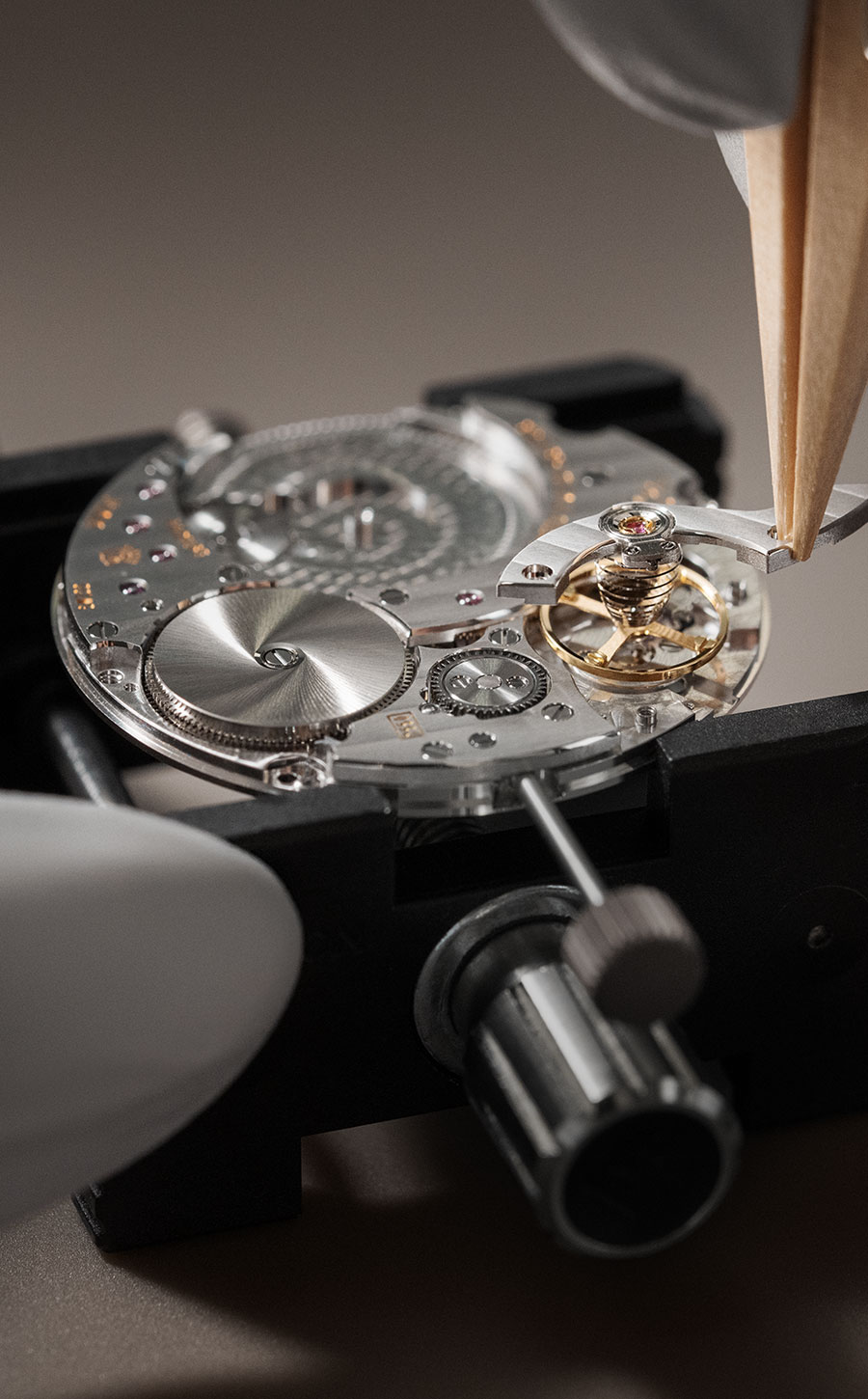
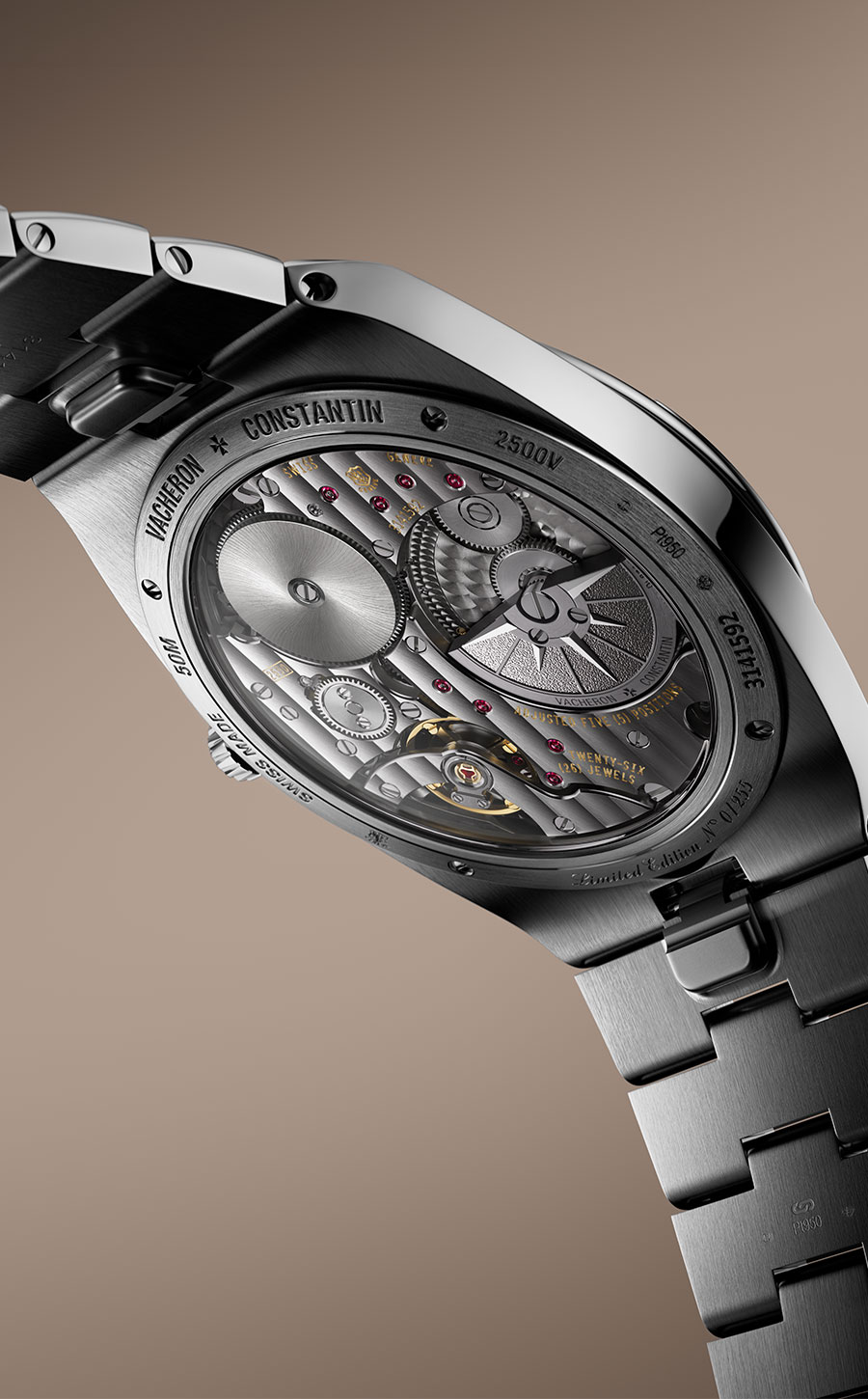
The upper barrel transmits energy to the lower barrel, ensuring a consistent rate throughout the entire 80-hour power reserve. Redesigned to fit within this constrained space, the gear train comprises five wheels arranged on a single plane, two of which are mounted on ball bearings. This construction improves energy efficiency while reinforcing the overall robustness of the movement. The balance oscillates at 3 Hz, equivalent to 21,600 vibrations per hour.
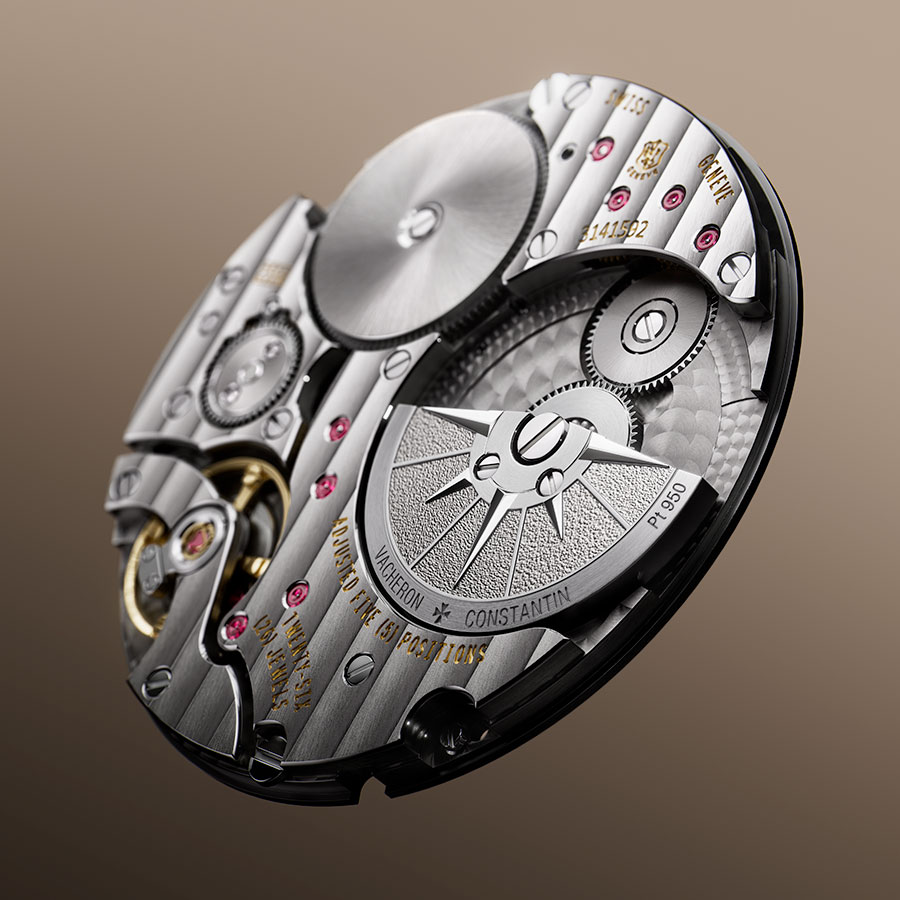
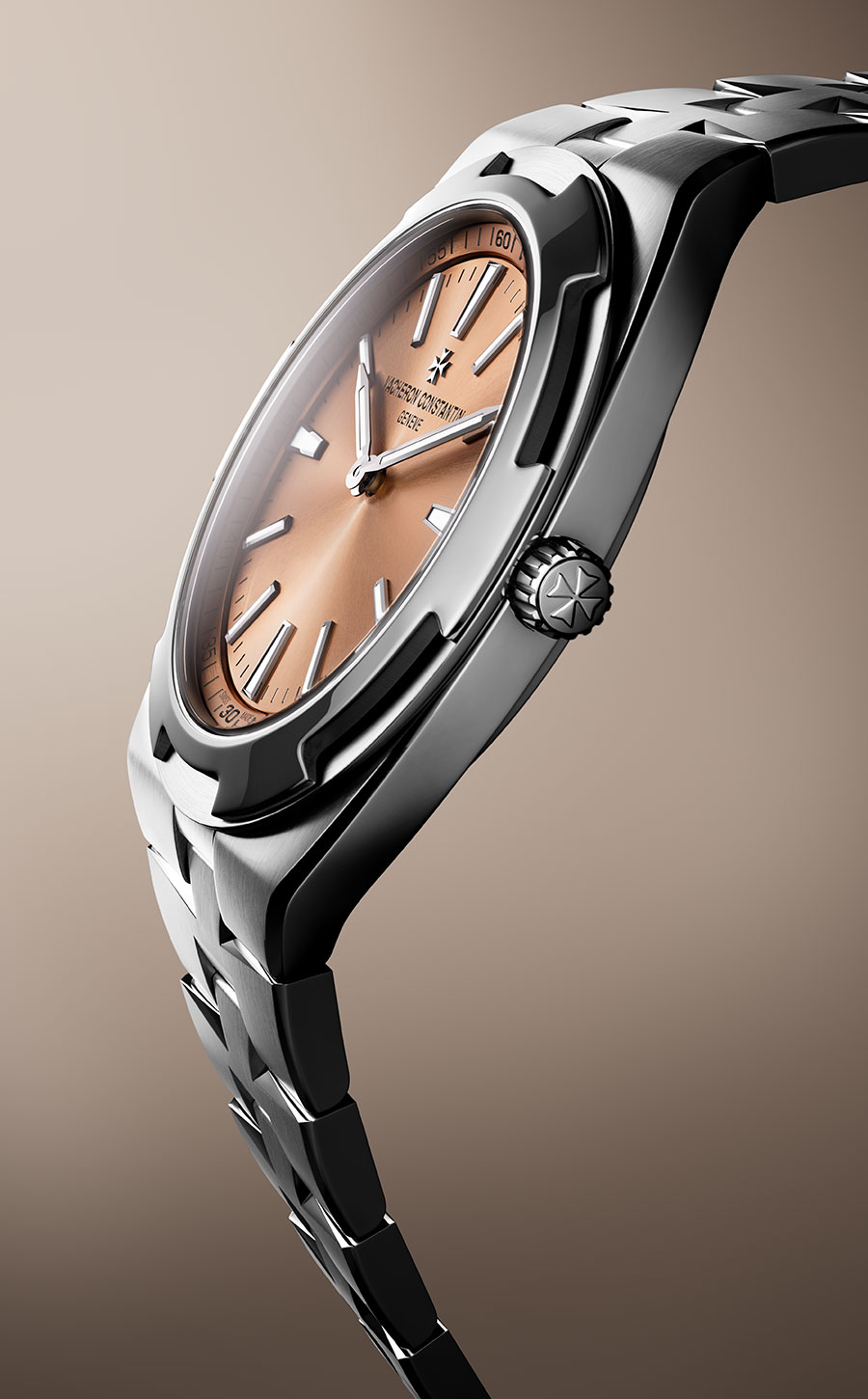
Visible through a sapphire caseback, this remarkable movement beats at the heart of the new Overseas Ultra-Thin Automatic, housed in a 950 platinum case measuring 39.5 mm in diameter and 7.35 mm thick. Enriched with copper and gallium, the bespoke alloy undergoes a heat-treatment process which is said to be 2.7 times more resistant than standard 950 platinum. Water-resistant to 50 metres, the watch features a salmon-lacquered dial with a sunbrushed and satin-brushed finish, framed by a peripheral minute track. The hands and hour markers are coated with blue Super-LumiNova®.

The model retains all the hallmarks of the Overseas lineup, thanks to its integrated platinum bracelet and tool-free switching system, and comes with additional rubber and alligator bracelets. The timepiece bears the prestigious Poinçon de Genève. It is available in a limited run of just 255 numbered pieces.
€118,000
Click here for the Overseas Ultra-Thin Automatic Timepiece spec sheet.
Historiques American 1921
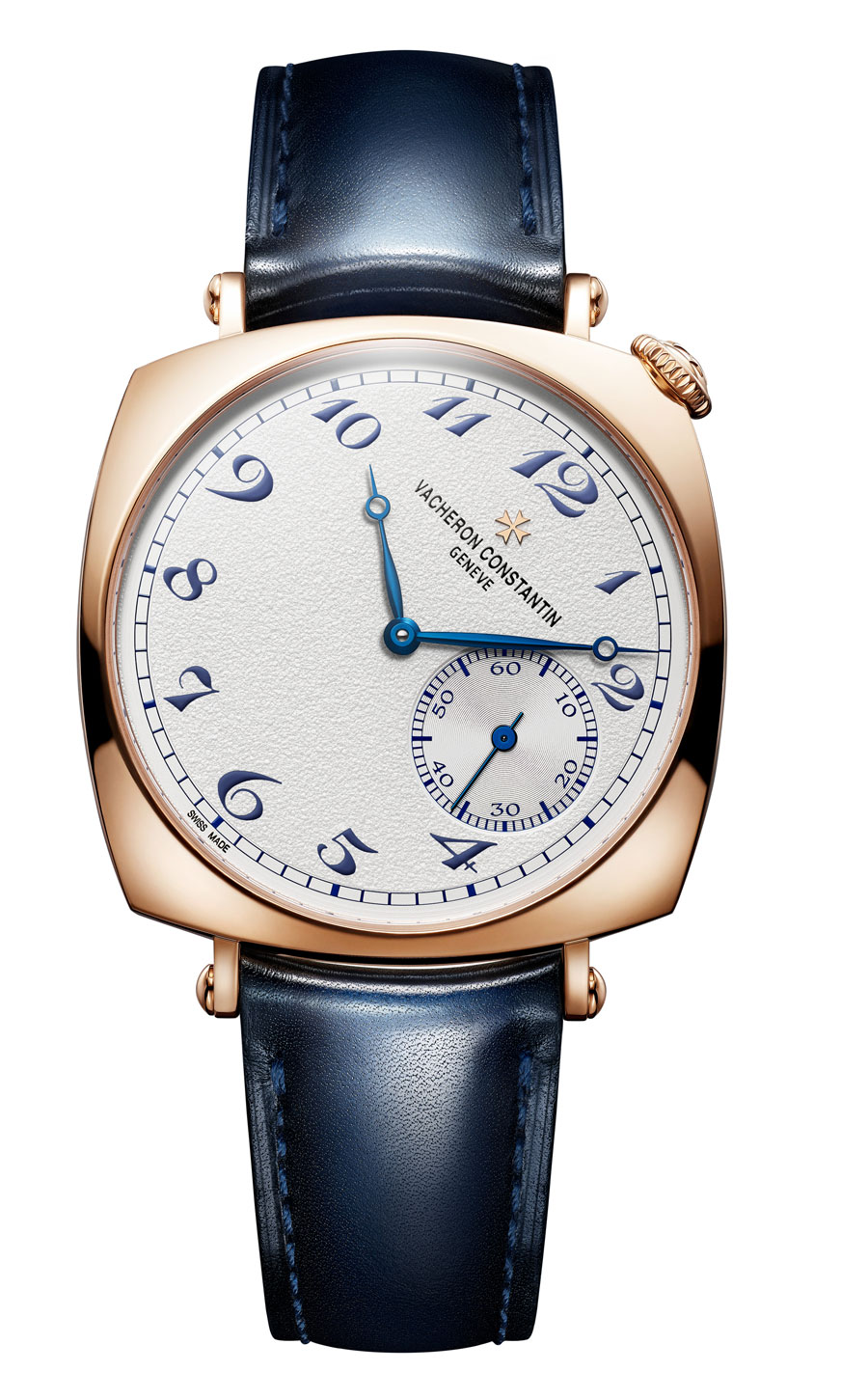
Vacheron Constantin has conceived these two new versions of its Historiques American 1921, remaining faithful to the original codes: the cushion-shaped case, the dial rotated 45 degrees, and the offset display. With its first appearance in the late 1910s, this distinctive layout was originally a practical solution, allowing the wearer to read the time at a glance without having to turn their wrist.
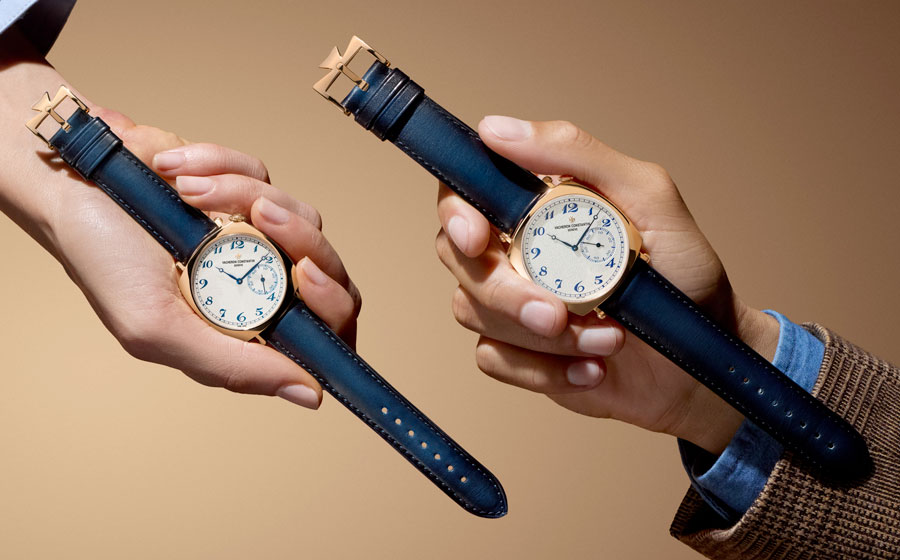
Both versions feature a rose-gold case, available in two sizes: 36.5 mm in diameter and 7.41 mm thick, or 40 mm in diameter and 8.06 mm thick. The grained silver-toned dial features a minute track, along with blued Arabic numerals and hands in blued gold with an ‘œil de perdrix’ motif.
The small-seconds display, positioned at a right angle, at 3 o’clock, remains clearly legible, distinct from the hours and minutes, tilted on a 45-degree axis.
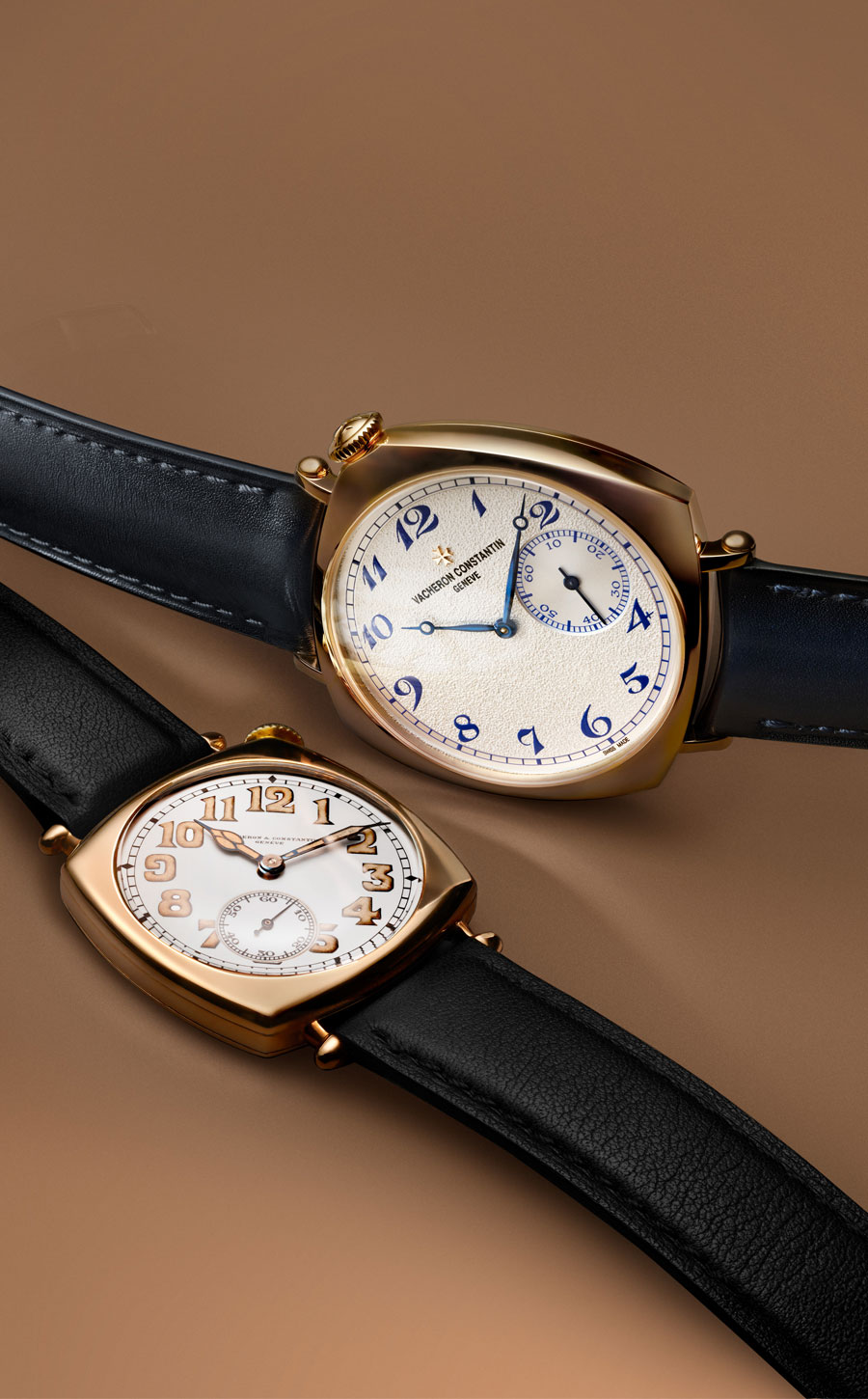
The duo boasts the calibre 4400 AS, a manufacture hand-wound movement measuring 2.8 mm in thickness. It beats at a frequency of 4 Hz (28,800 vibrations per hour) and delivers a power reserve of approximately 65 hours. Comprising 127 components and 21 rubies, it displays the hours, minutes and small seconds. The movement is mounted at an angle within the case to align the indications with the diagonal design of the dial. Visible through the sapphire caseback, the finishing includes Côtes de Genève on the bridges and the balance cock. Water-resistant to 30 metres, these timepieces, fitted on a patinated dark blue calfskin bracelet, are certified with the Poinçon de Genève, a guarantee of precision.
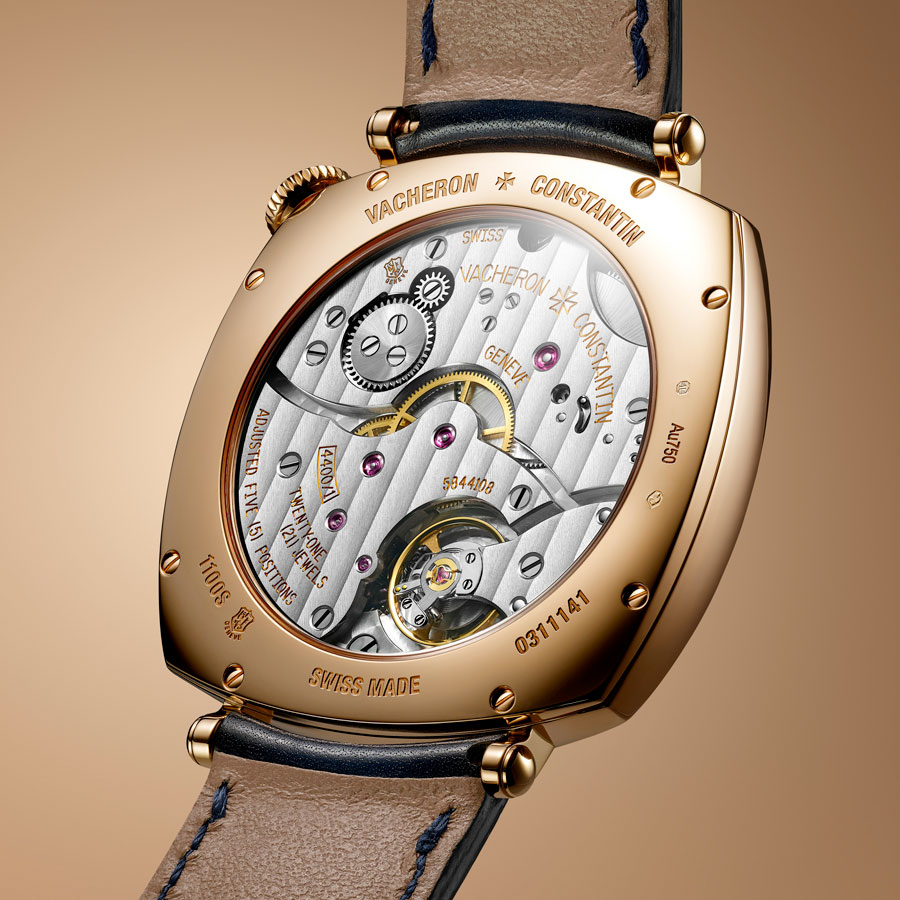
36.5 mm diameter model – €36,800
40 mm diameter model – €44,600
WATCHES PRESENTED IN THE VOX POP WITH ARTHUR FRYDMAN AND EDSON PANNIER, JOURNALISTS AT LE POINT, AND ETIENNE MEDDANE PASQUIER, FOUNDER OF THE MEDIA PATINE(S) AND CONTENT CREATOR


See also:
Read also: