Episode 3: A closer look at the new TAG Heuer Monaco watches!
“Everything changes, but nothing changes!” That’s the motto doing the rounds in the corridors of the Watches and Wonders fair and at the TAG Heuer manufacture too. Frank Sans C was lucky enough to visit the manufacture during the fair, teleported there by none other than American actor Patrick Dempsey! We take an in-depth look at the Monaco from every angle and discover the two new models with our watch enthusiast: Julien Delcambre, Lead Designer, now nicknamed the “King of Design”; Nicholas Biebuyck, Director of Heritage; Laurent Kervyn, Head of the Haute Horlogerie Group; not to mention Carole Forestier-Kasapi, Strategic Director of Movements and Haute Horlogerie, otherwise known as the “Queen of Tourbillon”. The Monaco as we’ve never seen it before… with the added bonus of a tour of the carbon balance spring factory! A true exclusive.
TAG Heuer Monaco: an icon born of innovation
The history of the TAG Heuer Monaco is marked by pivotal encounters and major innovations. In 1969, Jack Heuer, then at the helm of the brand, crossed paths with Swiss racing driver Jo Siffert, fresh from his victory at the British Grand Prix. The first partnership between a watch brand and a racing driver was born. The Heuer logo then appeared on a Lotus and on the driver’s racing suit, offering the brand unprecedented visibility. The aim was to support the strategic launch of a revolutionary movement, the Chronomatic Calibre 11, the first automatic chronograph in history. This ambitious project began in 1967, when Jack Heuer conceived the idea of combining a Dubois-Depraz chronograph module with a Buren automatic calibre featuring a micro-rotor. Faced with the high cost of development, he joined forces with Willy Breitling. Together, they secretly led ‘Project 99’, which came to fruition two years later.
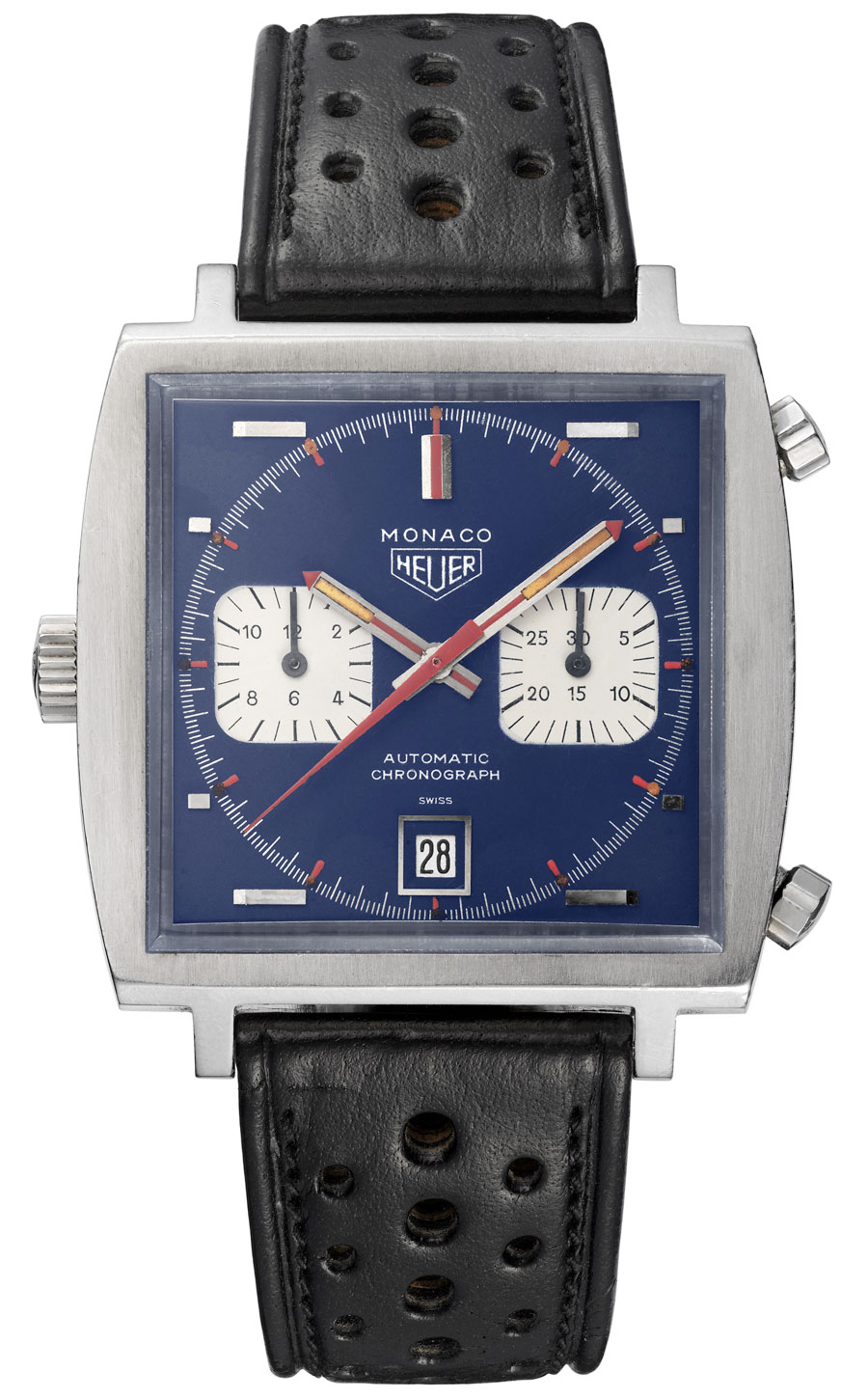
The Calibre 11 stands out for its original design, notably featuring a crown positioned on the left-hand side of the case, whilst the pushers remain on the right. This bold choice became a key selling point, symbolising a watch that no longer needed to be wound by hand. To complement this innovation, Heuer opted for an equally avant-garde design: a square, water-resistant case – a first at the time – developed by the Piquerez company. Thus was born the Monaco, named in homage to the legendary Formula 1 Grand Prix.
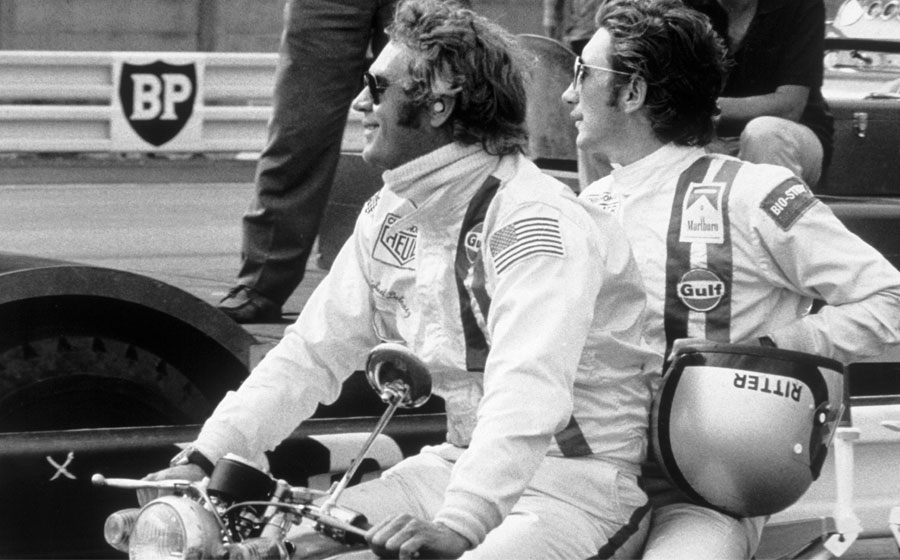
Despite its technical qualities and unique aesthetic, the Monaco initially struggled to win over the public. Its unconventional design and innovative positioning were somewhat bewildering. However, that same year, Steve McQueen discovered the watch whilst preparing for the film Le Mans. Keen to ensure realism, the actor chose to wear a Monaco, in keeping with the Heuer racing suit inspired by Jo Siffert.
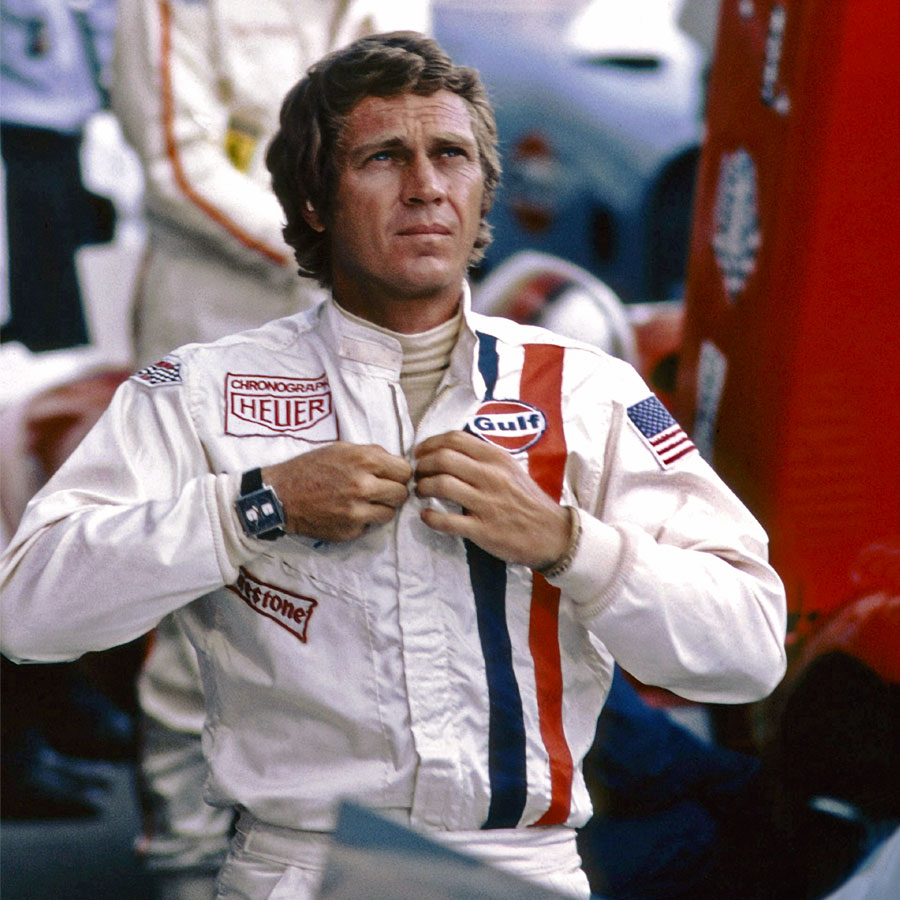
This choice proved to be decisive: by appearing on the wrist of one of the greatest stars of her time, the Monaco gradually rose to iconic status. Initially misunderstood, it eventually became one of the most iconic models in contemporary watchmaking.
The evolution of the Monaco in a few pieces, presented by Nicholas Biebuyck, Director of Heritage, and Julien Delcambre, Lead Designer at TAG Heuer
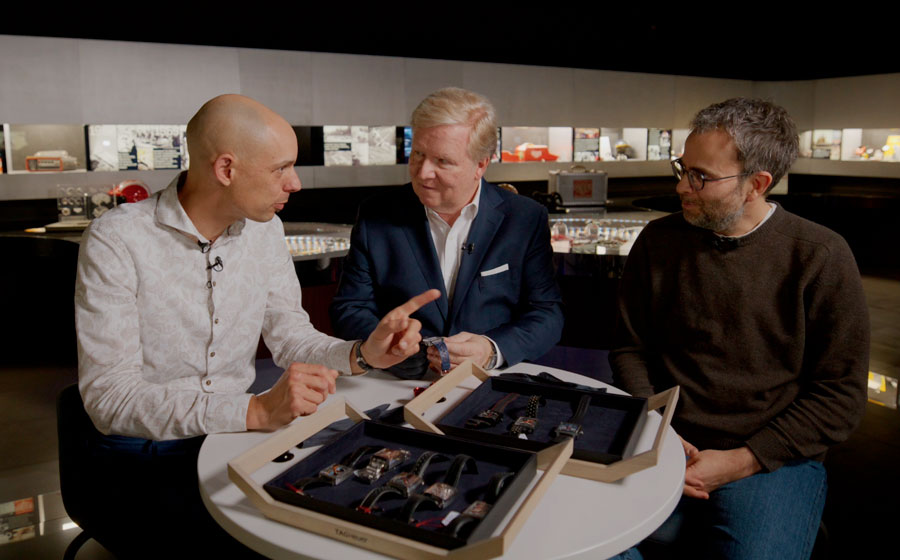
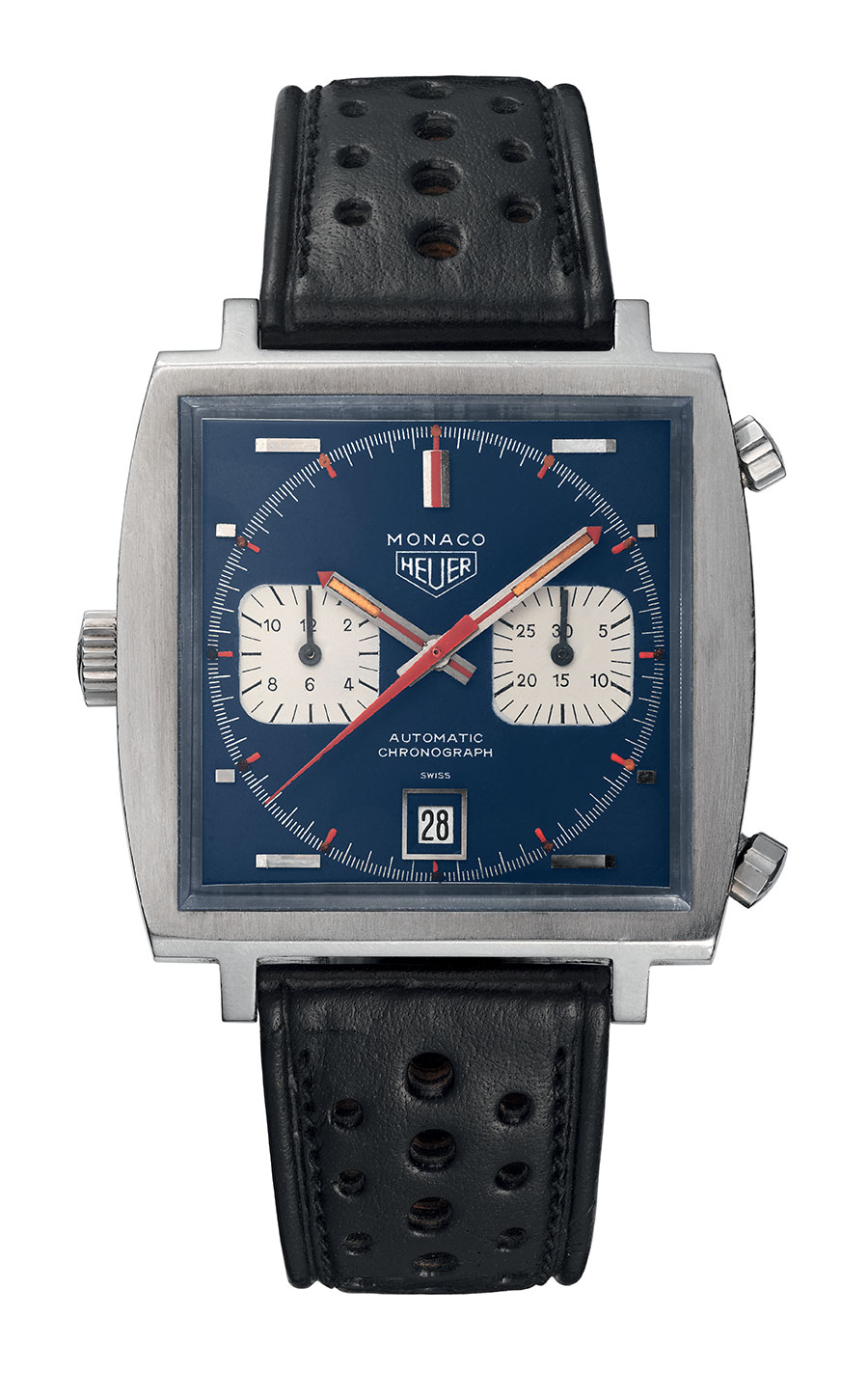
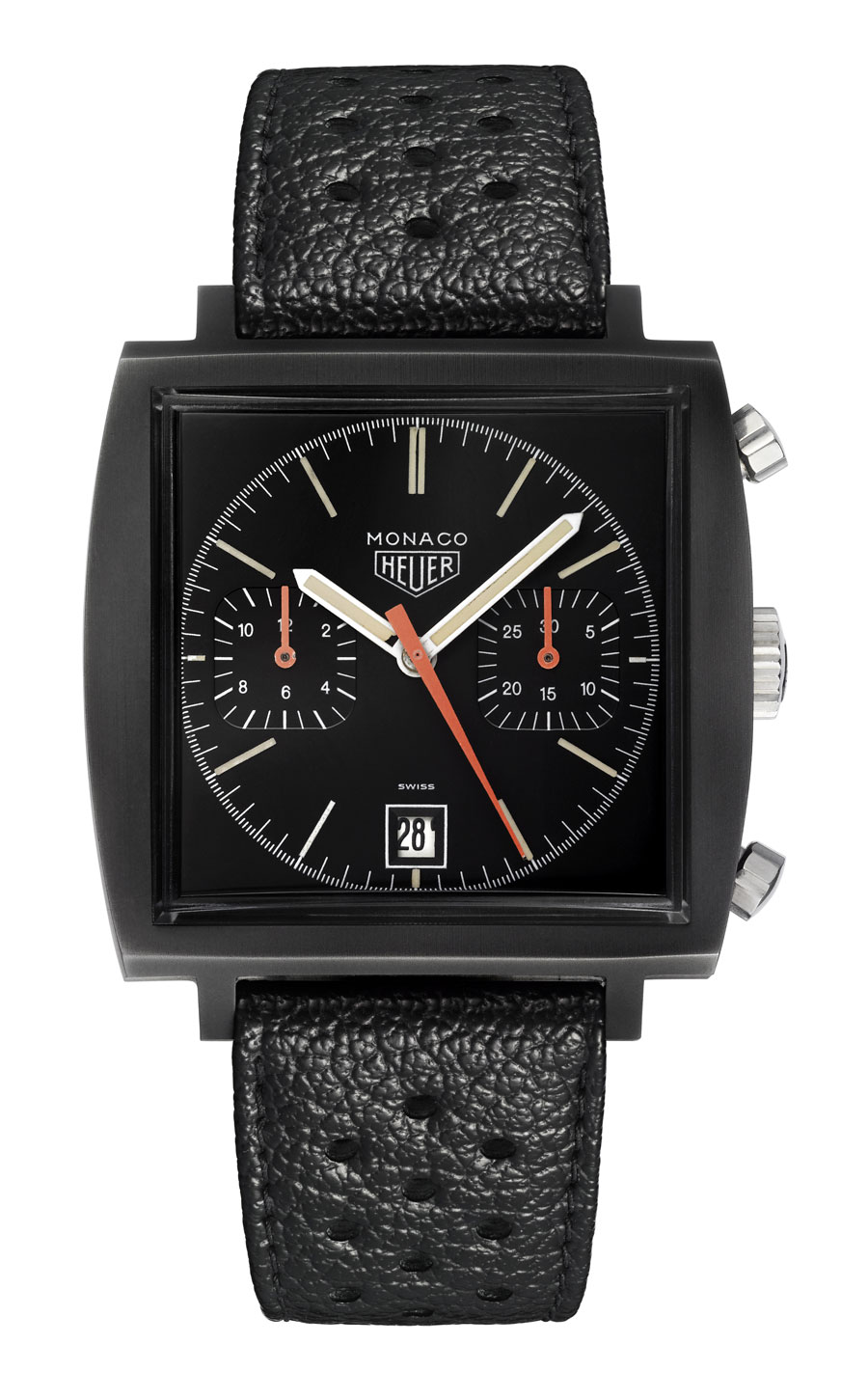
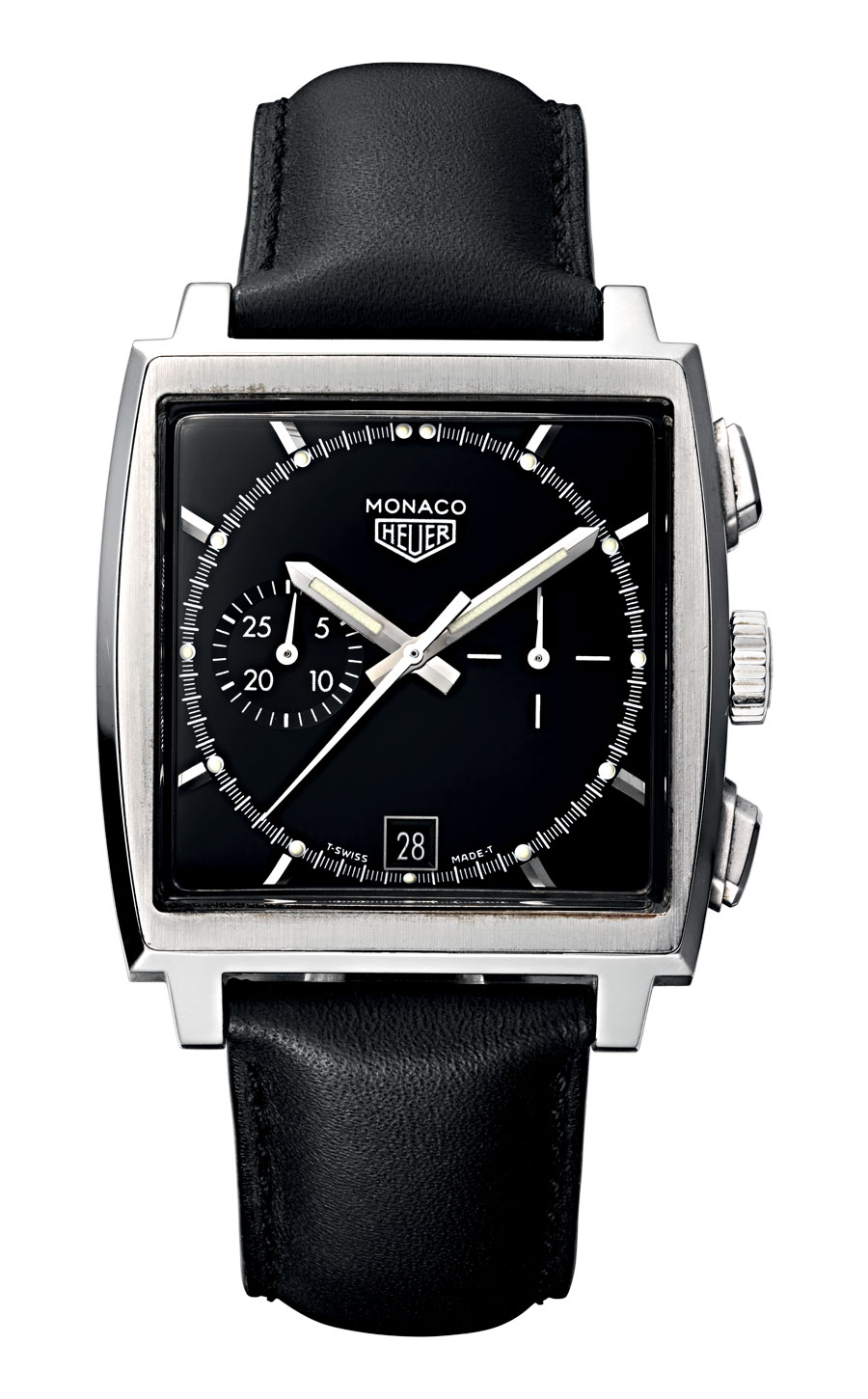
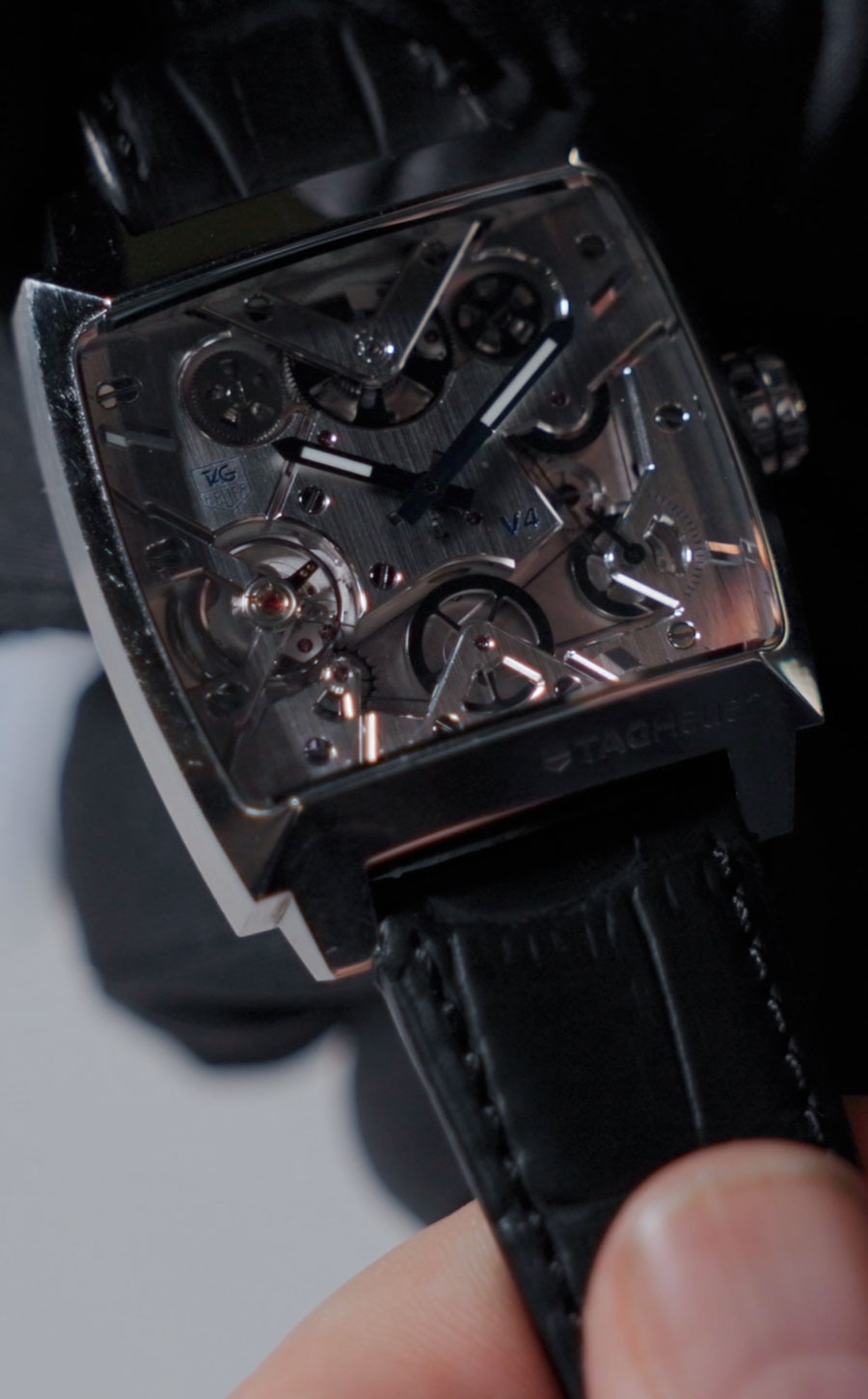
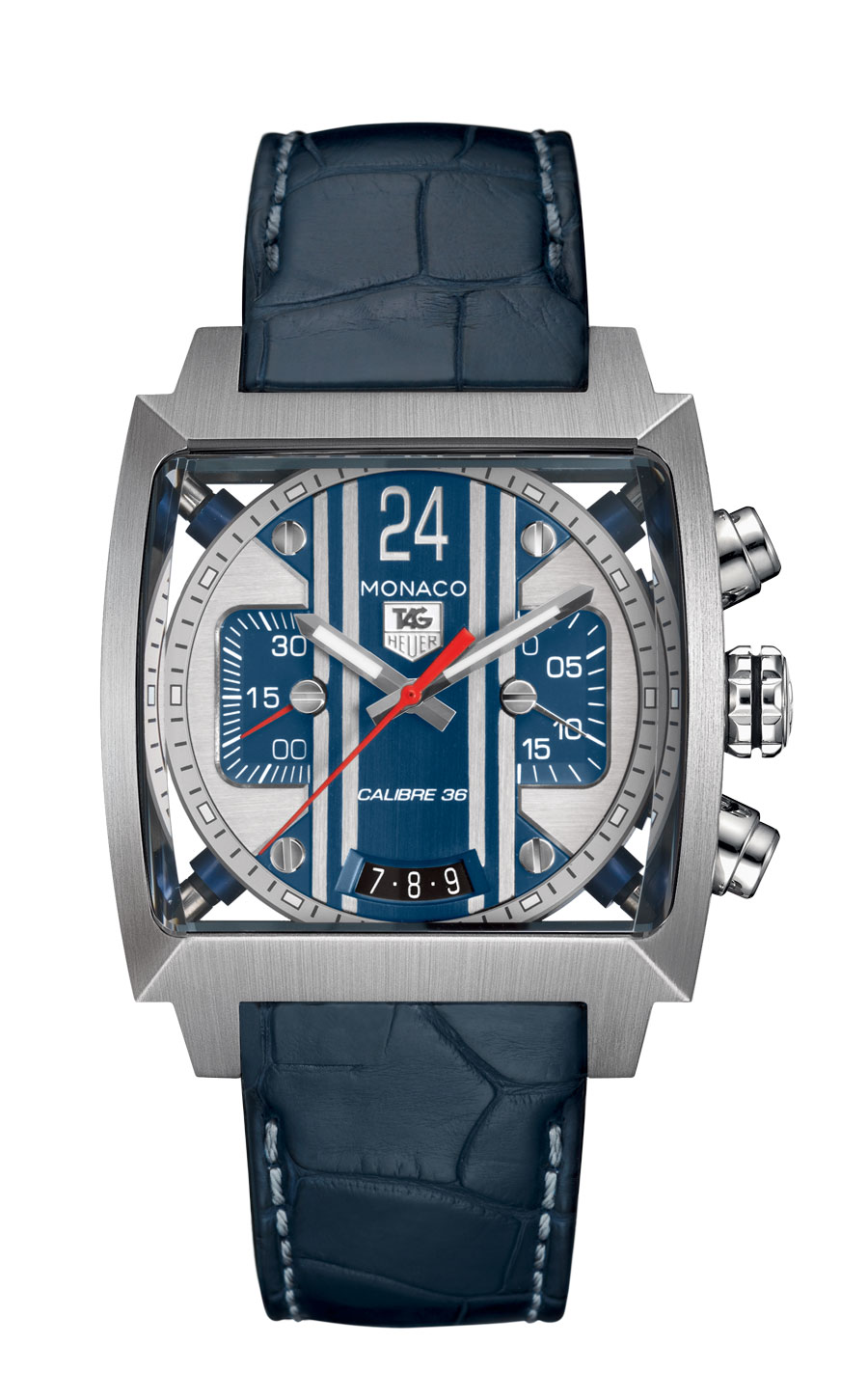
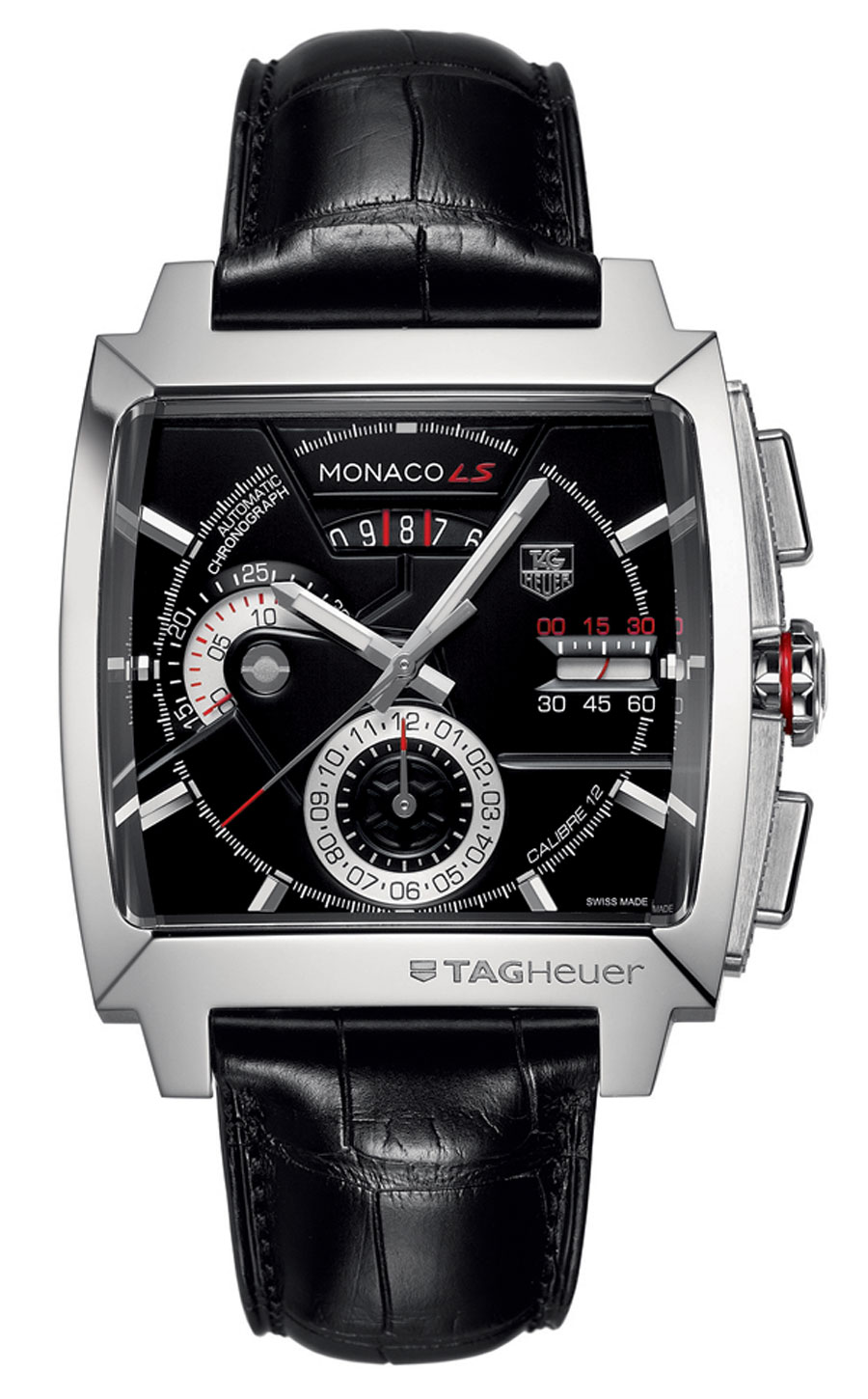
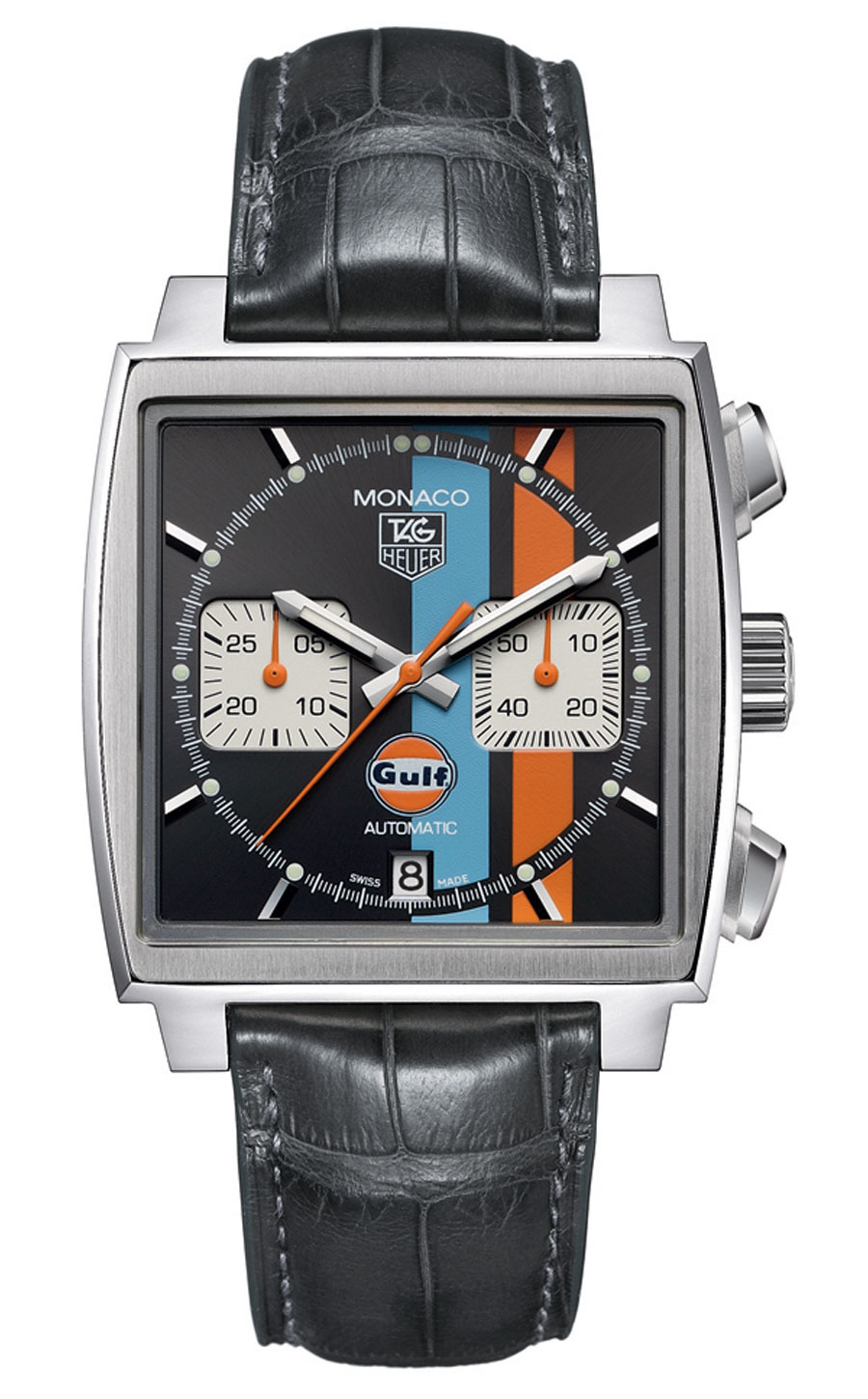
Watch our programme dedicated to the Monaco
through the eyes of Steve McQueen.
What’s new at Watches and Wonders 2026
Everything changes, yet nothing changes!
From reissue to contemporary reinterpretation: the evolution of the TAG Heuer Monaco
Relaunched in 1997, the TAG Heuer Monaco marked the return of an icon, remaining true to the spirit of the original model. This revival was, above all, a reissue: bringing a legend back to life whilst preserving its historic hallmarks. Almost thirty years later, the current Monaco goes far beyond a simple evolution. It embodies a deeper reinterpretation, where respect for heritage and technical innovation go hand in hand. Whereas the 1997 Monaco revived a legend, today’s model propels it into the future.
A reimagined architecture: faithful yet transformed
Whilst the diameter remains unchanged at 39 mm, the case has been completely redesigned. Inspired by the original 1133 model, the new design retains the watch’s defining features — a square case, a left-hand crown and a distinctive construction — whilst subtly updating them.
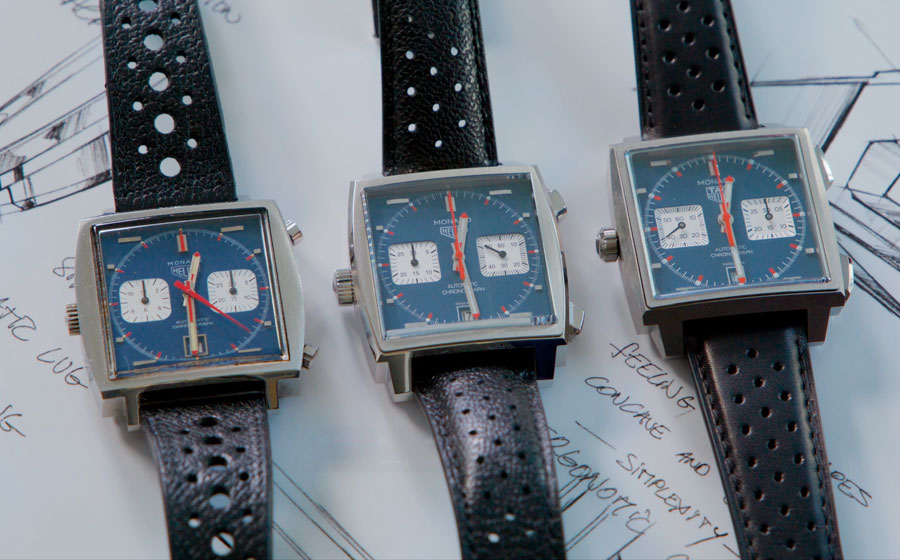
The changes can be seen in the details:
- a slimmer case with softened angles, giving it a more sculptural and streamlined appearance;
- redesigned lugs and case ergonomics to significantly improve comfort;
- thickness reduced from 14.3 mm to 13.8 mm,
- a case middle now featuring a bevelled edge;
- a redesigned bezel, more distinctly square and following the shape of the sapphire crystal;
- revised push-buttons, typography and dial details, right down to the Super-LumiNova markers, which are now square rather than round
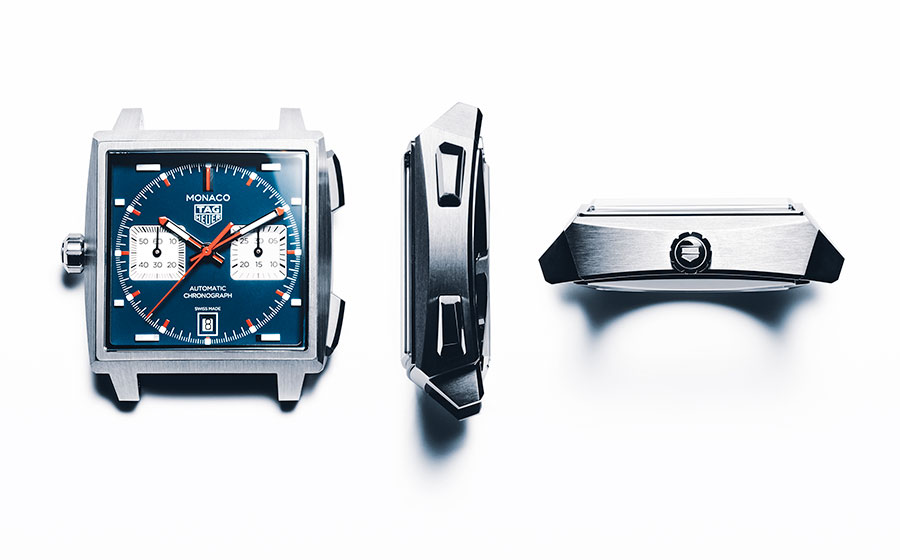
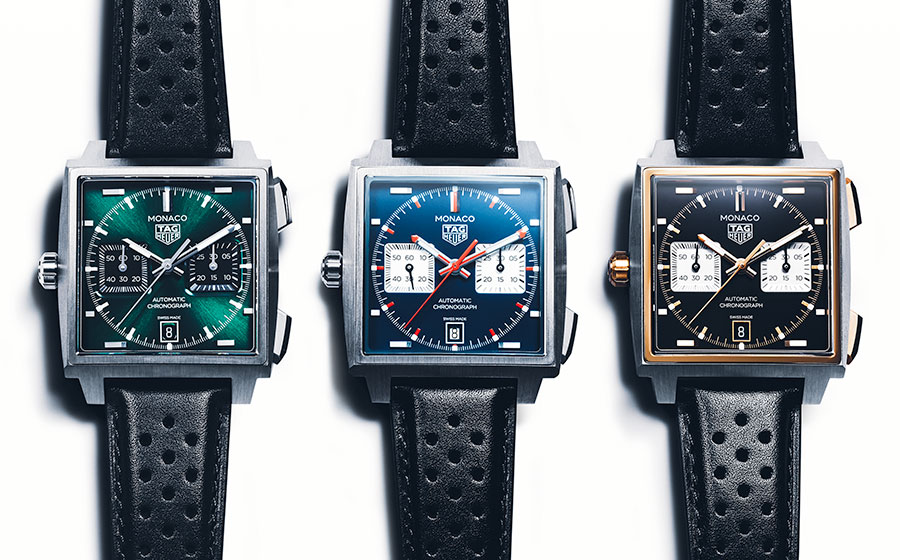
These changes may seem subtle, but they reflect a genuine commitment: to preserve all the signature features cherished by collectors whilst revitalising the design to appeal to a wider audience. The introduction of grade 5 titanium across all three models – combined with an 18-carat rose gold bezel on one of them – brings a new level of lightness and sophistication to the Monaco collection.
A major technical glitch
It is particularly in terms of mechanics that the difference from the original model is most striking. The Monaco, relaunched in 1997, was built on a reliable but relatively conventional platform. The current generation takes a significant step forward with the in-house TH20-11 calibre, which radically transforms the watch’s offering.
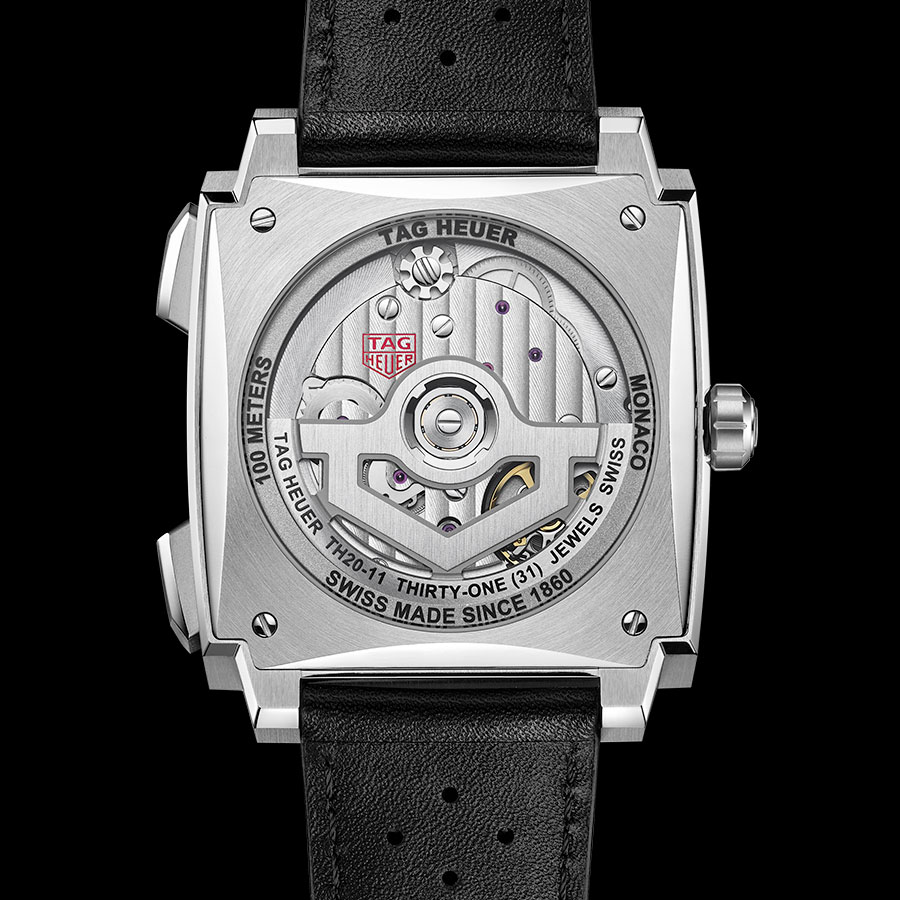
This new movement features a bi-compax architecture inspired by the historic Calibre 11, a column wheel, an optimised winding mechanism and a power reserve of approximately 80 hours.
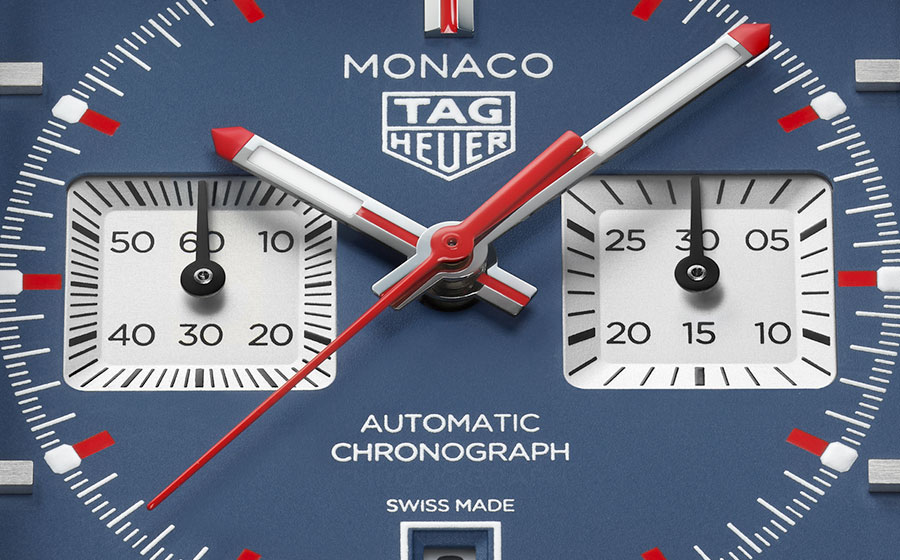
The display has also been updated, with the counters repositioned at 3 and 9 o’clock and a slanted date window at 6 o’clock, enhancing both legibility and visual identity. The Monaco thus evolves from a cult reissue to a true manufacture chronograph.
Modernisation right down to the way it’s worn
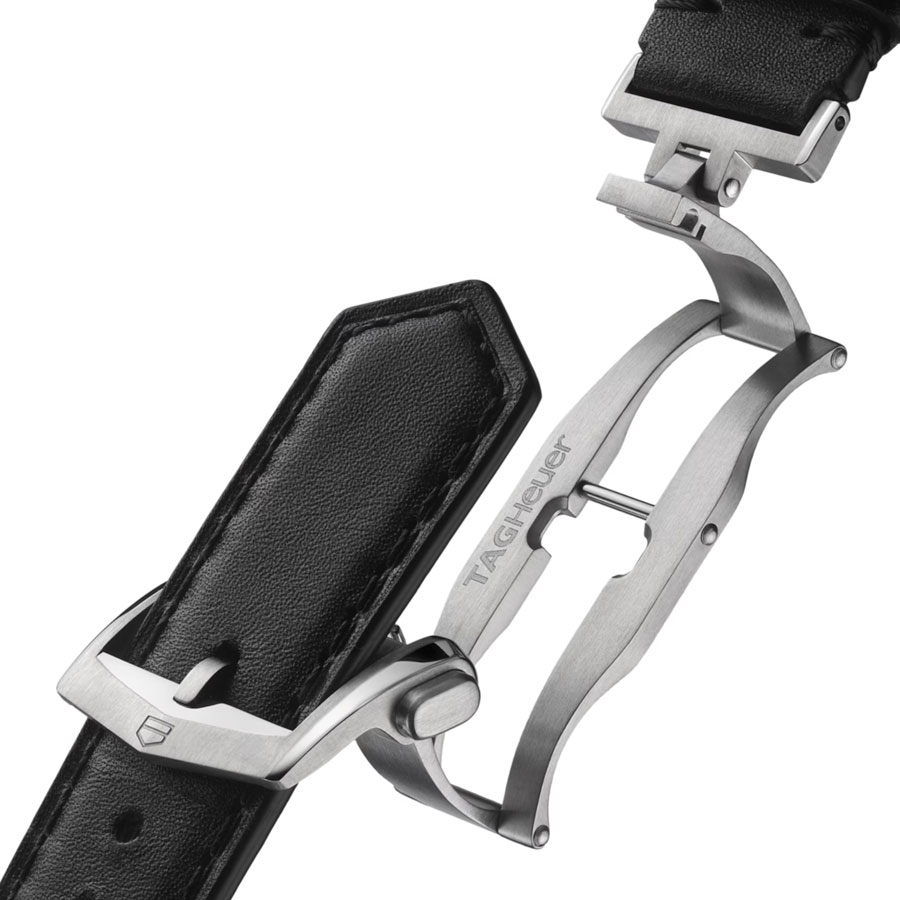
This transformation extends beyond the case and movement. Comfort and wearability have also been reimagined: an improved strap, a new pin buckle system, and a redesigned double folding clasp. These details contribute to a more contemporary take on the watch, designed with equal attention to both aesthetics and the wearing experience.
Monaco Chronograph in Grade 5 titanium and rose gold – €13,000
Monaco Chronograph in Grade 5 titanium / green dial – €9,300
Monaco Chronograph in Grade 5 titanium / blue dial – €9,300
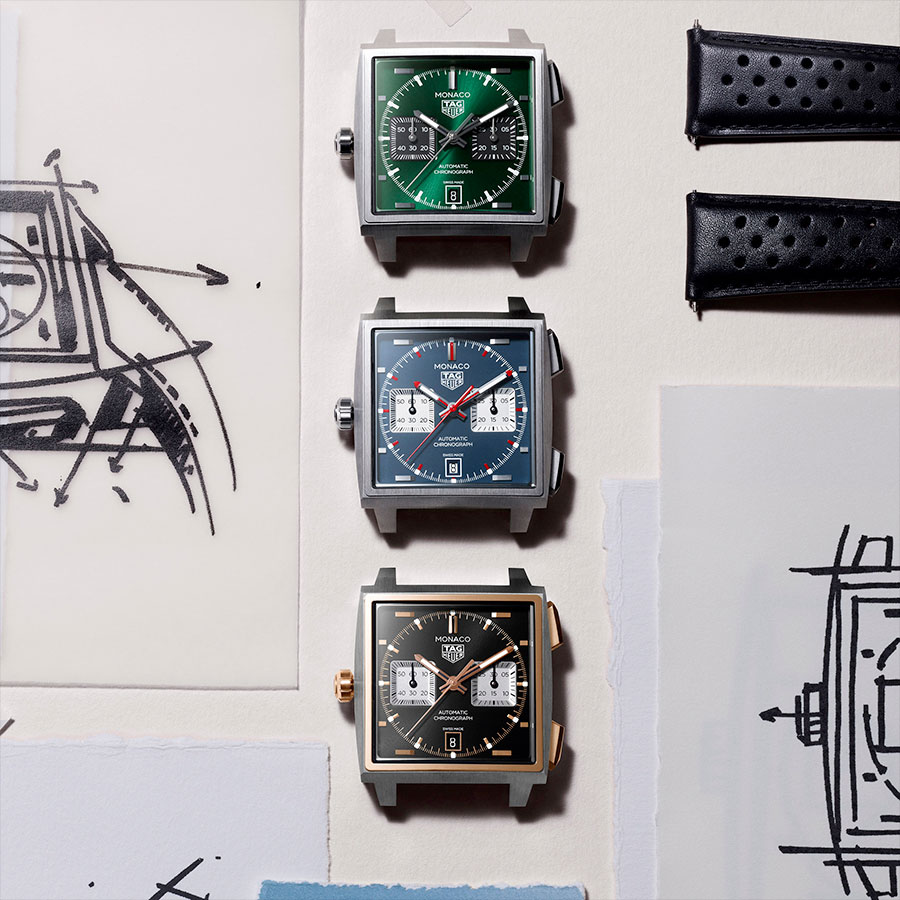
View all our technical specifications for the watches in the Monaco collection.
TAG Heuer Monaco Evergraph: a flexible mechanical watch
With the Monaco Evergraph, TAG Heuer is not just revamping an icon. It is a new take on the mechanical chronograph which combines visible architecture, high frequency and fundamental innovation. At the heart of this timepiece, the TH80-00 calibre marks a conceptual breakthrough. It boasts a technology still rare in watchmaking: flexible bistable components.
Traditional pivoting joints are being replaced by monobloc structures that deform with controlled precision. More than just a technical advancement, this flexible architecture redefines the very functioning of the chronograph. By drastically reducing friction points, mechanical play and inherent wear, the manufacture is paving the way for a more efficient, durable and stable complication.

Furthermore, this mechanical revolution finds another spectacular expression in the TH-Carbonspring oscillator, the very heart of the movement, unveiled at the latest Geneva Watch Days. Developed and patented at the TAG Heuer Lab, this 5-hertz regulating organ — equivalent to 36,000 vibrations per hour — enables reading to the nearest tenth of a second. It embodies the brand’s chronograph DNA. But its uniqueness lies above all in its construction: ultra-light, non-magnetic and highly shock-resistant. In a nutshell: this oscillator combines the benefits of advanced materials with chronometric stability designed to last.
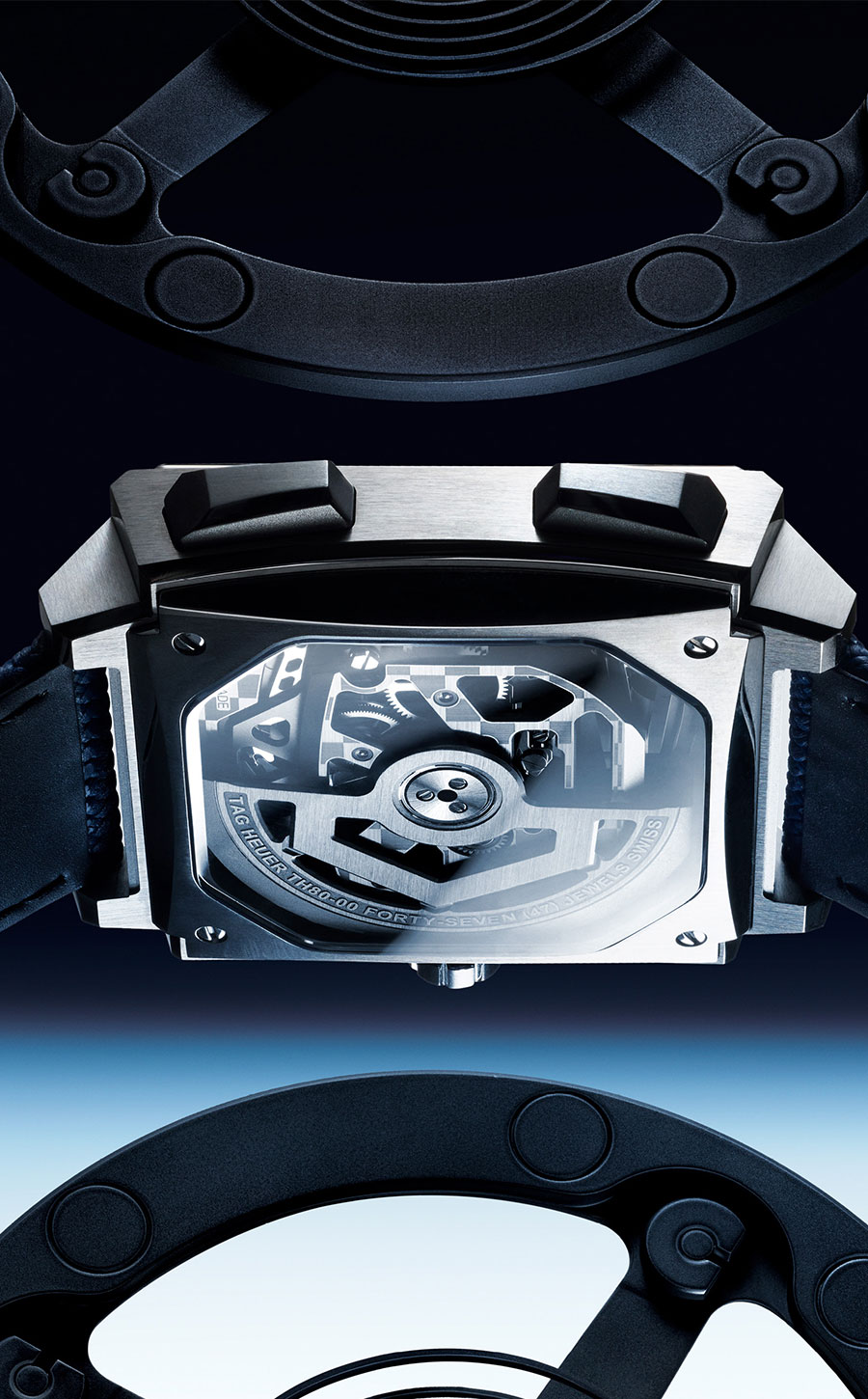
Rarely has such innovation been so directly integrated into a watch’s design. For the Monaco Evergraph lays its mechanics bare. Beneath an openworked dial, the barrel and the TH-Carbonspring are on full display, supported by two broad, architectural arches that lend depth and visual tension to the whole. Transparency here is not merely a stylistic choice, but a guiding principle: to make performance visible.
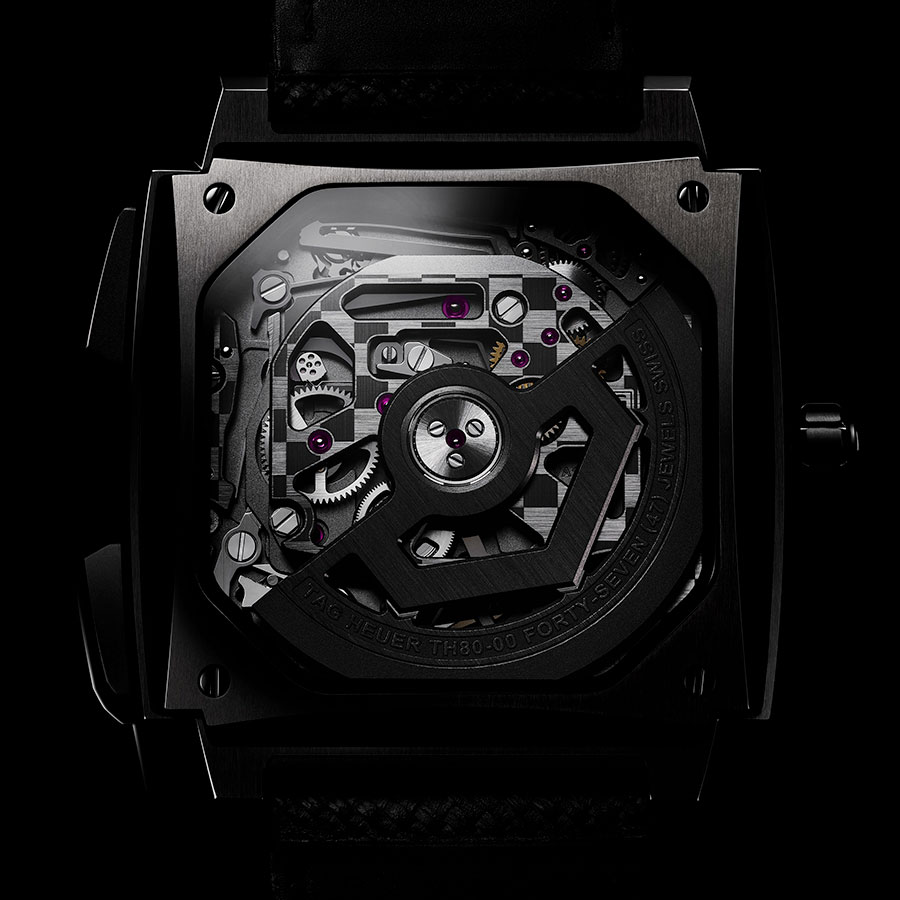
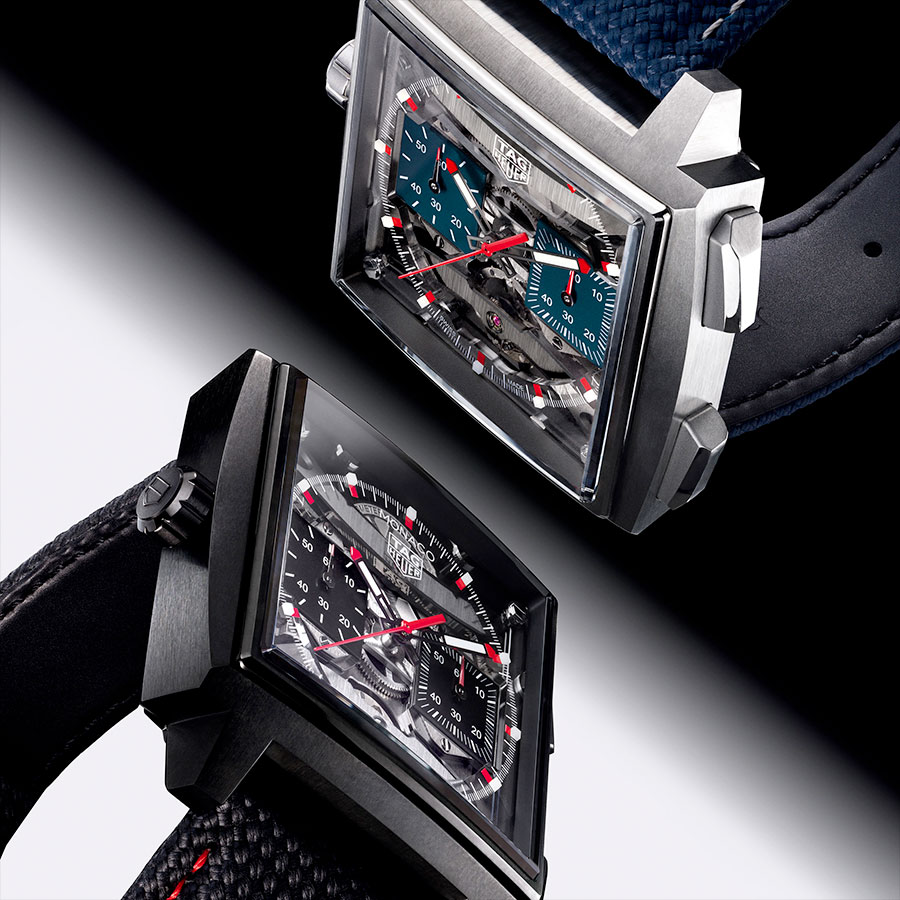
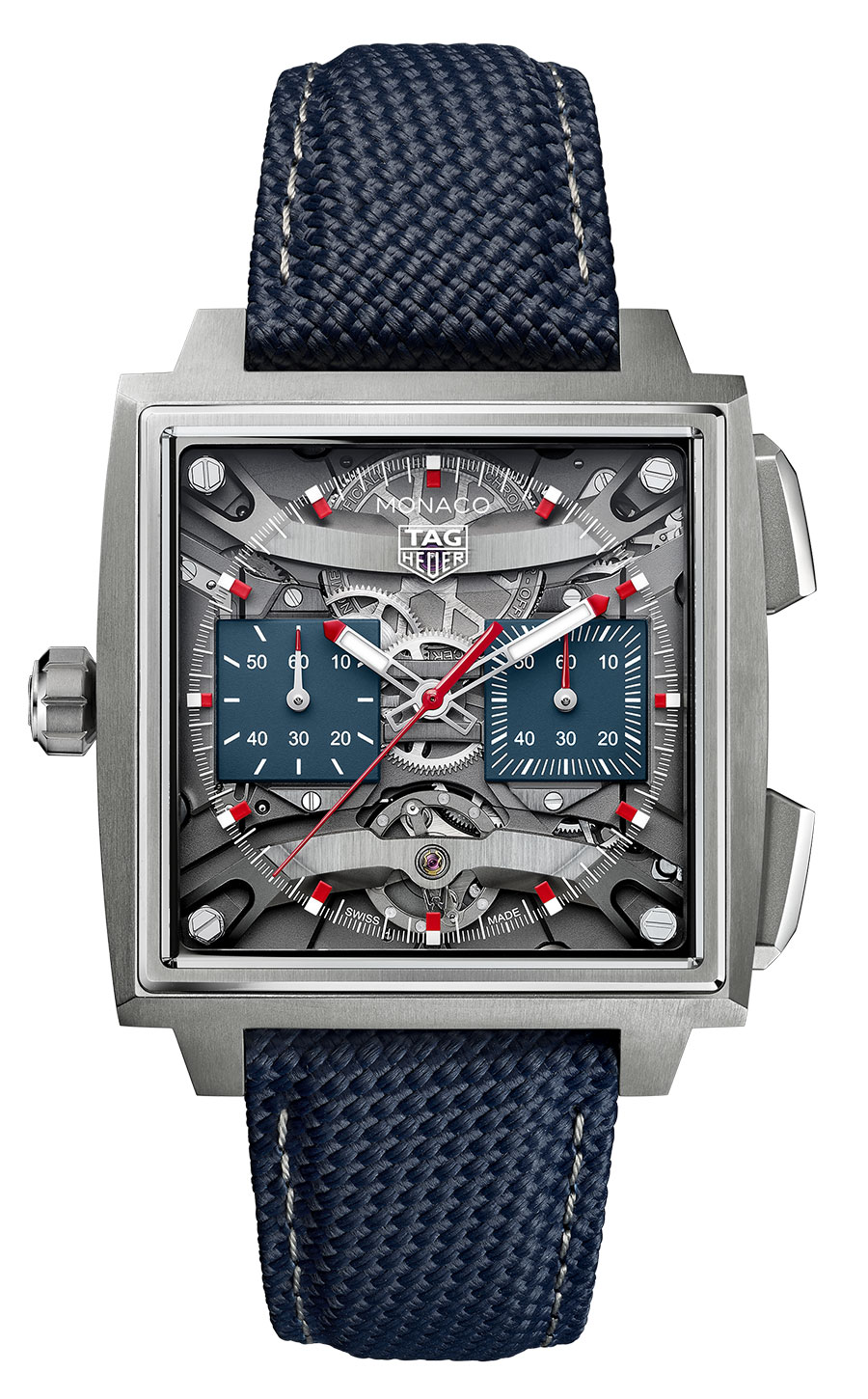
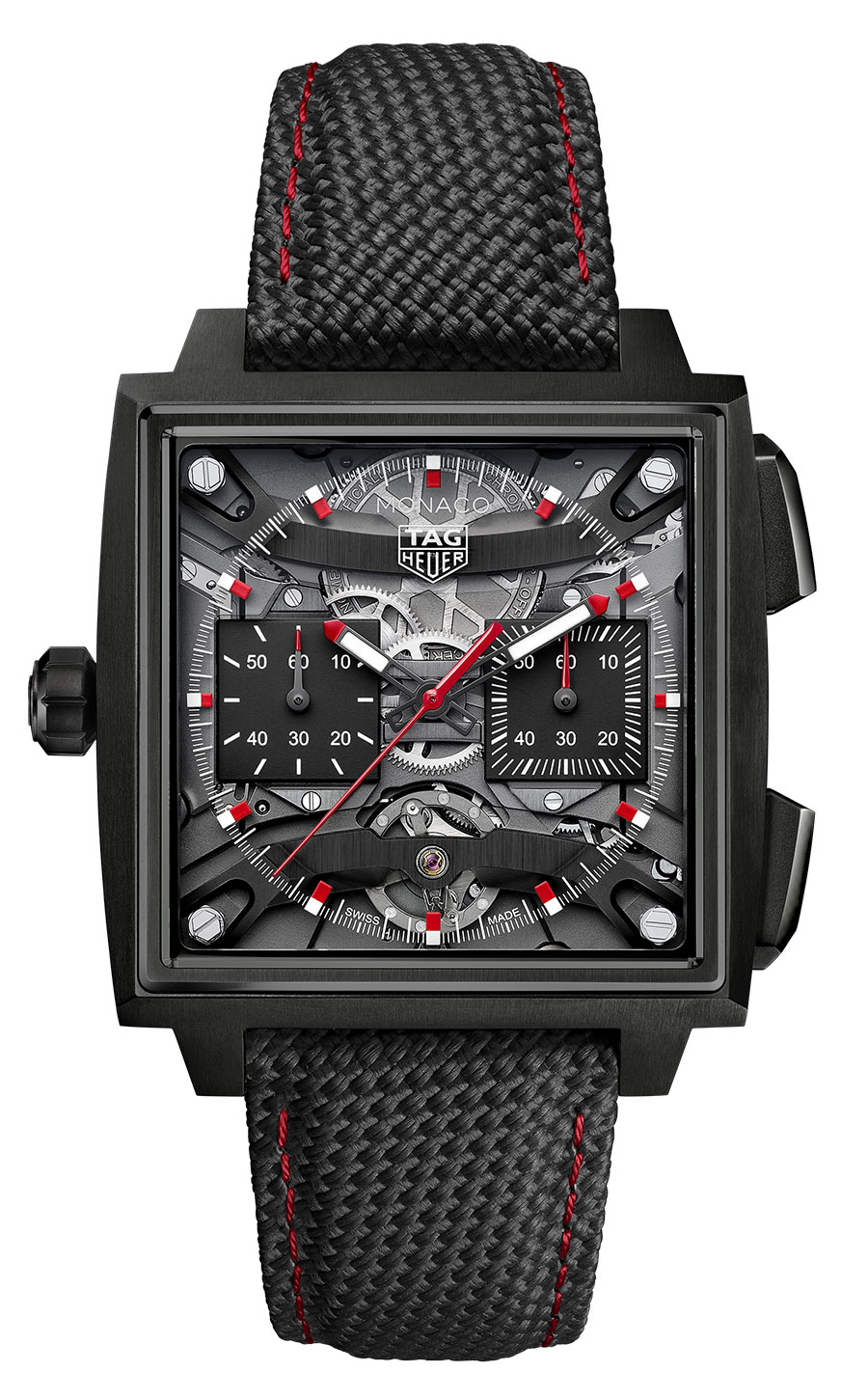
Housed in a 40 mm diameter case made from grade 5 titanium, this edition is available in two versions: grade 5 titanium with a black DLC coating, paired with a black rubber strap featuring a textile pattern and red stitching; and grade 5 titanium with a blue rubber strap featuring a textile pattern and grey stitching.
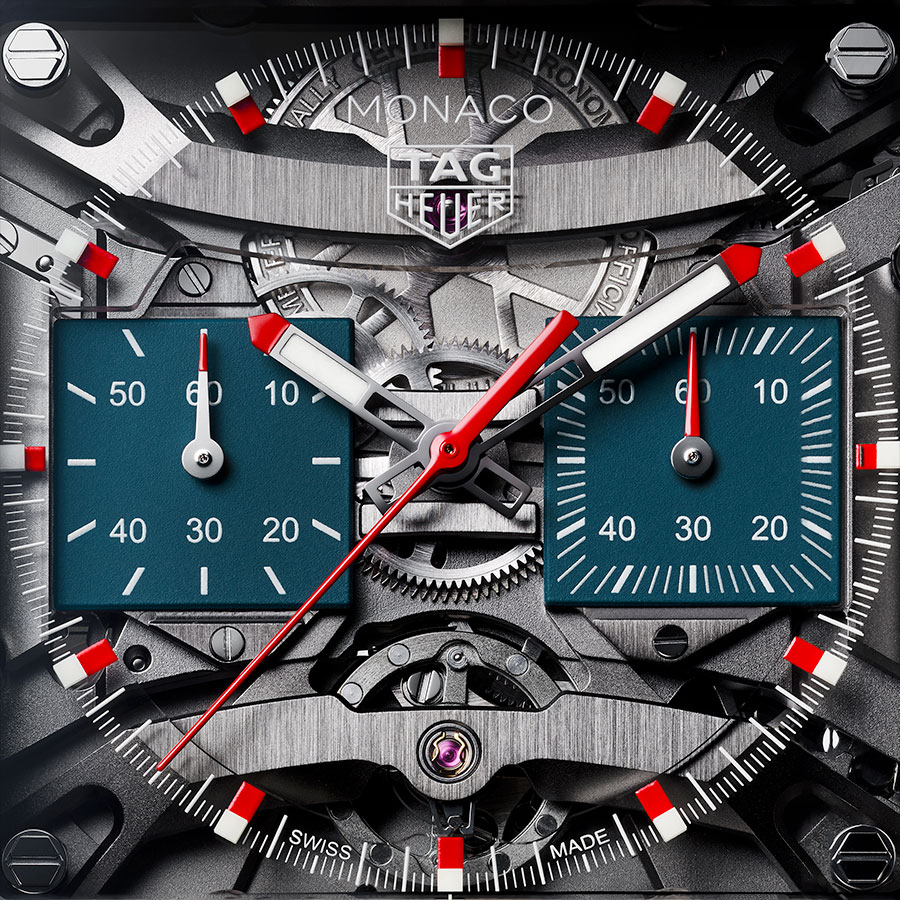
Monaco Evergraph in titanium with a blue rubber strap – €25,000
Monaco Evergraph in black DLC-coated titanium with a black rubber strap – €25,000
See also:
Read also: