Episode 7 (Last but not least!): Chopard, Frederique Constant and Oris
For one last time, let us wander through the aisles of Watches and Wonders. Since the beginning of this series, we have explored complications, anniversary editions, unexpected comebacks, and a handful of personal favourites along the way. A trade show such as this is never merely a showcase of new releases arranged in window displays; it is above all about the people you meet and the timepieces lingering in your mind long after the event has ended. Last, but by no means least, we turn the spotlight on Chopard, Frederique Constant and Oris.
CHOPARD
Alpine Eagle 41 XPS
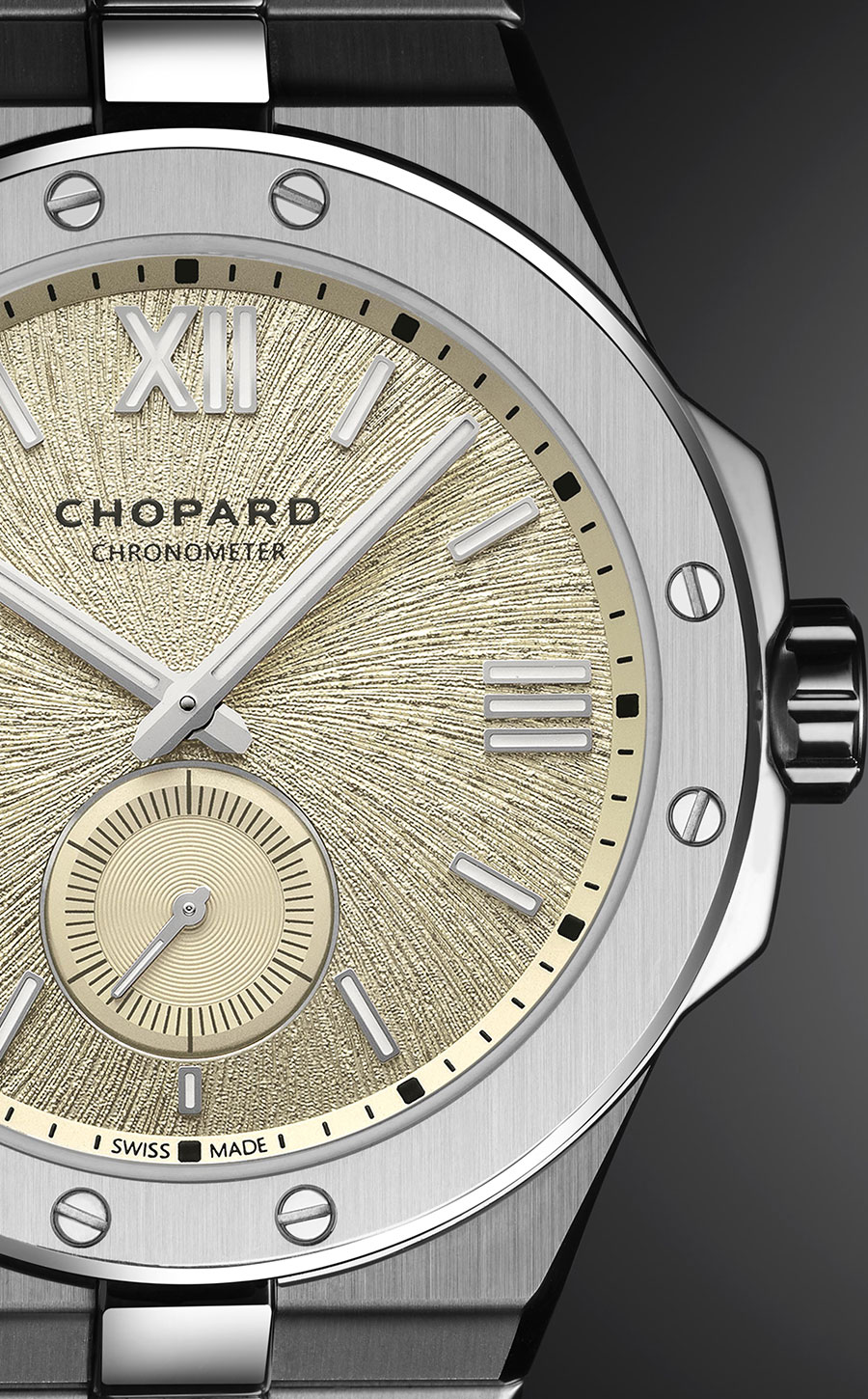
The Alpine Eagle 41 XPS continues to evolve with a new interpretation. It strikes a refined balance between slimness, precision and craftsmanship. Based on the initial model with its ‘Mont Rose’ dial, Chopard unveils at Watches and Wonders 2026 a fresh iteration with an ‘alpenglow’ dial. Sporting a galvanised champagne hue, its subtle reflections evoke the last rays of sunlight lingering on Alpine peaks. As with previous references, the radiating pattern inspired by the iris of an eagle remains one of the line’s most distinctive hallmarks.
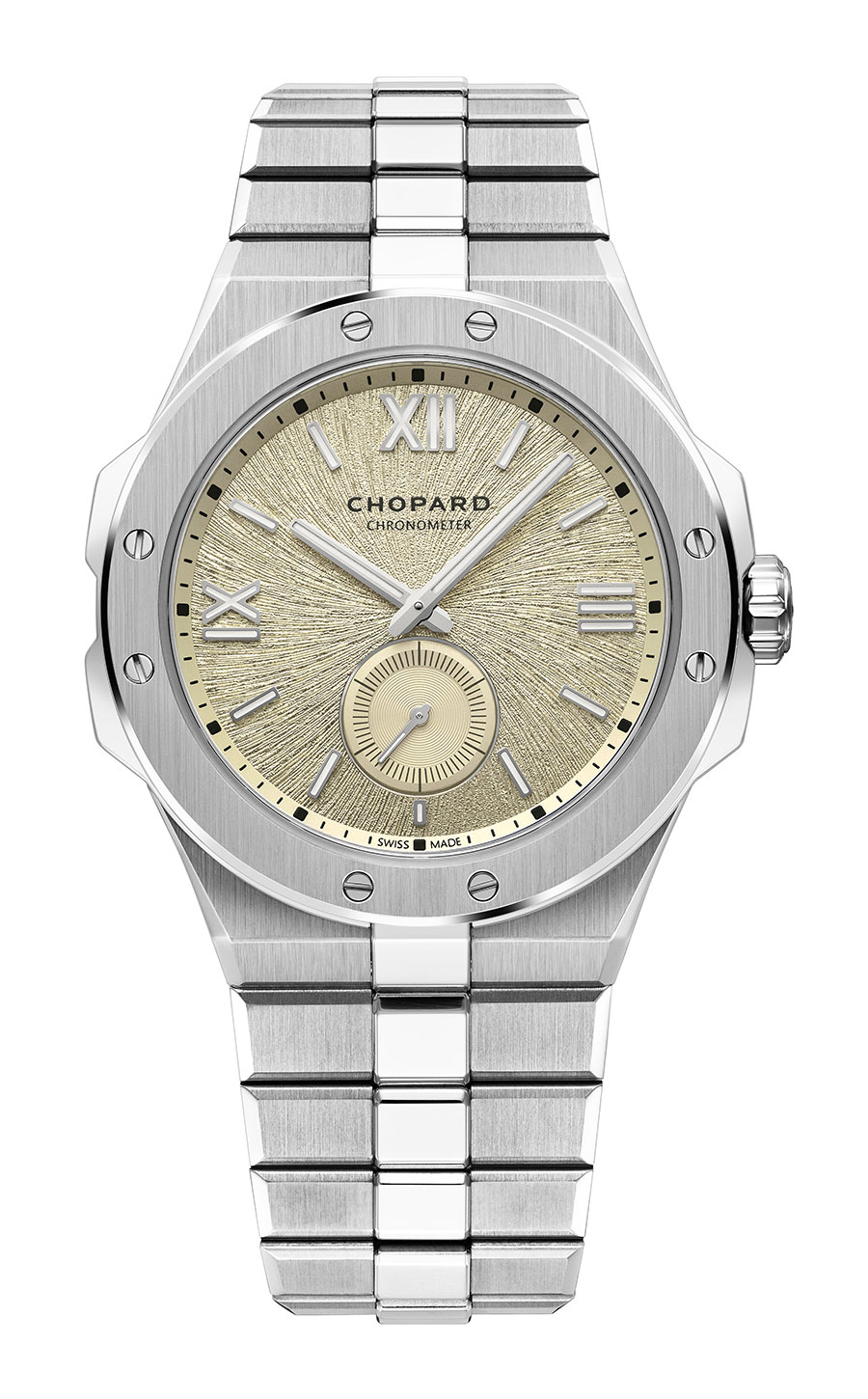
This version retains the refined proportions that define the Alpine Eagle 41 XPS: a 41mm case measuring 8mm thick, crafted from Lucent Steel™ — the alloy developed by Chopard and composed of 80% recycled materials. Not only more resistant to abrasion than conventional steel, this material is also naturally hypoallergenic. It is used throughout the timepiece, from the case to the bracelet. Water-resistant to 100 metres, this version features a bezel secured by eight indexed screws and a crown engraved with a compass rose.
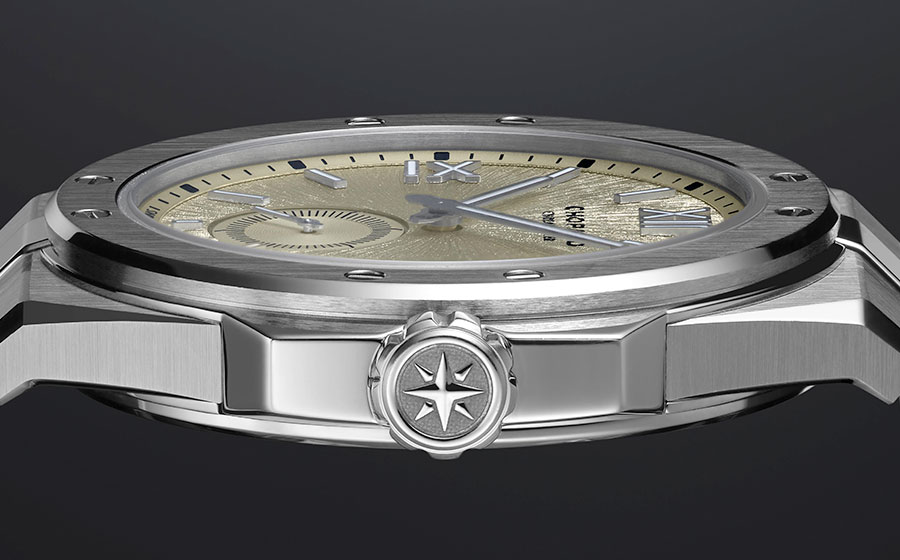
This focus on proportions extends to the integrated bracelet. Chopard has reimagined its design. It introduces a more pronounced taper across the first links and a slimmer profile as it approaches the clasp. It now includes an extension system seamlessly housed within the triple-folding clasp, allowing for quick, tool-free adjustment of up to 5mm.
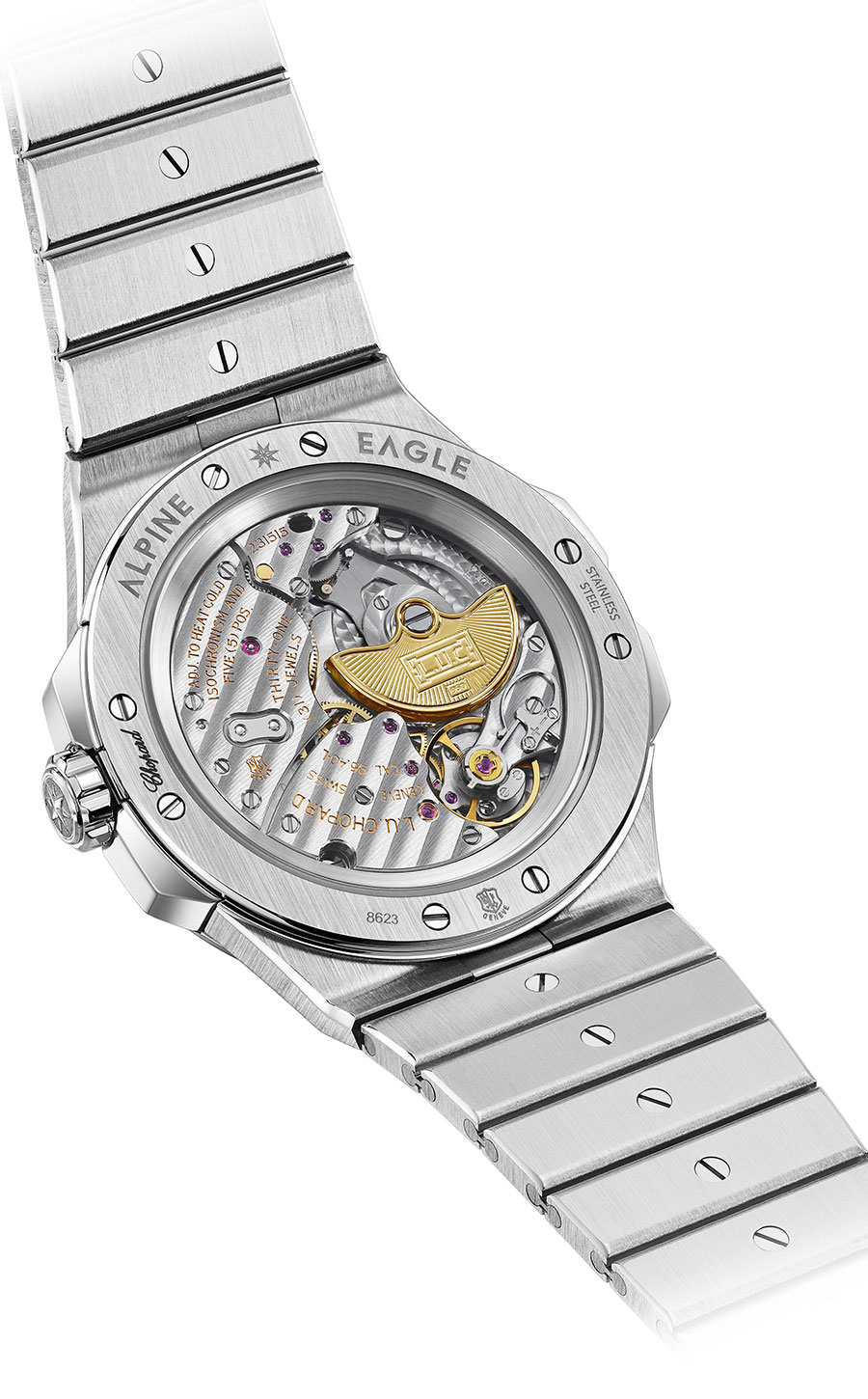
From a technical perspective, the timepiece boasts the self-winding L.U.C 96.40-L calibre. Based on the first movement developed by Chopard Manufacture in 1996, it measures 3.30mm thick. Its architecture is built around a 22-carat ethical gold micro-rotor paired with twin stacked barrels using Chopard Twin technology. This configuration allows it to deliver a power reserve of roughly 65 hours. Visible through the sapphire case back, the movement operates at a frequency of 4 Hz and includes a stop-seconds function. COSC-certified, it also meets the exacting standards of the prestigious Poinçon de Genève, a hallmark of craftsmanship.
€29,500
Click here for the Alpine Eagle 41 XPS timepiece spec sheet.
L.U.C 1860
Thirty years after the birth of Chopard Manufacture in Fleurier, the L.U.C 1860 comes back with one of the lineup’s founding models. While preserving the defining features of the original timepiece, this new edition highlights the technical evolutions developed by the manufacture since the late 1990s.
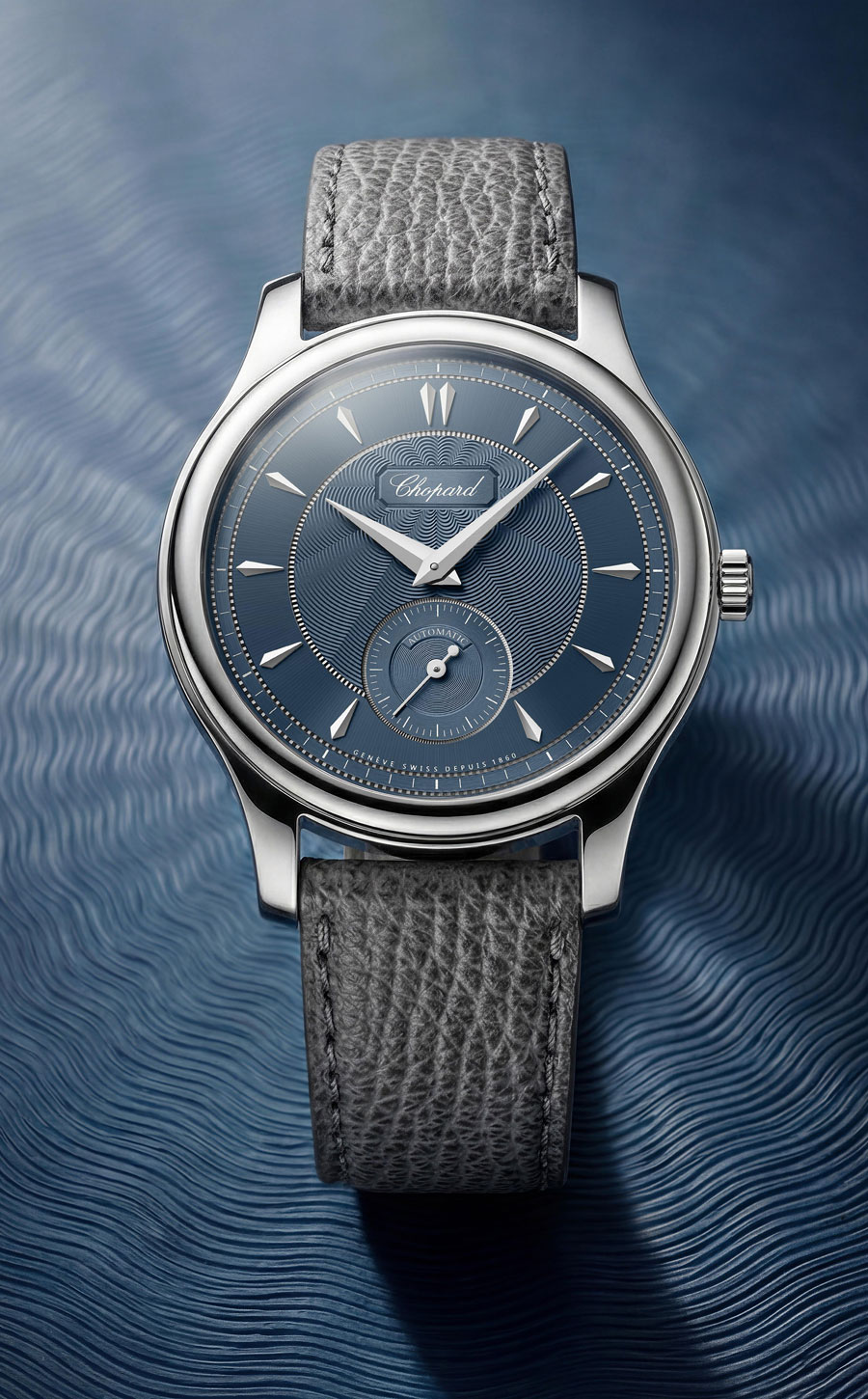
Water-resistant to 30 metres, the timepiece retains the proportions of the historic model, with a 36.5mm diameter case in addition to a thickness of 8.2mm. Crafted from Lucent Steel™, it combines a vertically satin-brushed case band with a polished bezel and a see-through sapphire crystal case back revealing the movement within. Attention then turns to the ‘Bleu Areuse’ dial: a name which pays tribute to the river, which runs through the Val-de-Travers, the region next to Fleurier. Crafted in 18-carat white gold, it is hand-guilloché on historic lathes used in the Metalem workshops of the Chopard Group. The whole assembly highlights the sunray motif, while guilloché flanks, a satin-brushed hour ring and polished white-gold chevron hour markers add depth. At 6 o’clock, a snailed small seconds counter enhances the dial’s symmetry.
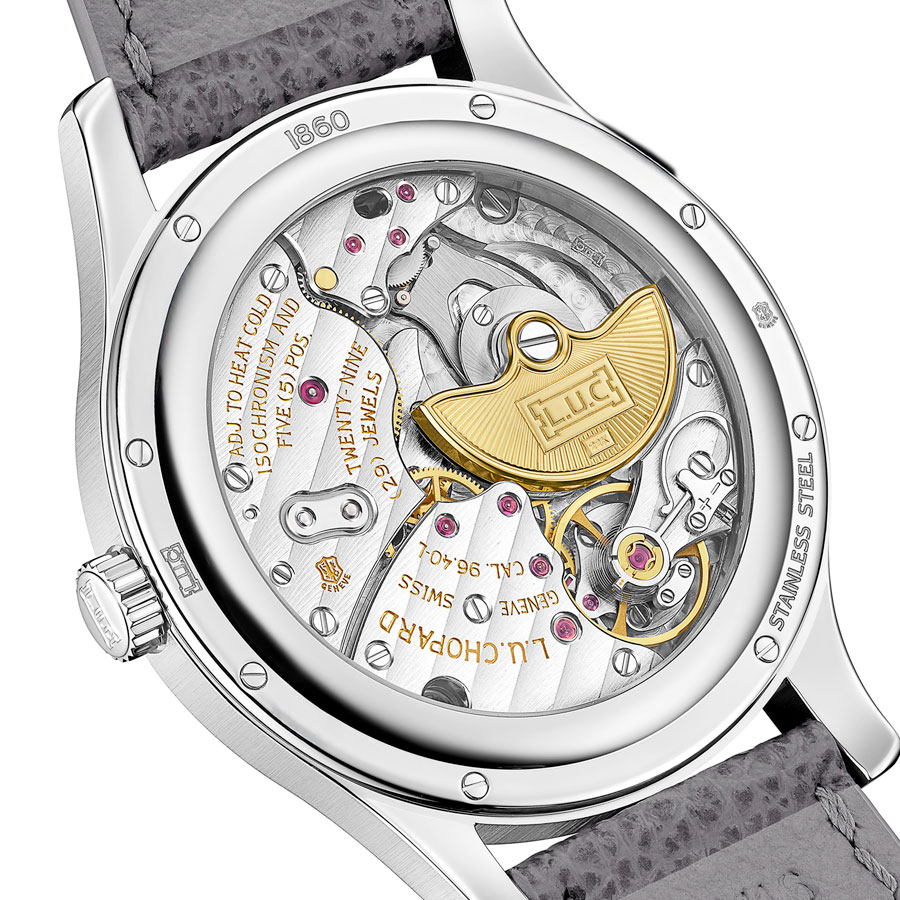
This pursuit of visual balance is matched by a mechanical craftsmanship. It pays direct tribute to the origins of the collection. The L.U.C 1860 boasts the L.U.C 96.40-L self-winding calibre, an evolution of the first movement developed by Chopard Manufacture in 1996. At only 3.30mm thick, this ultra-thin movement combines a 22-carat ethical gold micro-rotor with twin barrels using Chopard Twin technology, delivering a 65-hour power reserve. COSC-certified, it also meets the requirements of the Poinçon de Genève.
€28,200
Click here for the 36,5mm L.U.C 1860 with Lucent Steel™ spec sheet
L.U.C XPS Prussian Blue
The new L.U.C XPS Prussian Blue enriches further the L.U.C lineup. True to the spirit of the XPS line, this model focuses on adjusted proportions and a chronometer-certified in-house movement.
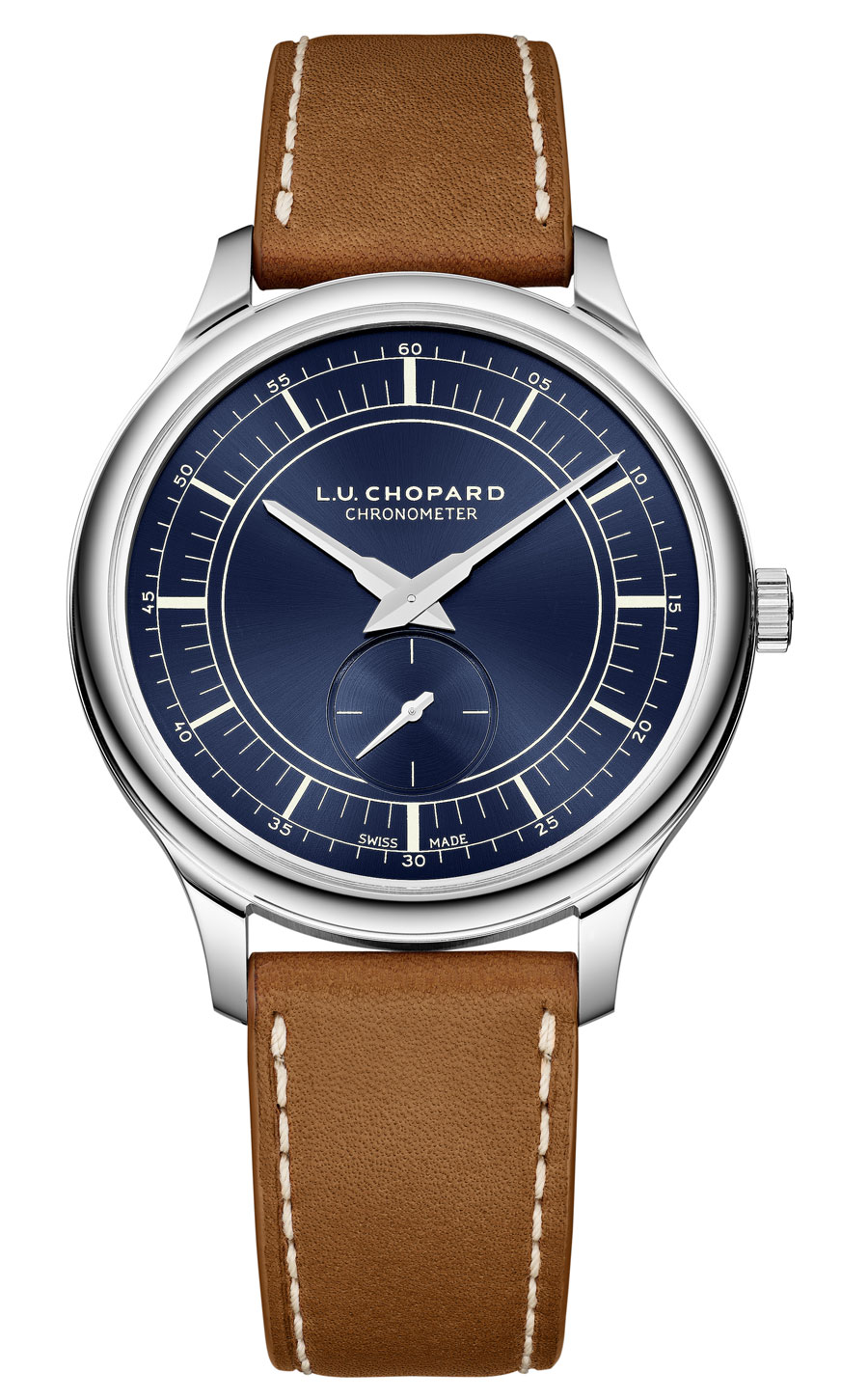
The Lucent Steel™ case measures 40mm in diameter and just 7.2mm in thickness, combining polished and satin-brushed surfaces. Additionally, this features an open case back, revealing the movement within. Paired with a hand-stitched brown calfskin strap, the timepiece features a dial architecture inspired by 1930s sector designs, with clear nods to both Art Deco and Bauhaus movements. Two concentric rings structure the display, while radial hour markers guide legibility. At six o’clock, the small seconds sub-dial blends into this geometric composition. Its ‘Prussian Blue’ hue, achieved through a galvanic treatment and enhanced by the sun-brushed and satin-brushed finish pays tribute to Neuchâtel’s unique history, dating back to when the region was part of the Kingdom of Prussia between the 18th and 19th centuries.
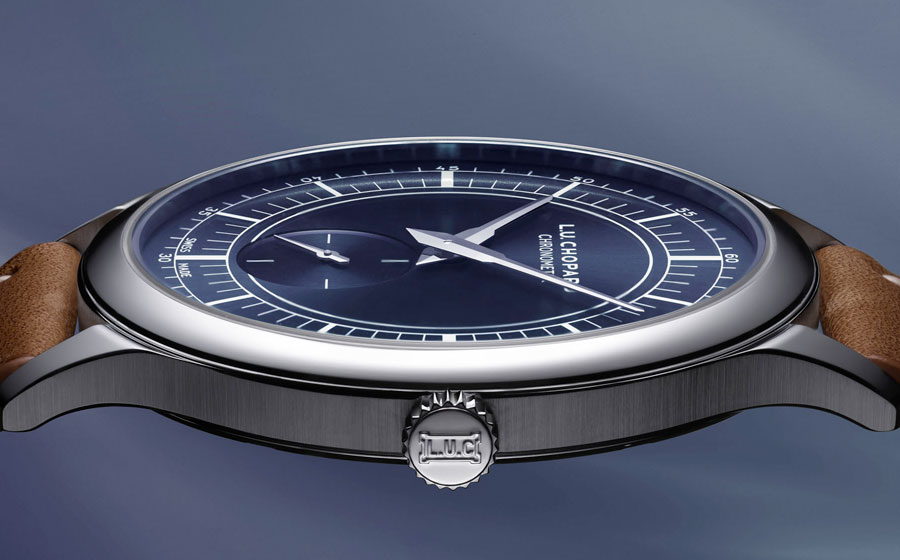
The case’s slender profile boasts an ultra-thin self-winding calibre measuring 3.30mm thick, featuring a micro-rotor in ethical 22-carat gold and a twin-barrel system developed by Chopard Twin technology. This architecture delivers a 65-hour power reserve while maintaining an extra-flat construction.
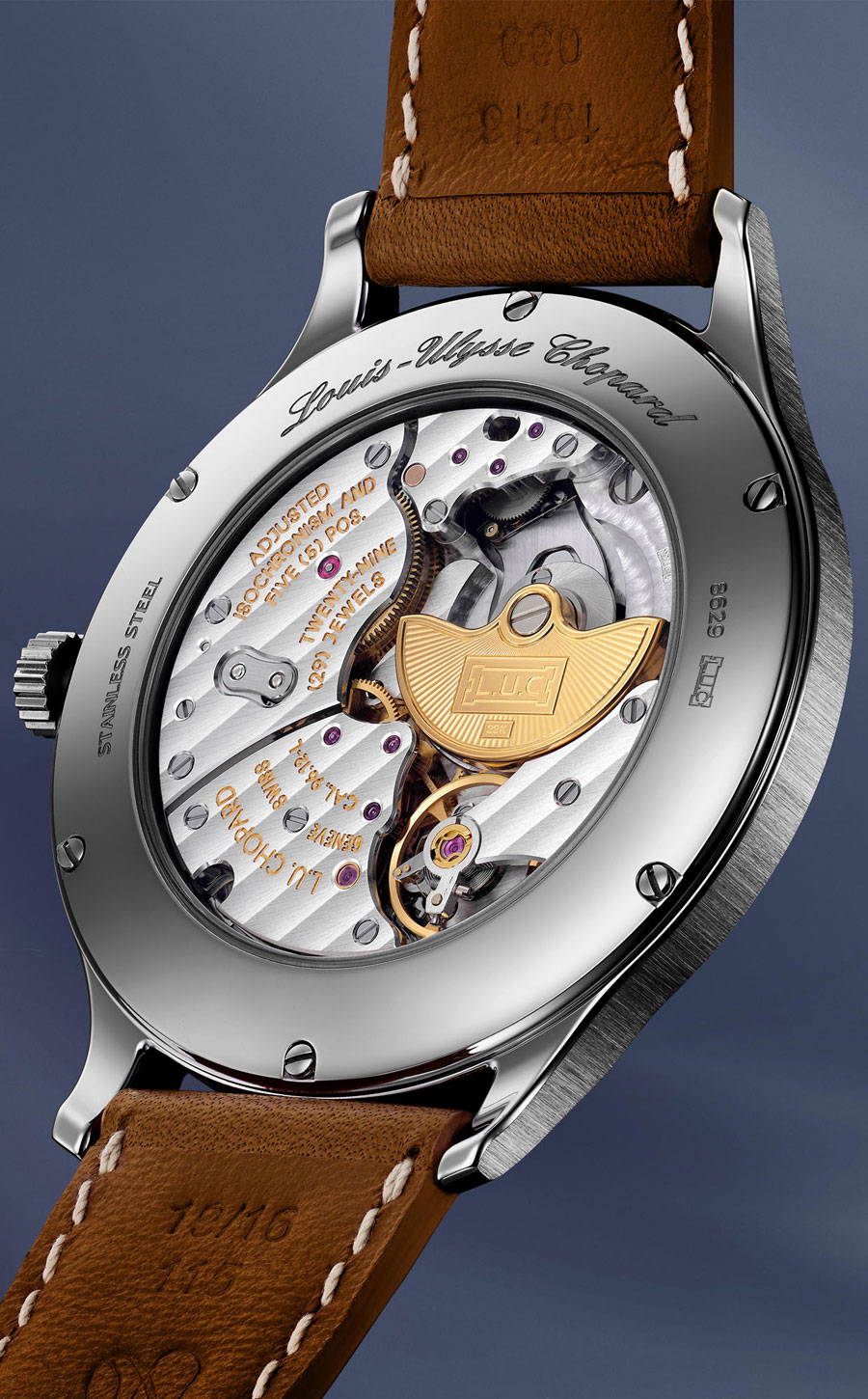
It beats at a frequency of 4 Hz and features a stop-seconds function for precise time setting. COSC-certified, it has been awarded after a series of tests conducted over fifteen days.
€12,900
Click here for the L.U.C XPS Prussian Blue timepiece spec sheet.
Mille Miglia Classic Patina
Limited to 100 pieces, this limited run showcases for the first time a combination of Lucent Steel™ treated with DLC and a tribofinishing process. This technique uses vibrating ceramic abrasives to subtly mark the surface of the case.
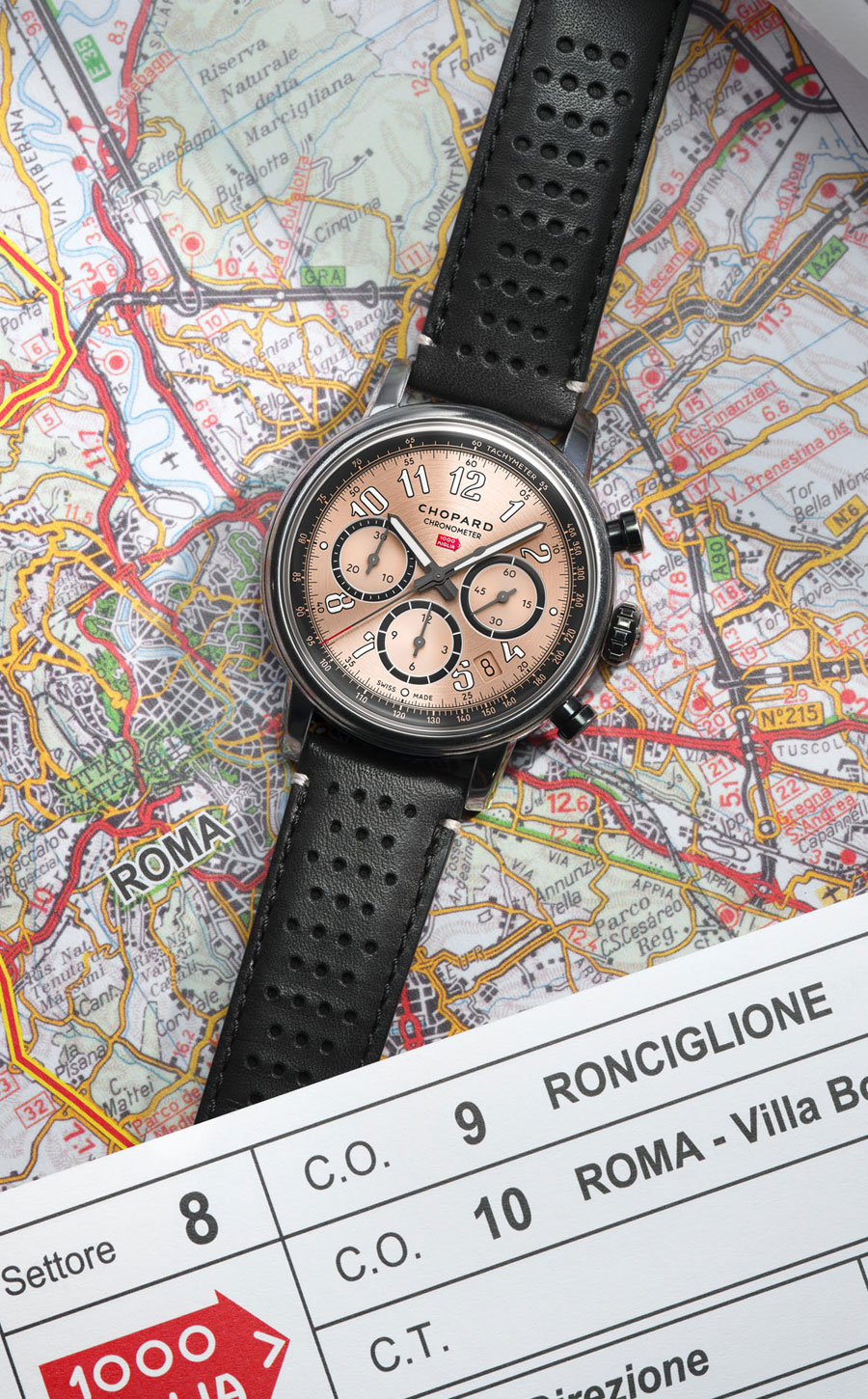
The result is a deliberately patinated look, designed to reflect the wear and marks left by everyday use. This approach is a nod to the world of historic racing cars. Some signs of wear are preserved in order to witness their history. In line with the Mille Miglia lineup, it was born from Chopard’s partnership with the famous Italian road race, of which the brand has been official sponsor and timekeeper since 1988.
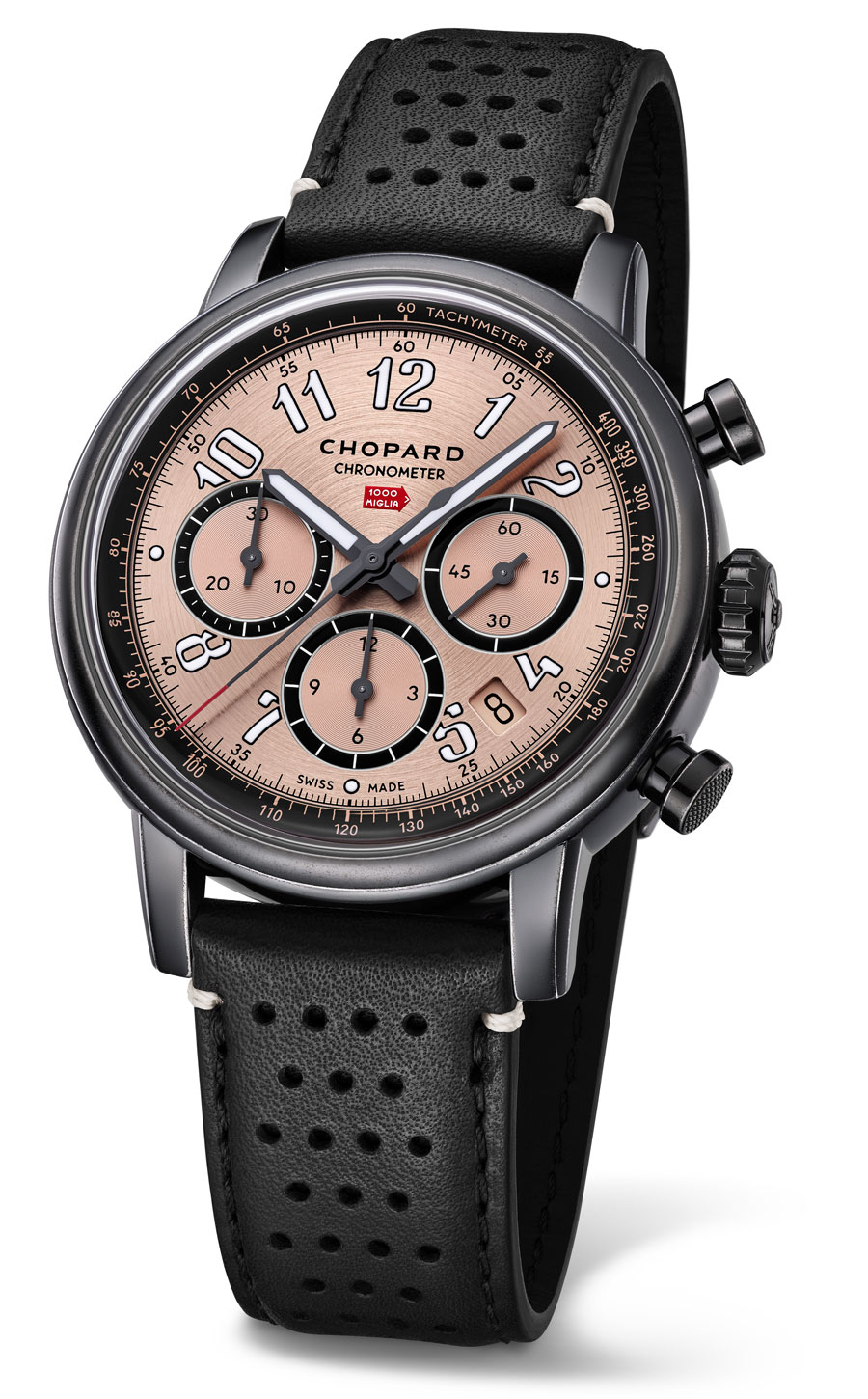
The chronograph features a 40.5mm case, 12.88mm thick, and is water-resistant to 50 metres. It highlights a “glass box” sapphire crystal, a defining feature of the line, along with that copper dial finished in a circular satin texture. Contrasting sub-dials, a tachymeter scale, and red accents on the chronograph central hand and the Mille Miglia logo underlines the motorsport heritage. The look is completed with hands and hour markers coated in Super-LumiNova® Grade X1, alongside a perforated calfskin leather strap inspired by classic driving gloves.
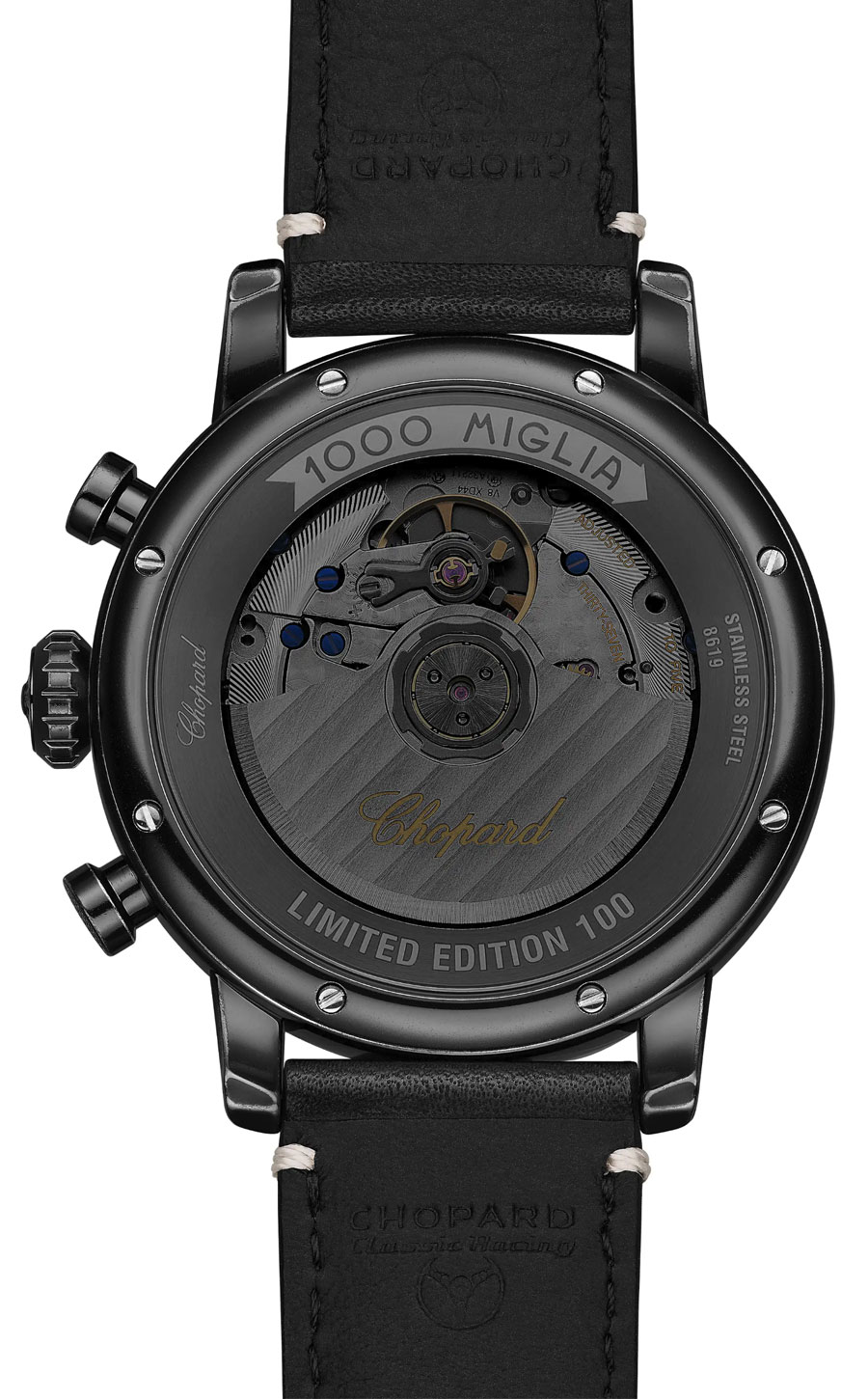
Beating at 4 Hz (28,800 vibrations per hour), the self-winding chronograph movement delivers a 54-hour power reserve. It also features a stop-seconds function for precise time-setting. Just like previous models in the lineup, the Mille Miglia Classic Patina is COSC-certified. It matches the spirit of this line inspired by endurance racing.
€12,100
Click here for the Mille Miglia Classic Patina spec sheet.
L.U.C Grand Strike
To mark its 30th anniversary, Chopard Manufacture highlights its most complex timepiece ever developed in-house: the L.U.C Grand Strike. This exceptional model brings together major chiming complications, including grande sonnerie, petite sonnerie, and a minute repeater. The result of more than 11,000 hours of research and development, it is protected by ten patents, five of which were created specifically for this model.
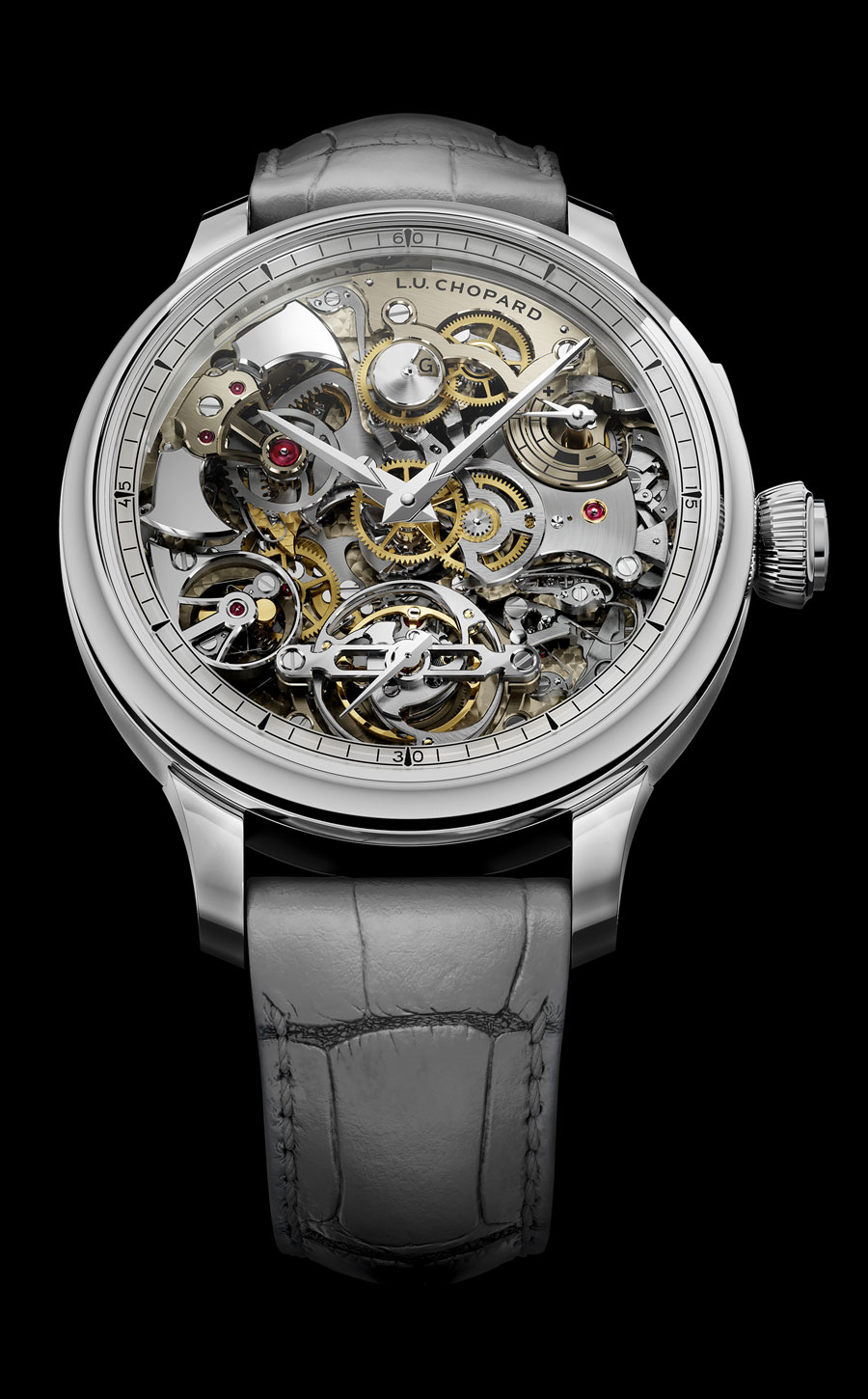
At its heart lies the manual-winding L.U.C 08.03-L calibre, composed of 686 components. Visible thanks to the absence of a traditional dial in its composition, the movement is fully housed within a 43mm case crafted from ethical 18-carat white gold, measuring 14.08mm thick. At 10 o’clock, two polished hammers immediately reveal the timepiece’s striking mechanism. A selector is used to switch between Grande Sonnerie, Petite Sonnerie, and Silence modes.
Beyond its mechanical complexity, Chopard continues its research into sapphire gongs, first introduced with the L.U.C Full Strike. Patented by the manufacture, this monobloc system directly integrates the gongs into the sapphire crystal itself. Unlike traditional constructions, where metal gongs transmit vibrations through several components, this design allows sound waves to travel more directly. Chopard also employs a distinctive square-section geometry designed to optimise acoustic propagation and sound reproduction.
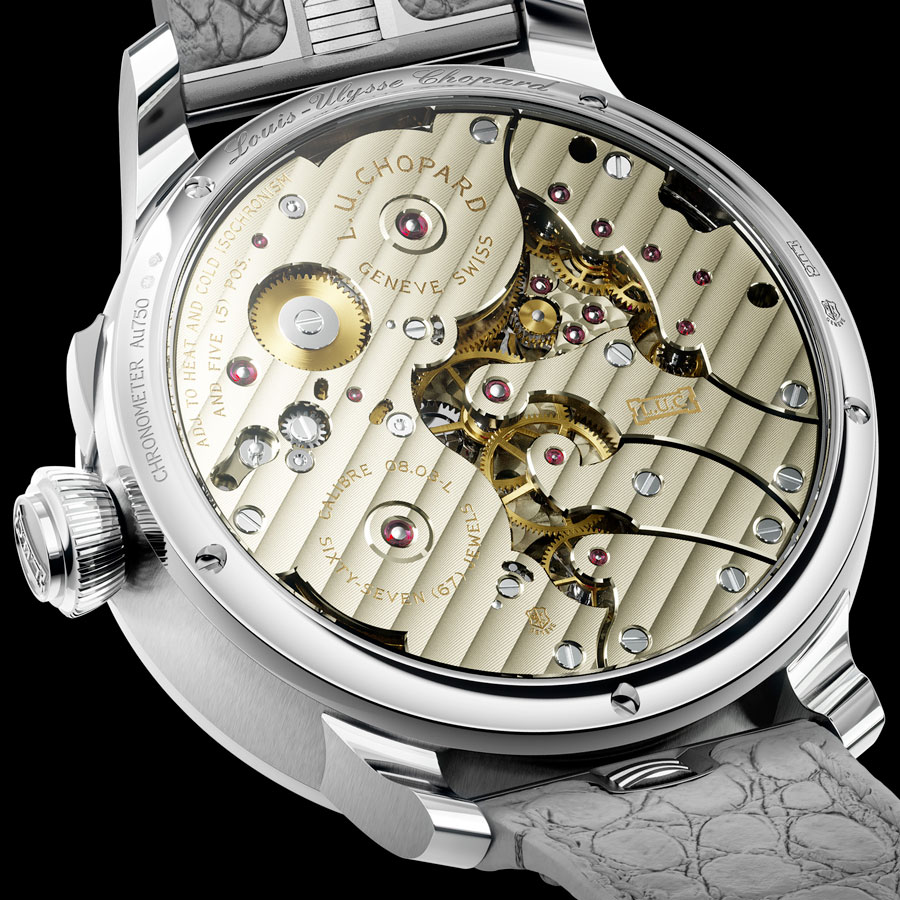
The movement operates at a frequency of 4 Hz and combines two separate barrels: one dedicated to timekeeping, the other to the striking mechanism. Power reserve reaches 70 hours for the timekeeping functions and up to 12 hours in grande sonnerie mode. The calibre also incorporates a tourbillon with small seconds, as well as a stop-seconds function for precise time-setting.
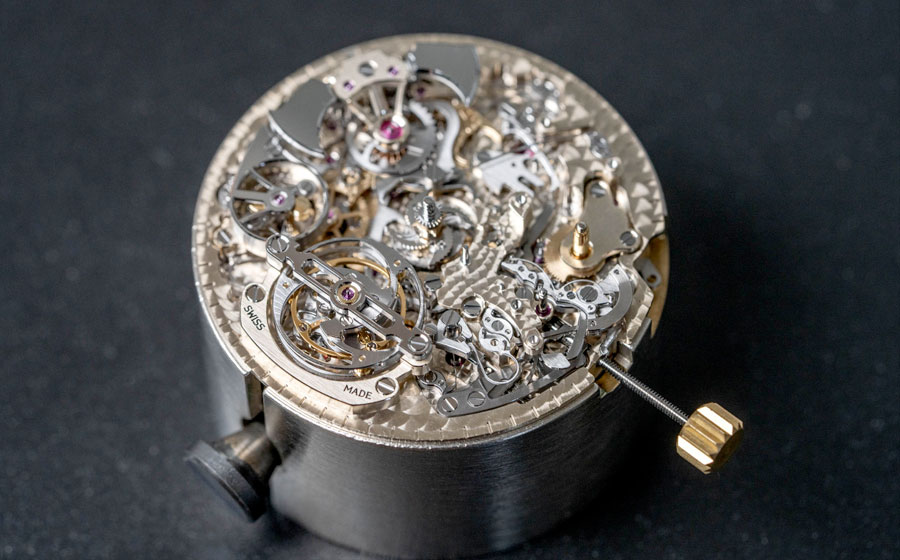
Like other flagships in the L.U.C lineup, this Grand Strike is both certified by COSC and the Poinçon de Genève. This is further underpinned by extensive in-house testing. More than half a million strikes on sapphire gongs and several thousand activations of the mechanics have been carried out to replicate several years of use. This confirms Chopard’s intention to place the piece within the run of developments led by the manufacture since the creation of Fleurier in 1996.
Price on request
Click here for the L.U.C Grand Strike spec sheet.
PLEASE NOTE THAT A FULL EPISODE ENTIRELY DEDICATED TO THIS TIMEPIECE WILL BE SHOT AND BROADCAST SHORTLY.
FREDERIQUE CONSTANT
Classics Manchette
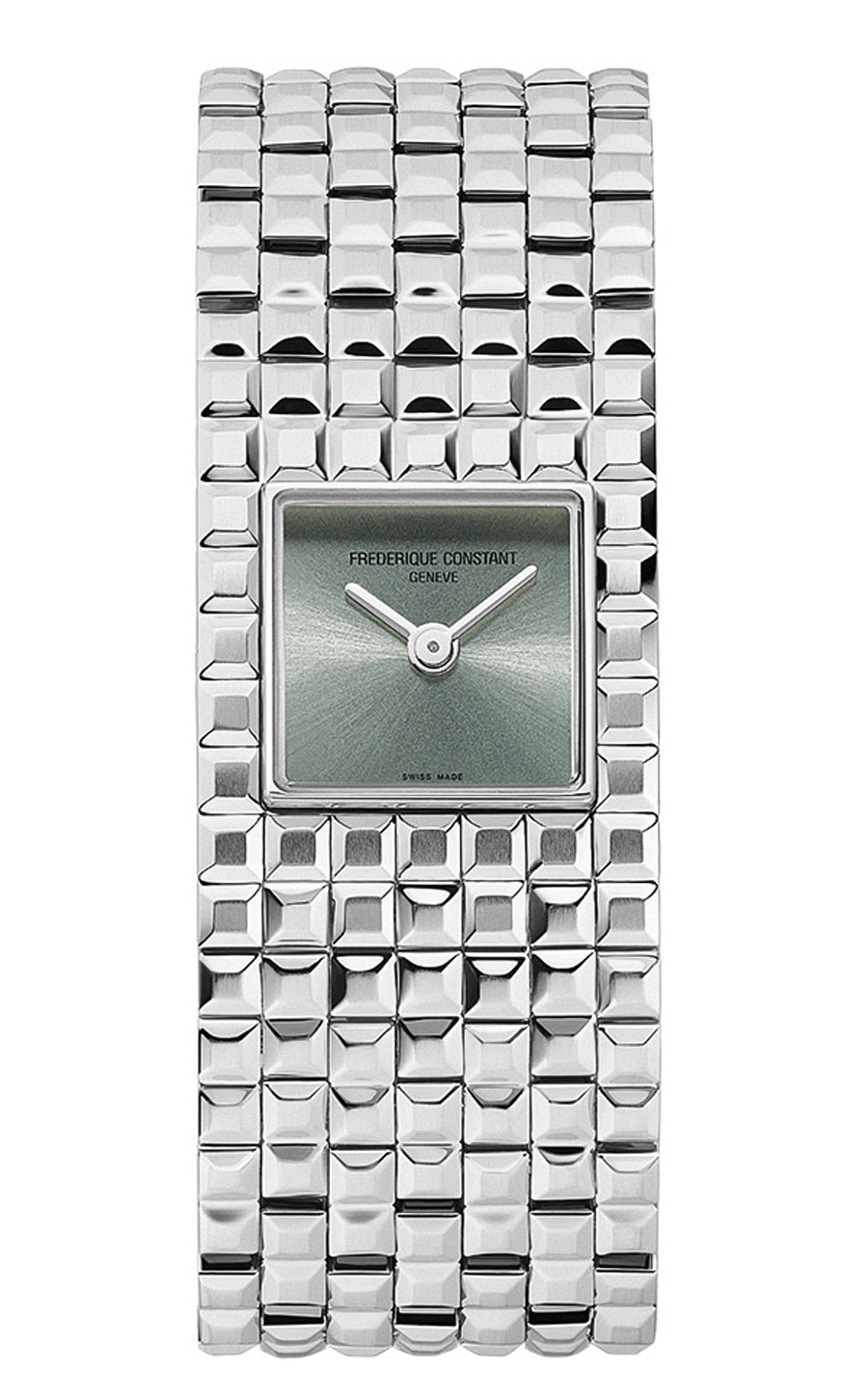
With this new Classics Manchette series presented at WATCHES AND WONDERS 2026, Frederique Constant continues to develop a timepiece that deliberately blurs the boundaries between watch and jewellery. More cuff than traditional timepiece in its aesthetic approach, this new generation is offered in two iterations. They play on textures, colour and material craftsmanship.
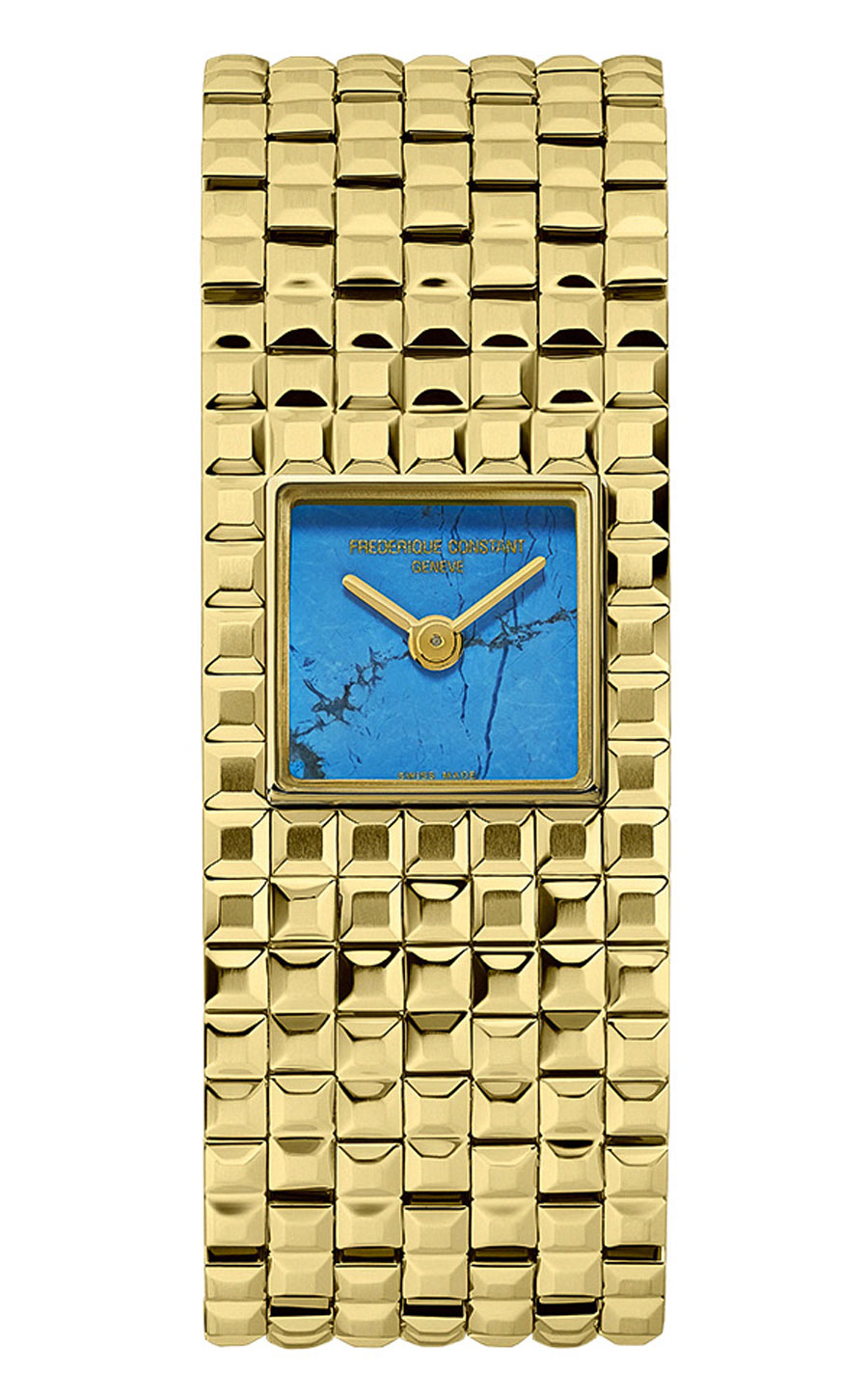
The first version places stone right at the heart of the design. Paired with a gold bracelet structured around a tapisserie motif, it features a natural turquoise dial, following on from a previous malachite edition. The stone is far more than merely decorative: its veins, shifts in tone, and natural variations ensure that every single piece is unique. No two dials are ever exactly alike, giving each timepiece its own distinct identity. The combination of turquoise and golden tones creates a striking visual aesthetic.
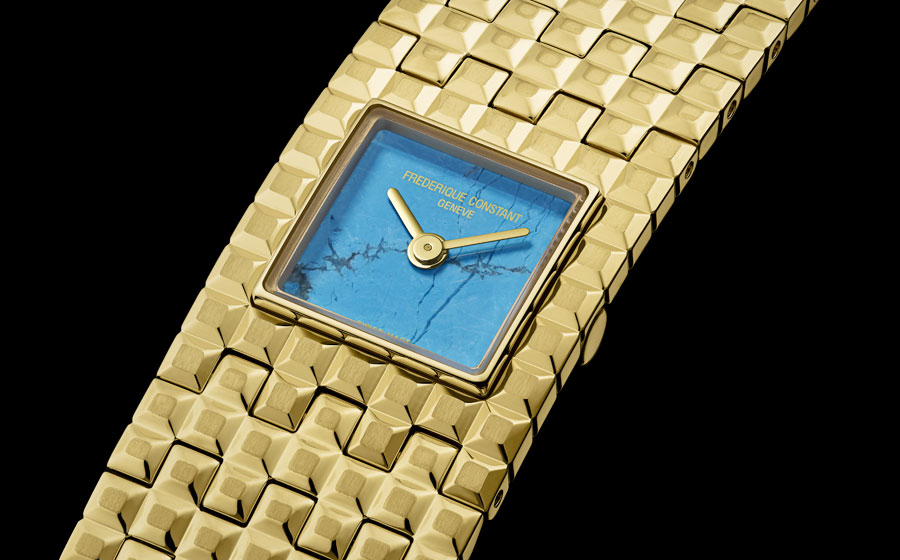
The intense blue of the stone echoes the warm reflections of the metal, creating a deliberate contrast that immediately catches the eye. With just two hands reduced to the absolute essentials, telling the time almost takes a back seat to the exquisite craftsmanship of the materials. Conversely, the second iteration features a lighter approach. Presented on a steel bracelet, it retains the graphic texture of the tapisserie motif but replaces the natural stone with a sunbrushed mint-green dial. Here, light plays a different role: less organic, more shifting, with reflections dancing with every movement of the wrist.
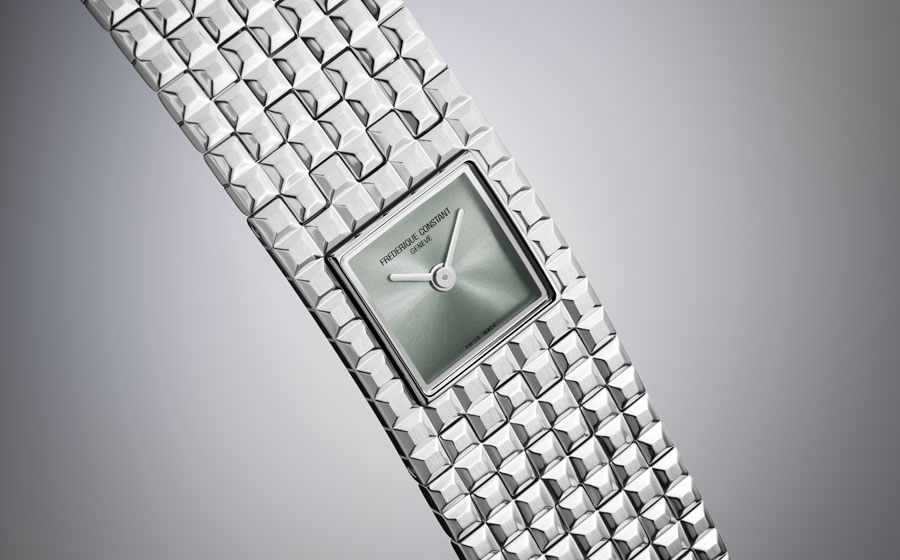
With these two new versions, the Classics Manchette timepieces cement a direction where personality takes precedence over technical showcasing. On the one hand, the uniqueness of a natural stone; on the other, a masterclass in colour and light. Two different iterations of the same piece, designed to be considered both as accessory and timepiece.
Yellow gold Classics Manchette – €1,995
Steel Classics Manchette – €1,295
Click here for the Classics Manchette timepiece spec sheet.
Manufacture Classic Worldtimer
With its new Manufacture Classic Worldtimer, Frederique Constant has updated one of its most established flagship models while retaining its hallmark layout: a world-time display designed to be incredibly straightforward to use. This new generation features a revised 40mm case and, crucially, introduces the new in-house Manufacture FC-719 calibre. Its power reserve has been given a serious boost. It delivers 72 hours compared to the previous 38.
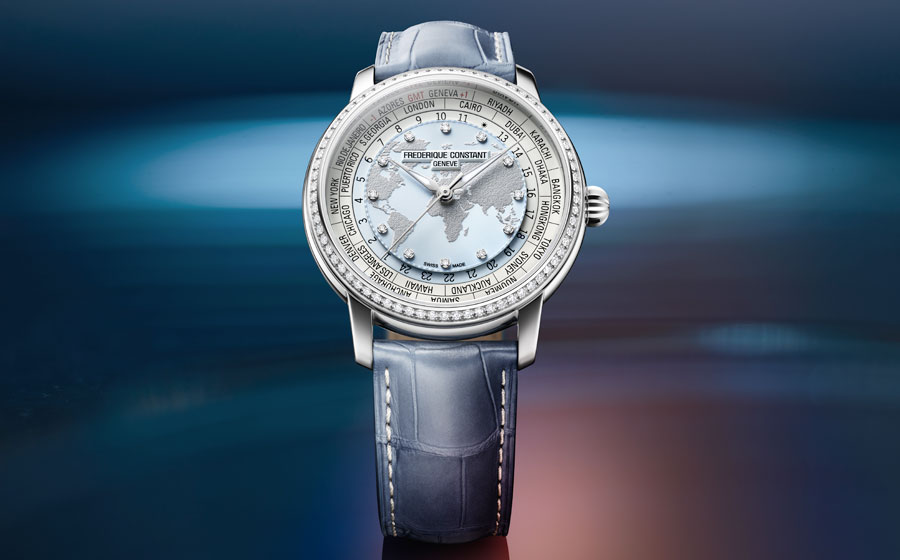
Even with this technical upgrade, the core principle remains exactly the same. The timepiece displays all 24 time zones simultaneously thanks to a two-tone day/night disc, and it keeps all adjustments centralised via the crown. Every single function can be set without the need for extra pushers. It is a design that makes operating it easier. The manufacture has also taken the opportunity to remove the date display to clean up the dial layout, shifting the focus firmly onto the Worldtimer complication itself.
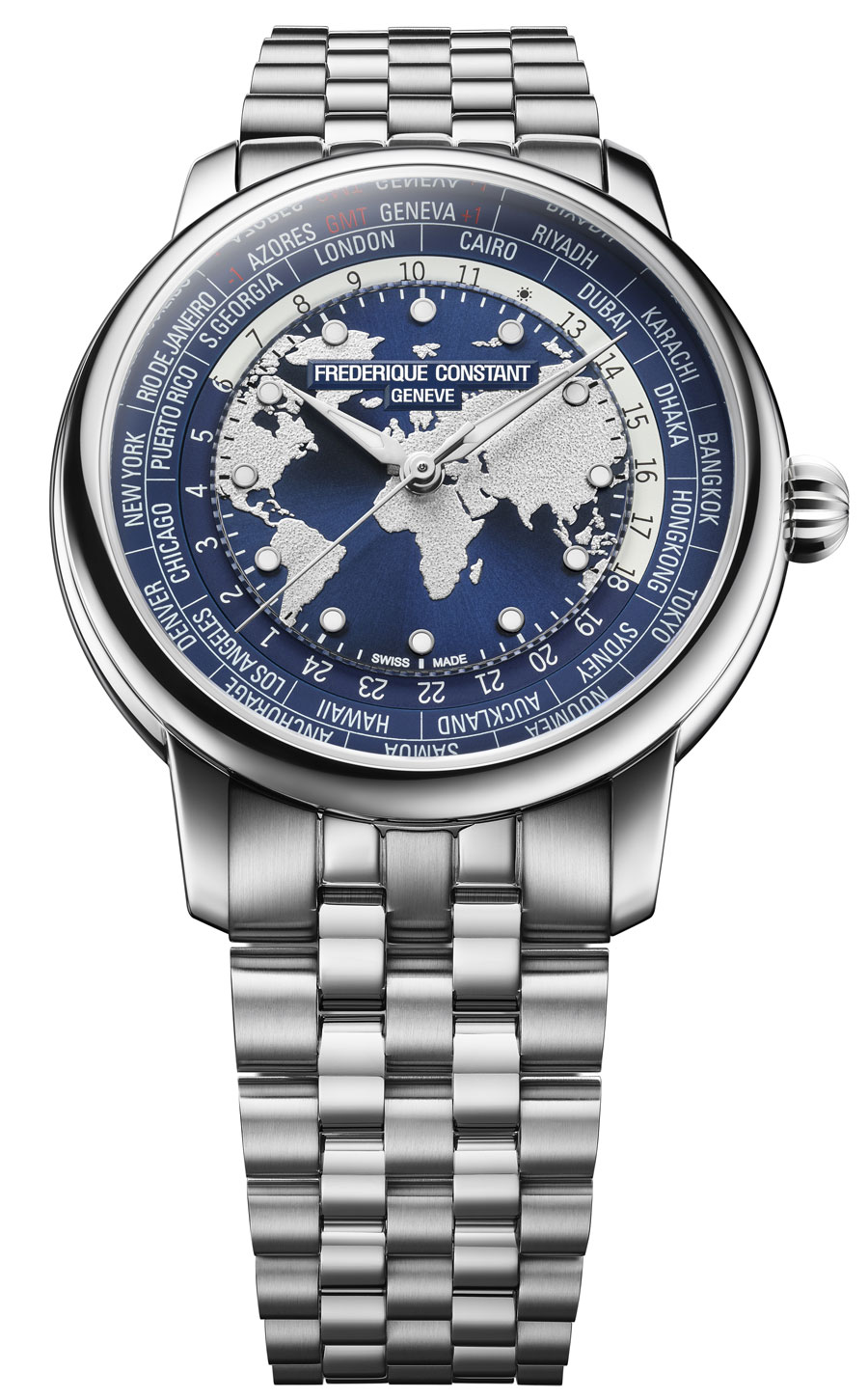
This new generation actually comes in three distinct editions. The first takes a more jewellery-focused approach, limited to a run of 88 pieces. Its bezel is set with 70 diamonds, while 12 diamond hour markers sit on the dial, totalling 0.785 carats. This version also plays with textures, featuring raised, grained grey continents set against a sunray light-blue ocean. Coming with two interchangeable alligator straps, it is the dressiest option in the new lineup. The second variation stays more faithful to the lineup’s historical design cues. It keeps the navy blue oceans and raised grey continents, but introduces a new five-link steel bracelet that alternates between brushed and polished finishes. Meanwhile, the applied hour markers with Super-LumiNova treatment give it a more functional, legible feel.
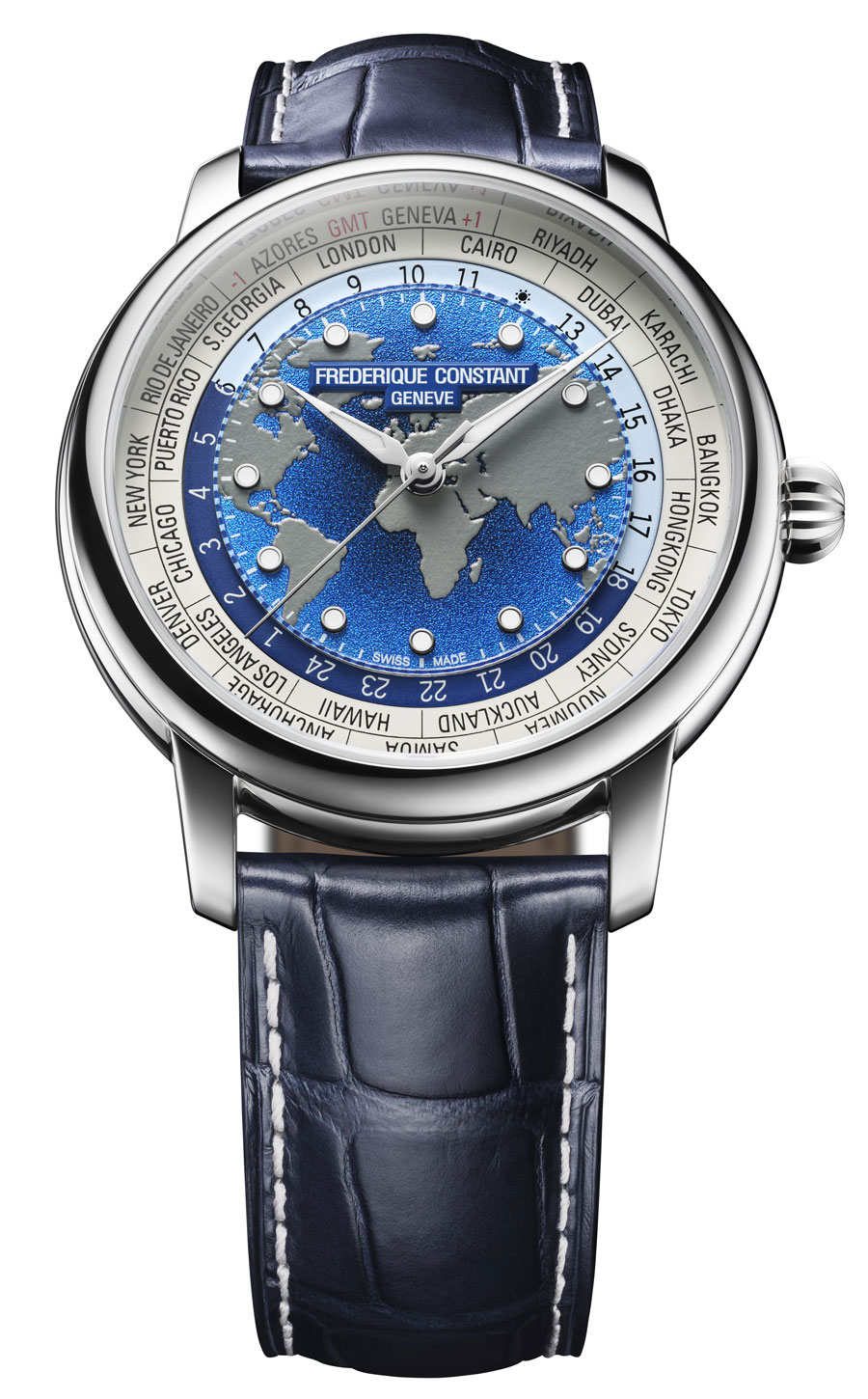
The third iteration takes a more graphic approach, highlighting a gradient blue for the oceans alongside taupe-grey continents and a crisp white city disc. It is a composition that really plays up the contrasts and depth of the dial. Three different looks, all using the same mechanics: the Manufacture FC-719 calibre, which can be admired through a sapphire case back and comes adorned with Côtes de Genève, perlage, and sunbrushed finishes.
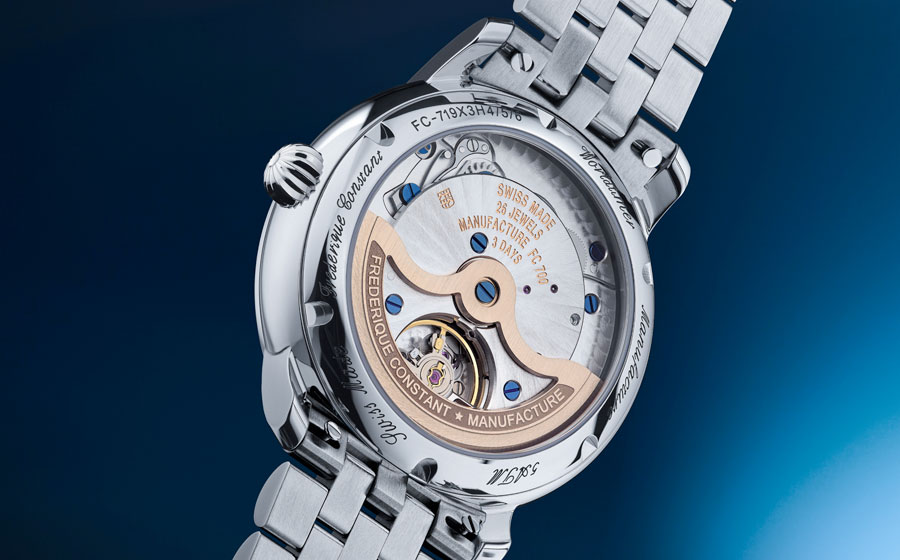
The steel Classic Worldtimer spec sheet – €4,995
The steel Classic Worldtimer fitted with a navy blue leather strap spec sheet – €4,995
The Classic Worldtimer with a diamond set bezel spec sheet – €7,995
FREDERIQUE CONSTANT WATCHES WEBSITE
ORIS
It all started as a bit of gossip in the aisles of the trade show, but it quickly became the main talking point of the trade show. The new releases from Oris absolutely charmed some men, blew women away, and even managed to catch a few journalists off guard — which is quite a feat! Have a look at a lineup making a major comeback with two standout models and their iterations: the Artelier Calibre 113 and the Artelier Complication. Plus, one of my absolute personal highlights of the show: the Oris Star Edition.
Artelier Calibre 113
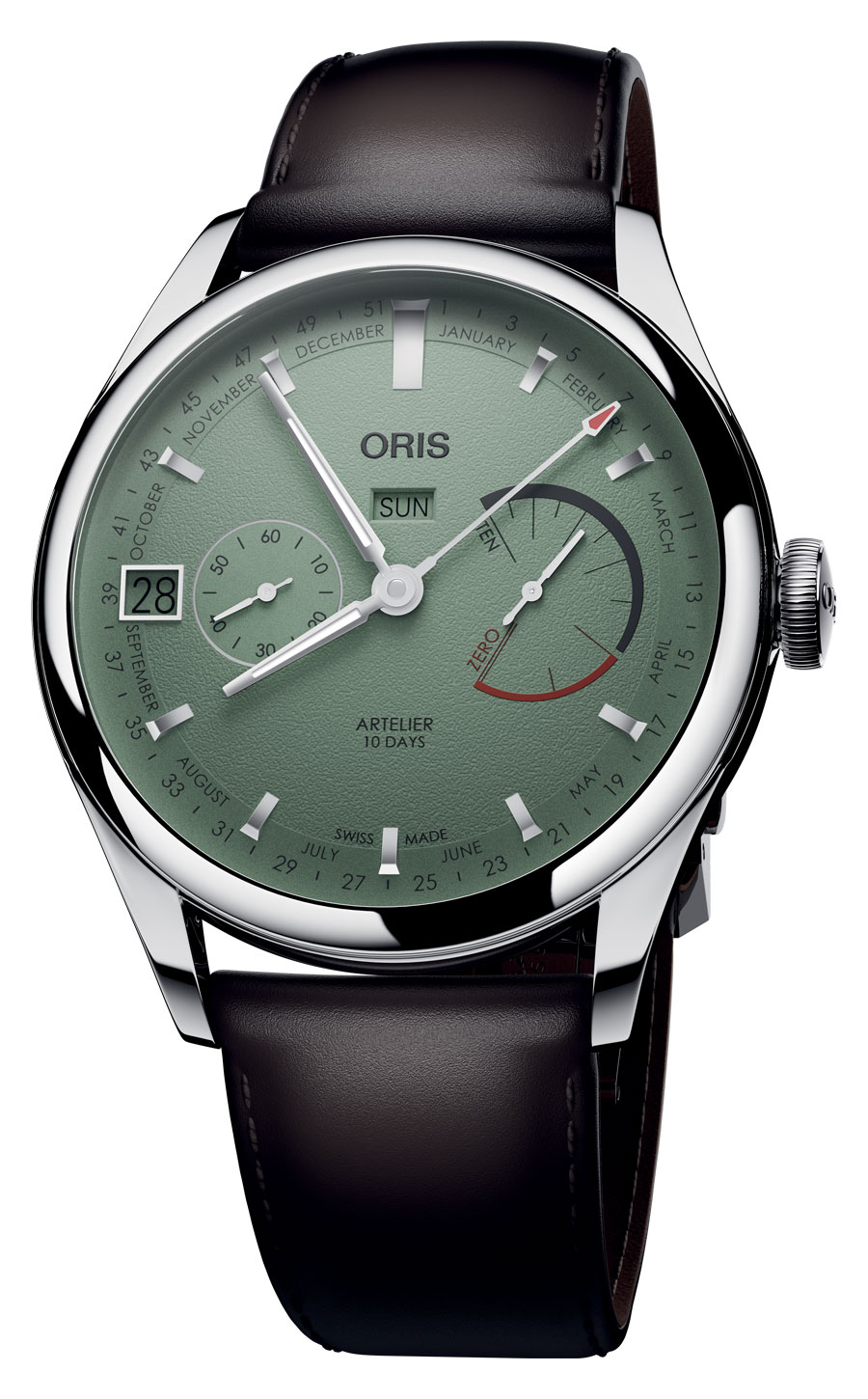
With the return of the Artelier Calibre 113, Oris revisits one of its most distinctive in-house movements. Following the success of the quick-selling Year of the Horse edition, the brand crafted the base timepiece in a more permanent version, faithful to Oris’s hallmark approach to complications. At its heart lies the Oris Calibre 113, a hand-wound movement developed entirely in-house. Its standout feature is a 240-hour power reserve, which means that it is autonomous for ten whole days, paired with a non-linear power reserve indicator at 3 o’clock. As the power winds down, the display scale expands, allowing you to see exactly how much time is left before it needs a wind.
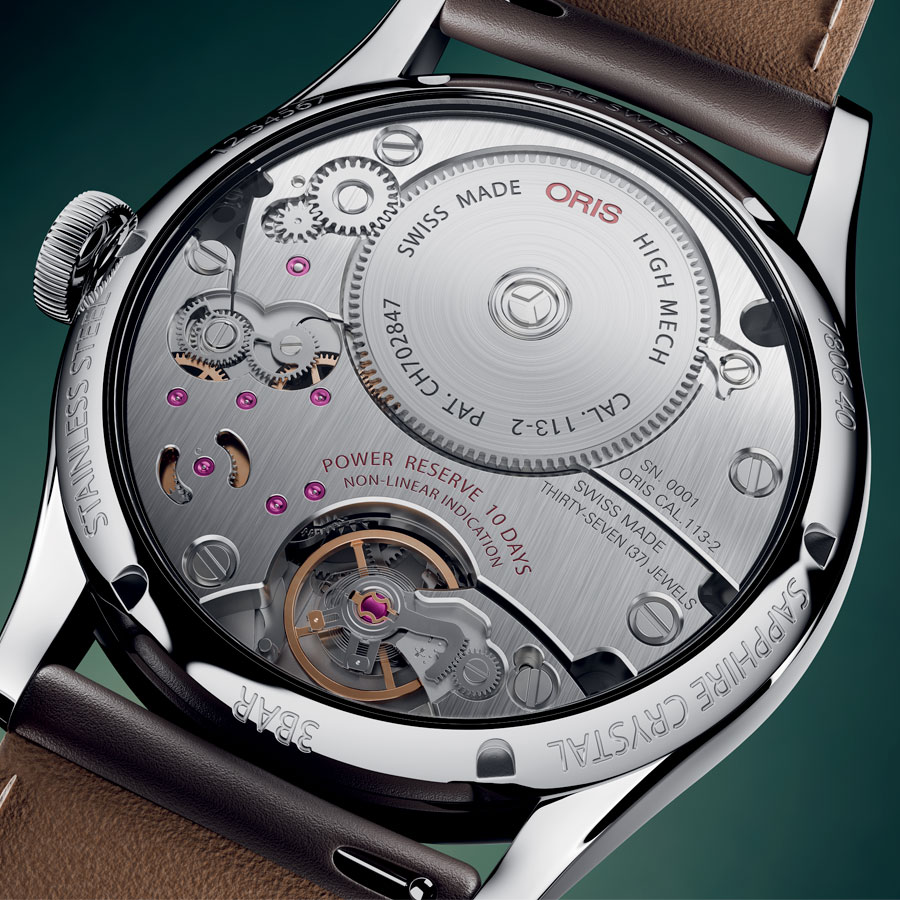
The movement highlights a full calendar, known as ‘business’ calendar, that simultaneously displays the day, date, month, and week of the year. All functions are operated directly via a single crown. No extra pushers needed. This design keeps adjustments simple while ensuring the dial remains highly legible, despite the wealth of information on display. These impressive mechanics highlight a steel case measuring 43mm in diameter and 13.1mm thick. It showcases a domed sapphire crystal with an anti-reflective coating, and a see-through case back to admire the movement.
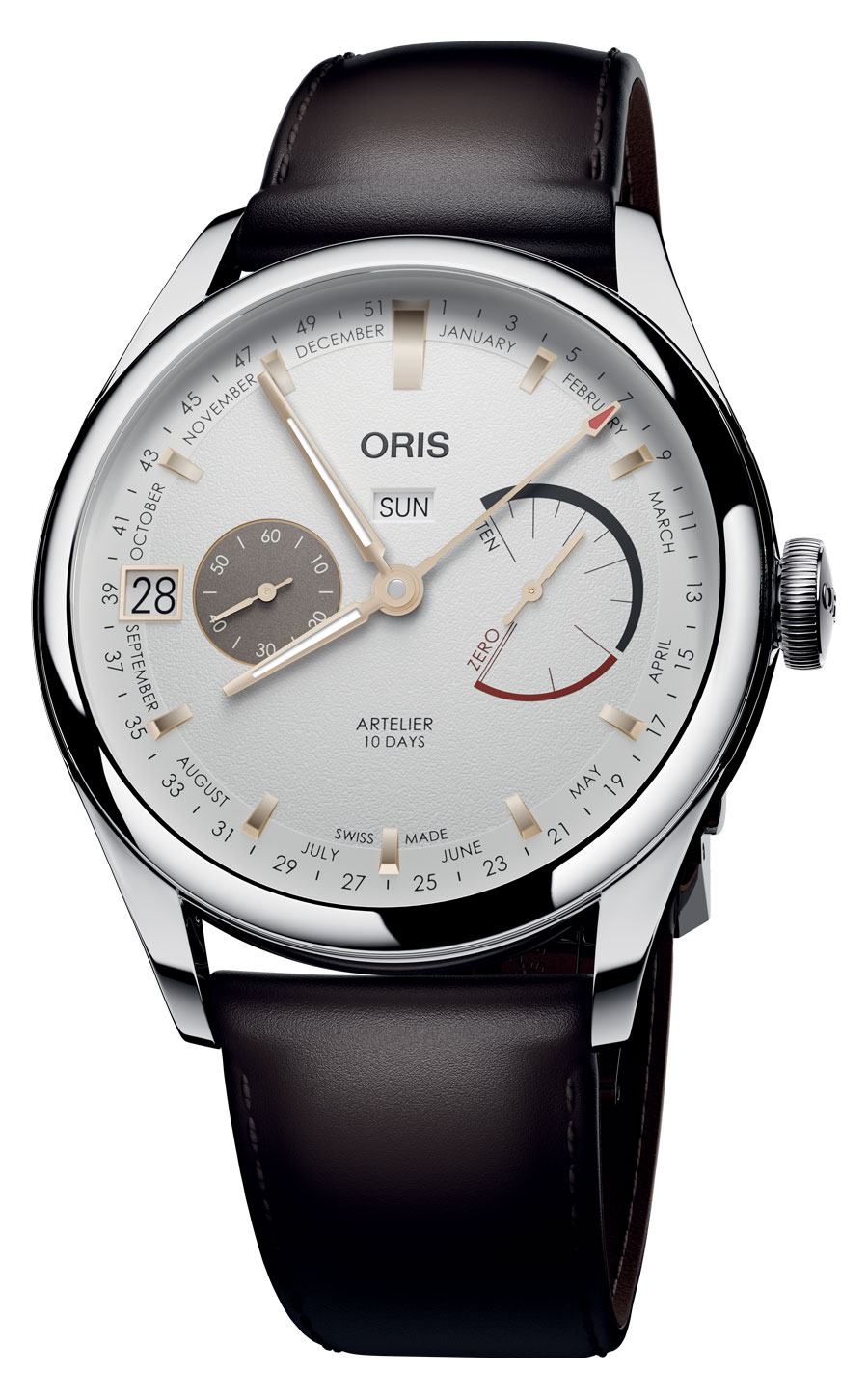
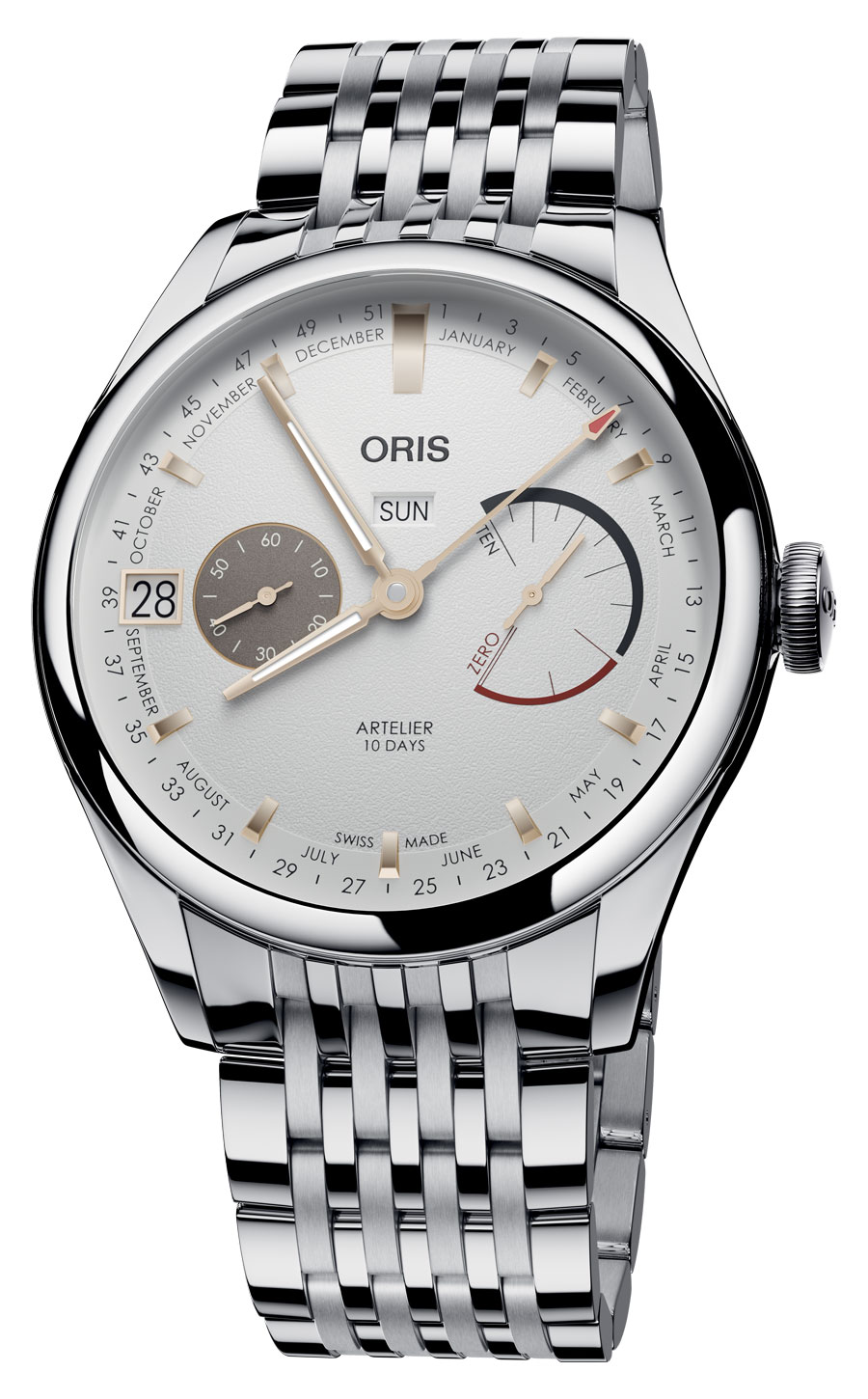
Oris offers two configurations: a white-dial version and a green-dial version, both fitted with appliqué hour markers and hands treated with Super-LumiNova®. The timepiece comes on a brown Cordovan leather strap, while the white-dial version can also feature a multi-link steel bracelet.
On a leather strap – €6,150
On a steel bracelet – €6,350
Click here for the Oris Artelier Calibre 113 spec sheet.
Artelier Complication
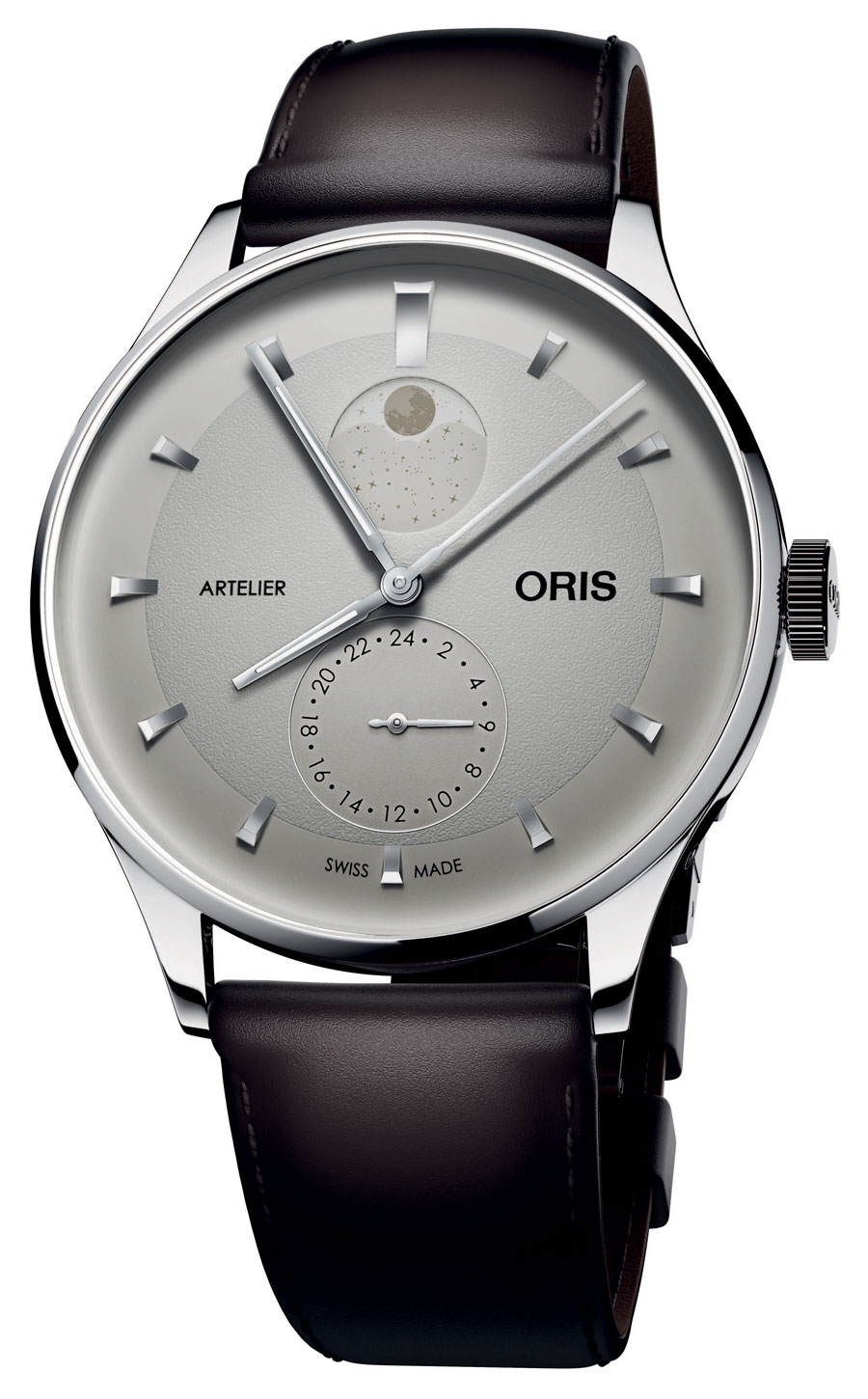
The design work on the new Artelier Complication focuses as much on legibility as it does on proportions. The timepiece retains its hallmark complications while simplifying their layout.
The new Artelier Complication was designed by Lena Huwiler, a new product engineer at Oris, who is just 24 years old.
This evolution is released along with the new Oris 782 self-winding calibre, derived from the previous 781 movement. The construction removed two displays found on older versions. It focuses again on the layout around two key indications: a moon phase at 12 o’clock and a 24-hour second time zone at 6 o’clock. The movement retains a 41-hour power reserve and features a stop seconds function.
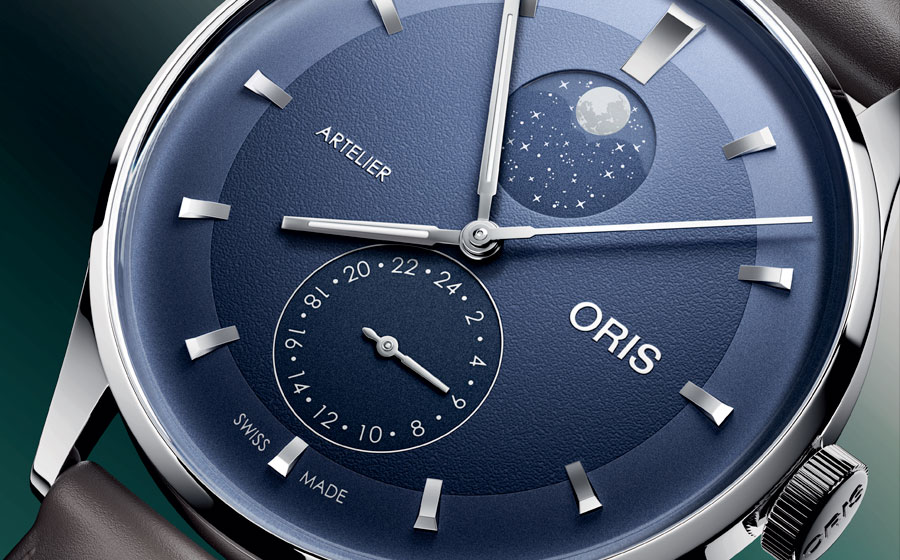
This new design directly changes the balance of the dial. With a more spacious feel, it showcases a multi-tiered construction. Its textured central section, its slightly curved outer chapter ring, and its two sub-dials that enhance the structure of legibility. The moon phase is set against a starry sky. The latter blends more naturally into the dial aperture. Faceted hour markers, square-tipped hands, and new typeface are also part of this update.
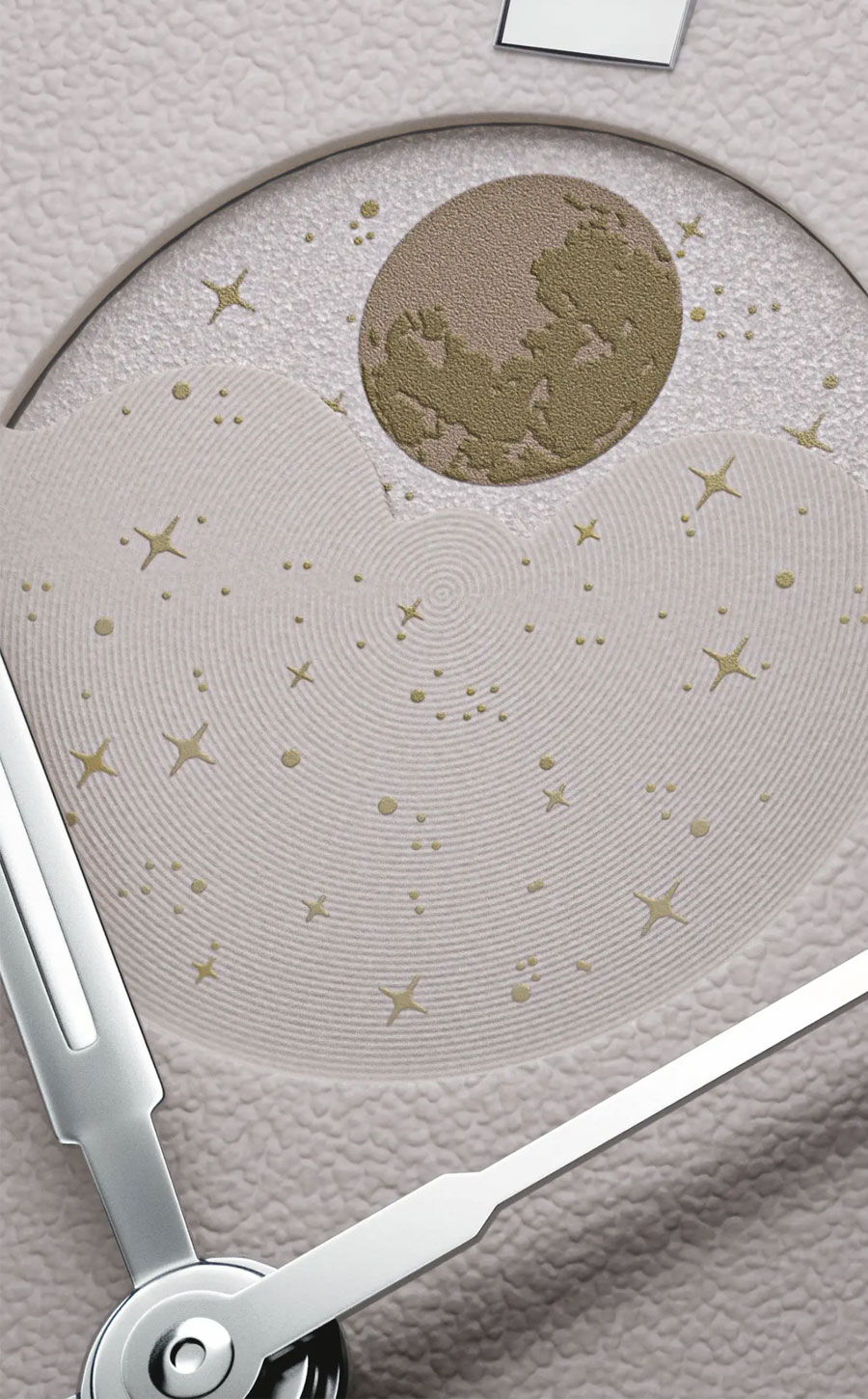
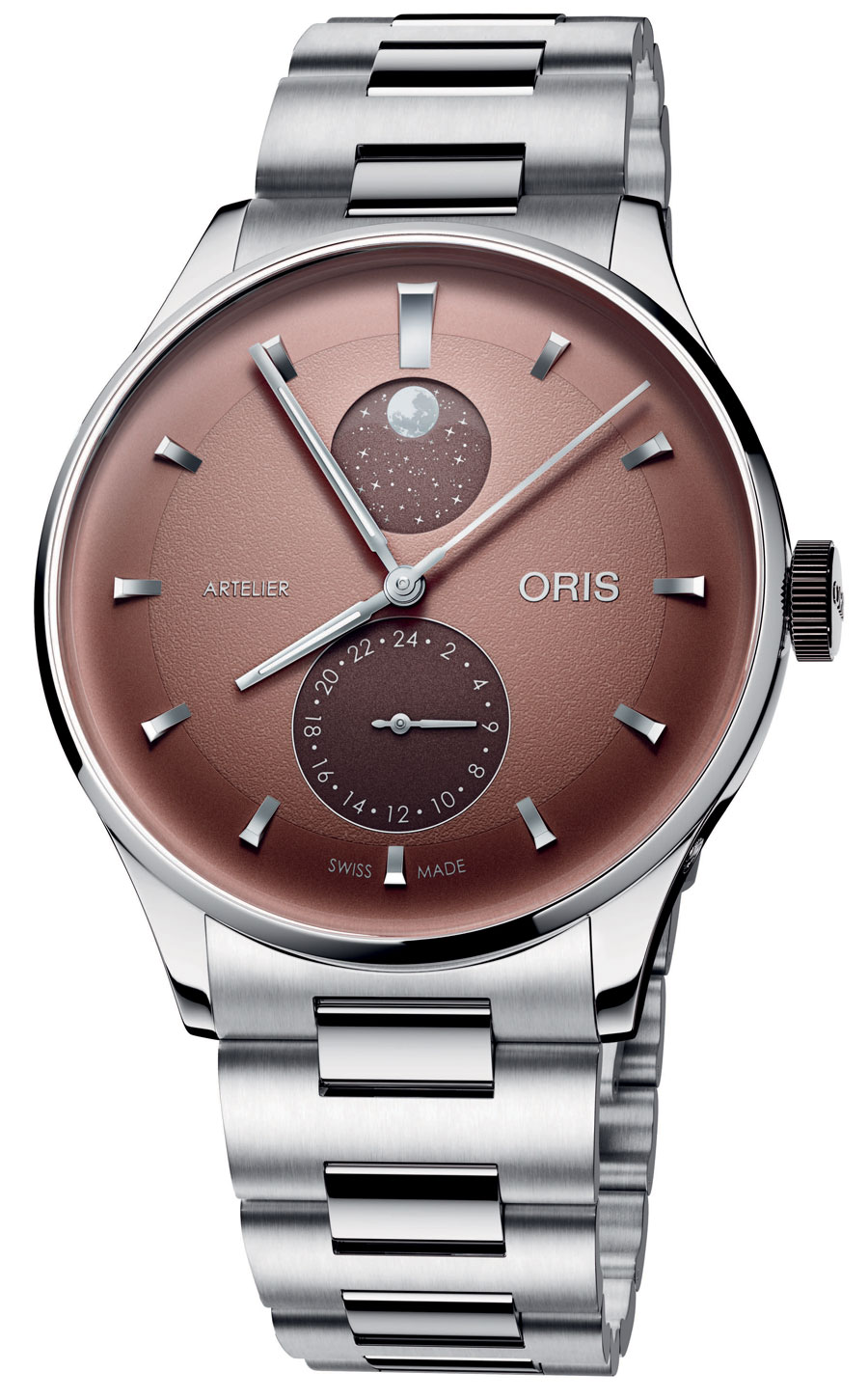
Oris is offering this new Artelier in three colourways: ivory, midnight blue, and brick. Each plays on a different mood while retaining the exact same visual architecture. The brick version especially stands out due to darker sub-dials designed to underline contrast and legibility. The whole assembly features a 39.5mm steel case, available on either a brown leather strap or a multi-link steel bracelet.
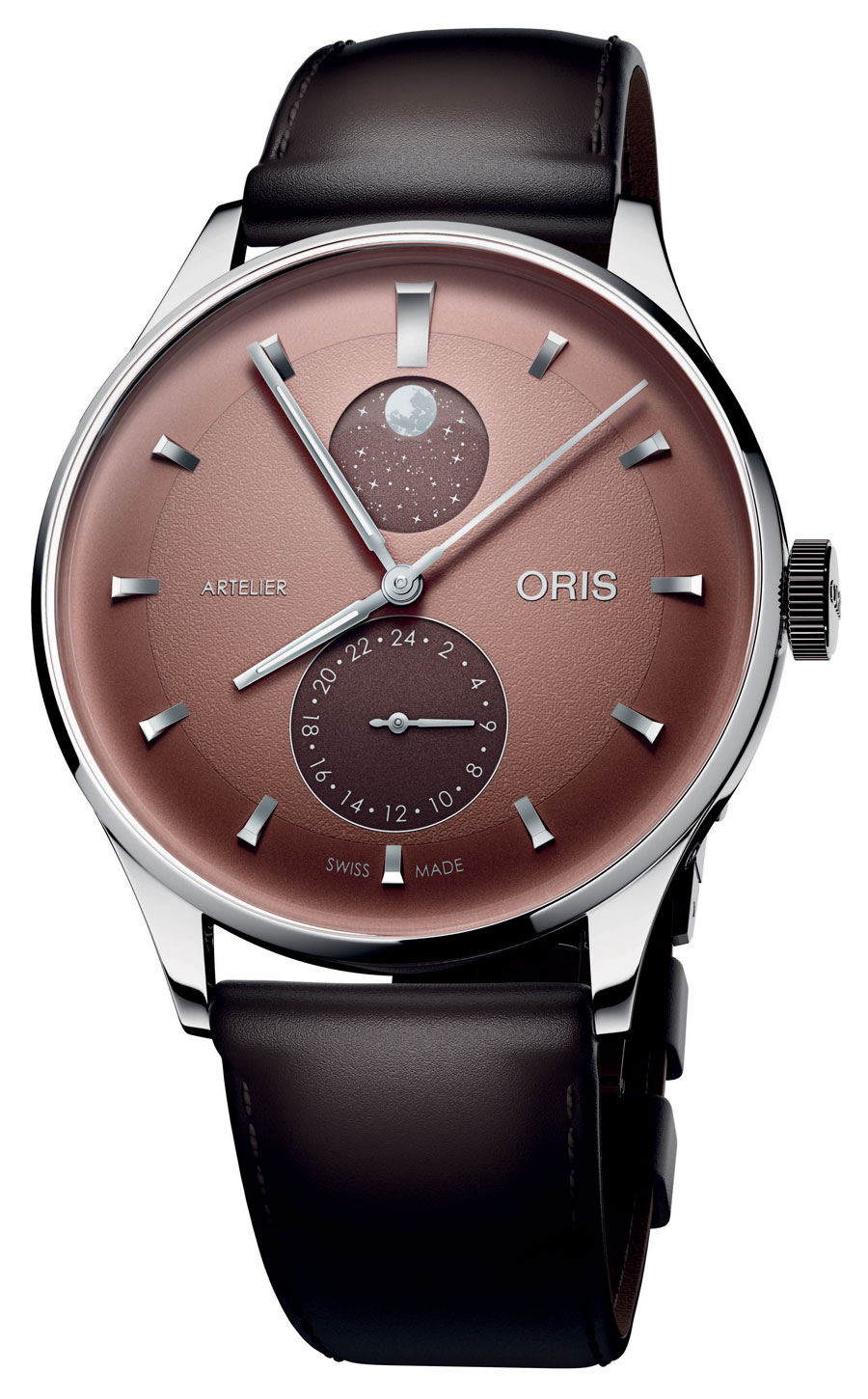
On leather strap – €2,300
On steel bracelet – €2,500
Click here for Oris Artelier Complication spec sheet..
Oris Star Edition
Some timepieces immediately catch your eye with their mechanics; others with their design. The Oris Star Edition is one of those timepieces that brings both together, with an added historical dimension that is rarely quite so clear. In fact, it is one of my personal favourites from the WATCHES AND WONDERS 2026 trade show. Beneath its understated exterior lies a timepiece. It defines a chapter in the story of Oris and, more broadly, Swiss watchmaking.
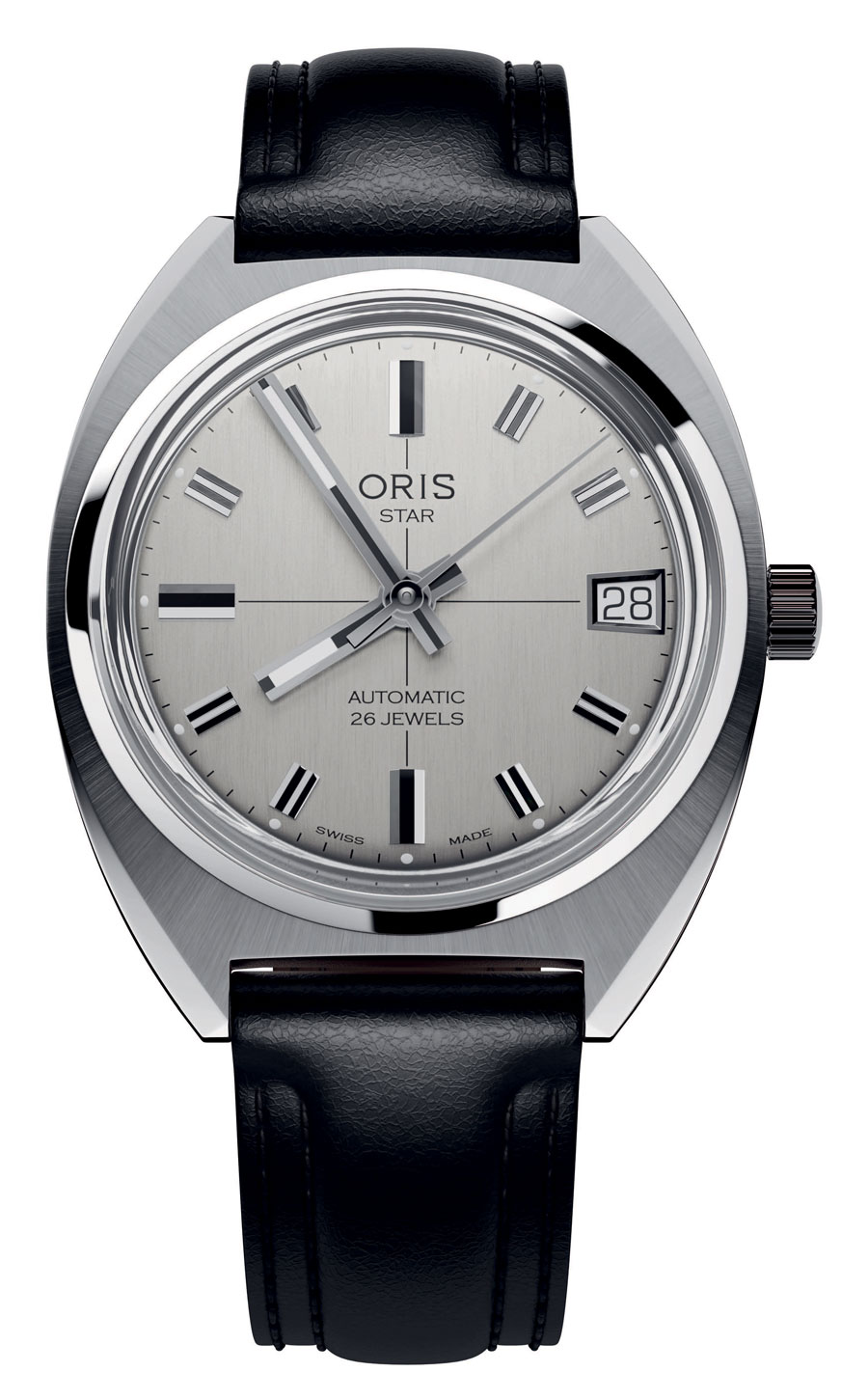
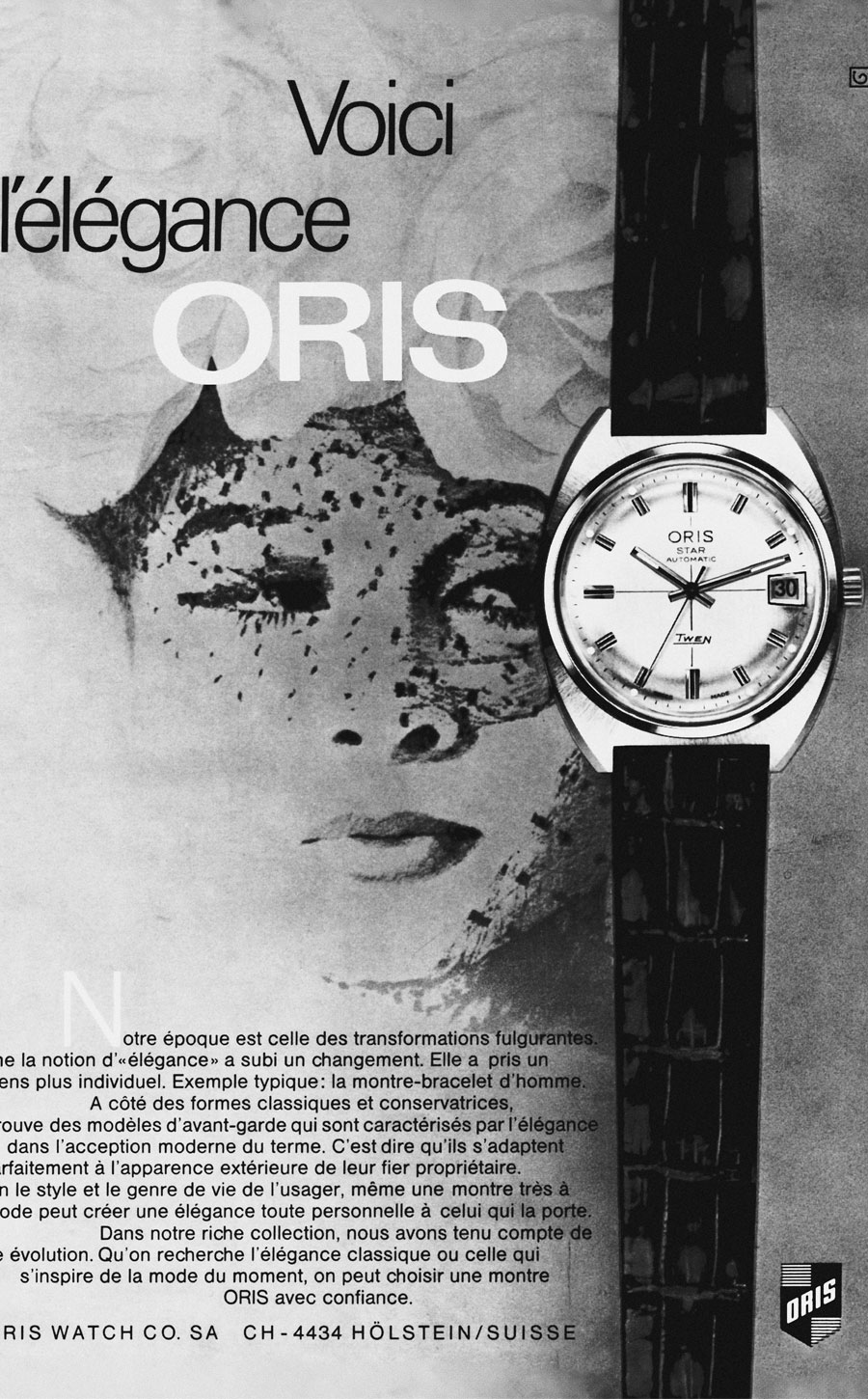
This edition pays tribute to 1966, a time when the brand introduced its very first timepiece powered by an in-house lever-escapement movement. This breakthrough follows the repeal of the Swiss Watch Statute. It is a piece of legislation that had stifled the innovative capacity of manufactures like Oris for decades. At the heart of this battle was Dr Rolf Portmann. Its decisive role in this transformation has also been paid tribute to with this Star Edition.

But beyond the historical narrative, it is the timepiece itself that truly steals the show. Oris has opted for a highly faithful reinterpretation of the original model. It highlights a 35mm tonneau case with especially adjusted proportions. The brushed silver dial preserves its heritage design cues, complete with applied hour markers, square-tipped hands, the “Star” and “Automatic” text, and a discreet date window at three o’clock. Even the choice of plexiglass contributes to that distinct 1960s style. Inside, the self-winding Oris 733 calibre handles the essentials. It delivers a 41-hour power reserve, a stop-seconds function, and an instantaneous date. There is nothing flashy here — just a movement entirely matching the spirit of the timepiece: simple, efficient, and built to last.
€1,800
Click here for the Oris Star Edition timepiece spec sheet
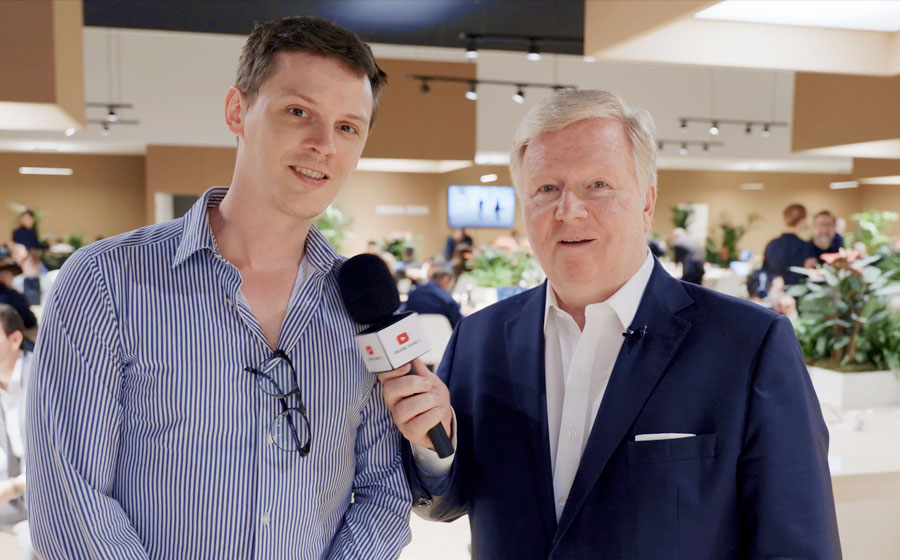
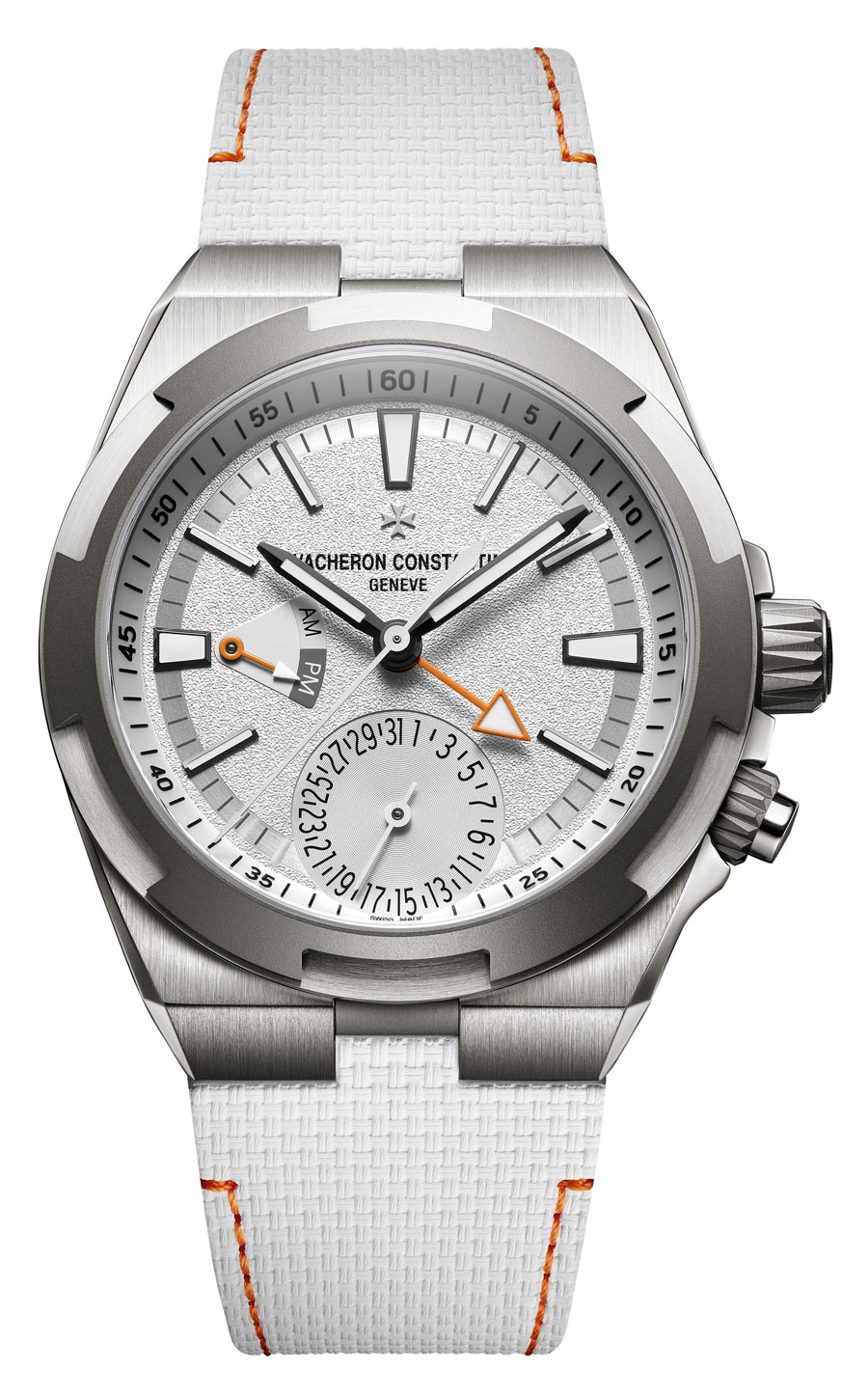
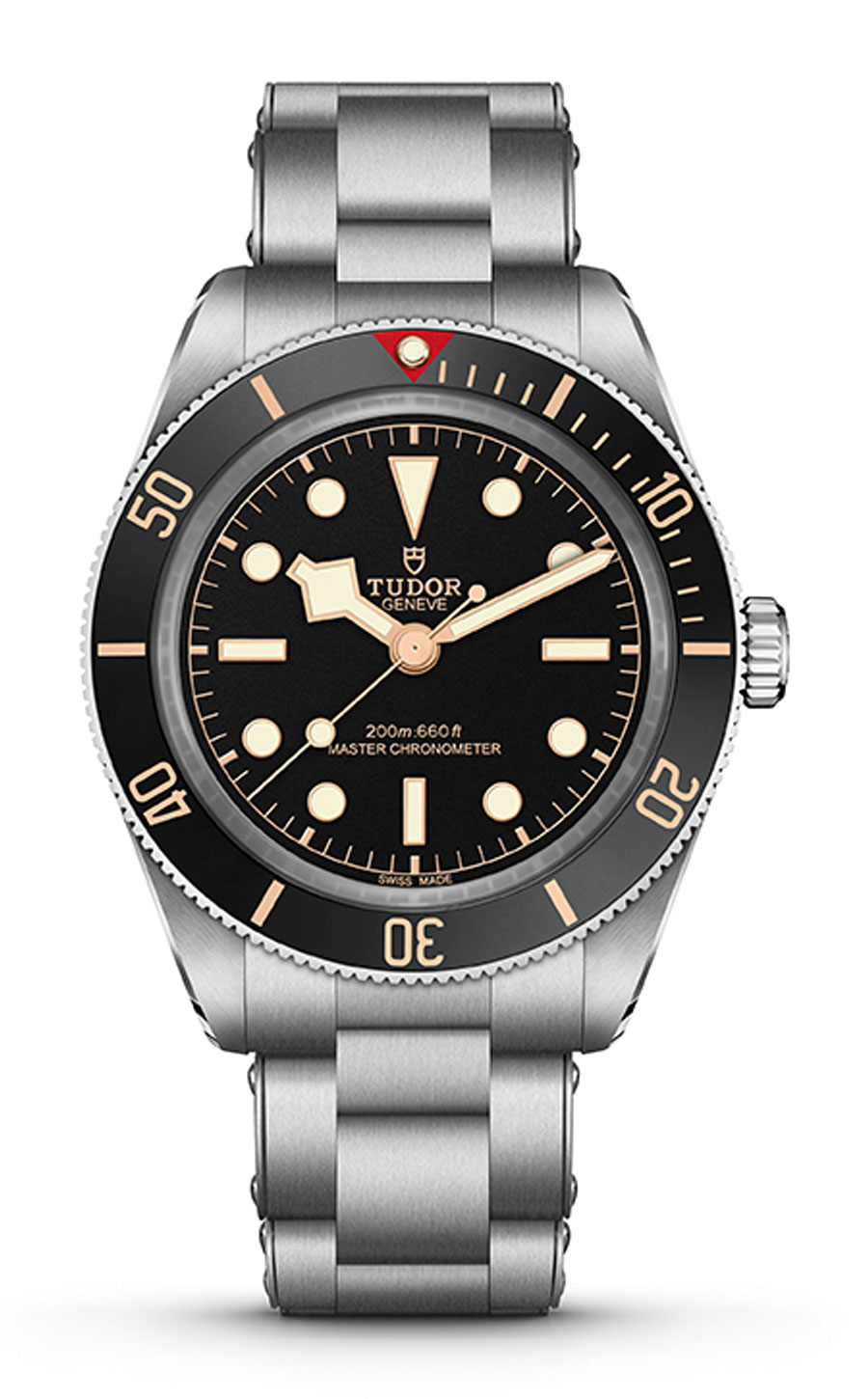
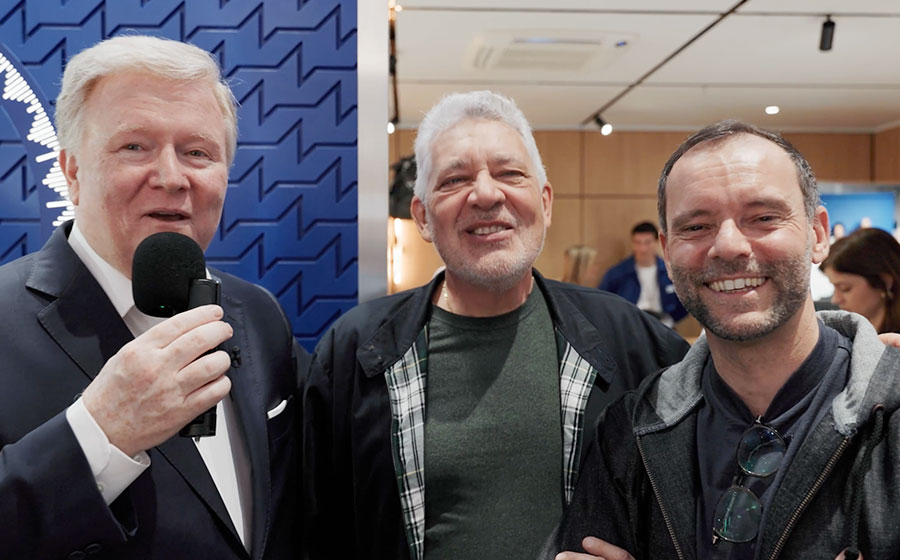
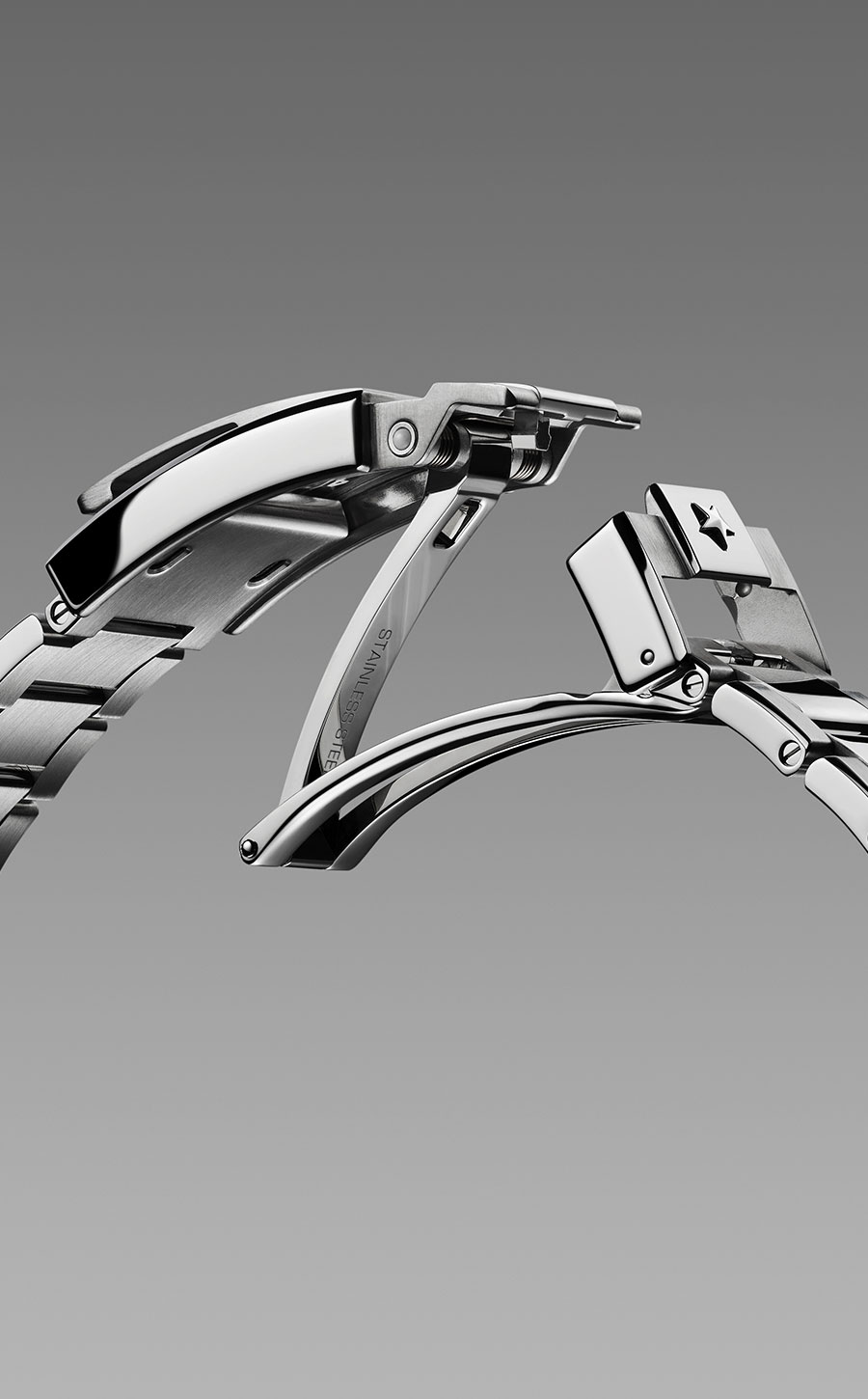
TIMEPIECES FEATURED IN THE VOX POPS WITH THÉOPHILE GAGOGNE, founder of Lecalibre.com, ENRICO BARBASINI, master watchmaker and co-founder of La Fabrique du Temps Louis Vuitton, MATTHIEU HEGI, artistic director of La Fabrique du Temps Louis Vuitton, plus two of my personal favourites.
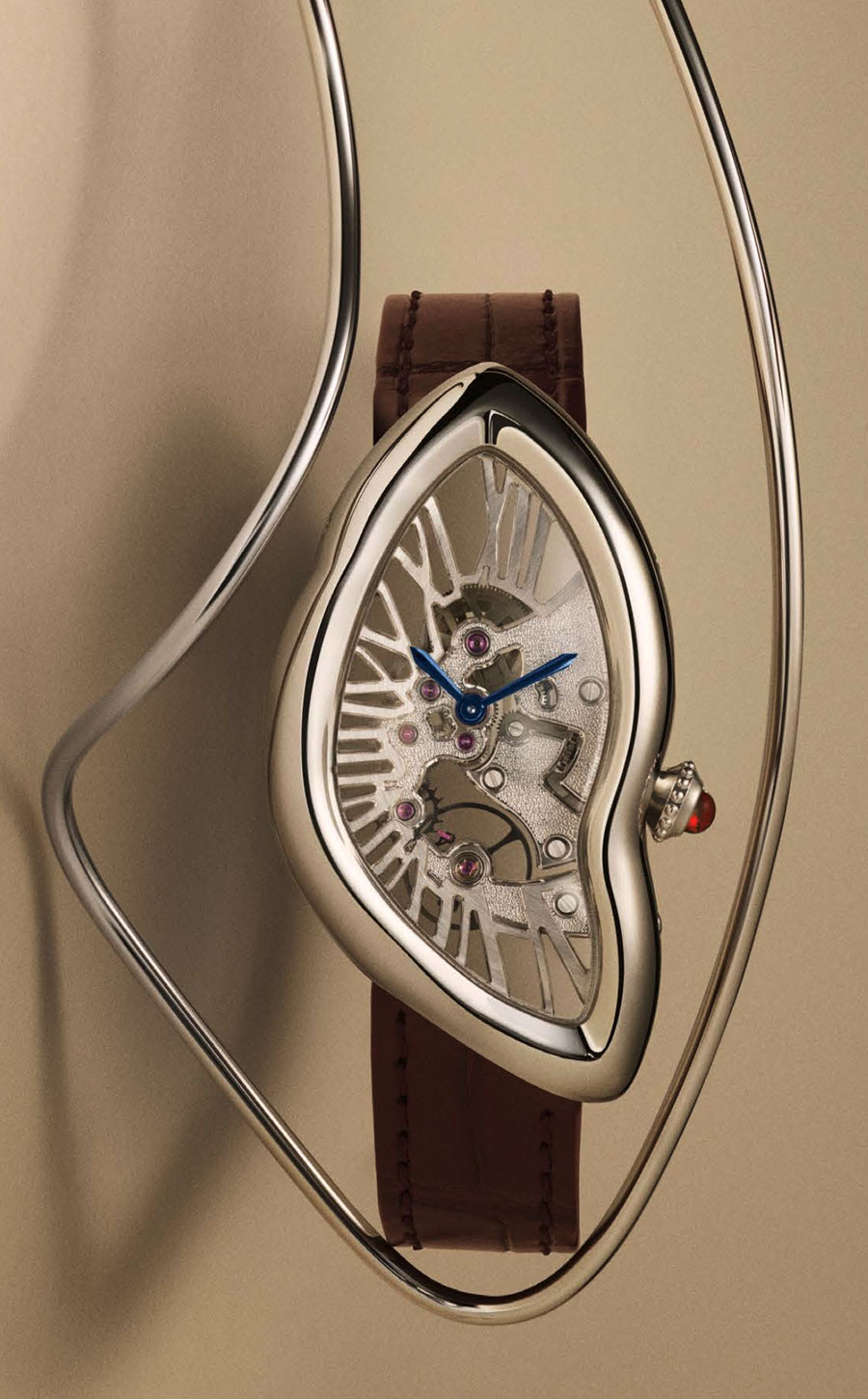
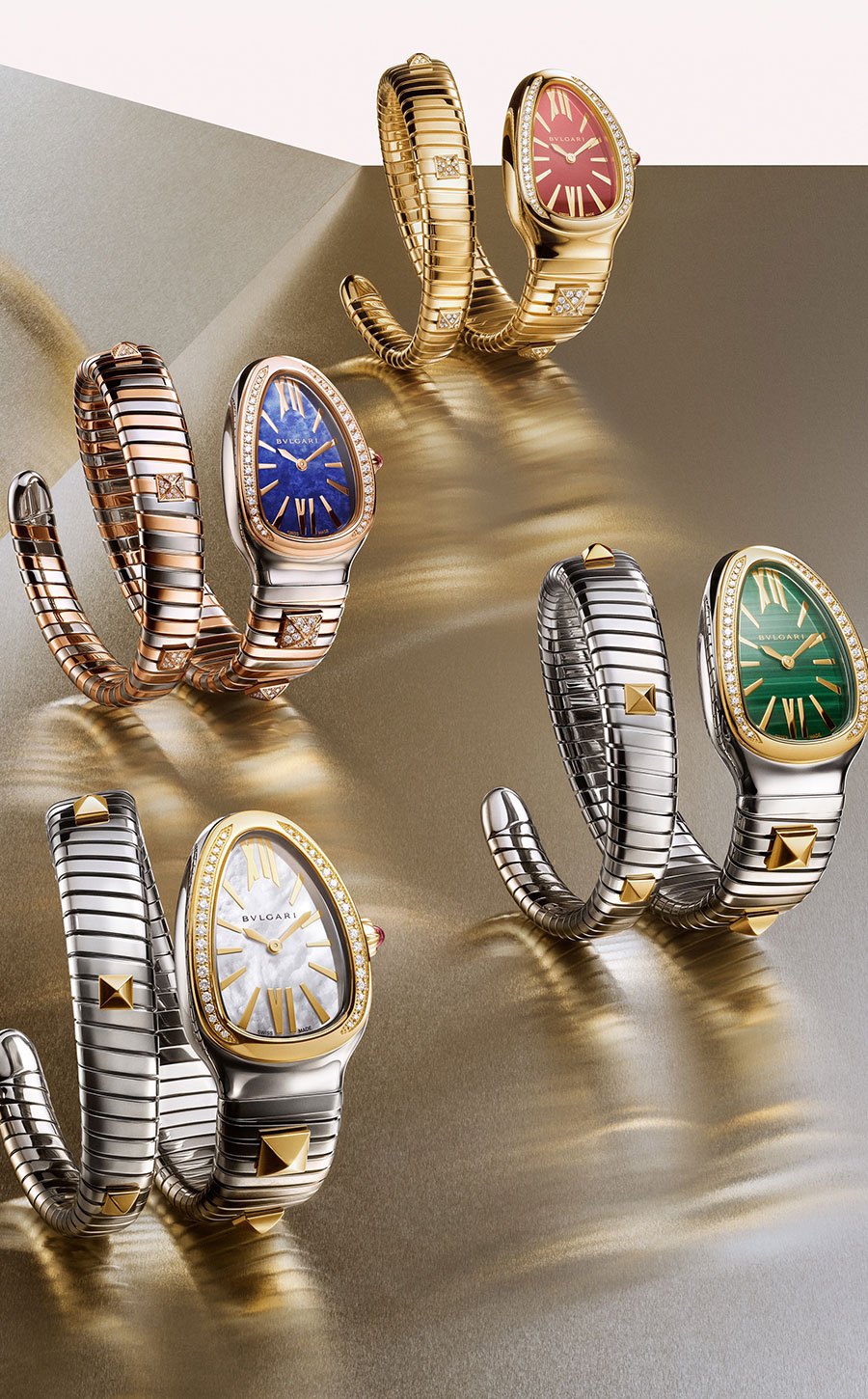
And my two personal favourites:
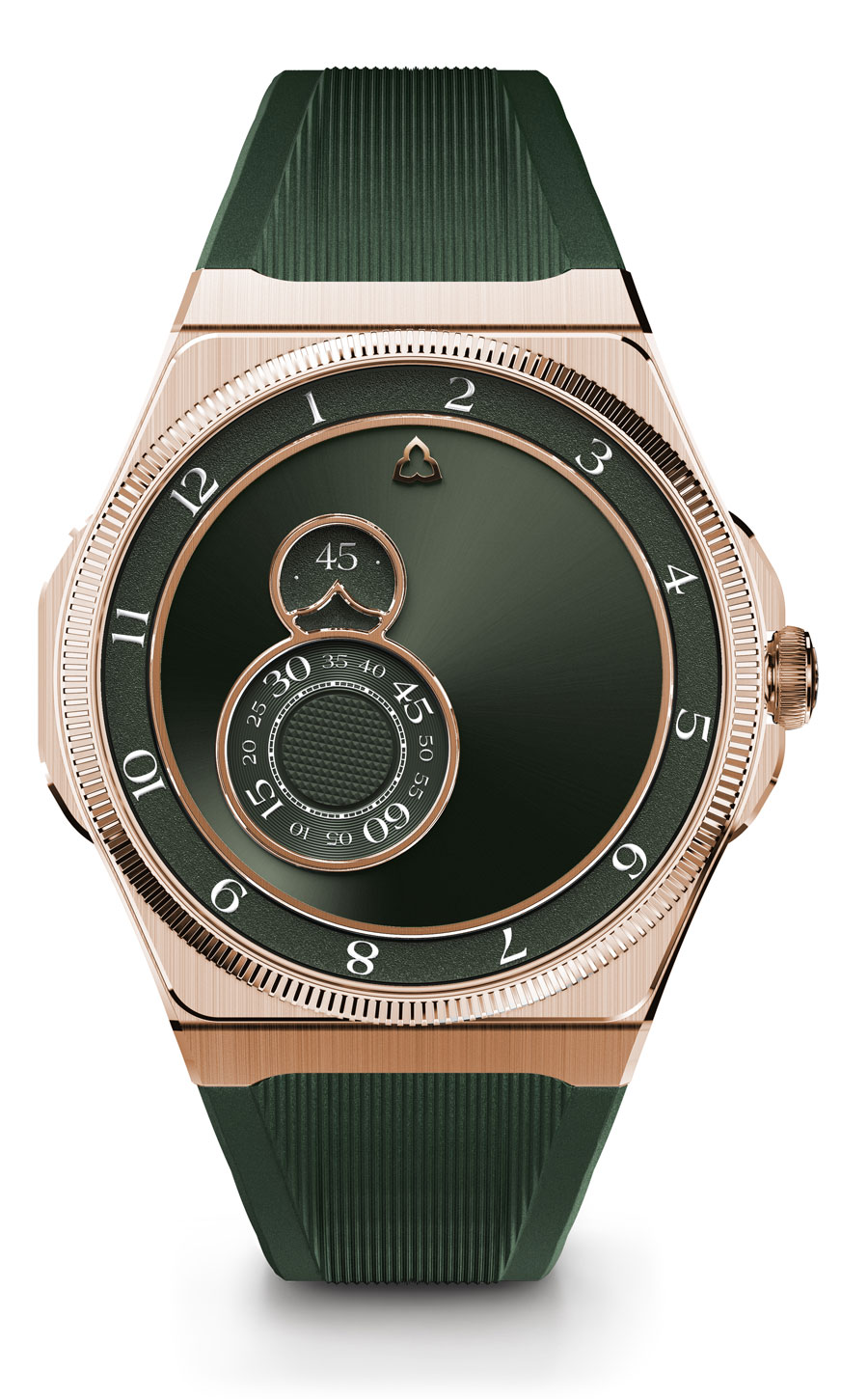
See also:
Read also: